No portrait yet
Saraguros Erotic
Southern highlands of Ecuador, centered on Saraguro canton in Loja Province, with long-established settlements in Zamora Chinchipe in the Amazonian lowlands; migrant communities in Spain and the United States.
Kichwa (Quechuan), Spanish (Indo-European, Romance)
Roman Catholic, with Andean festivals such as Inti Raymi and Kapak Raymi
One of the Kichwa peoples of Ecuador, part of the wider Quechua-speaking Andean world; highland communities in Loja and lowland communities in Zamora Chinchipe.
About Saraguros People
You can usually spot a Saraguro before they say a word: black wool from shoulder to knee, a white wide-brimmed hat and long hair, often worn in a single braid by men as well as women. Women add pleated black skirts, embroidered blouses, broad beaded collars and shawls held by large silver pins. The Saraguros are a Kichwa people of Ecuador's southern highlands, centered on the town and canton of Saraguro in Loja Province. Their clothes are not a costume for visitors. They are everyday proof that this community kept its own name and its own ways in a region where many indigenous communities blended into mestizo life. A popular local story says the black is mourning for Atahualpa, the last Inca ruler. Another widely told tradition says their ancestors were mitmaq, colonists the Inca state moved here from far to the south, perhaps from around Lake Titicaca. Neither story is settled history, but both show how Saraguros see themselves: as Andean people with a long memory, not a local footnote.
Their language is Kichwa, the Ecuadorian form of Quechua, spoken alongside Spanish. Spanish has gained ground with the young in many households, and Saraguro families and teachers have pushed bilingual schooling to push back. Religious life is Catholic in form and Andean in rhythm. Big church feasts, Christmas above all, are run by sponsors who take on the cost and the honor of hosting. In recent decades communities have also revived the solar and farming festivals, including Inti Raymi in June and Kapak Raymi in December, as open statements of who they are.
Home is a scatter of rural communities around the town, places like Lagunas, Ilincho and Tuncarta. Families there grow maize, beans and potatoes and keep cattle for milk and cheese. Cattle also drove a less familiar chapter of Saraguro history. From the late nineteenth century on, families drove their herds east over the mountains into the Amazonian lowlands of Zamora Chinchipe. They settled around Yacuambi and Zamora, in territory long used by the Shuar, and built a second homeland there. More recently many Saraguros have gone to work in Spain and the United States, and the money they send home shows up in new houses and community projects. At home, Saraguros are active in Ecuador's national indigenous movement, and a growing number work as teachers, doctors and local officials. They have also built community tourism that they run themselves.
Related ethnic groups
Groups that share Saraguros's homeland, region, language, or religious tradition. These are likely candidates for comparative phenotype reference.
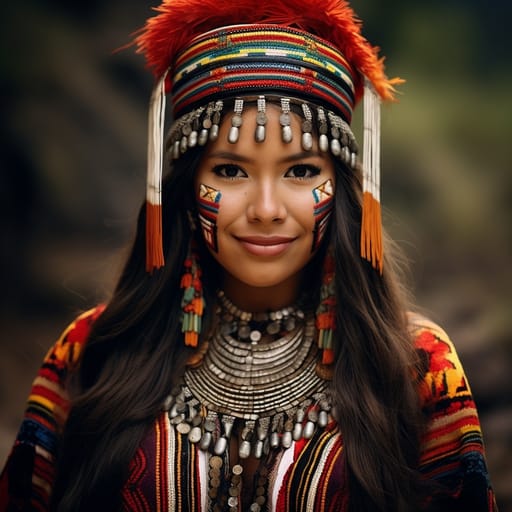
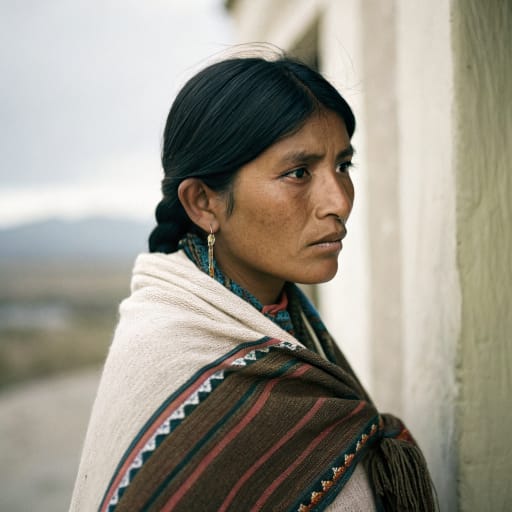
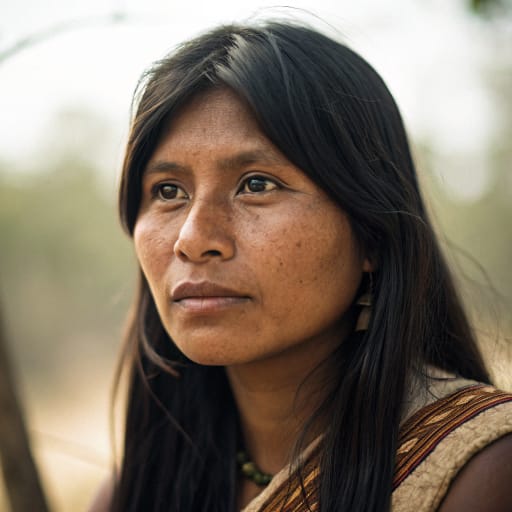
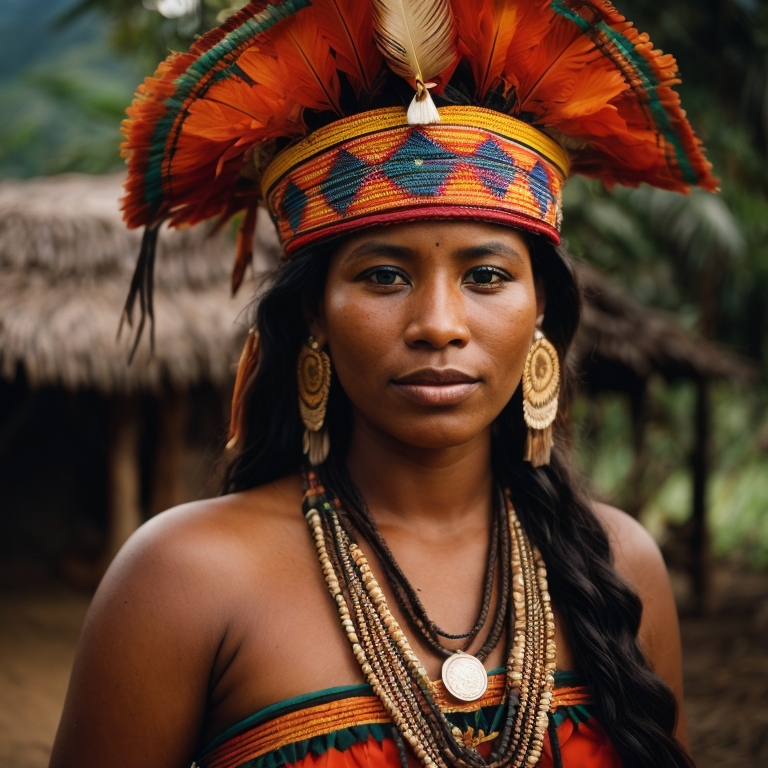
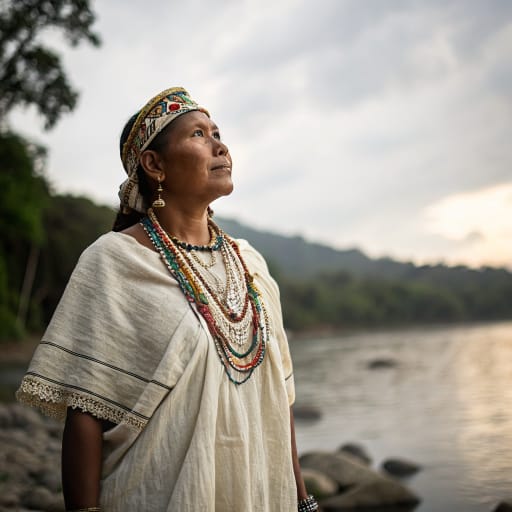
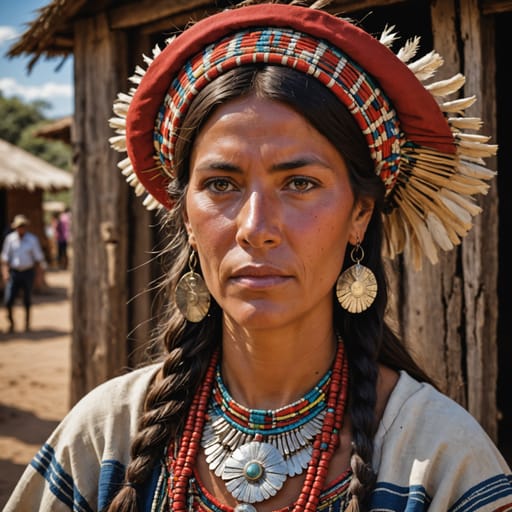
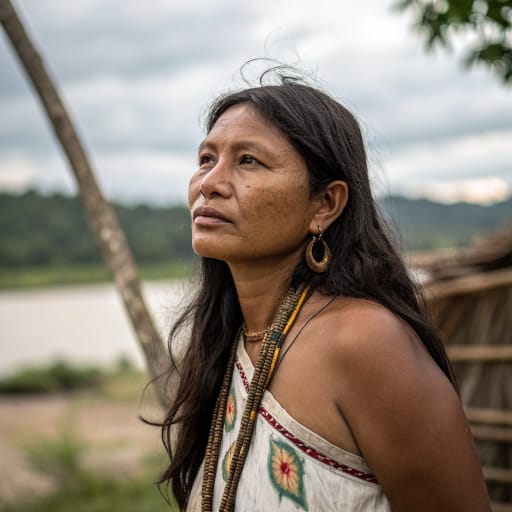
Typical Saraguros Phenotypes
Reference for AI generation: hair, eyes, skin, facial structure, build
Saraguros Body & Anatomy Reference
Per-feature anatomical profile for AI nude generation: South American Indigenous / European-Mestizo / Afro-Latino mix phenotype
Saraguros Boobs & Breasts
Bust reference for Saraguros women: medium-to-large cup, full, high projection, which is typical of South American Indigenous / European-Mestizo / Afro-Latino mix ancestry. Areolas measure about 32-46mm across, with medium-brown to dark-brown pigmentation. Body type (endomorph-to-mesomorph with high gluteal-femoral deposition) shapes the bust as well, so Saraguros tits are usually the classic Brazilian / Latina curvy bust profile in lowland populations; smaller and shorter-set in Andean Indigenous populations. In AI imagery, keep the forward-set shape rather than drifting toward the smaller bust profile of Andean Indigenous sub-populations.
Saraguros Ass & Hips
The Saraguros ass is typically full, high projection, the famous Brazilian / Latina bunda profile, which sets it apart from the slim narrow-hip East Asian profile. Underneath, the pelvis shows wide iliac crests, very full gluteal-femoral fat deposition (the hallmark Brazilian / Latina hip-to-waist ratio), part of the South American Indigenous / European-Mestizo / Afro-Latino mix skeletal pattern. For Saraguros butt pics and AI renders, match that silhouette and the overall build (endomorph-to-mesomorph with high gluteal-femoral deposition).
Saraguros Vagina & Pussy
Saraguros pussy and vulvar anatomy presents medium-brown to dark-brown labial pigmentation, fuller labia minora, consistent with the South American Indigenous / European-Mestizo / Afro-Latino mix phenotype's pigmentation pattern. Saraguros pubic hair is typically wavy-to-curly coarse dark texture, dense distribution, in the inverted-triangle pattern. For anatomically accurate Saraguros pussy renders the labial coloration should match the surrounding tan to deep-brown skin tone with a continuous gradient, and the hair should keep its wavy-to-curly coarse dark texture.
Saraguros Dicks & Penis
Saraguros dicks follow the South American Indigenous / European-Mestizo / Afro-Latino mix reference data: regional mean ~13cm erect; moderate-to-above-average girth; medium-brown shaft pigmentation. Shaft color should track the tan to deep-brown skin tone with a smooth change toward the glans, and Saraguros pubic hair keeps its wavy-to-curly coarse dark texture.
Saraguros Body, Curves & Build
Saraguros body type and overall build presents as endomorph-to-mesomorph with high gluteal-femoral deposition, with mean adult female BMI 25-28: the characteristic South American Indigenous / European-Mestizo / Afro-Latino mix habitus. Saraguros curves and proportions should keep the regional skeletal frame (height, shoulder-to-hip ratio, limb proportions) rather than a generic mesomorph default.
Saraguros Skin Tone & Hair Texture
Saraguros skin sits in the tan to deep-brown (Fitzpatrick III-VI) band. Hair is typically straight-to-curly 1A-3C, varies widely by ancestral composition, in keeping with the South American Indigenous / European-Mestizo / Afro-Latino mix phenotype. In nude renders the skin should stay one even tone from face to body, and body, pubic and head hair should match.
Explore phenotype categories
Structured taxonomy with peer-reviewed scales · 22 anatomical categories
Erotic Poses & Sex Positions
From the pose catalog: 219 named positions with reference skeletons
Frequently asked questions about Saraguros people
Where is the Saraguros homeland?
The Saraguros homeland is Southern highlands of Ecuador, centered on Saraguro canton in Loja Province, with long-established settlements in Zamora Chinchipe in the Amazonian lowlands; migrant communities in Spain and the United States. in South America.
What language do Saraguros people speak?
Saraguros people primarily speak Kichwa (Quechuan), Spanish (Indo-European, Romance).
What religion do Saraguros people practice?
The predominant religion among Saraguros people is Roman Catholic, with Andean festivals such as Inti Raymi and Kapak Raymi.






Make your own Saraguros images
Five a day, free, no credits to buy. The studio starts from this group's phenotype data, so you can set body type, pose and style and keep the traits accurate.
Start with Saraguros