No portrait yet
Quimbaya Erotic
Middle Cauca River valley and the slopes of the Central Cordillera, Colombia: today's Quindío, Risaralda, Caldas and northern Valle del Cauca.
Quimbaya (extinct, unclassified; too poorly recorded to assign to a family)
Indigenous pre-Columbian religion, known mainly from shaft tomb burials with offerings and ritual coca use.
Archaeologically divided into Early Quimbaya, source of the famous goldwork, and Late Quimbaya, lasting to the Spanish conquest; one of several middle Cauca chiefdoms.
About Quimbaya People
The Quimbaya were an Indigenous people of the middle Cauca River valley in the Colombian Andes. Goldsmiths were already at work there in the last centuries BCE, and Spanish conquistadors met the people they called Quimbaya in 1539. Conquest, epidemic disease and forced labor emptied the valley in the decades that followed, and the survivors were absorbed into the colonial population. No living community carries the name. What carries it is metal: a body of cast gold so accomplished that Quimbaya now works in museum catalogs almost as a style label.
That label needs a caveat. Quimbaya is the name the Spanish gave to the people living in the valley in the sixteenth century. Archaeologists later stretched it to cover the much older gold found in the same hills. Specialists now separate an early phase, which produced the celebrated pieces, from a late phase that ran up to the conquest, and the link between the two is not a straight line. The language went with its speakers and was recorded too thinly to be classified.
The goldsmiths worked largely in tumbaga, an alloy of gold and copper, and mastered lost-wax casting. They made hollow flasks, helmets, pendants and small human figures. The figures stay with you: seated or standing men and women, nude, eyes half closed, faces smooth and inward. The best-known object is the Poporo Quimbaya, a gold flask for the powdered lime chewed with coca leaves, which says a good deal about coca's place in ceremony. The Banco de la República bought it in 1939, and that purchase became the founding piece of the Museo del Oro in Bogotá.
Most of this gold left the ground through looting, not excavation. The Quimbaya buried their dead in shaft tombs cut into the hillsides, often with side chambers for offerings. When settlers from Antioquia pushed into the region in the nineteenth century, digging for grave goods became a local trade. In 1890 treasure hunters near Filandia, in Quindío, pulled out the hoard now known as the Quimbaya Treasure. The Colombian government bought it, showed it in Madrid in 1892, and then gave it to the Spanish crown as a diplomatic gift. It is still in the Museo de América in Madrid, and in 2017 Colombia's Constitutional Court ordered the government to pursue its return. The hills where the Quimbaya lived are now the heart of Colombia's coffee country.
Related ethnic groups
Groups that share Quimbaya's homeland, region, language, or religious tradition. These are likely candidates for comparative phenotype reference.
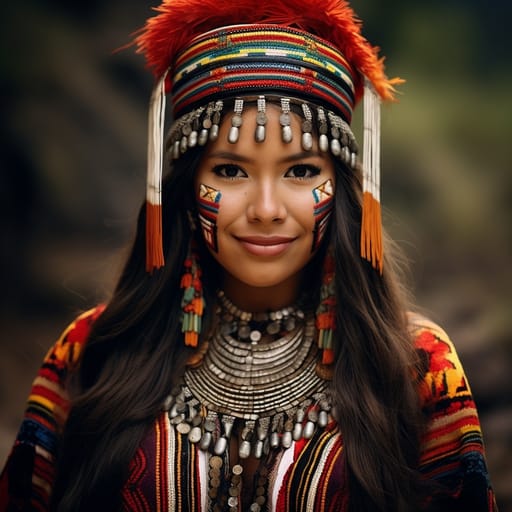
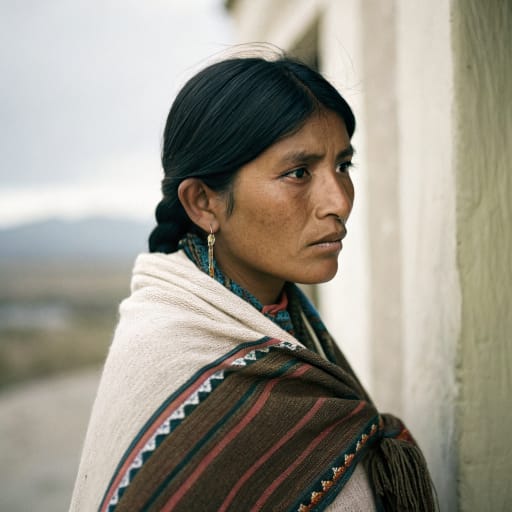
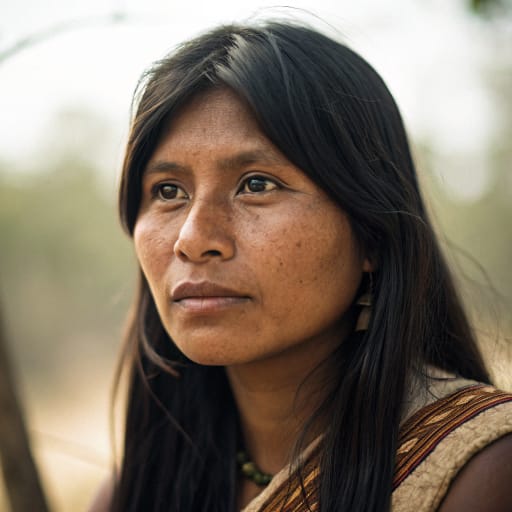
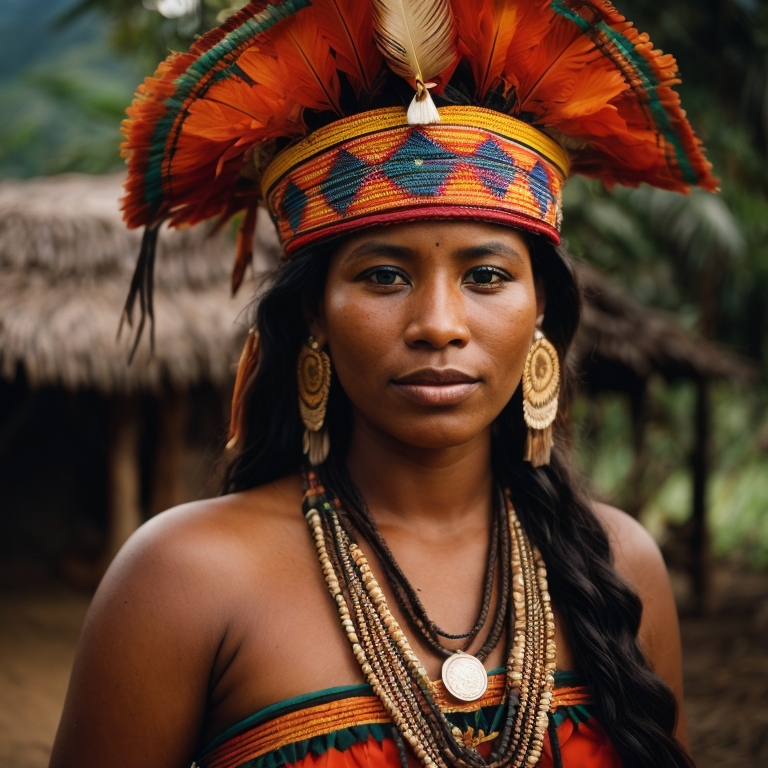
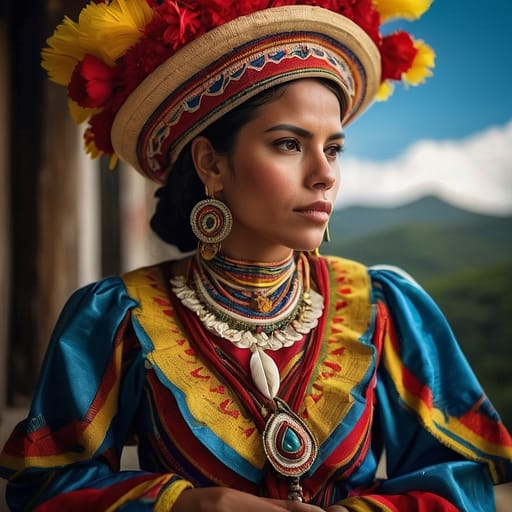
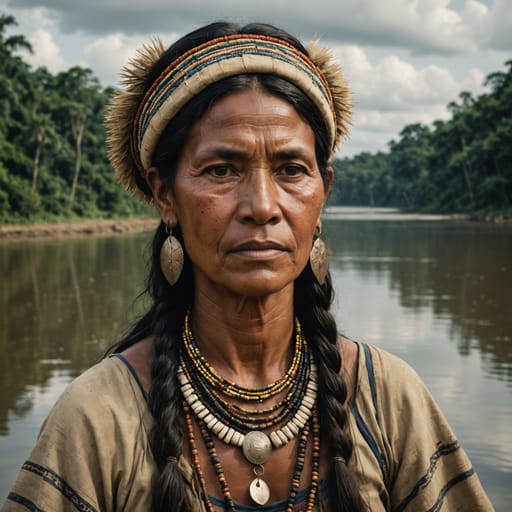
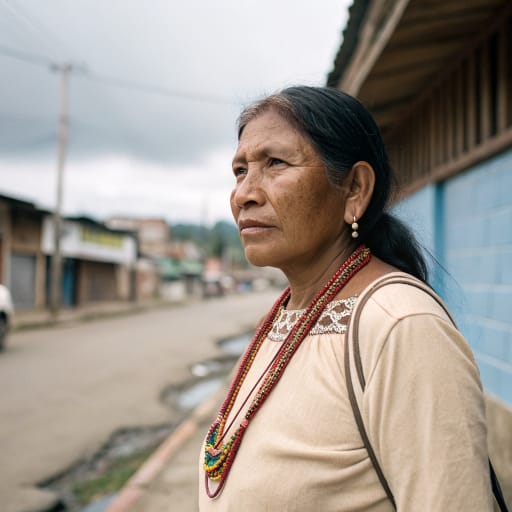
Typical Quimbaya Phenotypes
Reference for AI generation: hair, eyes, skin, facial structure, build
Quimbaya Body & Anatomy Reference
Anatomy by feature, South American Indigenous / European-Mestizo / Afro-Latino mix phenotype
Quimbaya Boobs & Breasts
The typical Quimbaya bust is medium-to-large cup, full, high projection, in line with the wider South American Indigenous / European-Mestizo / Afro-Latino mix pattern. Areolas usually fall in the 32-46mm range, with medium-brown to dark-brown areolar pigmentation against the tan-to-deep-brown skin tone. Compared with the smaller bust profile of Andean Indigenous sub-populations, Quimbaya breasts sit forward and are generally the classic Brazilian / Latina curvy bust profile in lowland populations; smaller and shorter-set in Andean Indigenous populations. A faithful AI render of Quimbaya tits keeps that shape and areola size.
Quimbaya Ass & Hips
Butt shape among Quimbaya women: full, high projection, the famous Brazilian / Latina bunda profile, over wide iliac crests, very full gluteal-femoral fat deposition (the hallmark Brazilian / Latina hip-to-waist ratio). This follows South American Indigenous / European-Mestizo / Afro-Latino mix ancestry and looks quite unlike the slim narrow-hip East Asian profile. An accurate Quimbaya ass in adult AI imagery keeps both the silhouette and the overall build (endomorph-to-mesomorph with high gluteal-femoral deposition) instead of a generic average.
Quimbaya Vagina & Pussy
Vulvar anatomy among Quimbaya women: medium-brown to dark-brown labial pigmentation, fuller labia minora. Pubic hair tends to be wavy-to-curly coarse dark texture, dense distribution, in the usual inverted-triangle pattern. Both follow South American Indigenous / European-Mestizo / Afro-Latino mix pigmentation, which is why Quimbaya pussy renders should not fall back on a pale, sparse Western template.
Quimbaya Dicks & Penis
The Quimbaya cock profile, from South American Indigenous / European-Mestizo / Afro-Latino mix anthropometric data: regional mean ~13cm erect; moderate-to-above-average girth; medium-brown shaft pigmentation. Pubic hair has a wavy-to-curly coarse dark texture and forms the usual inverted-V pattern. Whether Quimbaya men are circumcised follows religious and cultural practice rather than phenotype.
Quimbaya Body, Curves & Build
Build and curves among Quimbaya women follow the South American Indigenous / European-Mestizo / Afro-Latino mix pattern: endomorph-to-mesomorph with high gluteal-femoral deposition, mean adult female BMI 25-28. Proportions matter as much as skin tone, so Quimbaya figures should keep their regional height and limb ratios.
Quimbaya Skin Tone & Hair Texture
The Quimbaya skin range is tan to deep-brown (Fitzpatrick III-VI), and hair tends to be straight-to-curly 1A-3C, varies widely by ancestral composition. That combination marks the South American Indigenous / European-Mestizo / Afro-Latino mix phenotype, and skin tone is the trait AI generators most often get wrong for Quimbaya women.
Explore phenotype categories
Structured taxonomy with peer-reviewed scales · 22 anatomical categories
Erotic Poses & Sex Positions
From the pose catalog: 219 named positions with reference skeletons
Frequently asked questions about Quimbaya people
Where is the Quimbaya homeland?
The Quimbaya homeland is Middle Cauca River valley and the slopes of the Central Cordillera, Colombia: today's Quindío, Risaralda, Caldas and northern Valle del Cauca. in South America.
What language do Quimbaya people speak?
Quimbaya people primarily speak Quimbaya (extinct, unclassified; too poorly recorded to assign to a family).
What religion do Quimbaya people practice?
The predominant religion among Quimbaya people is Indigenous pre-Columbian religion, known mainly from shaft tomb burials with offerings and ritual coca use..






Make your own Quimbaya images
Five a day, free, no credits to buy. The studio starts from this group's phenotype data, so you can set body type, pose and style and keep the traits accurate.
Start with Quimbaya