No portrait yet
Chané Erotic
Northern Gran Chaco plains and Andean foothills of eastern Bolivia (Santa Cruz), northern Argentina (Salta), Paraguay, and Mato Grosso do Sul in Brazil.
Historically Arawakan (Maipurean). Most Chane shifted to Guarani (Tupi-Guarani), including Isoseno Guarani, while the Guana branch retains Terena (Arawakan). Spanish and Portuguese are widely spoken.
Roman Catholic from Franciscan mission contact, with a growing evangelical Protestant presence, layered over ancestor and spirit observance expressed in festivals such as Arete Guasu.
The southernmost Arawakan peoples. Historically split into the Chane proper of eastern Bolivia and the Guana of Paraguay and Brazil; today the Izoceno of Bolivia, the Chane of Salta, and the Terena and Kinikinao of Brazil, with Chane ancestry also carried
About Chané People
The Chané are the far southern edge of the Arawak world, a people whose ancestors carried an Amazonian language deep into country where nothing else sounded like it, and then held onto that language for a while before losing it. Their ground was the northern Gran Chaco and the dry foothills where the Andes start to climb out of the plain: thorn scrub, seasonal flood, seasonal drought, and long stretches that give up water reluctantly. Everyone around them spoke something unrelated. That linguistic isolation is the first thing to know about the Chané, and it explains most of what happened to them afterward.
What happened afterward was the Guaraní. From the fifteenth century, Guaraní-speaking bands pushed west out of Paraguay into the foothills and took the Chané settlements they found, absorbing the population rather than destroying it: Guaraní men, Chané women, and a subordinate class the conquerors named with a word close in force to serf. The people who came out of that arrangement are the Chiriguano, who speak Guaraní to this day while carrying a great deal of Chané ancestry. It is one of the clearest cases in South America of a people losing their language and surviving anyway.
The survivors sort into a few communities. The Izoceño hold the Bajo Isoso along the Parapeti River in Santa Cruz, Bolivia, farming behind hand dug irrigation canals; in 1995 their own organization negotiated the creation of Kaa Iya del Gran Chaco, among the first national parks in the Americas established and administered by an indigenous body. Several thousand more live around Tartagal in Salta province, northern Argentina, where carvers work palo santo into animal figures and into the masks used at Arete Guasu, the maize festival that shares its calendar slot with Carnival and during which the dead return to dance. The masks are destroyed or given to the river when it ends. East, in Mato Grosso do Sul, the Guana branch continues as the Terena, tens of thousands strong and still speaking an Arawakan language, and as the much smaller Kinikinao. Franciscan missions brought Catholicism, evangelical churches have made real inroads since, and neither displaced the older business with ancestors so much as gave it a fixed date.
Related ethnic groups
Groups that share Chané's homeland, region, language, or religious tradition. These are likely candidates for comparative phenotype reference.
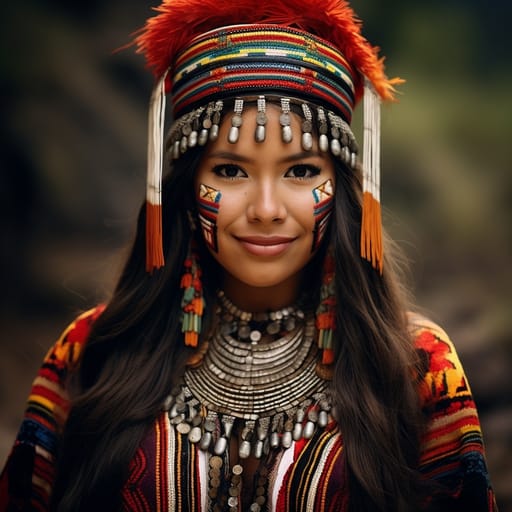
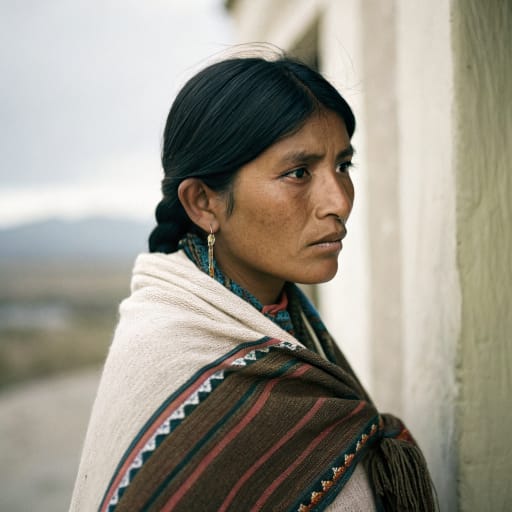
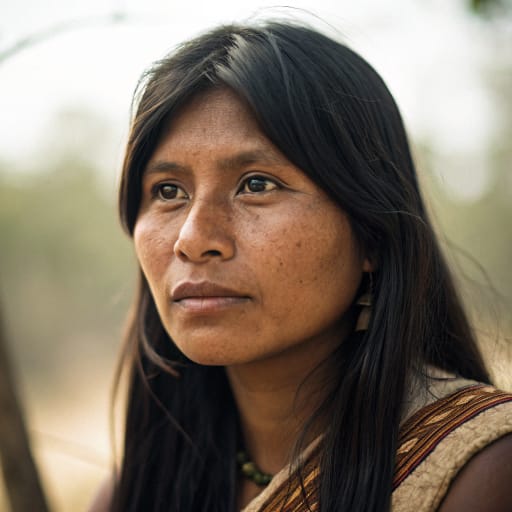
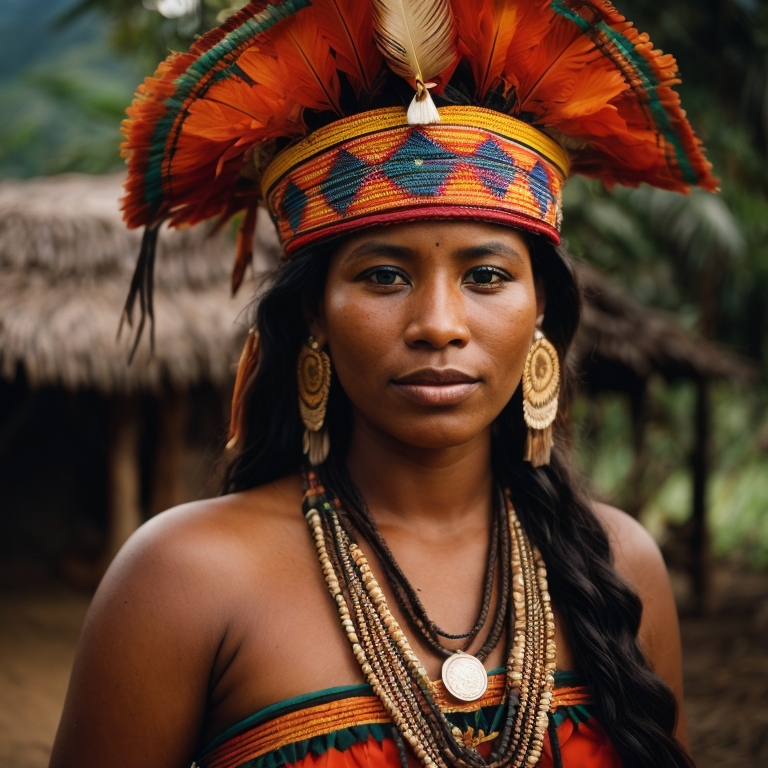
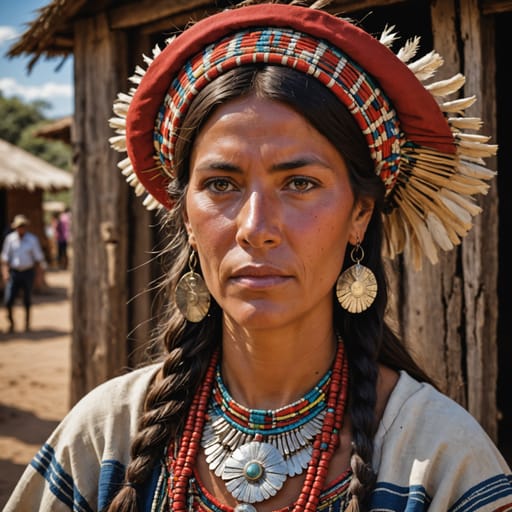
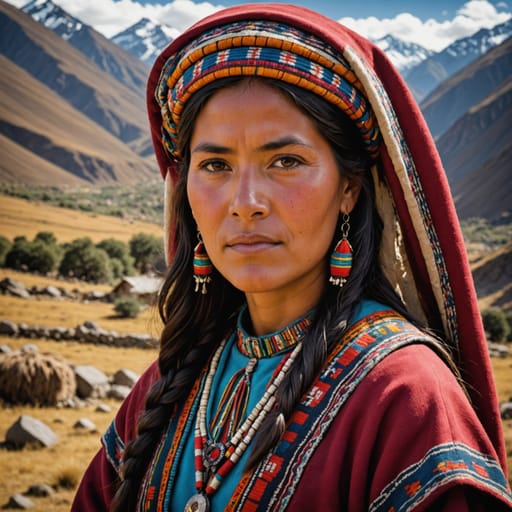
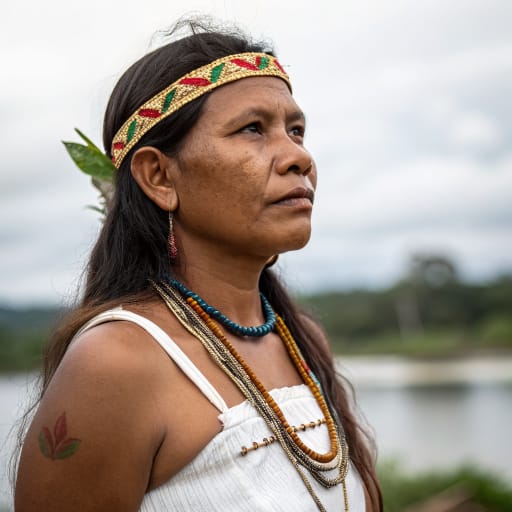
Typical Chané Phenotypes
Reference for AI generation: hair, eyes, skin, facial structure, build
Chané Body & Anatomy Reference
South American Indigenous / European-Mestizo / Afro-Latino mix phenotype: anatomy reference for AI nude generation
Chané Boobs & Breasts
Bust reference for Chané women: medium-to-large cup, full, high projection, which is typical of South American Indigenous / European-Mestizo / Afro-Latino mix ancestry. Areolas measure about 32-46mm across, with medium-brown to dark-brown pigmentation. Body type (endomorph-to-mesomorph with high gluteal-femoral deposition) shapes the bust as well, so Chané tits are usually the classic Brazilian / Latina curvy bust profile in lowland populations; smaller and shorter-set in Andean Indigenous populations. In AI imagery, keep the forward-set shape rather than drifting toward the smaller bust profile of Andean Indigenous sub-populations.
Chané Ass & Hips
The Chané ass is typically full, high projection, the famous Brazilian / Latina bunda profile, which sets it apart from the slim narrow-hip East Asian profile. Underneath, the pelvis shows wide iliac crests, very full gluteal-femoral fat deposition (the hallmark Brazilian / Latina hip-to-waist ratio), part of the South American Indigenous / European-Mestizo / Afro-Latino mix skeletal pattern. For Chané butt pics and AI renders, match that silhouette and the overall build (endomorph-to-mesomorph with high gluteal-femoral deposition).
Chané Vagina & Pussy
Chané pussy and vulvar anatomy presents medium-brown to dark-brown labial pigmentation, fuller labia minora, consistent with the South American Indigenous / European-Mestizo / Afro-Latino mix phenotype's pigmentation pattern. Chané pubic hair is typically wavy-to-curly coarse dark texture, dense distribution, in the inverted-triangle pattern. For anatomically accurate Chané pussy renders the labial coloration should match the surrounding tan to deep-brown skin tone with a continuous gradient, and the hair should keep its wavy-to-curly coarse dark texture.
Chané Dicks & Penis
Chané dicks follow the South American Indigenous / European-Mestizo / Afro-Latino mix reference data: regional mean ~13cm erect; moderate-to-above-average girth; medium-brown shaft pigmentation. Shaft color should track the tan to deep-brown skin tone with a smooth change toward the glans, and Chané pubic hair keeps its wavy-to-curly coarse dark texture.
Chané Body, Curves & Build
Chané body type and overall build presents as endomorph-to-mesomorph with high gluteal-femoral deposition, with mean adult female BMI 25-28: the characteristic South American Indigenous / European-Mestizo / Afro-Latino mix habitus. Chané curves and proportions should keep the regional skeletal frame (height, shoulder-to-hip ratio, limb proportions) rather than a generic mesomorph default.
Chané Skin Tone & Hair Texture
Chané skin sits in the tan to deep-brown (Fitzpatrick III-VI) band. Hair is typically straight-to-curly 1A-3C, varies widely by ancestral composition, in keeping with the South American Indigenous / European-Mestizo / Afro-Latino mix phenotype. In nude renders the skin should stay one even tone from face to body, and body, pubic and head hair should match.
Explore phenotype categories
Structured taxonomy with peer-reviewed scales · 22 anatomical categories
Erotic Poses & Sex Positions
From the pose catalog: 219 named positions with reference skeletons
Frequently asked questions about Chané people
Where is the Chané homeland?
The Chané homeland is Northern Gran Chaco plains and Andean foothills of eastern Bolivia (Santa Cruz), northern Argentina (Salta), Paraguay, and Mato Grosso do Sul in Brazil. in South America.
What language do Chané people speak?
Chané people primarily speak Historically Arawakan (Maipurean). Most Chane shifted to Guarani (Tupi-Guarani), including Isoseno Guarani, while the Guana branch retains Terena (Arawakan). Spanish and Portuguese are widely spoken..
What religion do Chané people practice?
The predominant religion among Chané people is Roman Catholic from Franciscan mission contact, with a growing evangelical Protestant presence, layered over ancestor and spirit observance expressed in festivals such as Arete Guasu..






Make your own Chané images
Five a day, free, no credits to buy. The studio starts from this group's phenotype data, so you can set body type, pose and style and keep the traits accurate.
Start with Chané