Help us get this right
Does this portrait look right for Puruhá?
One tap. It takes a second and it is recorded.
1 says it looks right, 0 say it looks off.
Puruhá Erotic
The central Ecuadorian Andes, chiefly Chimborazo province around Riobamba, with communities in neighboring Tungurahua and Bolívar.
Chimborazo Highland Kichwa (Quechuan) and Spanish; the ancestral Puruhá language is extinct and unclassified.
Roman Catholicism blended with Andean practice, alongside a large indigenous evangelical Protestant population.
One of the recognized pueblos of Ecuador's Kichwa nationality; local communities include Cacha, Colta, Licto, Calpi, Punín, Guano and Quimiag.
About Puruhá People
The Puruhá hold the high basin around Riobamba in Ecuador's Chimborazo province, farmland that climbs from river valleys near 2,700 meters up into páramo grassland above 4,000, with the ice of Chimborazo on the western skyline. They were a set of allied chiefdoms before the Inca came north in the late fifteenth century, and they resisted long enough that the empire fell back on its usual remedy, moving in colonists from elsewhere to dilute them. The Spanish arrived barely a generation later. What the two conquests did together is legible in the language: the ancestral Puruhá tongue is so thinly recorded that linguists cannot place it in any family, and it was gone by the eighteenth century, displaced by Kichwa, the Quechuan language Inca administration had carried north ahead of the friars. Chimborazo Kichwa is now among the most widely spoken varieties in the country. Being Puruhá today is less a matter of separate speech than of belonging to particular places: Cacha, Colta, Licto, Calpi, Punín, Guano, each with its own weaving, its own hat, its own reputation.
For four centuries the arithmetic of the province was land. Haciendas took the valley floor and left indigenous families on huasipungos, plots held in exchange for labor, until the agrarian reform laws of 1964 and 1973 began prying the system apart. Riobamba's bishop Leonidas Proaño spent three decades pushing that along, handing church estates to the communities that worked them and putting literacy classes on the radio in Kichwa, which is part of why an unusual number of Chimborazo villages produced organizers rather than emigrants. When the national indigenous uprising of June 1990 closed the highways, Chimborazo was one of the places it started. The province is also the center of indigenous evangelical Protestantism in Ecuador: the parishes around Lake Colta have been majority evangelical for decades, and the Catholic and evangelical halves of a village keep separate calendars, separate music, and often separate politics. Meanwhile the Saturday market in Riobamba still runs on Puruhá potatoes, barley and wool, and a great many young Puruhá spend part of the year working in Quito or Guayaquil and come home for the fiestas. Both facts are ordinary here, and neither cancels the other.
Related ethnic groups
Groups that share Puruhá's homeland, region, language, or religious tradition. These are likely candidates for comparative phenotype reference.
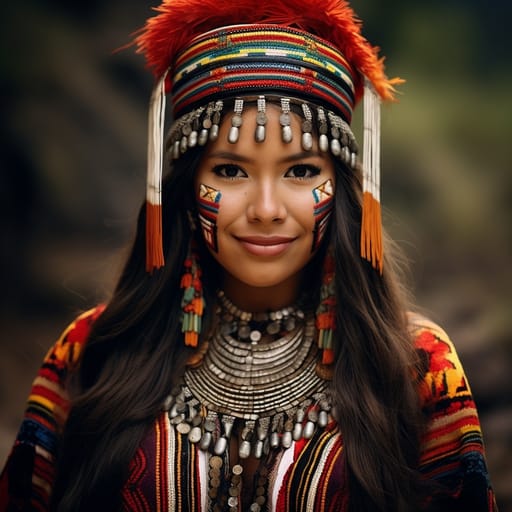
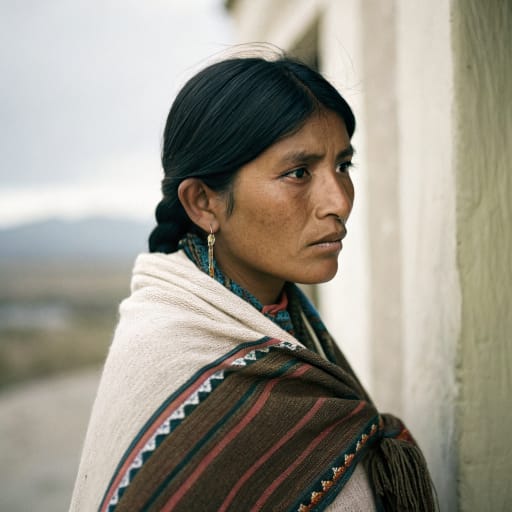
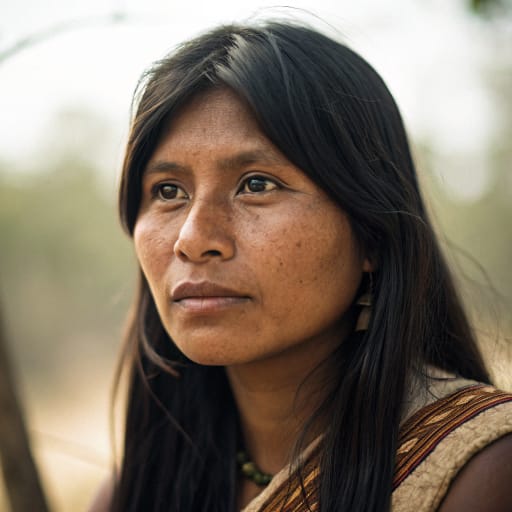
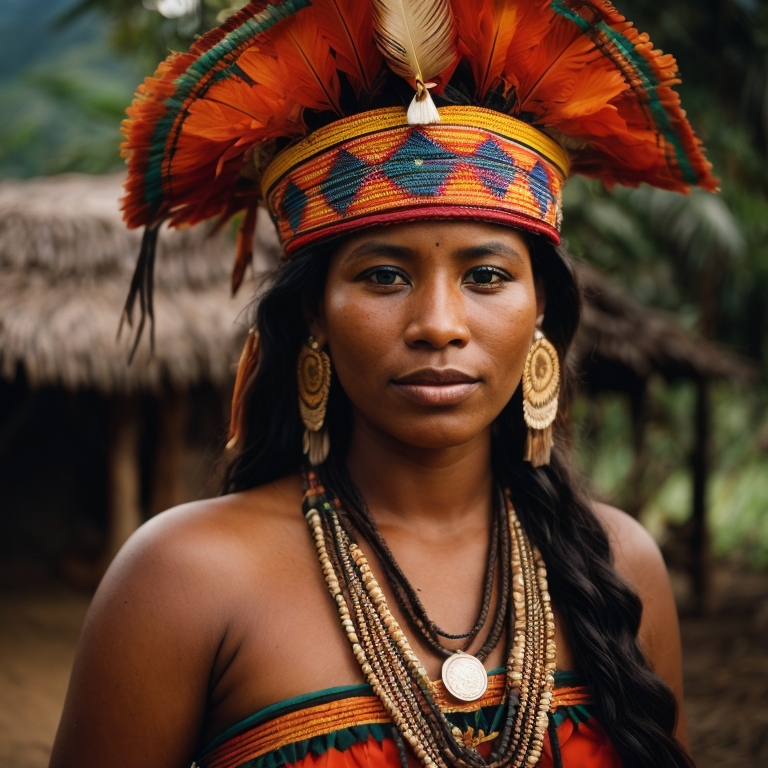
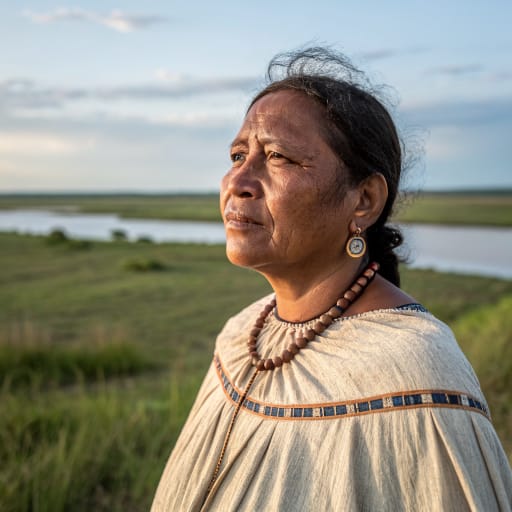
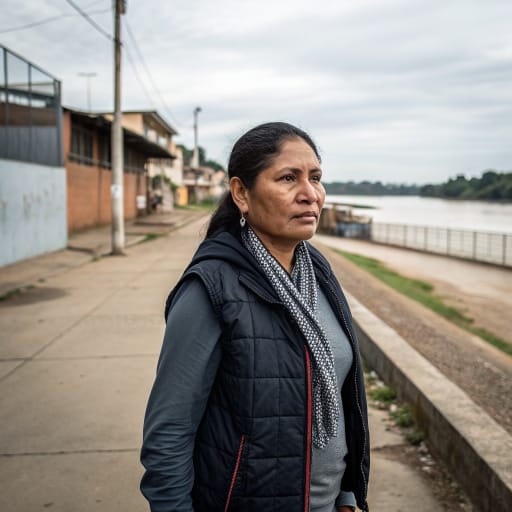
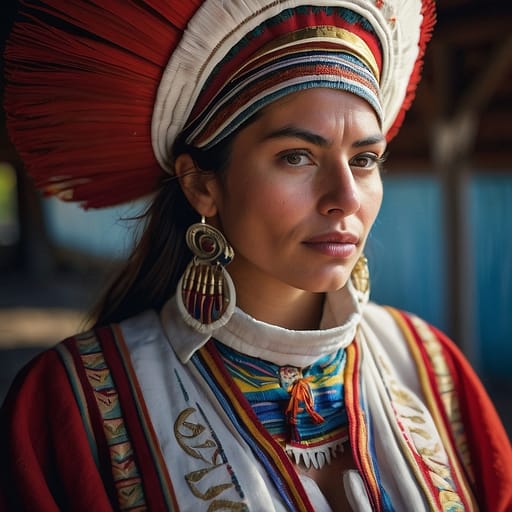
Typical Puruhá Phenotypes
Reference for AI generation: hair, eyes, skin, facial structure, build
Puruhá Body & Anatomy Reference
Anatomy by feature, South American Indigenous / European-Mestizo / Afro-Latino mix phenotype
Puruhá Boobs & Breasts
Bust reference for Puruhá women: medium-to-large cup, full, high projection, which is typical of South American Indigenous / European-Mestizo / Afro-Latino mix ancestry. Areolas measure about 32-46mm across, with medium-brown to dark-brown pigmentation. Body type (endomorph-to-mesomorph with high gluteal-femoral deposition) shapes the bust as well, so Puruhá tits are usually the classic Brazilian / Latina curvy bust profile in lowland populations; smaller and shorter-set in Andean Indigenous populations. In AI imagery, keep the forward-set shape rather than drifting toward the smaller bust profile of Andean Indigenous sub-populations.
Puruhá Ass & Hips
The Puruhá ass is typically full, high projection, the famous Brazilian / Latina bunda profile, which sets it apart from the slim narrow-hip East Asian profile. Underneath, the pelvis shows wide iliac crests, very full gluteal-femoral fat deposition (the hallmark Brazilian / Latina hip-to-waist ratio), part of the South American Indigenous / European-Mestizo / Afro-Latino mix skeletal pattern. For Puruhá butt pics and AI renders, match that silhouette and the overall build (endomorph-to-mesomorph with high gluteal-femoral deposition).
Puruhá Vagina & Pussy
Puruhá pussy and vulvar anatomy presents medium-brown to dark-brown labial pigmentation, fuller labia minora, consistent with the South American Indigenous / European-Mestizo / Afro-Latino mix phenotype's pigmentation pattern. Puruhá pubic hair is typically wavy-to-curly coarse dark texture, dense distribution, in the inverted-triangle pattern. For anatomically accurate Puruhá pussy renders the labial coloration should match the surrounding tan to deep-brown skin tone with a continuous gradient, and the hair should keep its wavy-to-curly coarse dark texture.
Puruhá Dicks & Penis
Puruhá dicks follow the South American Indigenous / European-Mestizo / Afro-Latino mix reference data: regional mean ~13cm erect; moderate-to-above-average girth; medium-brown shaft pigmentation. Shaft color should track the tan to deep-brown skin tone with a smooth change toward the glans, and Puruhá pubic hair keeps its wavy-to-curly coarse dark texture.
Puruhá Body, Curves & Build
Puruhá body type and overall build presents as endomorph-to-mesomorph with high gluteal-femoral deposition, with mean adult female BMI 25-28: the characteristic South American Indigenous / European-Mestizo / Afro-Latino mix habitus. Puruhá curves and proportions should keep the regional skeletal frame (height, shoulder-to-hip ratio, limb proportions) rather than a generic mesomorph default.
Puruhá Skin Tone & Hair Texture
Puruhá skin sits in the tan to deep-brown (Fitzpatrick III-VI) band. Hair is typically straight-to-curly 1A-3C, varies widely by ancestral composition, in keeping with the South American Indigenous / European-Mestizo / Afro-Latino mix phenotype. In nude renders the skin should stay one even tone from face to body, and body, pubic and head hair should match.
Explore phenotype categories
Structured taxonomy with peer-reviewed scales · 22 anatomical categories
Erotic Poses & Sex Positions
From the pose catalog: 219 named positions with reference skeletons
Frequently asked questions about Puruhá people
Where is the Puruhá homeland?
The Puruhá homeland is The central Ecuadorian Andes, chiefly Chimborazo province around Riobamba, with communities in neighboring Tungurahua and Bolívar. in South America.
What language do Puruhá people speak?
Puruhá people primarily speak Chimborazo Highland Kichwa (Quechuan) and Spanish; the ancestral Puruhá language is extinct and unclassified..
What religion do Puruhá people practice?
The predominant religion among Puruhá people is Roman Catholicism blended with Andean practice, alongside a large indigenous evangelical Protestant population..






Make your own Puruhá images
Five a day, free, no credits to buy. The studio starts from this group's phenotype data, so you can set body type, pose and style and keep the traits accurate.
Start with Puruhá