Help us get this right
Does this portrait look right for Minuane?
Nobody has judged this one yet. You would be the first.
Minuane Erotic
Grasslands between the Paraná and Uruguay rivers, extending east across Uruguay into southern Rio Grande do Sul: today's Argentina (Entre Ríos), Uruguay and Brazil
Minuane, often grouped with Güenoa (Charruan); extinct and poorly documented
Traditional Indigenous beliefs, poorly documented; intermittent contact with Jesuit missionaries
One of the Charruan peoples, related to the Charrúa, Yaro and Bohane; often identified with, or closely allied to, the Güenoa
About Minuane People
The Minuane were an Indigenous people of the southern grasslands. They lived between the lower Paraná and Uruguay rivers and across what are now Uruguay and southern Brazil, and by the early nineteenth century they no longer existed as a separate people. Their descendants were absorbed into the rural population of Uruguay, northeastern Argentina and Rio Grande do Sul. They were one of the Charruan peoples, the same broad family as the Charrúa. Colonial writers mentioned them together with the Güenoa so often that many historians treat Güenoa and Minuane as two names for one people, or for bands that were close allies.
Their homeland was open country: rolling grassland cut by rivers and strips of forest along the banks. Before Europeans arrived they lived by hunting, fishing and gathering, and they moved in small bands instead of settling in villages. That life changed with the horse and with the huge herds of wild cattle that spread through the Banda Oriental in the seventeenth century. The Minuane became hunters on horseback, and hides became their main trade good with outsiders. This put them on one of the most fought-over borders in the Americas, where Spain and Portugal competed for the land between Buenos Aires and southern Brazil. Both empires traded with them, sought them as allies and turned on them. The founding of Montevideo in the 1720s brought open conflict with Spanish settlers, and Jesuit missionaries tried off and on to draw them into mission life.
Their language is poorly documented. The few colonial records that survive place it in the Charruan group, separate from the Guaraní spoken by their northern neighbors and in the missions. What we know of their religious life comes mostly from missionaries and soldiers, and little of it can be described with confidence. Spanish observers tended to describe their customs as close to those of the Charrúa.
War and disease wore them down, and many were absorbed into Charrúa bands, mission towns and the mixed rural society of gauchos and ranch hands. After independence, Uruguay waged campaigns against the last free Indigenous bands of the countryside. The best known is the massacre at Salsipuedes in 1831, and those campaigns ended the era of the peoples who lived on horseback in the grasslands. The Minuane legacy is quieter, but it is real. In Rio Grande do Sul, the cold, dry wind that blows in from the southwest each winter is still called the minuano, after the people whose lands lay in that direction. Genetic studies of Uruguayans have found substantial Indigenous ancestry, especially through the mother's line, and a growing number of people in Uruguay and southern Brazil now claim Charruan descent.
Related ethnic groups
Groups that share Minuane's homeland, region, language, or religious tradition. These are likely candidates for comparative phenotype reference.
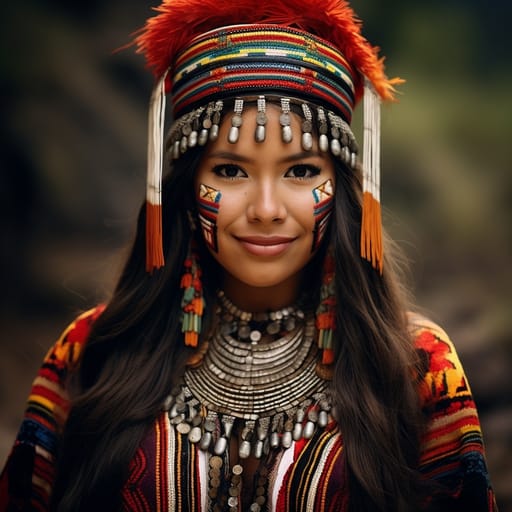
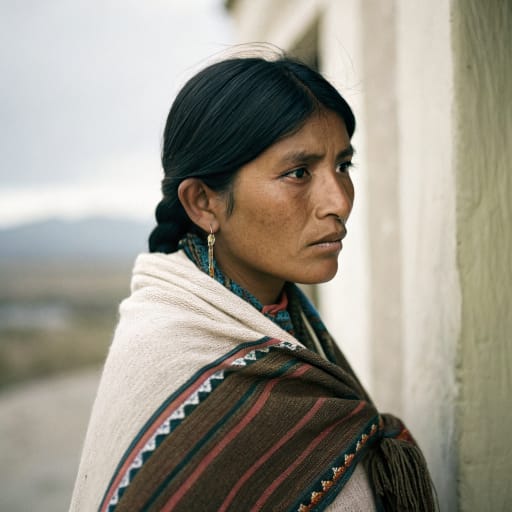
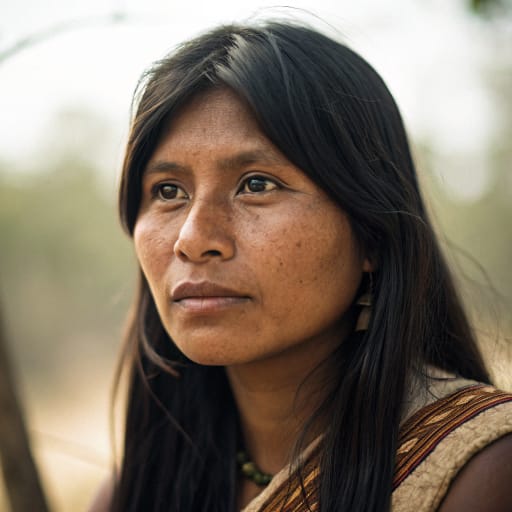
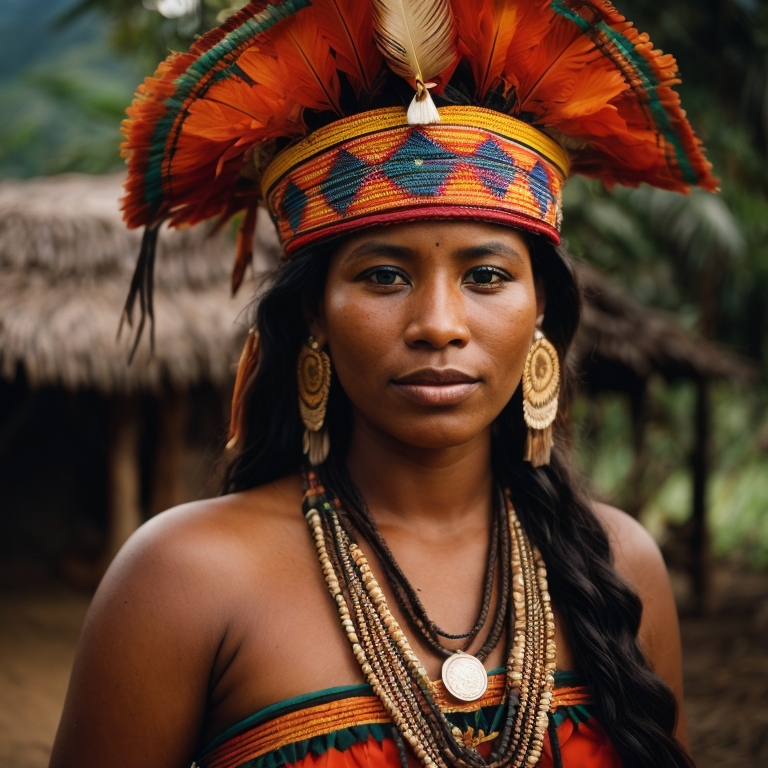
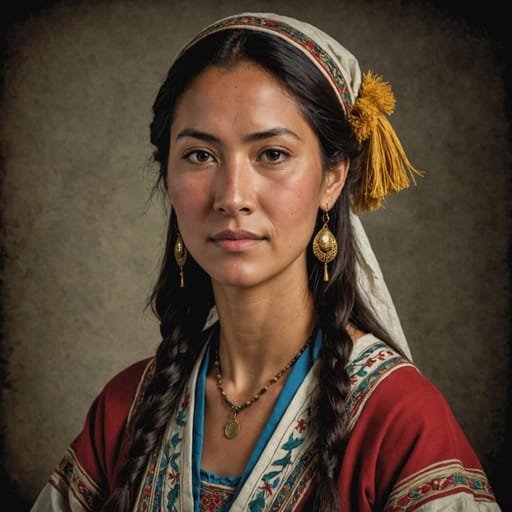
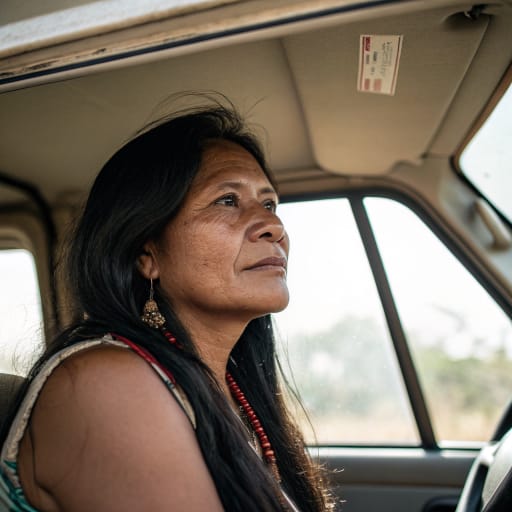
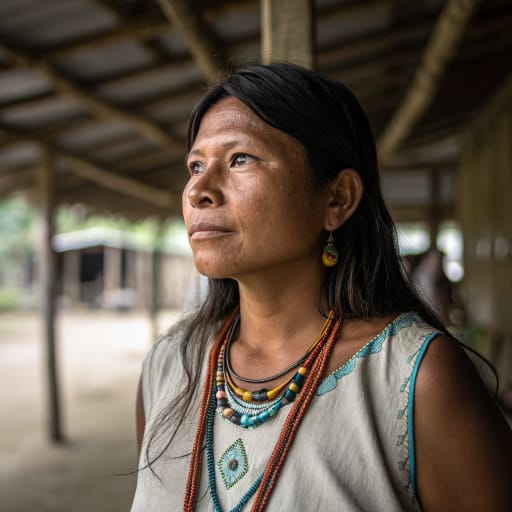
Typical Minuane Phenotypes
Reference for AI generation: hair, eyes, skin, facial structure, build
Minuane Body & Anatomy Reference
Anatomy by feature, South American Indigenous / European-Mestizo / Afro-Latino mix phenotype
Minuane Boobs & Breasts
Bust reference for Minuane women: medium-to-large cup, full, high projection, which is typical of South American Indigenous / European-Mestizo / Afro-Latino mix ancestry. Areolas measure about 32-46mm across, with medium-brown to dark-brown pigmentation. Body type (endomorph-to-mesomorph with high gluteal-femoral deposition) shapes the bust as well, so Minuane tits are usually the classic Brazilian / Latina curvy bust profile in lowland populations; smaller and shorter-set in Andean Indigenous populations. In AI imagery, keep the forward-set shape rather than drifting toward the smaller bust profile of Andean Indigenous sub-populations.
Minuane Ass & Hips
The Minuane ass is typically full, high projection, the famous Brazilian / Latina bunda profile, which sets it apart from the slim narrow-hip East Asian profile. Underneath, the pelvis shows wide iliac crests, very full gluteal-femoral fat deposition (the hallmark Brazilian / Latina hip-to-waist ratio), part of the South American Indigenous / European-Mestizo / Afro-Latino mix skeletal pattern. For Minuane butt pics and AI renders, match that silhouette and the overall build (endomorph-to-mesomorph with high gluteal-femoral deposition).
Minuane Vagina & Pussy
Minuane pussy and vulvar anatomy presents medium-brown to dark-brown labial pigmentation, fuller labia minora, consistent with the South American Indigenous / European-Mestizo / Afro-Latino mix phenotype's pigmentation pattern. Minuane pubic hair is typically wavy-to-curly coarse dark texture, dense distribution, in the inverted-triangle pattern. For anatomically accurate Minuane pussy renders the labial coloration should match the surrounding tan to deep-brown skin tone with a continuous gradient, and the hair should keep its wavy-to-curly coarse dark texture.
Minuane Dicks & Penis
Minuane dicks follow the South American Indigenous / European-Mestizo / Afro-Latino mix reference data: regional mean ~13cm erect; moderate-to-above-average girth; medium-brown shaft pigmentation. Shaft color should track the tan to deep-brown skin tone with a smooth change toward the glans, and Minuane pubic hair keeps its wavy-to-curly coarse dark texture.
Minuane Body, Curves & Build
Minuane body type and overall build presents as endomorph-to-mesomorph with high gluteal-femoral deposition, with mean adult female BMI 25-28: the characteristic South American Indigenous / European-Mestizo / Afro-Latino mix habitus. Minuane curves and proportions should keep the regional skeletal frame (height, shoulder-to-hip ratio, limb proportions) rather than a generic mesomorph default.
Minuane Skin Tone & Hair Texture
Minuane skin sits in the tan to deep-brown (Fitzpatrick III-VI) band. Hair is typically straight-to-curly 1A-3C, varies widely by ancestral composition, in keeping with the South American Indigenous / European-Mestizo / Afro-Latino mix phenotype. In nude renders the skin should stay one even tone from face to body, and body, pubic and head hair should match.
Explore phenotype categories
Structured taxonomy with peer-reviewed scales · 22 anatomical categories
Erotic Poses & Sex Positions
From the pose catalog: 219 named positions with reference skeletons
Frequently asked questions about Minuane people
Where is the Minuane homeland?
The Minuane homeland is Grasslands between the Paraná and Uruguay rivers, extending east across Uruguay into southern Rio Grande do Sul: today's Argentina (Entre Ríos), Uruguay and Brazil in South America.
What language do Minuane people speak?
Minuane people primarily speak Minuane, often grouped with Güenoa (Charruan); extinct and poorly documented.
What religion do Minuane people practice?
The predominant religion among Minuane people is Traditional Indigenous beliefs, poorly documented; intermittent contact with Jesuit missionaries.






Make your own Minuane images
Five a day, free, no credits to buy. The studio starts from this group's phenotype data, so you can set body type, pose and style and keep the traits accurate.
Start with Minuane