No portrait yet
Punan Bah Erotic
Longhouse communities on the middle Rajang and its tributaries, chiefly the Bah and Biau rivers, in the Belaga and Bintulu districts of Sarawak, Malaysia, on Borneo.
Punan Bah, also recorded as Punan Bah-Biau (Austronesian, Malayo-Polynesian, Kajang group); Sarawak Malay and English in wide daily use.
Predominantly Christian, Catholic and Protestant, layered over an indigenous ritual tradition that persists most strongly in funerary practice.
One of the Kajang peoples of the middle Rajang, alongside the Sekapan, Kejaman, Lahanan and Sian; counted within Sarawak's Orang Ulu category.
About Punan Bah People
The first thing the Punan Bah tell outsiders is what they are not. Across Borneo the label Punan gets fixed to nomadic forest foragers, and administrators, missionaries and ethnographers have been filing the Punan Bah under that heading for more than a century. They reject it flatly. They are river people, longhouse dwellers and rice farmers, settled on the middle Rajang in Sarawak for as long as their own accounts run, and those accounts run long: they hold they were on this water before the Iban pushed upriver, before the Brooke Rajahs, before any of it was written down. The name comes from the Bah, a tributary joining the Rajang below Belaga, and the main communities still sit near its mouth, with related longhouses on the Biau and toward Bintulu on the coast. There are only a few thousand of them. Their language is Austronesian, part of the small Kajang cluster of the middle Rajang shared with the Sekapan, Kejaman and Lahanan: close enough to those neighbors to mark them as very old company, far enough from Kayan and Iban to have kept them apart.
What separates them most sharply from the Iban downriver is rank. Punan Bah society is layered rather than egalitarian: an aristocratic stratum, a commoner majority, and a formerly enslaved class taken in war or debt, with the ranking families holding the apartments at the center of the longhouse and the ritual authority attached to that position. Rank shaped marriage, and it shaped death most visibly. The high-ranking dead were given secondary burial, the cleaned bones placed in a chamber cut near the top of a klirieng, a single ironwood trunk raised upright and carved along its length. A few still stand in the Rajang basin, gray and split, outliving the households that raised them. Most Punan Bah are Christian today, and the churches sit inside the longhouse settlements, though funeral practice and the older vocabulary of the soul have proved harder to displace than doctrine. Since the timber boom of the 1970s and the run of dams built upriver, wage work has pulled people to Bintulu, Sibu and the towns downriver, and the longhouse has become a place many return to rather than live in year round. The rice is still planted. The rank is still known, including by people who will tell you it no longer matters.
Related ethnic groups
Groups that share Punan Bah's homeland, region, language, or religious tradition. These are likely candidates for comparative phenotype reference.
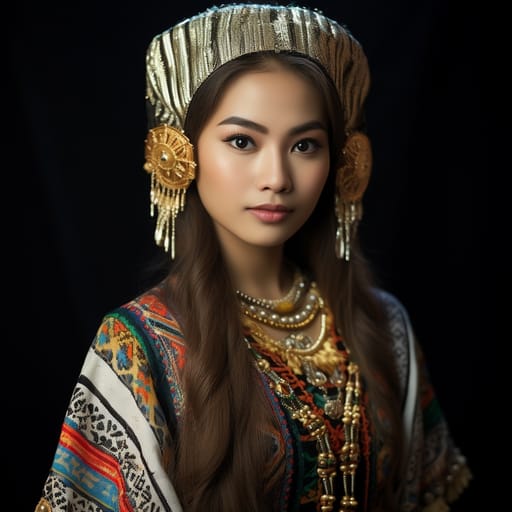
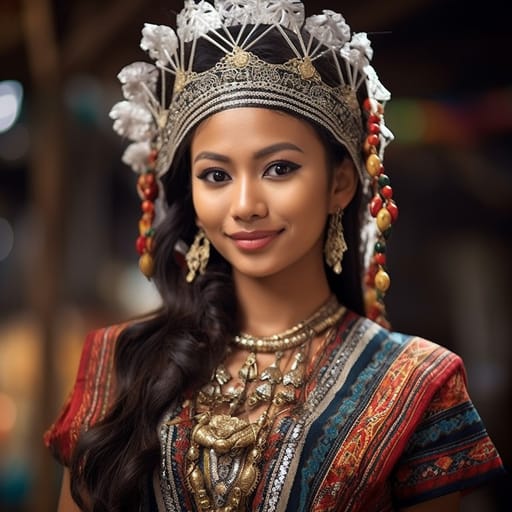
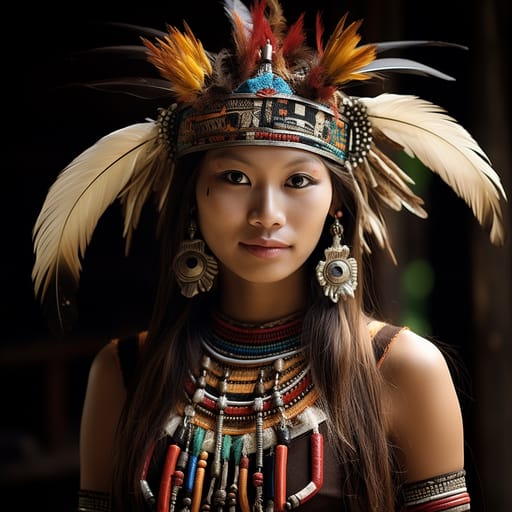

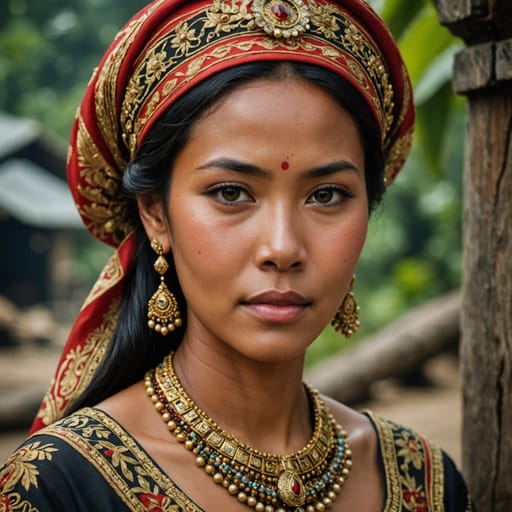
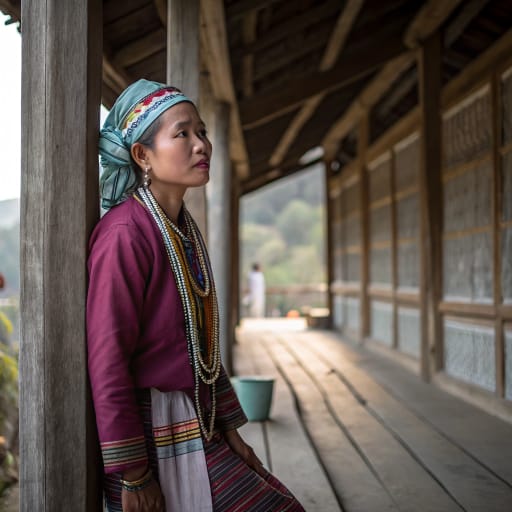
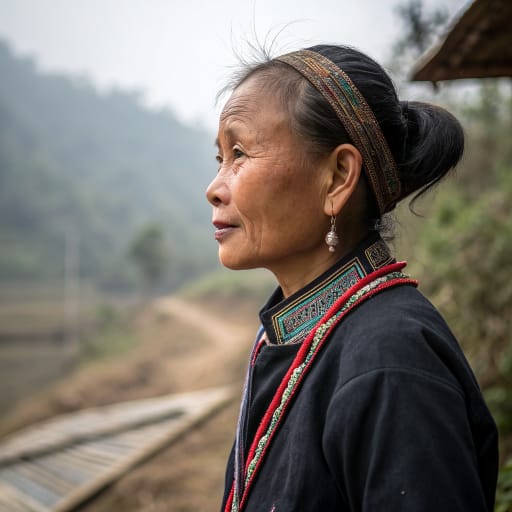
Typical Punan Bah Phenotypes
Reference for AI generation: hair, eyes, skin, facial structure, build
Punan Bah Body & Anatomy Reference
Anatomy by feature, Southeast Asian Austronesian / Austroasiatic phenotype
Punan Bah Boobs & Breasts
Bust reference for Punan Bah women: small-to-medium cup, modest projection, which is typical of Southeast Asian Austronesian / Austroasiatic ancestry. Areolas measure about 26-38mm across, with medium-brown to dark-brown pigmentation. Body type (ectomorph, petite frame) shapes the bust as well, so Punan Bah tits are usually firm, modest projection. In AI imagery, keep the forward-set shape rather than drifting toward the fuller South Asian or Polynesian bust.
Punan Bah Ass & Hips
The Punan Bah ass is typically small-to-medium, modest projection, narrower hip profile, which sets it apart from the fuller glutes of the Pacific Islander phenotype. Underneath, the pelvis shows narrow-to-medium iliac crests, part of the Southeast Asian Austronesian / Austroasiatic skeletal pattern. For Punan Bah butt pics and AI renders, match that silhouette and the overall build (ectomorph, petite frame).
Punan Bah Vagina & Pussy
Punan Bah pussy and vulvar anatomy presents medium-brown to dark-brown labial pigmentation, consistent with the Southeast Asian Austronesian / Austroasiatic phenotype's pigmentation pattern. Punan Bah pubic hair is typically straight-to-wavy fine-to-medium texture, in the inverted-triangle pattern. For anatomically accurate Punan Bah pussy renders the labial coloration should match the surrounding tan to medium-brown skin tone with a continuous gradient, and the hair should keep its straight-to-wavy fine-to-medium texture.
Punan Bah Dicks & Penis
Punan Bah dicks follow the Southeast Asian Austronesian / Austroasiatic reference data: regional mean ~11cm erect; moderate girth; medium-brown shaft pigmentation. Shaft color should track the tan to medium-brown skin tone with a smooth change toward the glans, and Punan Bah pubic hair keeps its straight-to-wavy fine-to-medium texture.
Punan Bah Body, Curves & Build
Punan Bah body type and overall build presents as ectomorph, petite frame, with mean adult female BMI 20-23: the characteristic Southeast Asian Austronesian / Austroasiatic habitus. Punan Bah curves and proportions should keep the regional skeletal frame (height, shoulder-to-hip ratio, limb proportions) rather than a generic mesomorph default.
Punan Bah Skin Tone & Hair Texture
Punan Bah skin sits in the tan to medium-brown (Fitzpatrick III-V) band. Hair is typically straight-to-wavy 1A-2A, dark-brown to black, in keeping with the Southeast Asian Austronesian / Austroasiatic phenotype. In nude renders the skin should stay one even tone from face to body, and body, pubic and head hair should match.
Explore phenotype categories
Structured taxonomy with peer-reviewed scales · 22 anatomical categories
Erotic Poses & Sex Positions
From the pose catalog: 219 named positions with reference skeletons
Frequently asked questions about Punan Bah people
Where is the Punan Bah homeland?
The Punan Bah homeland is Longhouse communities on the middle Rajang and its tributaries, chiefly the Bah and Biau rivers, in the Belaga and Bintulu districts of Sarawak, Malaysia, on Borneo. in Southeast Asia.
What language do Punan Bah people speak?
Punan Bah people primarily speak Punan Bah, also recorded as Punan Bah-Biau (Austronesian, Malayo-Polynesian, Kajang group); Sarawak Malay and English in wide daily use..
What religion do Punan Bah people practice?
The predominant religion among Punan Bah people is Predominantly Christian, Catholic and Protestant, layered over an indigenous ritual tradition that persists most strongly in funerary practice..






Make your own Punan Bah images
Five a day, free, no credits to buy. The studio starts from this group's phenotype data, so you can set body type, pose and style and keep the traits accurate.
Start with Punan Bah