Poqomchi' Erotic
Verapaz highlands of Guatemala: Tactic, Tamahú, Tucurú, San Cristóbal Verapaz and Santa Cruz Verapaz in Alta Verapaz, Purulhá in Baja Verapaz, and Chicamán in Quiché
Poqomchi' (Mayan, K'iche'an branch, Poqom subgroup); Spanish widely spoken as a second language
Catholic and evangelical Protestant Christianity, with cofradía traditions and Maya ceremonial practice in some communities
Maya people; closely related to the Poqomam within the Poqom group; western (San Cristóbal Verapaz) and eastern (Tactic, Tamahú, Tucurú) speech varieties
About Poqomchi' People
The Poqomchi' are a Maya people of the Verapaz highlands in north-central Guatemala. What sets them apart from their neighbors is above all their language and a tight cluster of home towns. Those towns follow the road that climbs from Baja Verapaz toward Cobán: Purulhá in the cloud forest, then Tactic and Santa Cruz Verapaz, with San Cristóbal Verapaz off to the west and Tamahú and Tucurú dropping east toward the Polochic valley. Speakers also live in Chicamán, just over the line in Quiché. This is wet, steep country where maize and beans share hillsides with coffee and cardamom, and fog can hang on the ridges for much of the day.
Their language, also called Poqomchi', belongs to the K'iche'an branch of the Mayan family. Its closest relative is Poqomam, spoken well to the south around Guatemala City and Palín, and the two are grouped together as the Poqom languages. At home, Poqomchi' shares the map with Q'eqchi', the far larger Maya language of Alta Verapaz, and with Spanish, which runs most schooling, commerce and government. Speech differs noticeably between the western towns around San Cristóbal Verapaz and the eastern ones around Tactic, Tamahú and Tucurú. Guatemala counts Poqomchi' among its 22 officially recognized Mayan languages.
History has pressed hard on this corner of the country. The Verapaz highlands held off Spanish soldiers long enough to be known as Tezulutlán, the land of war. Then Dominican friars linked to Bartolomé de las Casas won a negotiated, missionary entry in the sixteenth century, and the Crown renamed the region Verapaz, true peace. The friars gathered scattered hamlets into mission towns built around a church and a patron saint, and that pairing of town and patron still anchors local identity. In the late nineteenth century Liberal governments opened the Verapaces to coffee planters, many of them German immigrants, and Maya communities lost land and were pulled into plantation labor. The armed conflict of the late twentieth century brought killings and displacement here too.
Poqomchi' communities today are largely Christian, split between Catholic parishes and a growing number of evangelical churches, though the line between faiths is not always tidy. Cofradías, the lay brotherhoods that keep saints' images and organize patron fiestas, remain part of town life, and Maya spiritual guides still hold ceremonies with copal and candles. Tactic's Pozo Vivo, a spring whose water is said to stir when someone approaches, is a well-known local legend. Weaving carries identity as clearly as speech: a woman's huipil and wrapped corte often signal to anyone local which town she comes from.
Related ethnic groups
Groups that share Poqomchi''s homeland, region, language, or religious tradition. These are likely candidates for comparative phenotype reference.
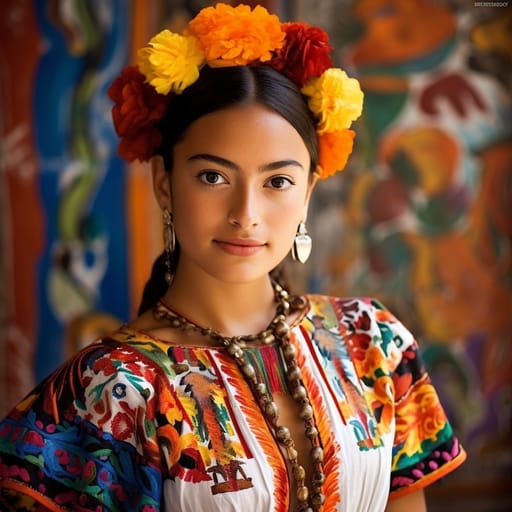
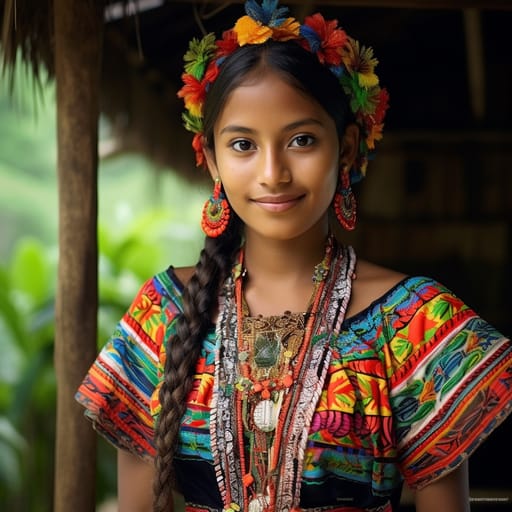
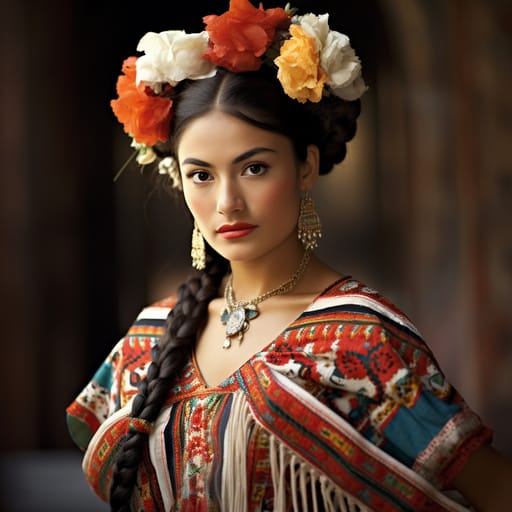
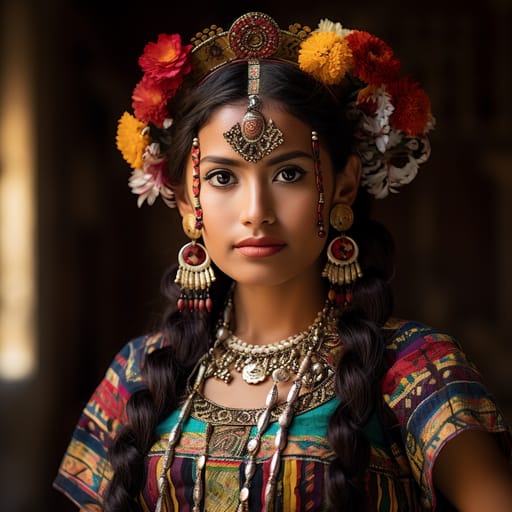
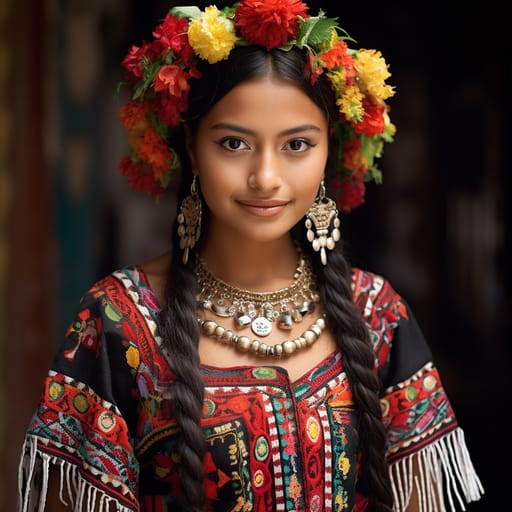
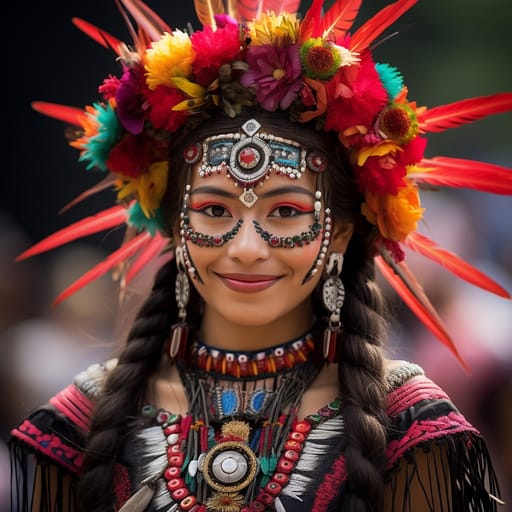
Typical Poqomchi' Phenotypes
Reference for AI generation: hair, eyes, skin, facial structure, build
Poqomchi' Body & Anatomy Reference
Per-feature anatomical profile for AI nude generation: Mesoamerican Indigenous / Mestizo phenotype
Poqomchi' Boobs & Breasts
Bust reference for Poqomchi' women: medium-to-large cup, full, moderate-to-high projection, which is typical of Mesoamerican Indigenous / Mestizo ancestry. Areolas measure about 32-46mm across, with medium-brown to dark-brown pigmentation. Body type (endomorph-to-mesomorph with strong hip-and-bust deposition) shapes the bust as well, so Poqomchi' tits are usually full and projecting, classic Latina curvy bust profile. In AI imagery, keep the forward-set shape rather than drifting toward the smaller East Asian bust.
Poqomchi' Ass & Hips
The Poqomchi' ass is typically medium-to-full, high projection, classic Latina curvy hip profile, which sets it apart from the slim narrow-hip East Asian profile. Underneath, the pelvis shows wide iliac crests, full gluteal-femoral fat deposition, part of the Mesoamerican Indigenous / Mestizo skeletal pattern. For Poqomchi' butt pics and AI renders, match that silhouette and the overall build (endomorph-to-mesomorph with strong hip-and-bust deposition).
Poqomchi' Vagina & Pussy
Poqomchi' pussy and vulvar anatomy presents medium-brown to dark-brown labial pigmentation, fuller labia minora, consistent with the Mesoamerican Indigenous / Mestizo phenotype's pigmentation pattern. Poqomchi' pubic hair is typically straight-to-wavy coarse dark texture, dense distribution, in the inverted-triangle pattern. For anatomically accurate Poqomchi' pussy renders the labial coloration should match the surrounding tan to medium-brown skin tone with a continuous gradient, and the hair should keep its straight-to-wavy coarse dark texture.
Poqomchi' Dicks & Penis
Poqomchi' dicks follow the Mesoamerican Indigenous / Mestizo reference data: regional mean ~13cm erect; moderate girth; medium-brown shaft pigmentation. Shaft color should track the tan to medium-brown skin tone with a smooth change toward the glans, and Poqomchi' pubic hair keeps its straight-to-wavy coarse dark texture.
Poqomchi' Body, Curves & Build
Poqomchi' body type and overall build presents as endomorph-to-mesomorph with strong hip-and-bust deposition, with mean adult female BMI 26-29: the characteristic Mesoamerican Indigenous / Mestizo habitus. Poqomchi' curves and proportions should keep the regional skeletal frame (height, shoulder-to-hip ratio, limb proportions) rather than a generic mesomorph default.
Poqomchi' Skin Tone & Hair Texture
Poqomchi' skin sits in the tan to medium-brown (Fitzpatrick III-V) band. Hair is typically straight-to-wavy 1A-2B, dense dark-brown to black, in keeping with the Mesoamerican Indigenous / Mestizo phenotype. In nude renders the skin should stay one even tone from face to body, and body, pubic and head hair should match.
Explore phenotype categories
Structured taxonomy with peer-reviewed scales · 22 anatomical categories
Erotic Poses & Sex Positions
From the pose catalog: 219 named positions with reference skeletons
Frequently asked questions about Poqomchi' people
Where is the Poqomchi' homeland?
The Poqomchi' homeland is Verapaz highlands of Guatemala: Tactic, Tamahú, Tucurú, San Cristóbal Verapaz and Santa Cruz Verapaz in Alta Verapaz, Purulhá in Baja Verapaz, and Chicamán in Quiché in Central America.
What language do Poqomchi' people speak?
Poqomchi' people primarily speak Poqomchi' (Mayan, K'iche'an branch, Poqom subgroup); Spanish widely spoken as a second language.
What religion do Poqomchi' people practice?
The predominant religion among Poqomchi' people is Catholic and evangelical Protestant Christianity, with cofradía traditions and Maya ceremonial practice in some communities.






Make your own Poqomchi' images
Five a day, free, no credits to buy. The studio starts from this group's phenotype data, so you can set body type, pose and style and keep the traits accurate.
Start with Poqomchi'