No portrait yet
Phunoi Erotic
Mountains of Phongsaly Province in far northern Laos, around Phongsaly town; migrant communities in Oudomxay, Luang Namtha and Vientiane.
Phunoi (Sino-Tibetan: Tibeto-Burman, Southern Loloish, Bisoid branch); Lao is widely spoken as a second language.
Theravada Buddhism, alongside ancestor and spirit practices that were sharply reduced after the 1960s.
Part of the Bisoid branch of Southern Loloish peoples; close linguistic relatives are the Bisu (Thailand), Cong (Vietnam), Laomian and Sangkong (Yunnan). Several local dialect groups within Phongsaly.
About Phunoi People
The name is a Lao label, not their own: phu noi means something like "little people," and it stuck to a cluster of Tibeto-Burman speaking highlanders in what is now Phongsaly Province, at the far northern tip of Laos. What turned those scattered hill communities into a single people was less shared ancestry than a shared job. For generations they guarded the mountain frontier for the kings of Luang Prabang, and in return received recognized rights to their land. That bargain with lowland power, renewed under different masters, is the thread that runs through Phunoi history. In recent decades the Lao state has listed them officially as Singsili, because many found the older name demeaning, but Phunoi remains the name in most of the literature.
Their language belongs to the Bisoid cluster of Southern Loloish, inside the Sino-Tibetan family. Its nearest kin are small languages scattered over four countries: Bisu in Thailand, Cong in Vietnam, Laomian and Sangkong in Yunnan. At home in Phongsaly it sits among Akha, Tai Lue, Khmu and Yunnanese Chinese speakers, and nearly everyone also speaks Lao, which is steadily gaining ground among the young. Village dialects differ enough that some linguists count several Phunoi languages rather than one.
What sets the Phunoi apart from most of their upland neighbors is Theravada Buddhism, picked up long ago from the Tai Lue and Lao. Villages kept temples and sent boys to be novices, while ancestor rites and territorial spirits ran alongside. In the 1960s, as the Pathet Lao consolidated its hold on Phongsaly, a campaign carried by Buddhist monks and backed by the revolution pushed villages to give up spirit cults, and many discarded their ritual objects outright. Phunoi men had served as soldiers and go-betweens for the French, then joined the revolutionary side in large numbers, and afterward they held a share of provincial posts well beyond their headcount.
The old economy was hillside rice on rotating swiddens, plus tea: the ancient tea trees at Ban Komaen, outside Phongsaly town, stand in a Phunoi village. Since the 1990s, state pressure against shifting cultivation and the pull of roads, schools and markets have emptied many mountain settlements. Families have moved down to Phongsaly town, Oudomxay, Luang Namtha and Vientiane, where they blend quickly into Lao urban life. A people numbering only a few tens of thousands is now spread thin, and the question of what stays Phunoi once the hills are left behind is one they are answering in real time.
Related ethnic groups
Groups that share Phunoi's homeland, region, language, or religious tradition. These are likely candidates for comparative phenotype reference.
Iranun
same region (Southeast Asia)
Makassarese
same region (Southeast Asia)
Iban
same region (Southeast Asia)
Javanese
same region (Southeast Asia)
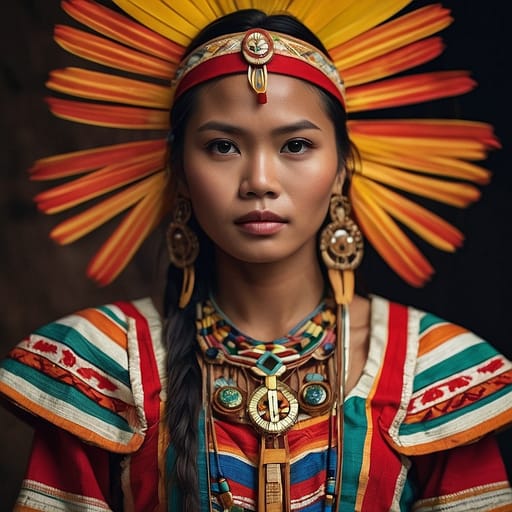
Philippine Indigenous
same region (Southeast Asia)
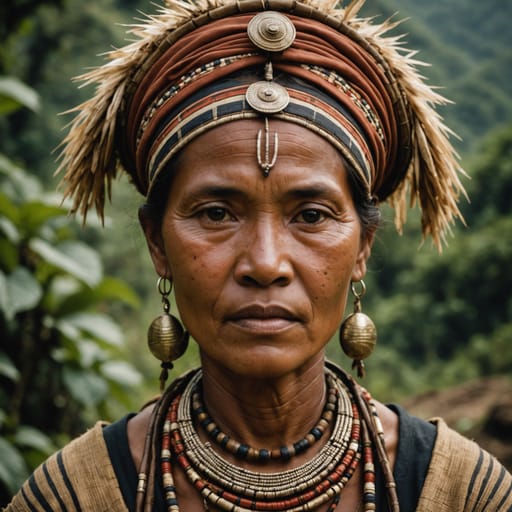
Ngada
same region (Southeast Asia)
S'gaw Karen
same region (Southeast Asia)
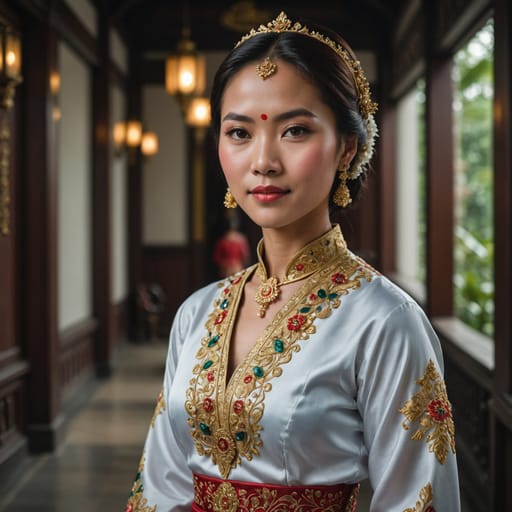
Singapore Eurasian
same region (Southeast Asia)
Typical Phunoi Phenotypes
Reference for AI generation: hair, eyes, skin, facial structure, build
Phunoi Body & Anatomy Reference
Per-feature anatomical profile for AI nude generation: Southeast Asian Austronesian / Austroasiatic phenotype
Phunoi Boobs & Breasts
The typical Phunoi bust is small-to-medium cup, modest projection, in line with the wider Southeast Asian Austronesian / Austroasiatic pattern. Areolas usually fall in the 26-38mm range, with medium-brown to dark-brown areolar pigmentation against the tan-to-medium-brown skin tone. Compared with the fuller South Asian or Polynesian bust, Phunoi breasts sit forward and are generally firm, modest projection. A faithful AI render of Phunoi tits keeps that shape and areola size.
Phunoi Ass & Hips
Butt shape among Phunoi women: small-to-medium, modest projection, narrower hip profile, over narrow-to-medium iliac crests. This follows Southeast Asian Austronesian / Austroasiatic ancestry and looks quite unlike the fuller glutes of the Pacific Islander phenotype. An accurate Phunoi ass in adult AI imagery keeps both the silhouette and the overall build (ectomorph, petite frame) instead of a generic average.
Phunoi Vagina & Pussy
Vulvar anatomy among Phunoi women: medium-brown to dark-brown labial pigmentation. Pubic hair tends to be straight-to-wavy fine-to-medium texture, in the usual inverted-triangle pattern. Both follow Southeast Asian Austronesian / Austroasiatic pigmentation, which is why Phunoi pussy renders should not fall back on a pale, sparse Western template.
Phunoi Dicks & Penis
The Phunoi cock profile, from Southeast Asian Austronesian / Austroasiatic anthropometric data: regional mean ~11cm erect; moderate girth; medium-brown shaft pigmentation. Pubic hair has a straight-to-wavy fine-to-medium texture and forms the usual inverted-V pattern. Whether Phunoi men are circumcised follows religious and cultural practice rather than phenotype.
Phunoi Body, Curves & Build
Build and curves among Phunoi women follow the Southeast Asian Austronesian / Austroasiatic pattern: ectomorph, petite frame, mean adult female BMI 20-23. Proportions matter as much as skin tone, so Phunoi figures should keep their regional height and limb ratios.
Phunoi Skin Tone & Hair Texture
The Phunoi skin range is tan to medium-brown (Fitzpatrick III-V), and hair tends to be straight-to-wavy 1A-2A, dark-brown to black. That combination marks the Southeast Asian Austronesian / Austroasiatic phenotype, and skin tone is the trait AI generators most often get wrong for Phunoi women.
Explore phenotype categories
Structured taxonomy with peer-reviewed scales · 22 anatomical categories
Erotic Poses & Sex Positions
From the pose catalog: 219 named positions with reference skeletons
Frequently asked questions about Phunoi people
Where is the Phunoi homeland?
The Phunoi homeland is Mountains of Phongsaly Province in far northern Laos, around Phongsaly town; migrant communities in Oudomxay, Luang Namtha and Vientiane. in Southeast Asia.
What language do Phunoi people speak?
Phunoi people primarily speak Phunoi (Sino-Tibetan: Tibeto-Burman, Southern Loloish, Bisoid branch); Lao is widely spoken as a second language..
What religion do Phunoi people practice?
The predominant religion among Phunoi people is Theravada Buddhism, alongside ancestor and spirit practices that were sharply reduced after the 1960s..






Make your own Phunoi images
Five a day, free, no credits to buy. The studio starts from this group's phenotype data, so you can set body type, pose and style and keep the traits accurate.
Start with Phunoi