Help us get this right
Does this portrait look right for Papel?
Nobody has judged this one yet. You would be the first.
Papel Erotic
Biombo Region (Guinea-Bissau)
Christianity / Catholicism
About Papel People
The Papel are a coastal people of Guinea-Bissau, concentrated on the Biombo peninsula and the small islands and creeks just west of Bissau itself. Their territory is low, tidal, and laced with mangrove — rice country, but rice grown in salt-touched paddies that have to be diked, drained, and replanted with a stubbornness that has shaped Papel social life for generations. Land is held through matrilineal lineages, and a man's most important kin tie is often to his mother's brother rather than his father, an arrangement that has survived four centuries of Portuguese contact, Catholic missions, and the country's long war of independence largely intact.
Their language, also called Papel (Pepel, Papei in some sources), belongs to the Bak branch of the Atlantic group within Niger–Congo, placing it close to Manjak and Mankanya — the three are sometimes spoken of together as a small linguistic cluster rather than as separate islands. Most Papel today are bilingual in Guinea-Bissau Creole, the country's lingua franca, and many of the younger generation work in or commute to Bissau, which sits a short ferry ride from Biombo's main villages.
Catholicism arrived early through Cape Verdean and Portuguese clergy and is now the majority affiliation, but it sits in active conversation with older practice rather than having displaced it. Funerals are the clearest case: a Papel funeral, the toca-tchur, is a multi-day affair with drumming, ritual fighting, animal sacrifice, and the public settling of accounts between the deceased's lineage and the community, and it is held for Catholic and non-Catholic dead alike. Sacred groves, lineage shrines, and a class of ritual specialists remain part of village life, and the local clergy has historically chosen accommodation over confrontation on most of it.
Politically, the Papel produced one of the more consequential figures of the colonial period — Bissau's last pre-independence king, Tenente Bote, whose death in 1915 at Portuguese hands is still a reference point — and the group has remained politically visible out of proportion to its numbers, which sit in the low hundreds of thousands. They are not a "minority" in the apologetic sense the word sometimes carries; in their own region they are simply the people who live there, farm the rice, bury their dead the right way, and have done so for as long as anyone has bothered to ask.
Related ethnic groups
Groups that share Papel's homeland, region, language, or religious tradition. These are likely candidates for comparative phenotype reference.
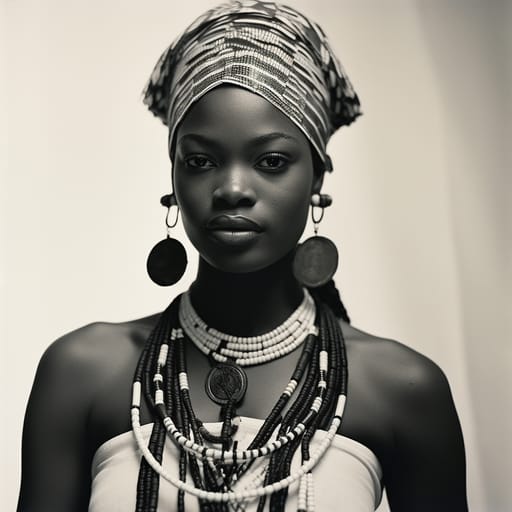
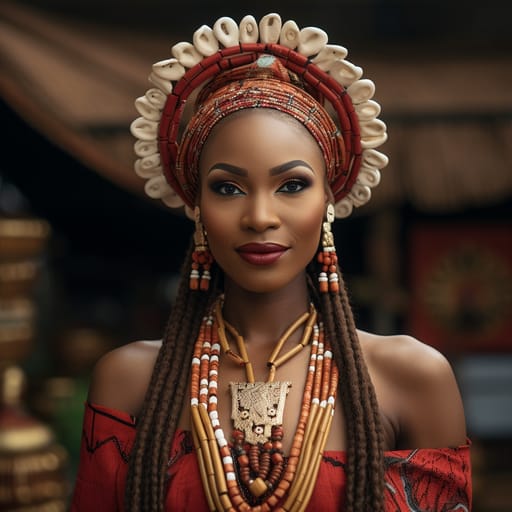
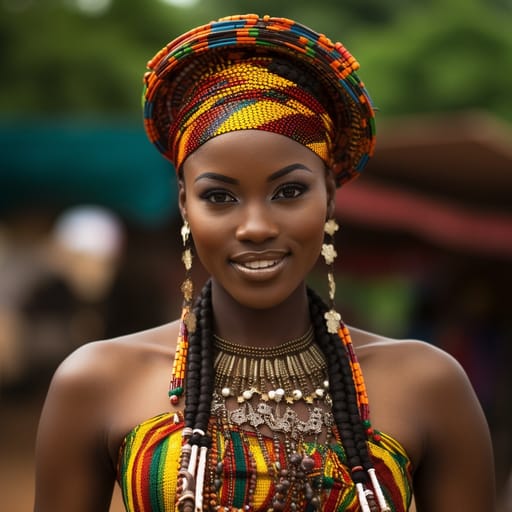
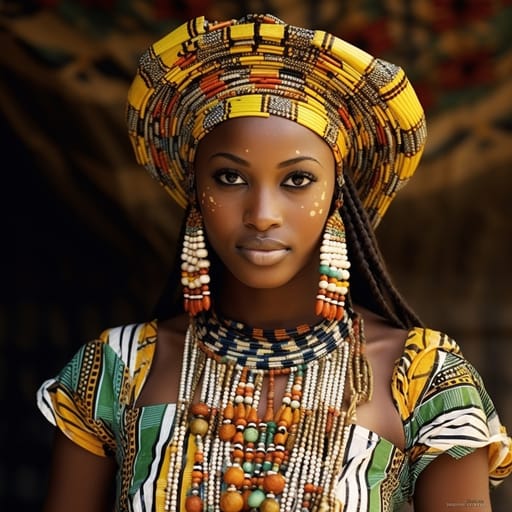
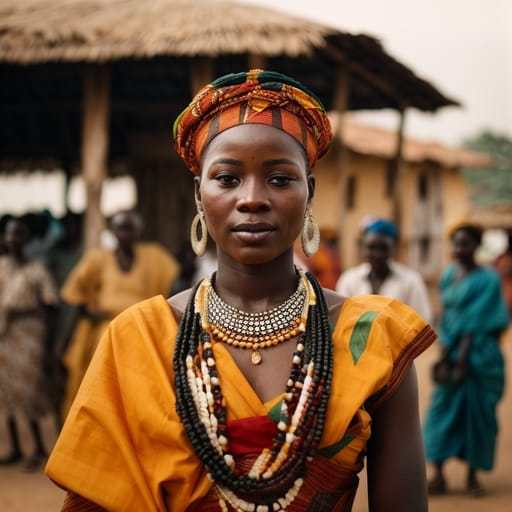
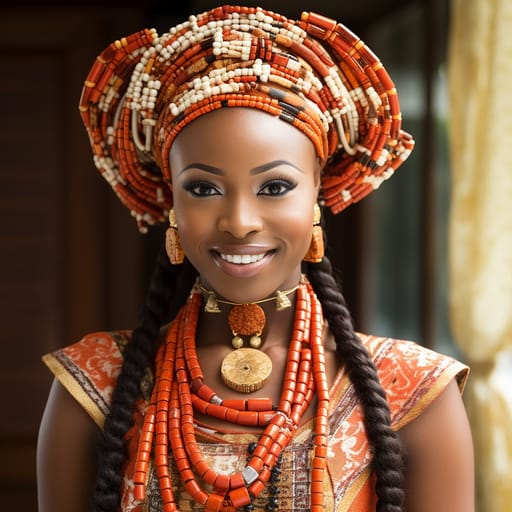
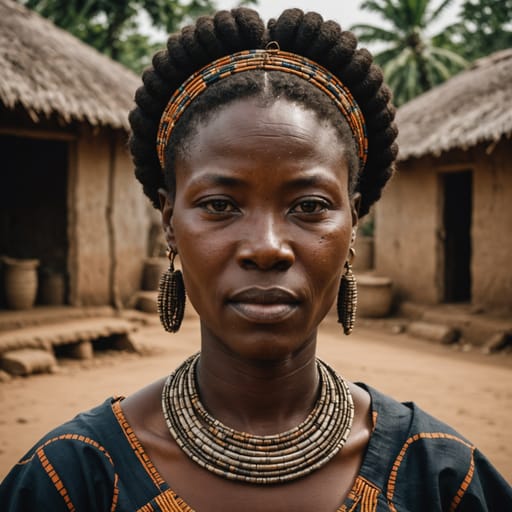
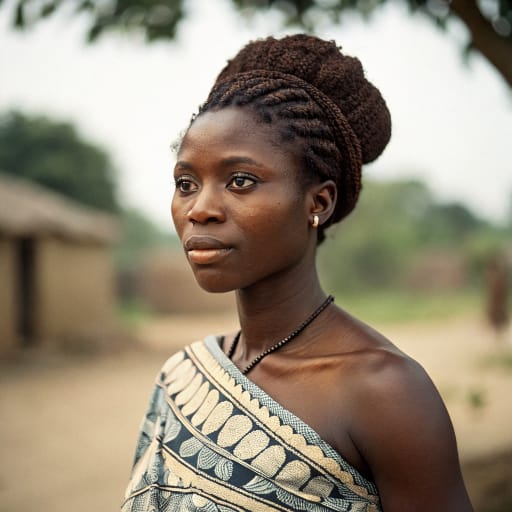
Geographic Distribution: Papel populations across 1 country
Each row is ranked by the group's share of that country's population, with the source citation drawn from published census and demographic surveys. Click through for the full per-country phenotype profile.
| Country | Share | Source |
|---|---|---|
| Guinea-Bissau | 7.0% | Guinea-Bissau 2009 Census; Papel (~7%) |
Typical Papel Phenotypes
Reference for AI generation: hair, eyes, skin, facial structure, build
The Papel are a small Atlantic-coastal population of roughly 75,000 concentrated in the Biombo Region just north of Bissau, and their phenotype reads as classic Upper Guinea coastal West African — closer in build and feature to neighboring Manjaco and Balanta than to the Mande-speaking interior. Hair is uniformly tightly coiled Type 4, predominantly 4B and 4C, dense and dark brown to true black; greying tends to come late and concentrate at the temples first.
Eye color sits in the dark brown to near-black range with no meaningful incidence of lighter eyes; the eyelid is a flat, open monolid with no epicanthic fold, set under a moderately heavy brow ridge. Skin tone runs deep — Fitzpatrick V to VI — with warm reddish-brown to cool deep-umber undertones, and the equatorial sun exposure of coastal Guinea-Bissau keeps tonal variation across a single individual minimal. You will rarely see the lighter cocoa shades common further north among Wolof or Fula populations.
Facial structure is broad and balanced rather than elongated. Noses tend toward a low, wide bridge with a rounded tip and broad alar base — wider than typical Mande or Sahelian profiles. Lips are full and well-defined on both upper and lower, with a clearly bowed cupid's arch. Cheekbones are prominent but rounded, jawlines square in men and softer in women, with full mid-face volume rather than the angular leanness of Nilotic or Sahelian groups.
Build is medium-statured by West African standards — men averaging around 170 cm, women around 160 cm — with compact, muscular proportions, broad shoulders relative to hips in men, and pronounced gluteofemoral fat distribution in women that's characteristic of coastal Atlantic populations. As seen in figures like Marcelino da Mata, frames tend toward dense and powerful rather than tall and lean. The Papel clan structure (Leopard, Frog, Hyena, and others) is totemic and social rather than phenotypic — there is no visible morphological divergence between the seven clan lines.
Papel Body & Anatomy Reference
Anatomy by feature, West African Niger-Congo phenotype
Papel Boobs & Breasts
Papel tits and boobs run medium-to-large cup, full, projecting, the classic West African Niger-Congo bust profile. Papel nipples and areolas show deep-brown to near-black areolar pigmentation against the medium-to-deep-brown skin tone, with areolar diameter typically in the 35-50mm range and forward-set positioning rather than the smaller conical Cushitic East African profile. Papel breasts trend fuller and more projecting than the East African norm, a function of the mesomorph with strong gluteal-femoral fat distribution body habitus and the mean adult female BMI 24-27. For anatomically accurate AI-generated Papel nudes the render preserves the medium-to-large cup, full, projecting shape, 35-50mm areolas with deep-brown to near-black pigmentation, and the torso proportions of the West African Niger-Congo phenotype.
Papel Ass & Hips
Papel hips and butt usually read as wide-set, full, heavily projected glutes. The skeletal base is wide iliac crests, broad gynoid pelvic pattern, high glute-to-waist ratio, the West African Niger-Congo pattern. Set against the slim narrow-hip Cushitic East African profile, the difference is easy to see, and the hip-to-waist ratio is often what identifies Papel women in photos.
Papel Vagina & Pussy
Expect deep-brown to near-black labial pigmentation, fuller labia minora on Papel women, in keeping with West African Niger-Congo ancestry. The pubic hair is tightly-coiled coarse texture, densely distributed. Coloring should run evenly from the medium-brown to deep-brown skin of the thighs to the labia, and Papel nude imagery should keep the hair's tightly-coiled coarse texture.
Papel Dicks & Penis
Papel dick and penile anatomy in adult AI generation should anchor on the regional reference data: regional mean ~14-15cm erect, above-average girth, ~13cm circumference, and deep-brown-to-near-black shaft pigmentation. The Papel cock profile reflects the West African Niger-Congo population's anthropometric measurements. The shaft pigmentation should track the surrounding medium-brown to deep-brown skin tone, and the pubic hair should keep its tightly-coiled coarse texture in the typical inverted-V escutcheon.
Papel Body, Curves & Build
Papel body type: mesomorph with strong gluteal-femoral fat distribution, with mean adult female BMI 24-27. This is the typical West African Niger-Congo build. Height range, shoulder-to-hip ratio and fat distribution all follow from it, which is what an accurate Papel nude body should show.
Papel Skin Tone & Hair Texture
Papel skin tone falls in the medium-brown to deep-brown (Fitzpatrick V-VI) band, the surface signal most often miscalibrated by generic AI nude generators. Papel hair texture is typically tight 4A-4C coil, often worn natural, braided, or relaxed, characteristic of the West African Niger-Congo phenotype. In Papel nude renders the skin should hold that band consistently across the body.
Data depth
60/100Coverage of image-grounded phenotype observations · drives AI generation diversity
- Sample size
- 10/40· 3 images
- Image quality
- 30/30· 67% high
- Confidence
- 20/20· mean 0.86
- Source diversity
- 0/10· wikipedia
- ·Small sample (n<10)
- ·Wikipedia-only source, not population-representative
Observed Distribution: Image Sample
Empirical observations from analyzed photographs · supplementary signal, not population truth
Sample: 3 images analyzed (3 wikipedia). Quality: 2 high, 0 medium, 1 low, 0 very_low. Avg analyzer confidence: 0.86.
Skin tone (Fitzpatrick): VI (33%), unclear (67%)
Hair color: black (33%), gray/white (33%), other (33%)
Hair texture: coily (67%), bald (33%)
Eye color: dark brown (67%), other (33%)
Epicanthic fold: 0% present, 100% absent, 0% unclear
Caveats: Sample size 3 is small, so the observed distribution should be treated as suggestive, not definitive. Sample is 100% Wikipedia notable people, which skews toward male, public-life, and modern figures, not population-representative.
Last aggregated: May 7, 2026
Explore phenotype categories
Structured taxonomy with peer-reviewed scales · 22 anatomical categories
Notable Papel People
1 reference figure, sourced from Wikipedia
- Marcelino da Mata, Portuguese Army Lieutenant Colonel who served in the Portuguese Colonial War …
Erotic Poses & Sex Positions
From the pose catalog: 219 named positions with reference skeletons
Frequently asked questions about Papel people
Where is the Papel homeland?
The Papel homeland is Biombo Region (Guinea-Bissau) in Western Africa.
What countries do Papel people live in?
Papel populations are documented across 1 country: Guinea-Bissau.
What language do Papel people speak?
Papel people primarily speak Niger-Congo / Atlantic / Senegambian / Papel.
What religion do Papel people practice?
The predominant religion among Papel people is Christianity / Catholicism.






Make your own Papel images
Five a day, free, no credits to buy. The studio starts from this group's phenotype data, so you can set body type, pose and style and keep the traits accurate.
Start with Papel