Help us get this right
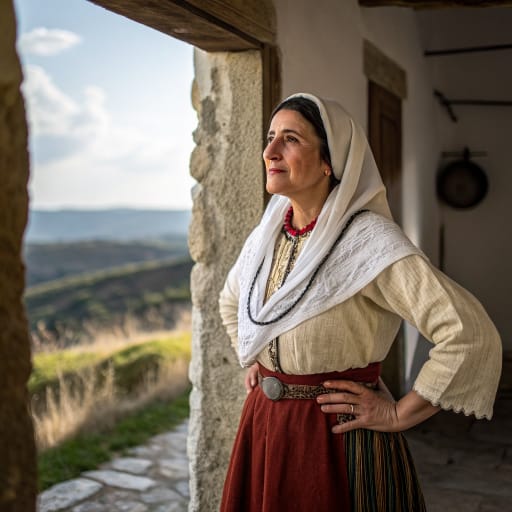
Does this portrait look right for Morlachs?
Nobody has judged this one yet. You would be the first.
Morlachs Erotic
The Dalmatian hinterland, Lika and western Herzegovina, in present-day Croatia and Bosnia and Herzegovina.
Originally a Balkan Romance idiom related to Istro-Romanian (Indo-European, Eastern Romance), replaced from the 16th century by Shtokavian and Chakavian South Slavic (Indo-European, Slavic).
Christian, both Eastern Orthodox and Roman Catholic, divided roughly along the Ottoman and Venetian sides of the frontier.
A branch of the Balkan Vlach pastoralists; ancestral to the Croats and Serbs of the Dalmatian hinterland, Lika and Herzegovina.
About Morlachs People
The Morlachs were the herders of the Dalmatian back country, and for four hundred years everyone had a name for them except themselves. The word is an exonym, most likely from the Greek for "black Vlachs," and it turns up in Venetian and Ragusan documents from the middle of the 14th century onward, attached to a bilingual pastoralist community in the mountains behind the Adriatic coast. They moved their sheep on a seasonal circuit, high pasture in summer, lowland grazing in winter, and the coastal cities treated them as useful, necessary and slightly alarming: suppliers of cheese, wool and fighting men, and a standing problem for anyone trying to fix a border. Their original speech was Balkan Romance, a cousin of the language that survives today as Istro-Romanian. By the early 16th century it had mostly gone. Slavic replaced it, and the label followed the community rather than the language, so that Morlach came to mean the Slavic-speaking population of the hinterland, Orthodox and Catholic alike.
What made them consequential was geography. Their pastures straddled the Venetian and Ottoman frontier, and through the Cretan and Morean wars of the 17th century both empires armed them as irregulars and raiders, then resettled whichever villages survived. Clans switched sides, sometimes more than once, and the map of who lived where in Lika and the Zagora was largely redrawn by those movements. The 18th century turned them into a literary property: Alberto Fortis devoted a long chapter of his Viaggio in Dalmazia (1774) to Morlach customs and printed the ballad Hasanaginica, which Goethe translated and Herder anthologized. For a generation, educated Europe read the Morlach as its nearest available noble savage, and Nodier and Merimee wrote imitations of songs they had never heard. Fortis also recorded pobratimstvo, a sworn brotherhood blessed at the altar with its own liturgy, which bound men outside of kinship in a society where kinship decided nearly everything. Back in Dalmatia the word itself soured into an insult for a coarse highlander, and once Croat and Serb national identities hardened in the 19th century, nobody claimed it. There are no Morlachs now. Their descendants are the Croats and Serbs of the Dalmatian hinterland, Lika and western Herzegovina, and what survives most audibly is the singing: the guslar reciting epic to a one-string fiddle, and ojkanje, the strained shouted polyphony still heard in those same hills.
Related ethnic groups
Groups that share Morlachs's homeland, region, language, or religious tradition. These are likely candidates for comparative phenotype reference.
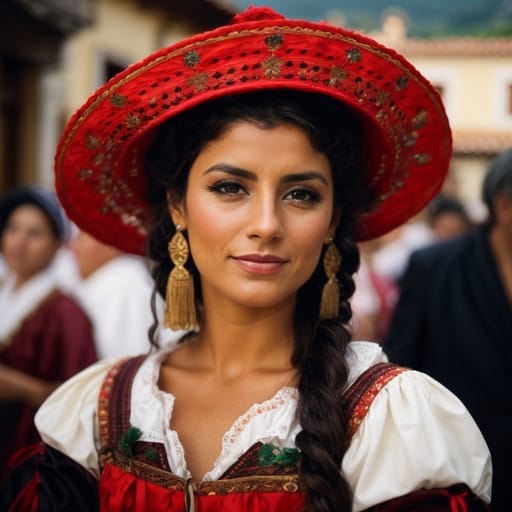
Basques
same region (Southern Europe)
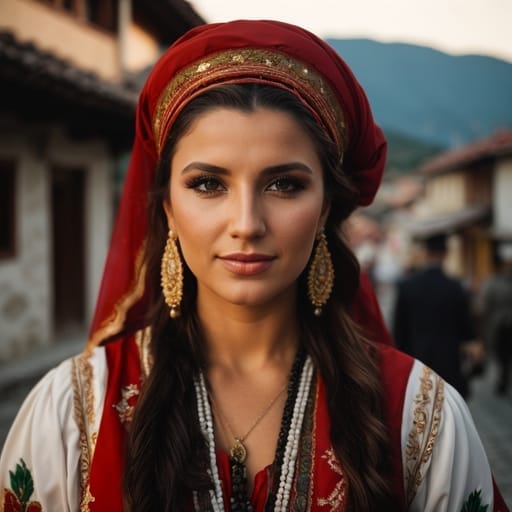
Bosniaks
same region (Southern Europe)
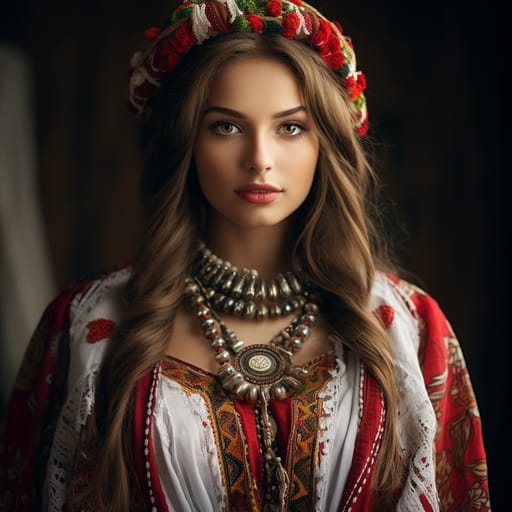
Moldovans
same region (Southern Europe)
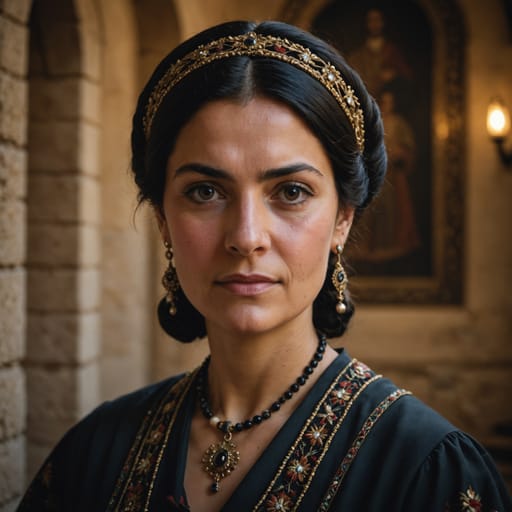
Maltese
same region (Southern Europe)
Lucuidonenses
same region (Southern Europe)
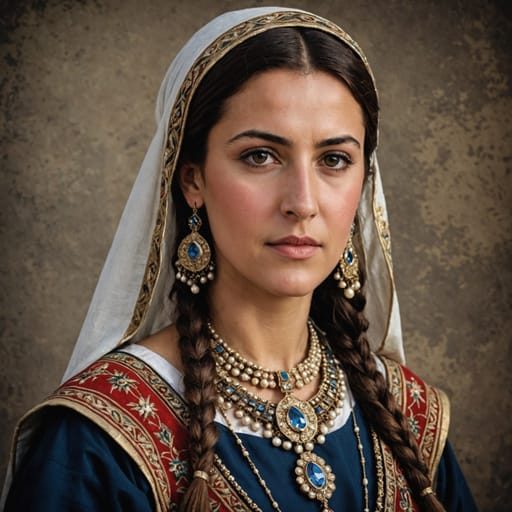
Greek Turkish
same region (Southern Europe)
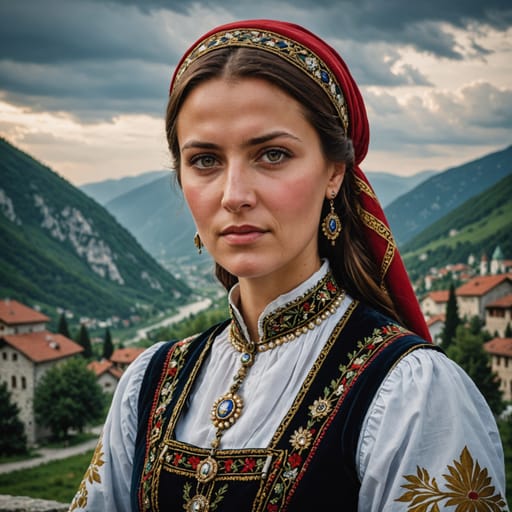
Bosnia Other
same region (Southern Europe)
Turduli
same region (Southern Europe)
Typical Morlachs Phenotypes
Reference for AI generation: hair, eyes, skin, facial structure, build
Morlachs Body & Anatomy Reference
Anatomy by feature, Southern European / Mediterranean phenotype
Morlachs Boobs & Breasts
The typical Morlachs bust is medium-to-large cup, full, moderate-to-high projection, in line with the wider Southern European / Mediterranean pattern. Areolas usually fall in the 32-46mm range, with medium-brown to dark-brown areolar pigmentation against the olive-to-light-brown skin tone. Compared with the lighter pigmentation of the Northern European bust, Morlachs breasts sit forward and are generally full and projecting, generally the classic Mediterranean curvy bust profile. A faithful AI render of Morlachs tits keeps that shape and areola size.
Morlachs Ass & Hips
Butt shape among Morlachs women: medium-to-full, moderate-to-high projection, broader hip profile, over medium-to-wide iliac crests, full gluteal-femoral fat distribution. This follows Southern European / Mediterranean ancestry and looks quite unlike the slim Northern European narrow-hip pattern. An accurate Morlachs ass in adult AI imagery keeps both the silhouette and the overall build (mesomorph with full hip-and-bust deposition) instead of a generic average.
Morlachs Vagina & Pussy
Vulvar anatomy among Morlachs women: medium-brown to dark-brown labial pigmentation, fuller labia minora. Pubic hair tends to be wavy-to-curly medium-coarse dark texture, dense distribution, in the usual inverted-triangle pattern. Both follow Southern European / Mediterranean pigmentation, which is why Morlachs pussy renders should not fall back on a pale, sparse Western template.
Morlachs Dicks & Penis
The Morlachs cock profile, from Southern European / Mediterranean anthropometric data: regional mean ~13-14cm erect; moderate girth; medium-brown shaft pigmentation. Pubic hair has a wavy-to-curly medium-coarse dark texture and forms the usual inverted-V pattern. Whether Morlachs men are circumcised follows religious and cultural practice rather than phenotype.
Morlachs Body, Curves & Build
Build and curves among Morlachs women follow the Southern European / Mediterranean pattern: mesomorph with full hip-and-bust deposition, mean adult female BMI 24-28. Proportions matter as much as skin tone, so Morlachs figures should keep their regional height and limb ratios.
Morlachs Skin Tone & Hair Texture
The Morlachs skin range is olive to medium (Fitzpatrick III-IV), and hair tends to be wavy-to-curly 2B-3B, dark-brown to black. That combination marks the Southern European / Mediterranean phenotype, and skin tone is the trait AI generators most often get wrong for Morlachs women.
Explore phenotype categories
Structured taxonomy with peer-reviewed scales · 22 anatomical categories
Erotic Poses & Sex Positions
From the pose catalog: 219 named positions with reference skeletons
Frequently asked questions about Morlachs people
Where is the Morlachs homeland?
The Morlachs homeland is The Dalmatian hinterland, Lika and western Herzegovina, in present-day Croatia and Bosnia and Herzegovina. in Southern Europe.
What language do Morlachs people speak?
Morlachs people primarily speak Originally a Balkan Romance idiom related to Istro-Romanian (Indo-European, Eastern Romance), replaced from the 16th century by Shtokavian and Chakavian South Slavic (Indo-European, Slavic)..
What religion do Morlachs people practice?
The predominant religion among Morlachs people is Christian, both Eastern Orthodox and Roman Catholic, divided roughly along the Ottoman and Venetian sides of the frontier..






Make your own Morlachs images
Five a day, free, no credits to buy. The studio starts from this group's phenotype data, so you can set body type, pose and style and keep the traits accurate.
Start with Morlachs