Help us get this right
Does this portrait look right for Mocoví?
Nobody has judged this one yet. You would be the first.
Mocoví Erotic
Southern Gran Chaco, in the Argentine provinces of Chaco and Santa Fe, with urban communities in Rosario, Santa Fe city and Resistencia.
Mocoví, also called Moqoit la'qaatqa (Guaycuruan family); Spanish is dominant in daily life.
Roman Catholicism and, increasingly, Pentecostal churches, coexisting with shamanic healing and older spirit beliefs.
One of the Guaycurú peoples, with the Qom (Toba), Pilagá, Abipón and Kadiwéu; historically divided into northern (Chaco) and southern (Santa Fe) groupings.
About Mocoví People
The Moqoit, better known in Spanish as Mocoví, are a Chaco people who spent roughly two centuries as one of the most effective mounted forces on the southern frontier of the Spanish empire, and who now live largely as small farmers, laborers and townspeople across the provinces of Chaco and Santa Fe in northern Argentina. Their country is the flat southern Gran Chaco: thorn forest and quebracho, palm savanna, rivers that flood in summer and shrink to cracked mud in winter. Their language belongs to the Guaycuruan family, which makes them close relatives of the Qom, also called Toba, and the Pilagá to the north, kin to the Abipón who did not survive the eighteenth century as a distinct people, and more distant cousins of the Kadiwéu across the Brazilian border. Guaycuruan has nothing to do with Guaraní or Quechua, the two indigenous languages most Argentines can name, and that gap matters: the Chaco was its own world with its own politics, not an outlying district of somebody else's empire.
Horses reached them in the seventeenth century and rearranged everything. Bands that had hunted and fished on foot became raiders who could hit the settlements around Santa Fe and Santiago del Estero and be gone before a militia formed. The Spanish answer was the mission, and the best record of that period comes from an unlikely source: Florián Paucke, a Jesuit from Silesia, who lived at San Javier on the Paraná from 1749 until the order was expelled in 1767 and left a memoir illustrated with his own watercolors of Mocoví faces, body paint, fishing weirs and dances. The nineteenth century went badly. Army campaigns from the 1880s took the land, and the cotton and sugar economy that followed turned independent people into seasonal labor. In 1904 the Mocoví of San Javier rose in a revolt with millenarian overtones, remembered in Argentina as the last malón, and were shot down. In 1924 at Napalpí, police and settlers massacred Moqoit and Qom cotton workers who had gone on strike, a killing Argentine courts finally judged a crime against humanity in 2022. Around twenty thousand people identify as Mocoví today. The language is endangered, most fluent speakers being older, but it is no longer invisible: Chaco province recognizes Moqoit, Qom and Wichí alongside Spanish as official languages, and bilingual schools teach in it. Most families are Catholic or Pentecostal, and the churches coexist with older practice rather than having replaced it, since healers and the spirit owners of animals and water still have work to do.
Related ethnic groups
Groups that share Mocoví's homeland, region, language, or religious tradition. These are likely candidates for comparative phenotype reference.
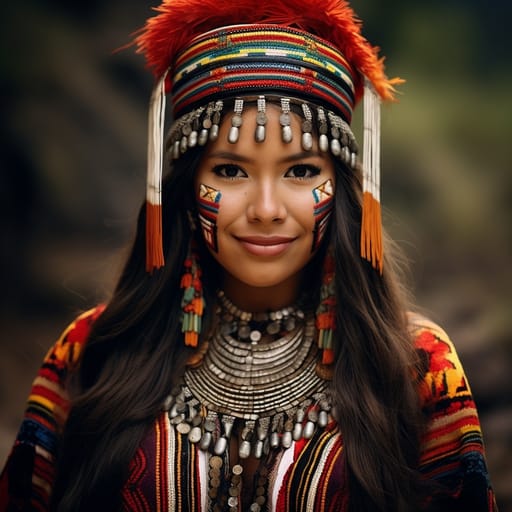
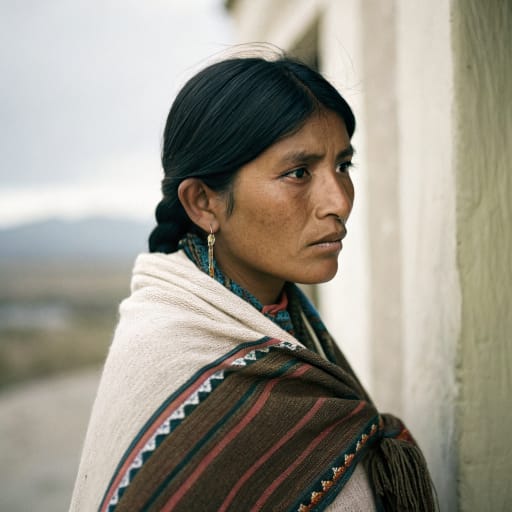
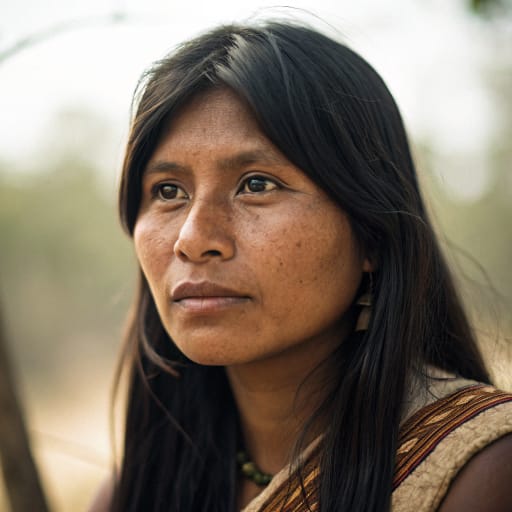
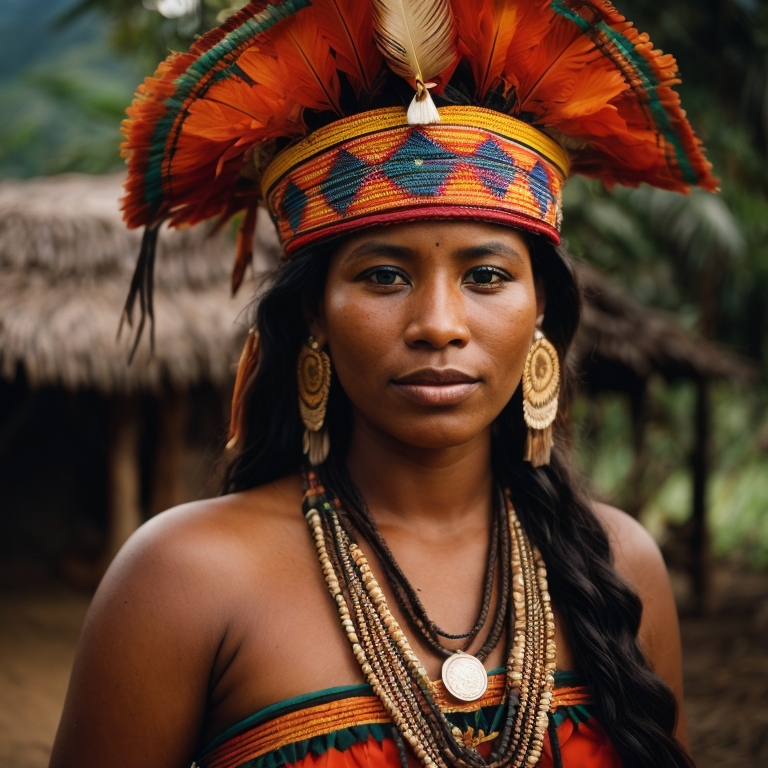
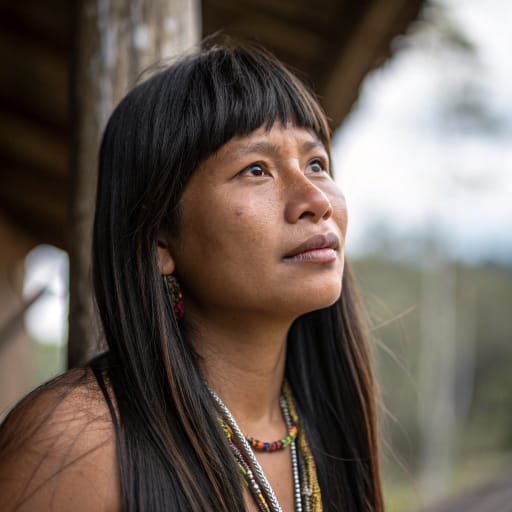
Typical Mocoví Phenotypes
Reference for AI generation: hair, eyes, skin, facial structure, build
Mocoví Body & Anatomy Reference
South American Indigenous / European-Mestizo / Afro-Latino mix phenotype: anatomy reference for AI nude generation
Mocoví Boobs & Breasts
The typical Mocoví bust is medium-to-large cup, full, high projection, in line with the wider South American Indigenous / European-Mestizo / Afro-Latino mix pattern. Areolas usually fall in the 32-46mm range, with medium-brown to dark-brown areolar pigmentation against the tan-to-deep-brown skin tone. Compared with the smaller bust profile of Andean Indigenous sub-populations, Mocoví breasts sit forward and are generally the classic Brazilian / Latina curvy bust profile in lowland populations; smaller and shorter-set in Andean Indigenous populations. A faithful AI render of Mocoví tits keeps that shape and areola size.
Mocoví Ass & Hips
Butt shape among Mocoví women: full, high projection, the famous Brazilian / Latina bunda profile, over wide iliac crests, very full gluteal-femoral fat deposition (the hallmark Brazilian / Latina hip-to-waist ratio). This follows South American Indigenous / European-Mestizo / Afro-Latino mix ancestry and looks quite unlike the slim narrow-hip East Asian profile. An accurate Mocoví ass in adult AI imagery keeps both the silhouette and the overall build (endomorph-to-mesomorph with high gluteal-femoral deposition) instead of a generic average.
Mocoví Vagina & Pussy
Vulvar anatomy among Mocoví women: medium-brown to dark-brown labial pigmentation, fuller labia minora. Pubic hair tends to be wavy-to-curly coarse dark texture, dense distribution, in the usual inverted-triangle pattern. Both follow South American Indigenous / European-Mestizo / Afro-Latino mix pigmentation, which is why Mocoví pussy renders should not fall back on a pale, sparse Western template.
Mocoví Dicks & Penis
The Mocoví cock profile, from South American Indigenous / European-Mestizo / Afro-Latino mix anthropometric data: regional mean ~13cm erect; moderate-to-above-average girth; medium-brown shaft pigmentation. Pubic hair has a wavy-to-curly coarse dark texture and forms the usual inverted-V pattern. Whether Mocoví men are circumcised follows religious and cultural practice rather than phenotype.
Mocoví Body, Curves & Build
Build and curves among Mocoví women follow the South American Indigenous / European-Mestizo / Afro-Latino mix pattern: endomorph-to-mesomorph with high gluteal-femoral deposition, mean adult female BMI 25-28. Proportions matter as much as skin tone, so Mocoví figures should keep their regional height and limb ratios.
Mocoví Skin Tone & Hair Texture
The Mocoví skin range is tan to deep-brown (Fitzpatrick III-VI), and hair tends to be straight-to-curly 1A-3C, varies widely by ancestral composition. That combination marks the South American Indigenous / European-Mestizo / Afro-Latino mix phenotype, and skin tone is the trait AI generators most often get wrong for Mocoví women.
Explore phenotype categories
Structured taxonomy with peer-reviewed scales · 22 anatomical categories
Erotic Poses & Sex Positions
From the pose catalog: 219 named positions with reference skeletons
Frequently asked questions about Mocoví people
Where is the Mocoví homeland?
The Mocoví homeland is Southern Gran Chaco, in the Argentine provinces of Chaco and Santa Fe, with urban communities in Rosario, Santa Fe city and Resistencia. in South America.
What language do Mocoví people speak?
Mocoví people primarily speak Mocoví, also called Moqoit la'qaatqa (Guaycuruan family); Spanish is dominant in daily life..
What religion do Mocoví people practice?
The predominant religion among Mocoví people is Roman Catholicism and, increasingly, Pentecostal churches, coexisting with shamanic healing and older spirit beliefs..






Make your own Mocoví images
Five a day, free, no credits to buy. The studio starts from this group's phenotype data, so you can set body type, pose and style and keep the traits accurate.
Start with Mocoví