Help us get this right
Does this portrait look right for Mardijkers?
Nobody has judged this one yet. You would be the first.
Mardijkers Erotic
Batavia, now Jakarta, and other Dutch East India Company ports in the Indonesian archipelago; Kampung Tugu in North Jakarta is the surviving descendant settlement
Mardijker Portuguese creole (Portuguese-based creole, kin to Malacca's Papia Kristang), later Malay and Betawi Malay (Austronesian)
Protestant, Dutch Reformed, converted under Company pressure from Portuguese Catholicism
Absorbed into the Betawi and Indo Eurasian populations; the Tugu community of North Jakarta is the distinct surviving branch
About Mardijkers People
The Mardijkers were a freed-slave class of Batavia and a few other Dutch East India Company towns, at their peak from the middle of the seventeenth century through the eighteenth, and dissolved as a legal category in the nineteenth. They were not a people who arrived somewhere and stayed. They were assembled: men and women enslaved by the Portuguese in India, Ceylon, Bengal, Malacca and along the East African coast, taken again when the Dutch seized those places, and then released into a colonial city that wanted a loyal population who were neither slaves nor Europeans. The name comes through Malay merdeka, free, and behind that Sanskrit maharddhika. Their descendants are folded into the Betawi of Jakarta and into the Indo Eurasian community, with one village, Kampung Tugu on the north edge of the city, still holding the thread in the open.
What made them recognizable was the Portuguese they carried without ever having seen Portugal. A Portuguese creole, not the speech of Lisbon but a trade tongue with Asian grammar underneath it, was the everyday language of Batavia's streets for well over a century, to the steady irritation of Dutch officials who kept legislating for Dutch or Malay and kept losing. Church followed language. The Company pressed them out of Catholicism into the Reformed fold and built them the Portugese Buitenkerk, still standing as Gereja Sion, where sermons were preached in Portuguese into the early nineteenth century. They took Portuguese surnames, mustered militia companies under their own captains, and dressed the part. A mid seventeenth century painting of the market outside Batavia castle shows a Mardijker couple: the man in a broad hat and long coat with a sword, the woman beside him in sarong and kebaya. European above, Asian below, which is about as good a one line summary of the group as anyone has managed.
The legacy that lasted best is music. Keroncong, the oldest surviving popular form in Indonesia, descends from what the Mardijkers played on small Portuguese-derived lutes, and Tugu families still perform it as inheritance rather than revival. They also keep their own turn-of-the-year customs: rabo-rabo, in which households join in a chain going door to door, and mandi-mandi, a face-powdering rite of forgiveness once the new year has come in.
Related ethnic groups
Groups that share Mardijkers's homeland, region, language, or religious tradition. These are likely candidates for comparative phenotype reference.
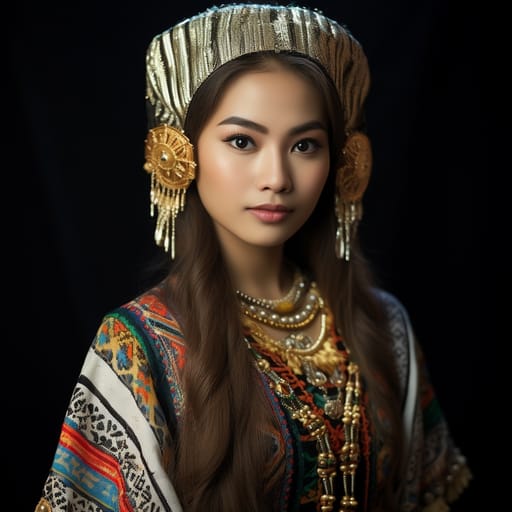
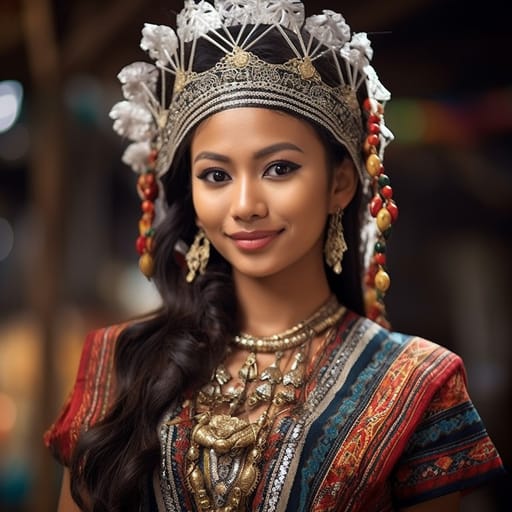
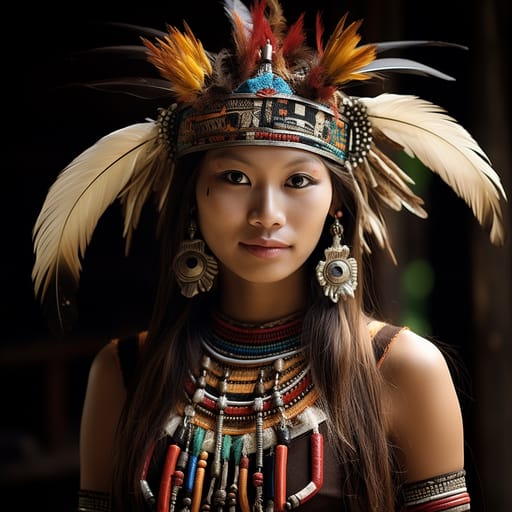
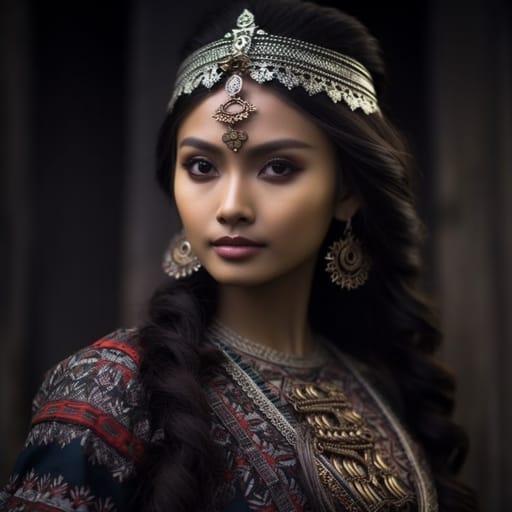
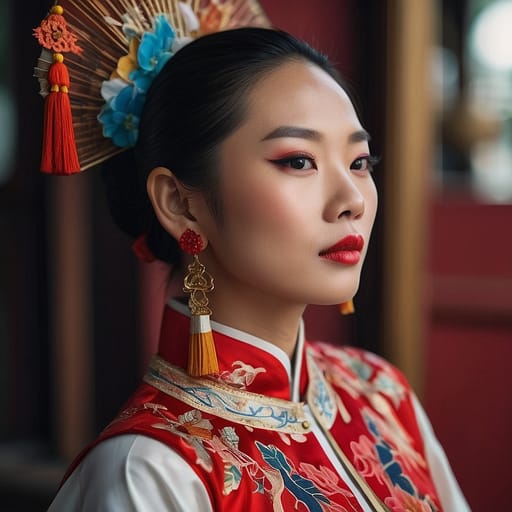
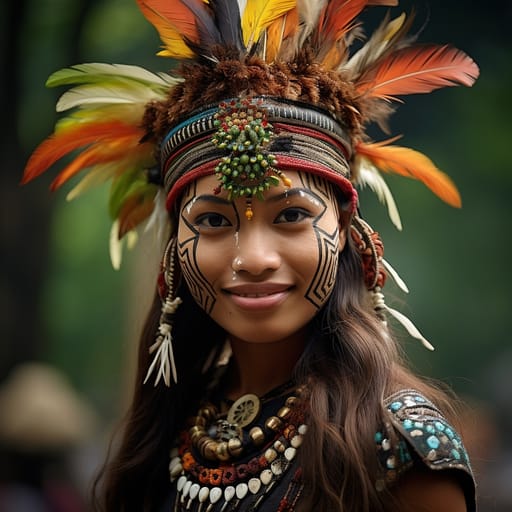
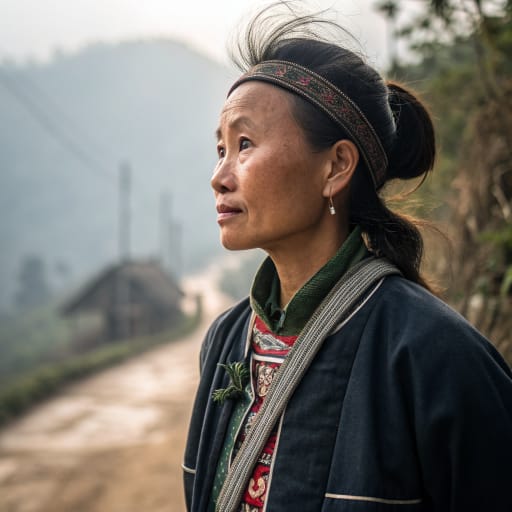
Typical Mardijkers Phenotypes
Reference for AI generation: hair, eyes, skin, facial structure, build
Mardijkers Body & Anatomy Reference
Per-feature anatomical profile for AI nude generation: Southeast Asian Austronesian / Austroasiatic phenotype
Mardijkers Boobs & Breasts
Mardijkers boobs follow the Southeast Asian Austronesian / Austroasiatic profile: small-to-medium cup, modest projection. Areolar diameter is usually 26-38mm, and the coloring is medium-brown to dark-brown areolar pigmentation against the tan-to-medium-brown skin tone. Breast shape tracks body composition (ectomorph, petite frame, mean adult female BMI 20-23), so Mardijkers breasts tend to be firm, modest projection. Expect a forward-set shape, not the fuller South Asian or Polynesian bust.
Mardijkers Ass & Hips
Mardijkers ass and hip morphology presents as small-to-medium, modest projection, narrower hip profile, distinctly different from the fuller glutes of the Pacific Islander phenotype. The Mardijkers pelvic profile shows narrow-to-medium iliac crests, anchored in the Southeast Asian Austronesian / Austroasiatic skeletal pattern. Mardijkers butt shots in adult AI imagery should render the small-to-medium, modest projection, narrower hip profile silhouette with the overall build (ectomorph, petite frame) and the fat distribution typical of the Southeast Asian Austronesian / Austroasiatic phenotype.
Mardijkers Vagina & Pussy
Mardijkers pussy anatomy typically shows medium-brown to dark-brown labial pigmentation. Pubic hair is usually straight-to-wavy fine-to-medium texture. In AI-generated Mardijkers nudes, labial color should blend into the tan to medium-brown skin with a gradual transition, and the hair should keep its straight-to-wavy fine-to-medium texture.
Mardijkers Dicks & Penis
Penis reference for Mardijkers men: regional mean ~11cm erect, moderate girth. Coloring: medium-brown shaft pigmentation. An accurate Mardijkers cock in AI imagery matches the surrounding tan to medium-brown skin rather than a generic porn default. Circumcision depends on religion and custom, not ancestry.
Mardijkers Body, Curves & Build
The Mardijkers figure is generally ectomorph, petite frame, with mean adult female BMI 20-23, characteristic of Southeast Asian Austronesian / Austroasiatic ancestry. AI image tools tend to flatten regional body types into a few stock shapes; here the Mardijkers build is kept as its own reference.
Mardijkers Skin Tone & Hair Texture
Skin: tan to medium-brown (Fitzpatrick III-V). Hair: straight-to-wavy 1A-2A, dark-brown to black. Both are typical of Southeast Asian Austronesian / Austroasiatic ancestry. The most common mistake in AI nudes of Mardijkers women is a body rendered lighter than the face.
Explore phenotype categories
Structured taxonomy with peer-reviewed scales · 22 anatomical categories
Erotic Poses & Sex Positions
From the pose catalog: 219 named positions with reference skeletons
Frequently asked questions about Mardijkers people
Where is the Mardijkers homeland?
The Mardijkers homeland is Batavia, now Jakarta, and other Dutch East India Company ports in the Indonesian archipelago; Kampung Tugu in North Jakarta is the surviving descendant settlement in Southeast Asia.
What language do Mardijkers people speak?
Mardijkers people primarily speak Mardijker Portuguese creole (Portuguese-based creole, kin to Malacca's Papia Kristang), later Malay and Betawi Malay (Austronesian).
What religion do Mardijkers people practice?
The predominant religion among Mardijkers people is Protestant, Dutch Reformed, converted under Company pressure from Portuguese Catholicism.






Make your own Mardijkers images
Five a day, free, no credits to buy. The studio starts from this group's phenotype data, so you can set body type, pose and style and keep the traits accurate.
Start with Mardijkers