No portrait yet
Mander Erotic
Inland lowlands around the Tor River in Sarmi Regency, Papua province, Indonesia
Mander (Tor-Kwerba, Tor branch); Indonesian and Papuan Malay widely used
Christian, predominantly Protestant
One of the small Tor-speaking peoples of the Sarmi hinterland, alongside the Berik, Kwesten, Bonerif and Itik
About Mander People
The Mander are one of the smallest peoples in Indonesian Papua. Two things set them apart: a language of their own, and a piece of lowland country in the hinterland of Sarmi Regency, inland from New Guinea's north coast. Few people outside the regency know the name. Inside it, the Mander are one of a group of very small communities around the Tor River, and each of those communities keeps its own language.
Their language is also called Mander. It belongs to the Tor branch of the Tor-Kwerba family. Tor-Kwerba is one of the many Papuan language families of New Guinea, which scholars have not shown to be related to each other. Mander's closest relatives are spoken nearby, by neighbors such as the Berik, Kwesten, Bonerif and Itik. Go toward the coast and things change. The villages around Sarmi speak Austronesian languages, which are not related to Mander at all, so the Mander live near the line between two separate language families. Indonesian is used on top of both, along with the Papuan Malay you hear in markets, schools, offices and churches. Mander has very few speakers and counts as endangered. Like its Tor neighbors, it is under steady pressure from the national language.
Religious life is Christian, mostly Protestant, the result of missionary work across northern Papua over the twentieth century. The church is a fixture of village life, but it exists alongside older duties to clan and to customary land. In Papua that land is held by the group, not by individuals, and it is still central to how families understand where they belong. As elsewhere in these lowlands, food starts with the sago palm, along with gardens, river fish and game from the forest.
The big turning points came from outside. In 1944 American forces landed on the coast near Sarmi and fought the Japanese there and on the offshore Wakde islands. Dutch rule over western New Guinea ended in 1962, and after a short United Nations administration the territory passed to Indonesia. In 2002 Sarmi was split off from Jayapura Regency to become a regency of its own, which put the Tor communities under a government based in Sarmi town. For a people this small, the real question now is whether they carry on: whether children keep speaking Mander at home, and whether the land stays in Mander hands.
Related ethnic groups
Groups that share Mander's homeland, region, language, or religious tradition. These are likely candidates for comparative phenotype reference.
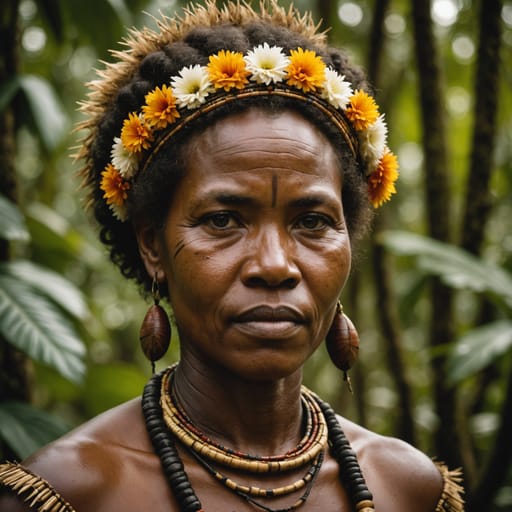
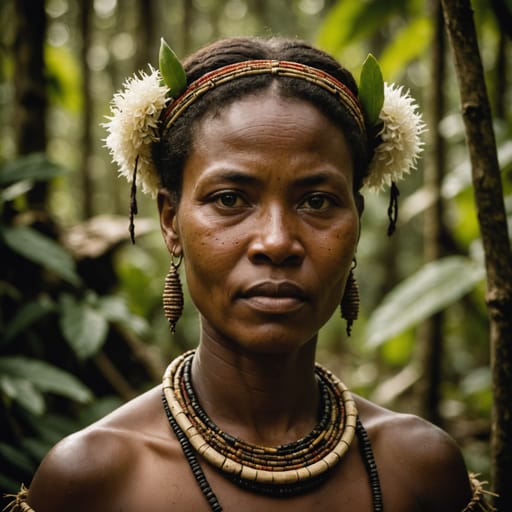
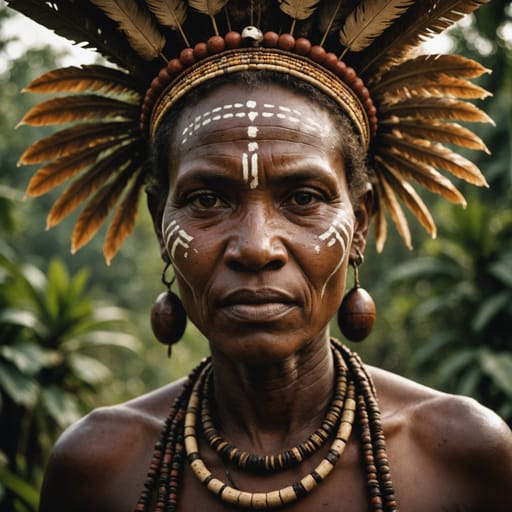
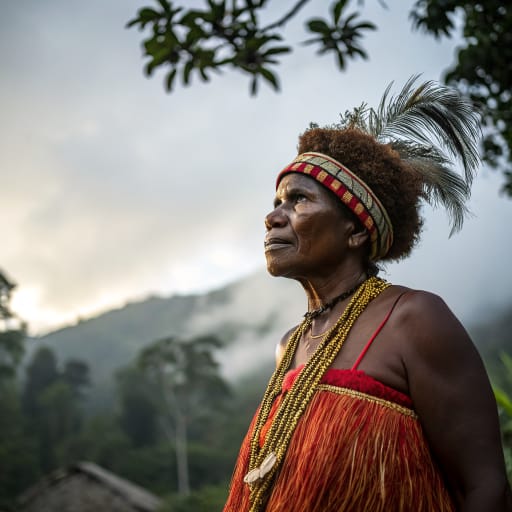
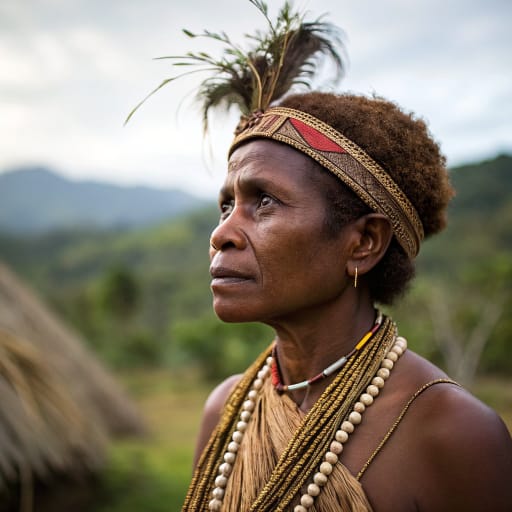
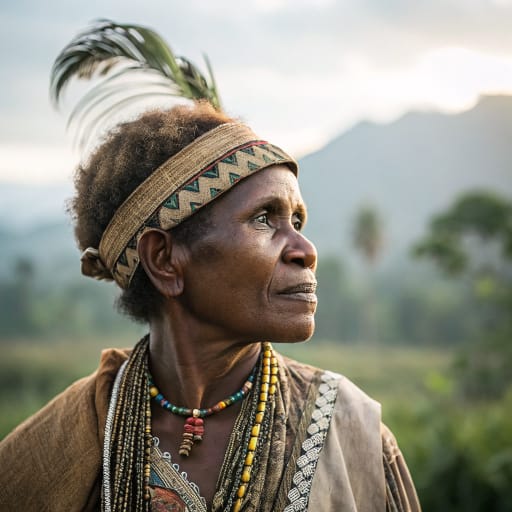
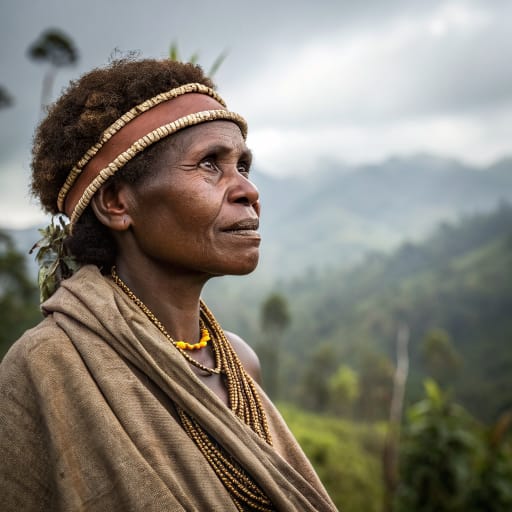
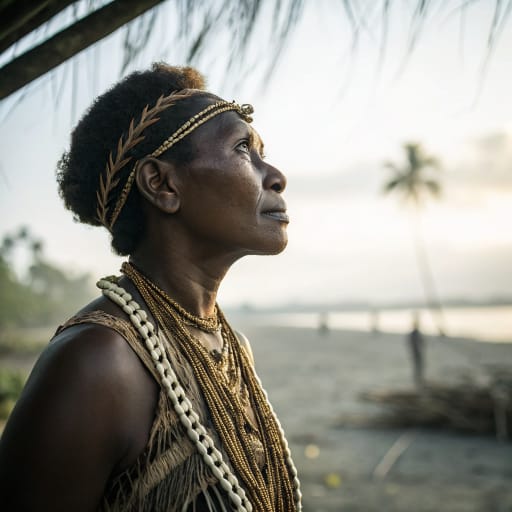
Typical Mander Phenotypes
Reference for AI generation: hair, eyes, skin, facial structure, build
Mander Body & Anatomy Reference
Anatomy by feature, Melanesian / Papuan phenotype
Mander Boobs & Breasts
The typical Mander bust is medium-to-large cup, full, moderate projection, in line with the wider Melanesian / Papuan pattern. Areolas usually fall in the 32-46mm range, with deep-brown to near-black areolar pigmentation against the deep-brown skin tone. Compared with the smaller Aboriginal Australian bust, Mander breasts sit forward and are generally full, moderate projection. A faithful AI render of Mander tits keeps that shape and areola size.
Mander Ass & Hips
Butt shape among Mander women: medium-to-full, moderate-to-high projection, over medium-to-wide iliac crests, full gluteal-femoral fat deposition. This follows Melanesian / Papuan ancestry and looks quite unlike the slim Aboriginal Australian narrow-hip profile. An accurate Mander ass in adult AI imagery keeps both the silhouette and the overall build (mesomorph) instead of a generic average.
Mander Vagina & Pussy
Vulvar anatomy among Mander women: deep-brown labial pigmentation. Pubic hair tends to be tightly-coiled coarse texture, dense distribution, in the usual inverted-triangle pattern. Both follow Melanesian / Papuan pigmentation, which is why Mander pussy renders should not fall back on a pale, sparse Western template.
Mander Dicks & Penis
The Mander cock profile, from Melanesian / Papuan anthropometric data: regional mean ~13cm erect; moderate-to-above-average girth; deep-brown shaft pigmentation. Pubic hair has a tightly-coiled coarse texture and forms the usual inverted-V pattern. Whether Mander men are circumcised follows religious and cultural practice rather than phenotype.
Mander Body, Curves & Build
Build and curves among Mander women follow the Melanesian / Papuan pattern: mesomorph, mean adult female BMI 25-28. Proportions matter as much as skin tone, so Mander figures should keep their regional height and limb ratios.
Mander Skin Tone & Hair Texture
The Mander skin range is deep-brown (Fitzpatrick V-VI); the distinctive blond-hair-on-dark-skin trait widely documented in Solomon Islands populations, and hair tends to be tight 4A-4C coil; the blond-on-dark trait is a TYRP1 variant unique to Melanesia. That combination marks the Melanesian / Papuan phenotype, and skin tone is the trait AI generators most often get wrong for Mander women.
Explore phenotype categories
Structured taxonomy with peer-reviewed scales · 22 anatomical categories
Erotic Poses & Sex Positions
From the pose catalog: 219 named positions with reference skeletons
Frequently asked questions about Mander people
Where is the Mander homeland?
The Mander homeland is Inland lowlands around the Tor River in Sarmi Regency, Papua province, Indonesia in Melanesia.
What language do Mander people speak?
Mander people primarily speak Mander (Tor-Kwerba, Tor branch); Indonesian and Papuan Malay widely used.
What religion do Mander people practice?
The predominant religion among Mander people is Christian, predominantly Protestant.






Make your own Mander images
Five a day, free, no credits to buy. The studio starts from this group's phenotype data, so you can set body type, pose and style and keep the traits accurate.
Start with Mander