Help us get this right
Does this portrait look right for Machinere?
Nobody has judged this one yet. You would be the first.
Machinere Erotic
Upper Iaco and Purus river basin in Acre state, Brazil, chiefly the Mamoadate Indigenous Land; smaller communities in Pando department, Bolivia
Machinere (Arawakan, Purus branch; closely related to Yine/Piro); Portuguese in Brazil, Spanish in Bolivia
Indigenous shamanic traditions including ritual ayahuasca use, alongside Christianity in some communities
Closely related to the Yine (Piro) of Peru and often described as an eastern Piro branch; part of the wider Arawakan-speaking peoples
About Machinere People
The Machinere are an Arawak-speaking people of the upper Iaco River, a tributary of the Purus in far western Acre, Brazil, where the forest runs up against the Peruvian and Bolivian borders. Most live in riverside villages inside the Mamoadate Indigenous Land, which they share with the Jaminawa, and much of what moves in and out of those villages still moves by boat. Smaller Machinere communities live in Bolivia's Pando department, and family ties reach across that border, because the rivers organized this country long before the frontier lines did.
Their language sits in the Purus branch of the Arawakan family. It is so close to Yine, spoken by the Piro of the Peruvian Amazon, that linguists often treat the two as varieties of one language. Older ethnographic accounts go further and describe the Machinere as an eastern branch of the Piro themselves. Language puts them in a different world from the Jaminawa next door, whose language is Panoan. Bolivia names Machineri among the Indigenous languages recognized in its 2009 constitution, a notable status for such a small community on the Bolivian side. In Brazil, Portuguese is widely spoken alongside the native tongue, and bilingual village schools work to keep that tongue in daily use.
The twentieth century came to them as rubber. Acre was Bolivian territory until the Treaty of Petrópolis handed it to Brazil in 1903, and by then tappers and estate bosses had already pushed up the Purus and its tributaries. Machinere families were pulled into the rubber estates, cutting latex and trading it against debts kept in the boss's ledger. As the estates faded in the later twentieth century, the land question remained. The long campaign by Acre's Indigenous peoples for recognized territory eventually produced Mamoadate.
Daily life turns on garden plots of manioc, bananas and maize, along with hunting and fishing on the Iaco. Shamanic knowledge, including the ritual use of ayahuasca, remains part of how illness and healing are understood, and in some communities it sits alongside Christianity. The headwaters above the villages are not empty either. Communities in Mamoadate have reported signs of isolated peoples upriver, a reminder that contact in this part of the Amazon is still not a finished story.
Related ethnic groups
Groups that share Machinere's homeland, region, language, or religious tradition. These are likely candidates for comparative phenotype reference.
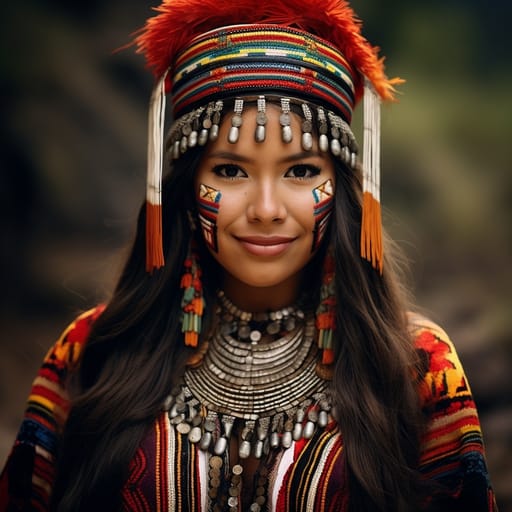
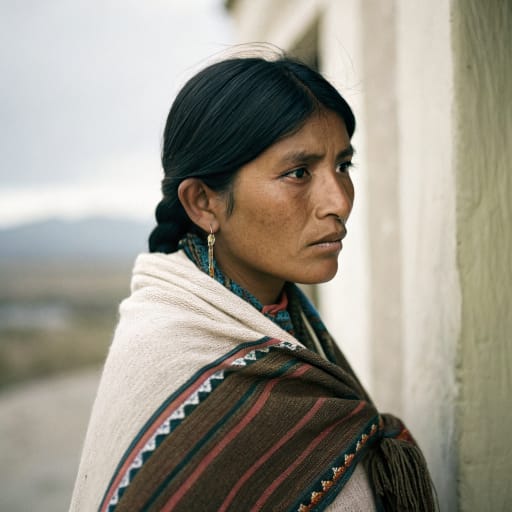
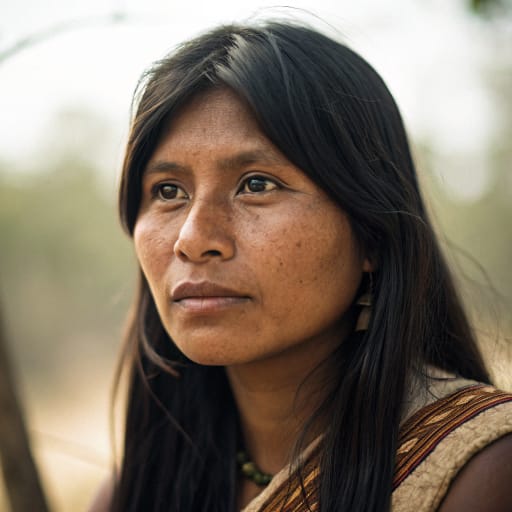
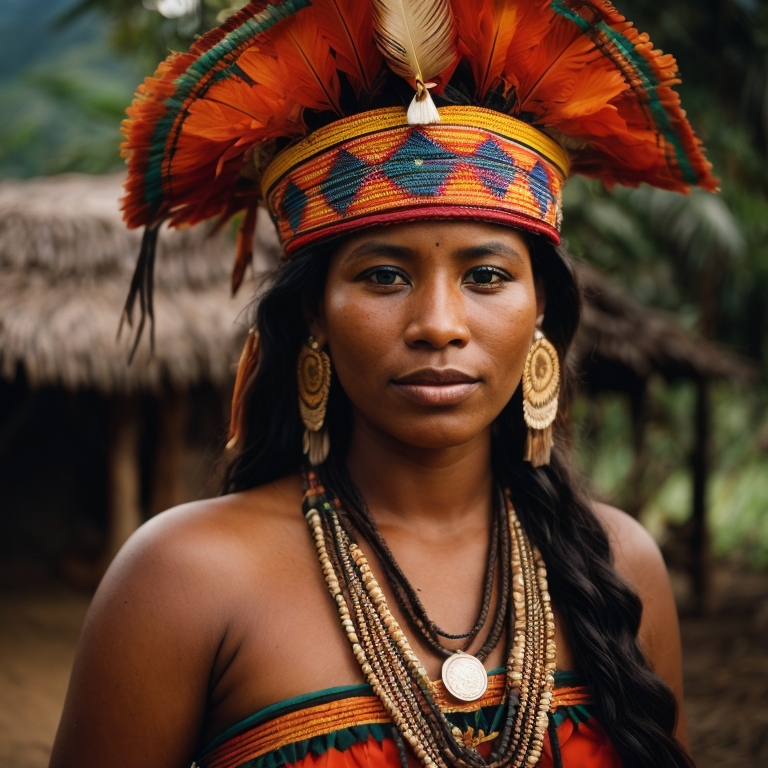
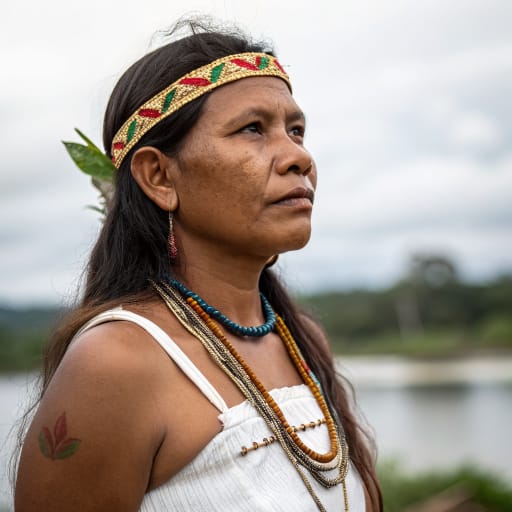
Typical Machinere Phenotypes
Reference for AI generation: hair, eyes, skin, facial structure, build
Machinere Body & Anatomy Reference
Per-feature anatomical profile for AI nude generation: South American Indigenous / European-Mestizo / Afro-Latino mix phenotype
Machinere Boobs & Breasts
Machinere tits and boobs run medium-to-large cup, full, high projection, the classic South American Indigenous / European-Mestizo / Afro-Latino mix bust profile. Machinere nipples and areolas show medium-brown to dark-brown areolar pigmentation against the tan-to-deep-brown skin tone, with areolar diameter typically in the 32-46mm range and forward-set positioning rather than the smaller bust profile of Andean Indigenous sub-populations. Machinere breasts trend the classic Brazilian / Latina curvy bust profile in lowland populations; smaller and shorter-set in Andean Indigenous populations, a function of the endomorph-to-mesomorph with high gluteal-femoral deposition body habitus and the mean adult female BMI 25-28. For anatomically accurate AI-generated Machinere nudes the render preserves the medium-to-large cup, full, high projection shape, 32-46mm areolas with medium-brown to dark-brown pigmentation, and the torso proportions of the South American Indigenous / European-Mestizo / Afro-Latino mix phenotype.
Machinere Ass & Hips
Machinere hips and butt usually read as full, high projection, the famous Brazilian / Latina bunda profile. The skeletal base is wide iliac crests, very full gluteal-femoral fat deposition (the hallmark Brazilian / Latina hip-to-waist ratio), the South American Indigenous / European-Mestizo / Afro-Latino mix pattern. Set against the slim narrow-hip East Asian profile, the difference is easy to see, and the hip-to-waist ratio is often what identifies Machinere women in photos.
Machinere Vagina & Pussy
Expect medium-brown to dark-brown labial pigmentation, fuller labia minora on Machinere women, in keeping with South American Indigenous / European-Mestizo / Afro-Latino mix ancestry. The pubic hair is wavy-to-curly coarse dark texture, dense distribution. Coloring should run evenly from the tan to deep-brown skin of the thighs to the labia, and Machinere nude imagery should keep the hair's wavy-to-curly coarse dark texture.
Machinere Dicks & Penis
Machinere dick and penile anatomy in adult AI generation should anchor on the regional reference data: regional mean ~13cm erect, moderate-to-above-average girth, and medium-brown shaft pigmentation. The Machinere cock profile reflects the South American Indigenous / European-Mestizo / Afro-Latino mix population's anthropometric measurements. The shaft pigmentation should track the surrounding tan to deep-brown skin tone, and the pubic hair should keep its wavy-to-curly coarse dark texture in the typical inverted-V escutcheon.
Machinere Body, Curves & Build
Machinere body type: endomorph-to-mesomorph with high gluteal-femoral deposition, with mean adult female BMI 25-28. This is the typical South American Indigenous / European-Mestizo / Afro-Latino mix build. Height range, shoulder-to-hip ratio and fat distribution all follow from it, which is what an accurate Machinere nude body should show.
Machinere Skin Tone & Hair Texture
Machinere skin tone falls in the tan to deep-brown (Fitzpatrick III-VI) band, the surface signal most often miscalibrated by generic AI nude generators. Machinere hair texture is typically straight-to-curly 1A-3C, varies widely by ancestral composition, characteristic of the South American Indigenous / European-Mestizo / Afro-Latino mix phenotype. In Machinere nude renders the skin should hold that band consistently across the body.
Explore phenotype categories
Structured taxonomy with peer-reviewed scales · 22 anatomical categories
Erotic Poses & Sex Positions
From the pose catalog: 219 named positions with reference skeletons
Frequently asked questions about Machinere people
Where is the Machinere homeland?
The Machinere homeland is Upper Iaco and Purus river basin in Acre state, Brazil, chiefly the Mamoadate Indigenous Land; smaller communities in Pando department, Bolivia in South America.
What language do Machinere people speak?
Machinere people primarily speak Machinere (Arawakan, Purus branch; closely related to Yine/Piro); Portuguese in Brazil, Spanish in Bolivia.
What religion do Machinere people practice?
The predominant religion among Machinere people is Indigenous shamanic traditions including ritual ayahuasca use, alongside Christianity in some communities.






Make your own Machinere images
Five a day, free, no credits to buy. The studio starts from this group's phenotype data, so you can set body type, pose and style and keep the traits accurate.
Start with Machinere