No image yet

Küresünni Erotic

Homeland

Highland districts of Tunceli, especially Pertek and Çemişgezek, with communities in Erzincan, Bingöl, Elazığ and Muş, eastern Turkey; substantial diaspora in Istanbul, western Turkish cities and Germany.

Language

Turkish, in eastern Anatolian dialect (Turkic, Oghuz branch)

Part of the Turkic language family

Religion

Sunni Islam, predominantly Hanafi

Subgroups

Anatolian Turks; commonly grouped with the Turkmen populations of eastern Anatolia and distinguished locally from neighboring Alevi Zaza, Kurmanji and Turkmen communities

About Küresünni People

The Küresünni are defined, more than anything, by contrast with their neighbors. They are Turkish-speaking Sunni Muslims scattered through the highlands of Tunceli, Erzincan, Bingöl and Elazığ, in a part of eastern Anatolia where most of the surrounding population speaks Zazaki or Kurmanji and follows Alevism. In a region routinely described from the outside as uniformly Alevi and Kurdish, the Küresünni are the exception that complicates the map, and they are well aware of it. Villages are still identified locally by which side of that line they sit on, and marriage patterns, mosque attendance and the shape of the religious year have long run along the same boundary. The country itself is rough: the upper Euphrates and Murat valleys, steep pasture, winters that close the roads. Their Turkish belongs to the Oghuz branch of Turkic, but the local speech carries eastern Anatolian dialect features that set it apart from the Istanbul standard, and it has taken on vocabulary from centuries of living alongside Zazaki and Kurmanji speakers.

Where they came from is genuinely argued over. Most accounts trace them to Turkmen groups that moved into or were settled in the region during the medieval centuries, under the Seljuks or later under the Karakoyunlu and Akkoyunlu confederations. Others suspect a more mixed ancestry, with local families gradually absorbed into a Turkish-speaking Sunni identity. The documentary evidence is thin enough that both readings survive. Religious practice is mostly Hanafi and, in the villages, unshowy: the mosque, the fast, the funeral, without much ceremony around any of it. The twentieth century pressed hard on the region, and the Keban dam, finished in the 1970s, drowned a long stretch of riverside around Pertek and Çemişgezek, taking farmland and settlements with it and pushing families toward Elazığ, Istanbul and, for many, Germany. What remains in the countryside is older and thinner than it was. The identity has not dissolved with the move, though. Küresünni families in the cities still name the specific village they come from, and the label itself, worn plainly by some and treated by others as an outsider's tag they would rather answer with simply Turk, still does real work in conversations about who belongs where.

Typical Küresünni Phenotypes

Reference for AI generation — hair, eyes, skin, facial structure, build

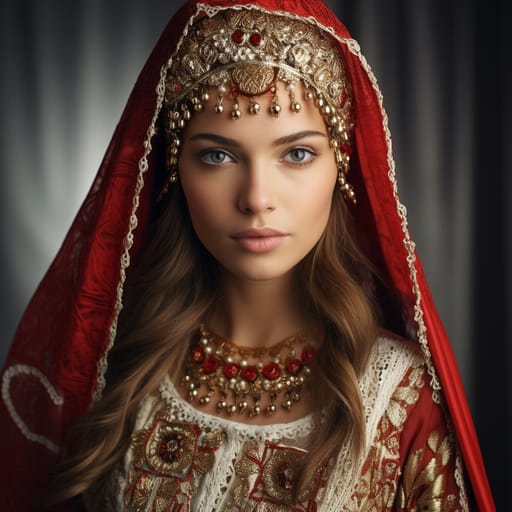
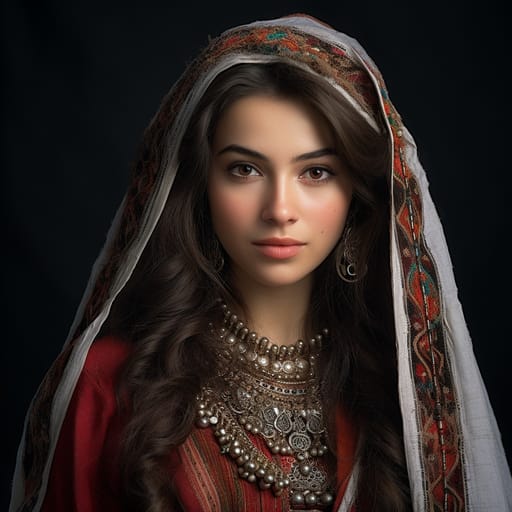
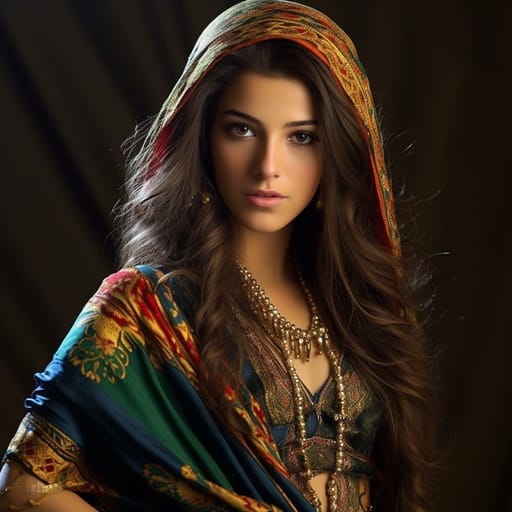
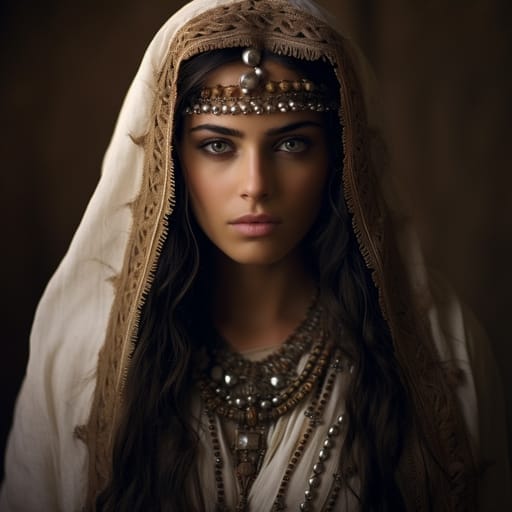
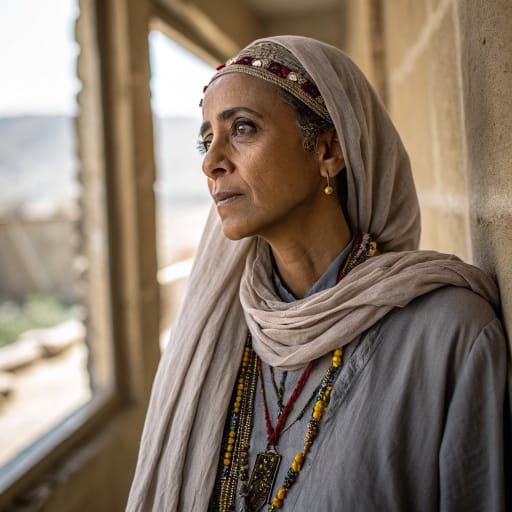
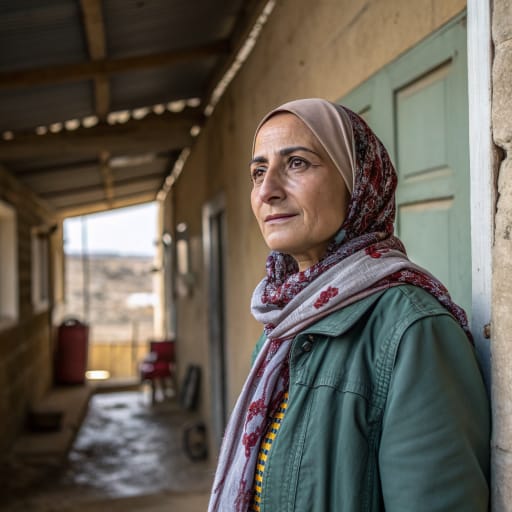
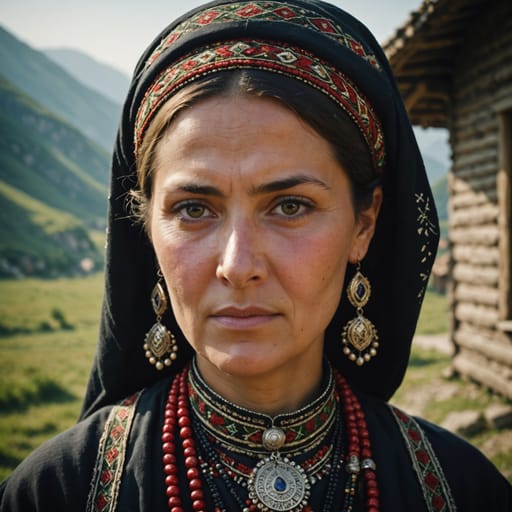
Appearance falls within the broad Anatolian range: skin from fair to olive, hair most often dark brown to black with lighter shades appearing, and brown eyes predominant alongside hazel and green. Everyday dress is ordinary modern Turkish clothing, jeans and jackets in town, work clothes in the villages. Among older women the printed cotton headscarf, usually worn with loose şalvar trousers and a long cardigan, remains standard, and turns up at weddings and religious holidays across generations. Men's older village wear has largely given way to the flat cap and plain suit jacket common throughout rural eastern Anatolia.

Küresünni Body & Anatomy Reference

Per-feature anatomical profile for AI nude generation — Levantine / Mediterranean Middle Eastern phenotype

Küresünni Boobs & Breasts

Küresünni tits and boobs run medium-to-large cup, full, moderate-to-high projection — the classic Levantine / Mediterranean Middle Eastern bust profile. Küresünni nipples and areolas show medium-brown to dark-brown areolar pigmentation against the olive-to-light-brown skin tone, with areolar diameter typically in the 32-46mm range and forward-set positioning rather than the the smaller East Asian bust profile. Küresünni breasts trend full and soft, fuller projection than the North-African Berber norm, a function of the mesomorph with fuller hip-and-bust deposition body habitus and the mean adult female BMI 25-28. For anatomically-accurate AI-generated Küresünni nudes the render preserves: medium-to-large cup, full, moderate-to-high projection shape, 32-46mm areolas with medium-brown to dark-brown pigmentation, and the torso proportions of the Levantine / Mediterranean Middle Eastern phenotype.

Küresünni Ass & Hips

Küresünni ass and hip morphology presents as medium-to-full, moderate projection, broader hip profile — distinctly different from the slim East Asian narrow-hip profile. The Küresünni pelvic profile shows medium-to-wide iliac crests, fuller gluteal-femoral deposition, anchored in the Levantine / Mediterranean Middle Eastern skeletal pattern. Küresünni butt shots in adult AI imagery should render the medium-to-full, moderate projection, broader hip profile silhouette with the mesomorph with fuller hip-and-bust deposition build and the gluteal-femoral fat distribution typical of the Levantine / Mediterranean Middle Eastern phenotype rather than defaulting to a globally-averaged "ethnic" butt that generic AI generators produce. The hip-to-waist ratio characteristic of Küresünni women is one of the identifying features of the Levantine / Mediterranean Middle Eastern regional phenotype.

Küresünni Vagina & Pussy

Küresünni pussy and vulvar anatomy presents medium-brown to dark-brown labial pigmentation, fuller labia minora — consistent with the Levantine / Mediterranean Middle Eastern phenotype's pigmentation pattern. Küresünni pubic hair is typically wavy-to-coiled medium-coarse dark texture, dense distribution, distributed in the inverted-triangle pattern with regional-typical density. AI-generated Küresünni nude imagery should preserve the medium-brown to dark-brown labial pigmentation and the wavy-to-coiled medium-coarse dark texture hair texture rather than defaulting to a Western-European pink-and-sparse template. For anatomically-accurate Küresünni pussy renders the labial pigmentation and coloration should match the surrounding olive to medium-brown skin tone of the Levantine / Mediterranean Middle Eastern phenotype, with continuous gradient rather than an abrupt color transition.

Küresünni Dicks & Penis

Küresünni dick and penile anatomy in adult AI generation should anchor on the regional reference data: regional mean ~14cm erect, moderate-to-above-average girth, and medium-brown shaft pigmentation. The Küresünni cock profile reflects the Levantine / Mediterranean Middle Eastern ancestral population's anthropometric measurements rather than a globally-averaged Western-pornography default. For anatomically-accurate Küresünni nude male imagery the shaft pigmentation should track the surrounding olive to medium-brown skin tone, the glans-to-shaft pigmentation transition should be continuous, and the pubic hair pattern should match wavy-to-coiled medium-coarse dark texture texture distributed in the typical inverted-V escutcheon. Circumcision status in Küresünni populations varies by religious-cultural tradition rather than ancestral phenotype.

Küresünni Body, Curves & Build

Küresünni body type and overall build presents as mesomorph with fuller hip-and-bust deposition, with mean adult female BMI 25-28 — the characteristic Levantine / Mediterranean Middle Eastern habitus. Küresünni curves and proportions in adult AI imagery should preserve the regional skeletal frame (height, shoulder-to-hip ratio, limb proportions) rather than scaling to a Western-European mesomorph default. The Küresünni nude female form, when rendered with anatomical fidelity, shows the height range, frame width, and adipose distribution pattern typical of the Levantine / Mediterranean Middle Eastern phenotype. Generic AI image generators tend to collapse regional body types into a few default shapes; the EthnicErotic phenotype-anchored approach preserves the Küresünni build as its own reference category.

Küresünni Skin Tone & Hair Texture

Küresünni skin tone falls in the olive to medium-brown (Fitzpatrick III-V) band — the surface signal most often miscalibrated by generic AI nude generators trained on Western-photographic datasets. Küresünni hair texture is typically wavy-to-curly 2B-3B, predominantly dark-brown to black, characteristic of the Levantine / Mediterranean Middle Eastern phenotype. For anatomically-accurate Küresünni nude renders the skin should hold the Fitzpatrick band consistently across body surface rather than showing the lighter-than-face body shading that AI generators default to. Küresünni hair pigmentation and texture on body, pubic, and head should match across the figure rather than mixing textures (a common AI artefact).

Get notified when there’s a new post about Küresünni.

Discussion Board

Have a view on this? Sign in to post — your first one earns 2 generation credits.

No posts on this board yet

Log in to start the conversation.

See what’s active across the community →

Erotic Poses & Sex Positions

From the pose catalog — 219 named positions with reference skeletons

Frequently asked questions about Küresünni people

Where is the Küresünni homeland?

The Küresünni homeland is Highland districts of Tunceli, especially Pertek and Çemişgezek, with communities in Erzincan, Bingöl, Elazığ and Muş, eastern Turkey; substantial diaspora in Istanbul, western Turkish cities and Germany. in Western Asia.

What language do Küresünni people speak?

Küresünni people primarily speak Turkish, in eastern Anatolian dialect (Turkic, Oghuz branch).

What religion do Küresünni people practice?

The predominant religion among Küresünni people is Sunni Islam, predominantly Hanafi.

What does a typical Küresünni woman look like?

Appearance falls within the broad Anatolian range: skin from fair to olive, hair most often dark brown to black with lighter shades appearing, and brown eyes predominant alongside hazel and green. Everyday dress is ordinary modern Turkish clothing, jeans and jackets in town, work clothes in the villages.