Help us get this right
Does this portrait look right for Jász?
Nobody has judged this one yet. You would be the first.
Jász Erotic
The Jászság, a district of towns between the Zagyva and Tarna rivers in Jász-Nagykun-Szolnok County, northeastern Hungary.
Hungarian (Uralic) today; formerly Jassic, an Eastern Iranian language of the Alanic group closely related to Ossetian (Indo-European), extinct by about the sixteenth century.
Roman Catholic, in a largely Calvinist part of the Hungarian Plain.
Descendants of the Alans, historically paired with the Cumans in the self-governing Jászkun district, and split locally into redemptus and irredemptus families after 1745.
About Jász People
The Jász are Hungarians with an Iranian past they have never quite put down. Their ancestors were Alans, horse-herding people from the steppe north of the Caucasus, who came into the Carpathian Basin in the 1240s alongside the Cumans, pushed west by the Mongols. Béla IV settled them on the flat country between the Zagyva and Tarna rivers northeast of Budapest, and that block of land, the Jászság, is still theirs: a cluster of towns most of which carry the name as a prefix, Jászberény, Jászapáti, Jászárokszállás, Jászfényszaru. Their language went early, gone by the sixteenth century, and what survives of it is one of the stranger scraps in European philology. Around forty words with Latin glosses, written on the back of a 1422 court document, sat unread in the Hungarian national archives until 1957, when someone finally recognized what he was looking at. An Ossetian can read most of the list without help: dan for water, bah for horse, fit for meat, sana for wine. That single page is the entire surviving corpus.
What the Jász commemorate is not a battle but a purchase. They held their land on privileged terms, self-governing and free of serfdom in exchange for mounted service to the crown, until 1702, when Leopold I, short of cash, sold the whole Jász and Cuman district to the Teutonic Order and the free districts woke up as somebody else's property. They litigated for four decades, then bought themselves back, raising half a million forints among their own towns and paying Maria Theresa in 1745 for their liberty. Households that paid in became redemptus and took a share of the common land; those that could not stayed irredemptus, and that line ran through local society for generations. Redemption Day, May 6, is still the date that matters here. They are Roman Catholic and pointedly so, a Catholic block in a stretch of the Great Plain that turned Calvinist around them, their old Cuman partners included. Jász is now a regional identity rather than a nationality: they speak Hungarian and appear on no minority census. They also elect a ceremonial Jász captain, hold a world meeting for those who have scattered, and keep in Jászberény a carved ivory horn of Byzantine work that has served as their emblem for centuries, attached by legend to a tenth century Magyar chieftain who had nothing to do with them. Recent ancient DNA work on medieval graves in the region found what the wordlist already implied: Caucasus ancestry arriving in the thirteenth century, thinning steadily ever since.
Related ethnic groups
Groups that share Jász's homeland, region, language, or religious tradition. These are likely candidates for comparative phenotype reference.
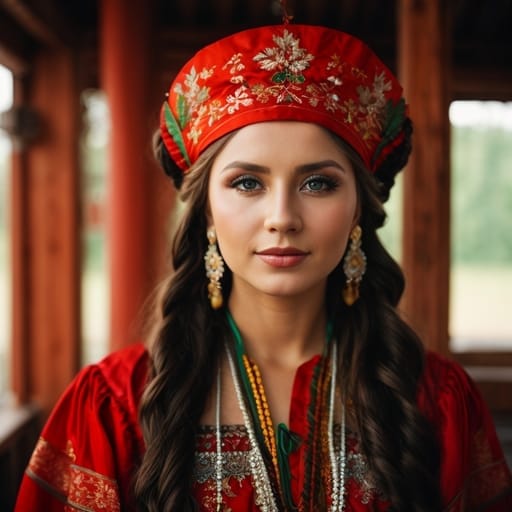
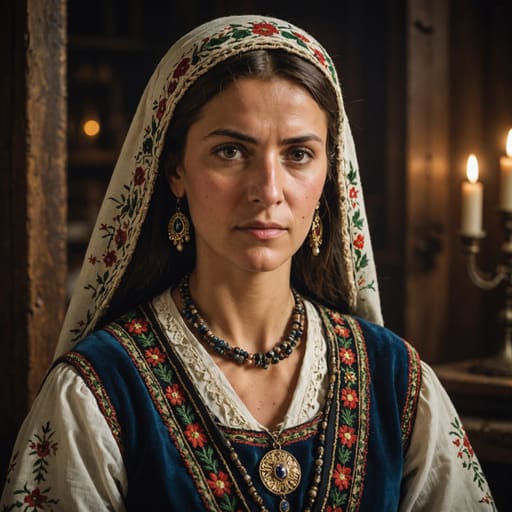
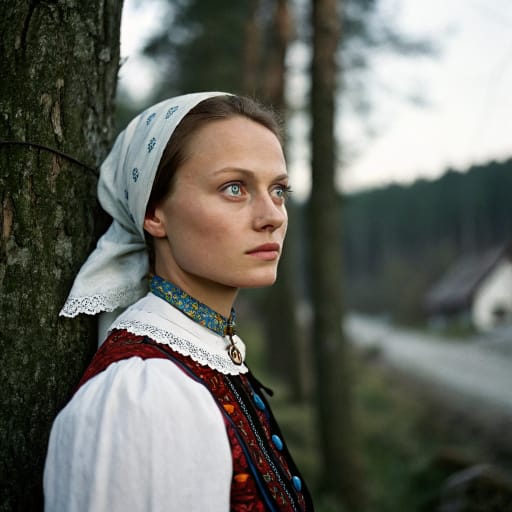
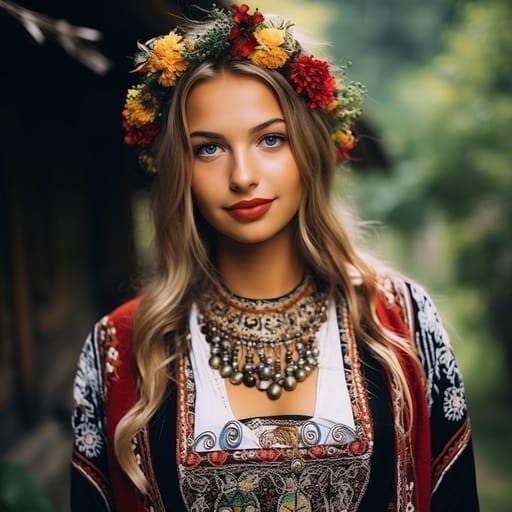
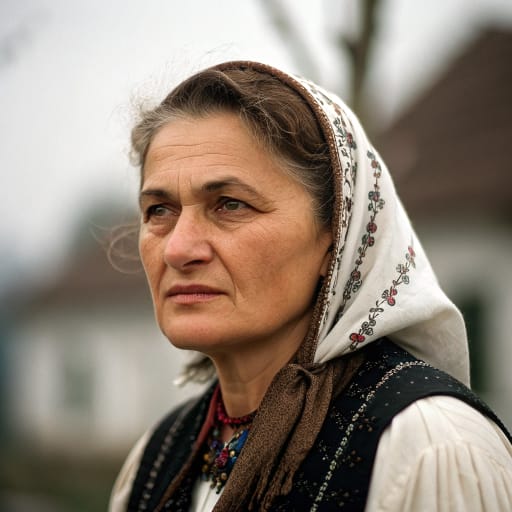
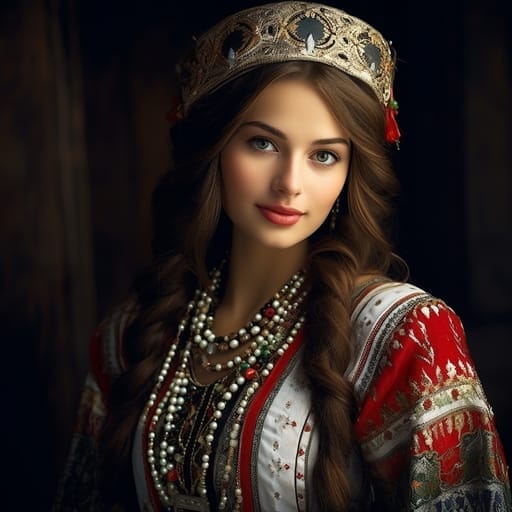
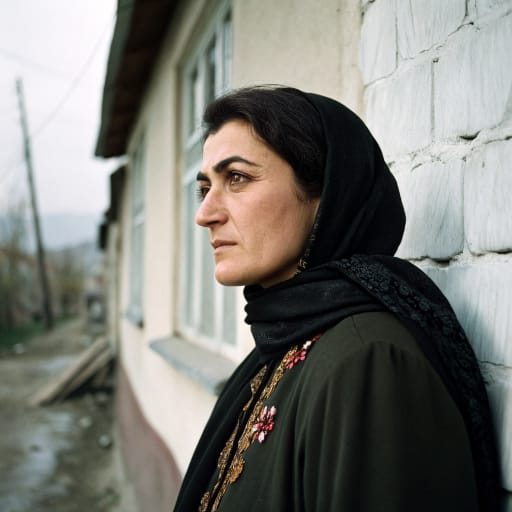
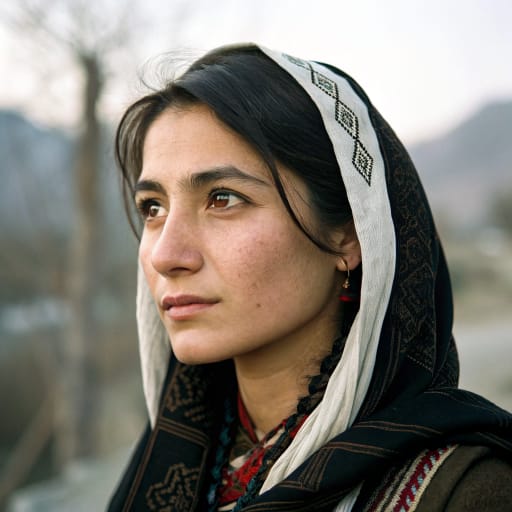
Typical Jász Phenotypes
Reference for AI generation: hair, eyes, skin, facial structure, build
Jász Body & Anatomy Reference
Eastern European / Slavic phenotype: anatomy reference for AI nude generation
Jász Boobs & Breasts
Jász boobs follow the Eastern European / Slavic profile: medium-to-large cup, full, moderate-to-high projection. Areolar diameter is usually 30-44mm, and the coloring is light-pink to medium-brown areolar pigmentation against the fair-to-light-brown skin tone. Breast shape tracks body composition (mesomorph, full hip-and-bust deposition, mean adult female BMI 23-26), so Jász breasts tend to be full and projecting, classic Eastern European curvy bust. Expect a forward-set shape, not the smaller East Asian bust.
Jász Ass & Hips
Jász ass and hip morphology presents as medium-to-full, moderate-to-high projection, distinctly different from the slim narrow-hip East Asian profile. The Jász pelvic profile shows medium iliac crests, full gluteal-femoral fat deposition, anchored in the Eastern European / Slavic skeletal pattern. Jász butt shots in adult AI imagery should render the medium-to-full, moderate-to-high projection silhouette with the overall build (mesomorph, full hip-and-bust deposition) and the fat distribution typical of the Eastern European / Slavic phenotype.
Jász Vagina & Pussy
Jász pussy anatomy typically shows light-pink to medium-brown labial pigmentation, varied labia minora. Pubic hair is usually wavy medium texture, blond to dark-brown. In AI-generated Jász nudes, labial color should blend into the fair to light skin with a gradual transition, and the hair should keep its wavy medium texture.
Jász Dicks & Penis
Penis reference for Jász men: regional mean ~13-14cm erect, moderate girth. Coloring: light-pink to medium-brown shaft pigmentation. An accurate Jász cock in AI imagery matches the surrounding fair to light skin rather than a generic porn default. Circumcision depends on religion and custom, not ancestry.
Jász Body, Curves & Build
The Jász figure is generally mesomorph, full hip-and-bust deposition, with mean adult female BMI 23-26, characteristic of Eastern European / Slavic ancestry. AI image tools tend to flatten regional body types into a few stock shapes; here the Jász build is kept as its own reference.
Jász Skin Tone & Hair Texture
Skin: fair to light (Fitzpatrick II-III). Hair: straight-to-wavy 1A-2B, light-blond to dark-brown. Both are typical of Eastern European / Slavic ancestry. The most common mistake in AI nudes of Jász women is a body rendered lighter than the face.
Explore phenotype categories
Structured taxonomy with peer-reviewed scales · 22 anatomical categories
Erotic Poses & Sex Positions
From the pose catalog: 219 named positions with reference skeletons
Frequently asked questions about Jász people
Where is the Jász homeland?
The Jász homeland is The Jászság, a district of towns between the Zagyva and Tarna rivers in Jász-Nagykun-Szolnok County, northeastern Hungary. in Eastern Europe.
What language do Jász people speak?
Jász people primarily speak Hungarian (Uralic) today; formerly Jassic, an Eastern Iranian language of the Alanic group closely related to Ossetian (Indo-European), extinct by about the sixteenth century..
What religion do Jász people practice?
The predominant religion among Jász people is Roman Catholic, in a largely Calvinist part of the Hungarian Plain..






Make your own Jász images
Five a day, free, no credits to buy. The studio starts from this group's phenotype data, so you can set body type, pose and style and keep the traits accurate.
Start with Jász