No portrait yet
Zipser Germans Erotic
Spiš (Zips) region of northeastern Slovakia, historically Szepes county in the Kingdom of Hungary; offshoot communities in Maramureș and Bukovina, Romania
Zipser German dialects, including Mantak in the Lower Zips (Indo-European, West Germanic); Standard German, Slovak and Hungarian in contact use
Roman Catholic and Lutheran Christianity
Upper Zipsers and Lower Zipsers (Mantaken); a branch of the Carpathian Germans, with Zipser offshoots in Maramureș and Bukovina
About Zipser Germans People
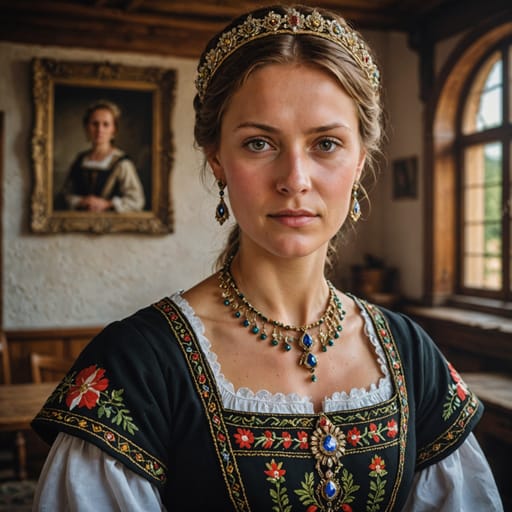
The Zipser Germans are the German-speaking townspeople, miners and farmers of Spiš, an upland region below the High Tatras in what is now northeastern Slovakia. For most of their history the region was Szepes county in the Kingdom of Hungary. The Zipsers were an old, self-governing German society living among Slovaks, Hungarians and Rusyns. They were loyal to the Hungarian crown and proud of their own law. Most of their ancestors arrived in the 12th and 13th centuries, many after the Mongol invasion of 1241 left the kingdom short of people. Medieval documents called them Saxons, the same catch-all name used for the Germans of Transylvania, though they came from several parts of the German lands.
Their towns ran their own affairs under a count of their own and a written code, the Zipser Willkür, set down in 1370. In 1412 King Sigismund pawned thirteen Zips towns to Poland as security for a loan. Those towns stayed under Polish administration until Hungary took them back in 1769, more than three and a half centuries later. The region splits in two. The Upper Zips, around Kežmarok, Levoča and Poprad, was a country of market towns and farming villages. The Lower Zips, along the Hnilec valley around Gelnica and Smolník, lived by mining copper, silver and iron. Its people, nicknamed Mantaken, spoke a dialect of their own.
Lutheran teaching spread quickly through the Zips towns in the 16th century. The Counter-Reformation later pulled much of the population back to Rome, leaving the community divided between Catholic and Lutheran congregations. Kežmarok's wooden articular church, built in 1717 when Habsburg law allowed Lutherans to build only in wood, is one of the lasting marks of that split. In the late 18th century Zipser miners and woodcutters also moved east to Bukovina and Maramureș. In Vișeu de Sus, Zipser families kept a German-speaking logging community going into modern times.
The 20th century undid the community. After 1918 Spiš became part of Czechoslovakia, and many Zipsers, whose loyalties had long run toward Budapest, were slow to take up German nationalist politics. In late 1944 many were evacuated ahead of the advancing Red Army. After the war, those who stayed or tried to return lost their citizenship, and most were expelled. Descendants now live mainly in Germany and Austria, and other Zipser families had already emigrated to the United States decades earlier. A small community remains in Slovakia, where the dialect hangs on among older speakers and local associations keep the old town histories in view.
Related ethnic groups
Groups that share Zipser Germans's homeland, region, language, or religious tradition. These are likely candidates for comparative phenotype reference.
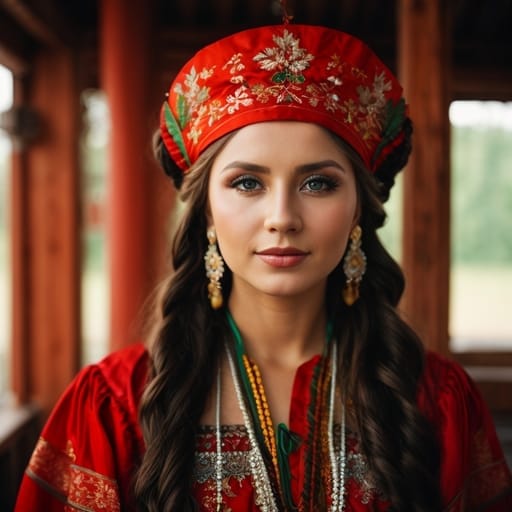
Belarusians
same region (Eastern Europe)
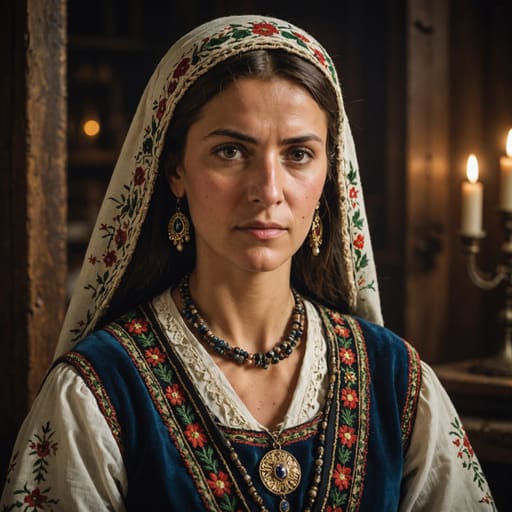
Bulgarians
same region (Eastern Europe)
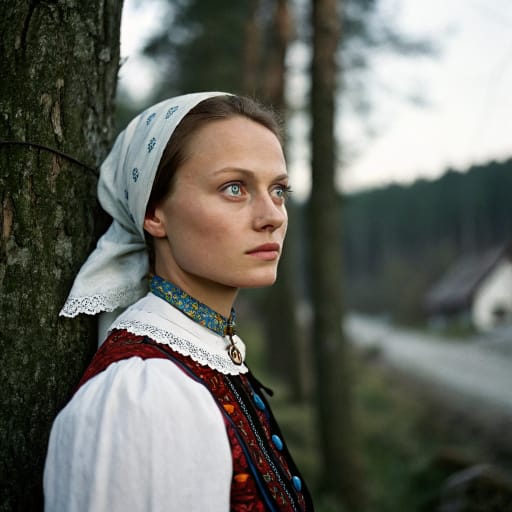
Czechs
same region (Eastern Europe)
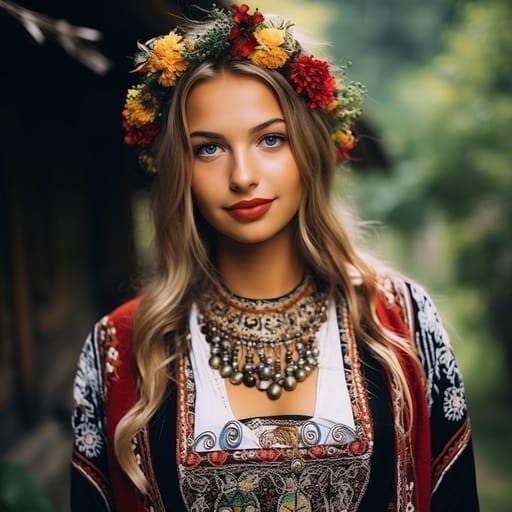
Slovaks
same region (Eastern Europe)
Tver Karelians
same region (Eastern Europe)
Poleshuks
same region (Eastern Europe)
Slovakia Other
same region (Eastern Europe)

Turkish Bulgaria
same region (Eastern Europe)
Typical Zipser Germans Phenotypes
Reference for AI generation: hair, eyes, skin, facial structure, build
Zipser Germans Body & Anatomy Reference
Per-feature anatomical profile for AI nude generation: Eastern European / Slavic phenotype
Zipser Germans Boobs & Breasts
Zipser Germans boobs follow the Eastern European / Slavic profile: medium-to-large cup, full, moderate-to-high projection. Areolar diameter is usually 30-44mm, and the coloring is light-pink to medium-brown areolar pigmentation against the fair-to-light-brown skin tone. Breast shape tracks body composition (mesomorph, full hip-and-bust deposition, mean adult female BMI 23-26), so Zipser Germans breasts tend to be full and projecting, classic Eastern European curvy bust. Expect a forward-set shape, not the smaller East Asian bust.
Zipser Germans Ass & Hips
Zipser Germans ass and hip morphology presents as medium-to-full, moderate-to-high projection, distinctly different from the slim narrow-hip East Asian profile. The Zipser Germans pelvic profile shows medium iliac crests, full gluteal-femoral fat deposition, anchored in the Eastern European / Slavic skeletal pattern. Zipser Germans butt shots in adult AI imagery should render the medium-to-full, moderate-to-high projection silhouette with the overall build (mesomorph, full hip-and-bust deposition) and the fat distribution typical of the Eastern European / Slavic phenotype.
Zipser Germans Vagina & Pussy
Zipser Germans pussy anatomy typically shows light-pink to medium-brown labial pigmentation, varied labia minora. Pubic hair is usually wavy medium texture, blond to dark-brown. In AI-generated Zipser Germans nudes, labial color should blend into the fair to light skin with a gradual transition, and the hair should keep its wavy medium texture.
Zipser Germans Dicks & Penis
Penis reference for Zipser Germans men: regional mean ~13-14cm erect, moderate girth. Coloring: light-pink to medium-brown shaft pigmentation. An accurate Zipser Germans cock in AI imagery matches the surrounding fair to light skin rather than a generic porn default. Circumcision depends on religion and custom, not ancestry.
Zipser Germans Body, Curves & Build
The Zipser Germans figure is generally mesomorph, full hip-and-bust deposition, with mean adult female BMI 23-26, characteristic of Eastern European / Slavic ancestry. AI image tools tend to flatten regional body types into a few stock shapes; here the Zipser Germans build is kept as its own reference.
Zipser Germans Skin Tone & Hair Texture
Skin: fair to light (Fitzpatrick II-III). Hair: straight-to-wavy 1A-2B, light-blond to dark-brown. Both are typical of Eastern European / Slavic ancestry. The most common mistake in AI nudes of Zipser Germans women is a body rendered lighter than the face.
Explore phenotype categories
Structured taxonomy with peer-reviewed scales · 22 anatomical categories
Erotic Poses & Sex Positions
From the pose catalog: 219 named positions with reference skeletons
Frequently asked questions about Zipser Germans people
Where is the Zipser Germans homeland?
The Zipser Germans homeland is Spiš (Zips) region of northeastern Slovakia, historically Szepes county in the Kingdom of Hungary; offshoot communities in Maramureș and Bukovina, Romania in Eastern Europe.
What language do Zipser Germans people speak?
Zipser Germans people primarily speak Zipser German dialects, including Mantak in the Lower Zips (Indo-European, West Germanic); Standard German, Slovak and Hungarian in contact use.
What religion do Zipser Germans people practice?
The predominant religion among Zipser Germans people is Roman Catholic and Lutheran Christianity.






Make your own Zipser Germans images
Five a day, free, no credits to buy. The studio starts from this group's phenotype data, so you can set body type, pose and style and keep the traits accurate.
Start with Zipser Germans