No portrait yet
Tver Karelians Erotic
Tver Oblast, Russia, chiefly the Likhoslavl, Maksatikha, Rameshki, Spirovo and Vesyegonsk districts; ancestral origin around Lake Ladoga and Korela (modern Priozersk)
Tver Karelian, a dialect of Karelian proper (Uralic, Finnic); Russian is now the first language for most
Russian Orthodox Christianity
A branch of the Karelians (Karelian proper); local dialect groups include Tolmachi, Maksatikha and Vesyegonsk; related to the Valdai and Tikhvin Karelian communities
About Tver Karelians People
The Tver Karelians are Karelians who ended up hundreds of miles from Karelia. Their ancestors farmed and fished around Lake Ladoga and the old fortress town of Korela. When the Treaty of Stolbovo gave that district to Sweden in 1617, Orthodox families found themselves under a Lutheran crown, with Lutheran clergy and new taxes. Many of them left. Over the following decades, and in a bigger wave after the Russo-Swedish war of 1656 to 1658, they moved south and east. They settled around Bezhetsk, on land the Time of Troubles had emptied, and Moscow was glad to have farmers there. Nearly four centuries later, their descendants still live in villages of Tver Oblast, around Likhoslavl, Maksatikha, Rameshki, Spirovo and Vesyegonsk, with Russian speakers on every side.
Faith and language held them together, pulling in opposite directions. Orthodoxy was the reason they left in the first place, and it kept them inside the Russian world. The language kept them apart from it. Their speech is a dialect of Karelian proper, a Finnic tongue of the Uralic family and a close relative of Finnish. Cut off from other Karelians, it went its own way: it took in a heavy load of Russian vocabulary but kept its Finnic grammar, and the local varieties differ noticeably from one group of villages to the next. Tver Karelian was also one of the first forms of Karelian to appear in print. A translation of the Gospel of Matthew was published in it in the early nineteenth century, long before most Karelians had anything written in their own language.
The twentieth century was hard on them. In 1937 the Soviet state created a Karelian National Okrug centered on Likhoslavl and gave the language a written standard for schools and publishing. The okrug was dissolved in 1939 and official support for the language went with it. War, collectivization and the pull of the cities did the rest. Censuses once counted well over a hundred thousand Karelians in the region. Today only a few thousand remain, and they are mostly older and rural. Still, Tver Karelian has not gone quiet. Cultural societies, folk ensembles and enthusiasts who compile dictionaries and primers keep it in use, and in some villages you can still hear it spoken at home.
Related ethnic groups
Groups that share Tver Karelians's homeland, region, language, or religious tradition. These are likely candidates for comparative phenotype reference.
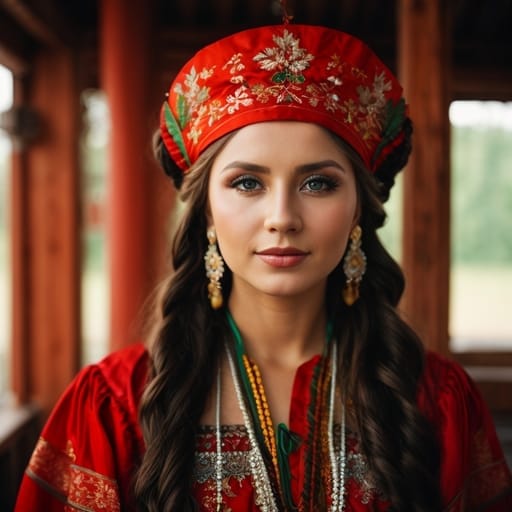
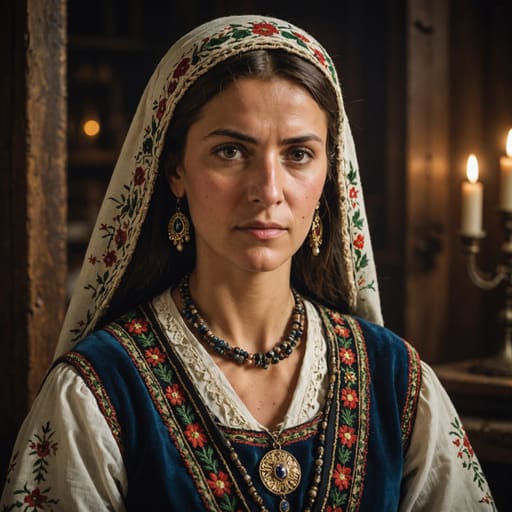
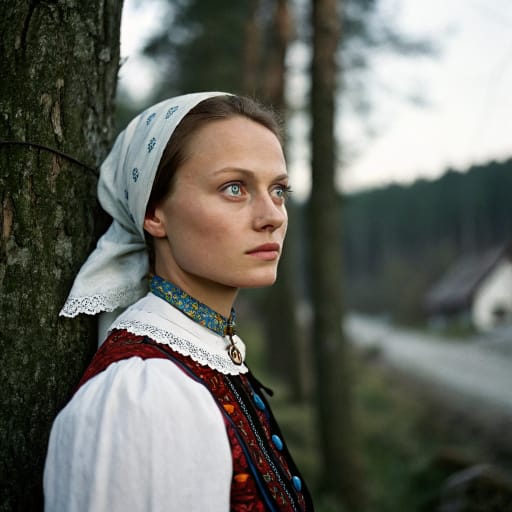
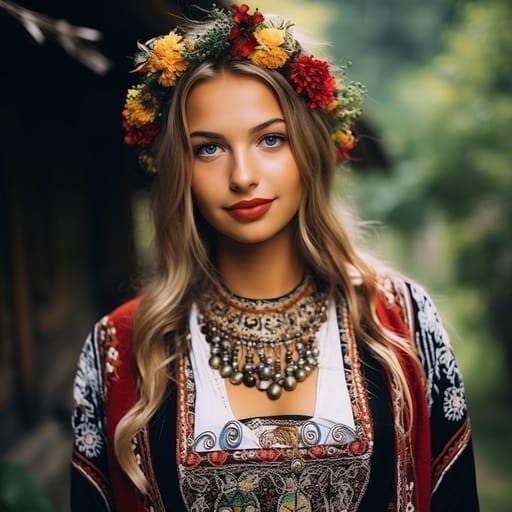
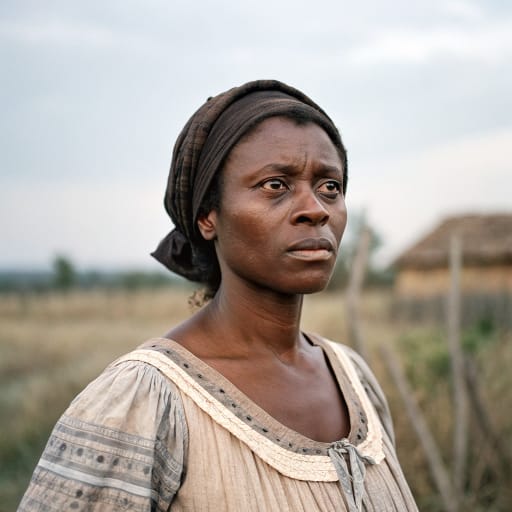
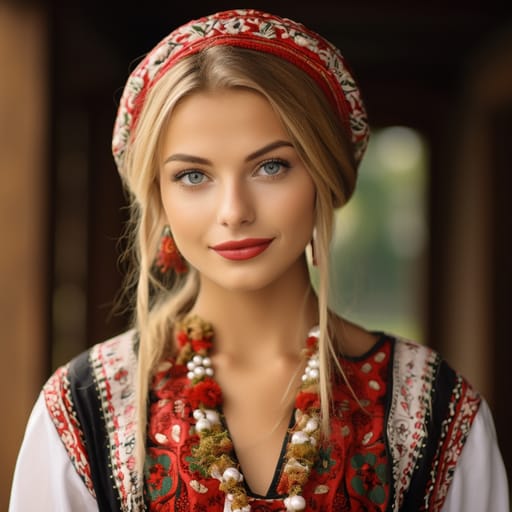
Typical Tver Karelians Phenotypes
Reference for AI generation: hair, eyes, skin, facial structure, build
Tver Karelians Body & Anatomy Reference
Anatomy by feature, Eastern European / Slavic phenotype
Tver Karelians Boobs & Breasts
The typical Tver Karelians bust is medium-to-large cup, full, moderate-to-high projection, in line with the wider Eastern European / Slavic pattern. Areolas usually fall in the 30-44mm range, with light-pink to medium-brown areolar pigmentation against the fair-to-light-brown skin tone. Compared with the smaller East Asian bust, Tver Karelians breasts sit forward and are generally full and projecting, classic Eastern European curvy bust. A faithful AI render of Tver Karelians tits keeps that shape and areola size.
Tver Karelians Ass & Hips
Butt shape among Tver Karelians women: medium-to-full, moderate-to-high projection, over medium iliac crests, full gluteal-femoral fat deposition. This follows Eastern European / Slavic ancestry and looks quite unlike the slim narrow-hip East Asian profile. An accurate Tver Karelians ass in adult AI imagery keeps both the silhouette and the overall build (mesomorph, full hip-and-bust deposition) instead of a generic average.
Tver Karelians Vagina & Pussy
Vulvar anatomy among Tver Karelians women: light-pink to medium-brown labial pigmentation, varied labia minora. Pubic hair tends to be wavy medium texture, blond to dark-brown, in the usual inverted-triangle pattern. Both follow Eastern European / Slavic pigmentation, which is why Tver Karelians pussy renders should not fall back on a pale, sparse Western template.
Tver Karelians Dicks & Penis
The Tver Karelians cock profile, from Eastern European / Slavic anthropometric data: regional mean ~13-14cm erect; moderate girth; light-pink to medium-brown shaft pigmentation. Pubic hair has a wavy medium texture and forms the usual inverted-V pattern. Whether Tver Karelians men are circumcised follows religious and cultural practice rather than phenotype.
Tver Karelians Body, Curves & Build
Build and curves among Tver Karelians women follow the Eastern European / Slavic pattern: mesomorph, full hip-and-bust deposition, mean adult female BMI 23-26. Proportions matter as much as skin tone, so Tver Karelians figures should keep their regional height and limb ratios.
Tver Karelians Skin Tone & Hair Texture
The Tver Karelians skin range is fair to light (Fitzpatrick II-III), and hair tends to be straight-to-wavy 1A-2B, light-blond to dark-brown. That combination marks the Eastern European / Slavic phenotype, and skin tone is the trait AI generators most often get wrong for Tver Karelians women.
Explore phenotype categories
Structured taxonomy with peer-reviewed scales · 22 anatomical categories
Erotic Poses & Sex Positions
From the pose catalog: 219 named positions with reference skeletons
Frequently asked questions about Tver Karelians people
Where is the Tver Karelians homeland?
The Tver Karelians homeland is Tver Oblast, Russia, chiefly the Likhoslavl, Maksatikha, Rameshki, Spirovo and Vesyegonsk districts; ancestral origin around Lake Ladoga and Korela (modern Priozersk) in Eastern Europe.
What language do Tver Karelians people speak?
Tver Karelians people primarily speak Tver Karelian, a dialect of Karelian proper (Uralic, Finnic); Russian is now the first language for most.
What religion do Tver Karelians people practice?
The predominant religion among Tver Karelians people is Russian Orthodox Christianity.






Make your own Tver Karelians images
Five a day, free, no credits to buy. The studio starts from this group's phenotype data, so you can set body type, pose and style and keep the traits accurate.
Start with Tver Karelians