No portrait yet
Poleshuks Erotic
Polesia, the forested wetland of the Pripyat River basin in southern Belarus and northern Ukraine, extending into eastern Poland and western Russia
Polesian dialects (Indo-European, Slavic, East Slavic), transitional between Belarusian and Ukrainian; standard Belarusian, Ukrainian and Russian are also used
Mainly Eastern Orthodox Christian, with notable Baptist and Pentecostal communities and surviving folk farming customs
Regional East Slavic group closely tied to Belarusians and Ukrainians; broadly divided into West Polesians and East Polesians, with local groups such as the Pinchuks around Pinsk
About Poleshuks People
Poleshuks are defined by a landscape before anything else. The name means the people of Polesia, the wide belt of forest, peat bog and slow river along the Pripyat basin across southern Belarus and northern Ukraine, with edges reaching into eastern Poland and western Russia. For centuries this was some of the hardest country in Europe to cross. Spring floods turned villages into islands, roads were few, and boats mattered as much as carts. That isolation shaped everything. It is also why Slavic ethnographers and dialectologists have long treated Polesia as a favorite field site: old ways of speaking and old rituals lasted here long after they faded elsewhere.
No one has ever settled whether Poleshuks are a separate people or a regional branch of Belarusians and Ukrainians. For much of their history the question mattered more to outsiders than to Poleshuks themselves. When the Polish census of 1931 asked people in the Polesie province what language they spoke, most simply answered tutejszy, "from here." Their speech is a set of East Slavic dialects. In the south and west they sound close to Ukrainian, and in the north and east they sound close to Belarusian. Linguists still argue over whether West Polesian is a language of its own. A small movement in late Soviet Belarus tried to give it a written standard, but it faded in the 1990s.
Most Poleshuks are Orthodox Christians. Evangelical Protestants are more common here than in either country as a whole, and Baptist and Pentecostal churches are a normal sight in western villages. Church feasts and older farming customs sit side by side. In the village of Pahost in southern Belarus, people still perform the Juraŭski Karahod, a St. George's Day round dance with songs meant to secure the harvest. UNESCO lists it as heritage in urgent need of safeguarding.
The twentieth century hit Polesia hard. Between the wars the region was split between Poland and the Soviet Union. In the Second World War partisans and occupying armies fought over it, and the war destroyed the Jewish communities of its market towns. Afterward, Soviet drainage projects reshaped the marshes on an enormous scale. Then in 1986 the Chernobyl disaster, which happened in Ukrainian Polesia, emptied scores of villages on both sides of the border. It scattered communities that had farmed the same ground for generations. Most Poleshuks now think of themselves as Belarusian or Ukrainian, but they keep a strong sense of being from Polesia. They live in farming villages and in towns like Pinsk and Mazyr.
Related ethnic groups
Groups that share Poleshuks's homeland, region, language, or religious tradition. These are likely candidates for comparative phenotype reference.
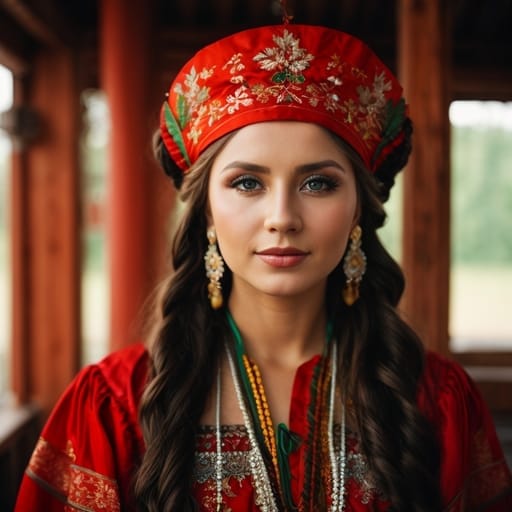
Belarusians
same region (Eastern Europe)
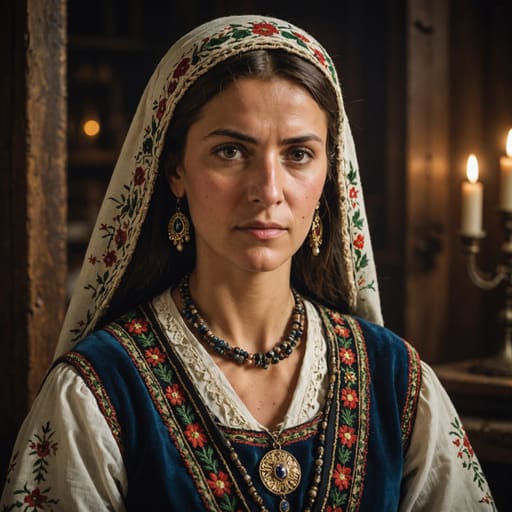
Bulgarians
same region (Eastern Europe)
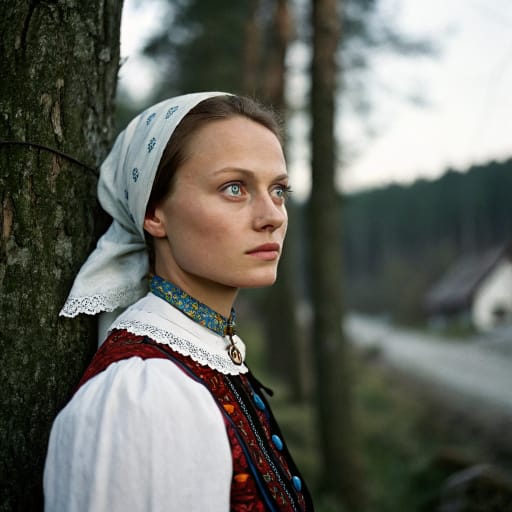
Czechs
same region (Eastern Europe)
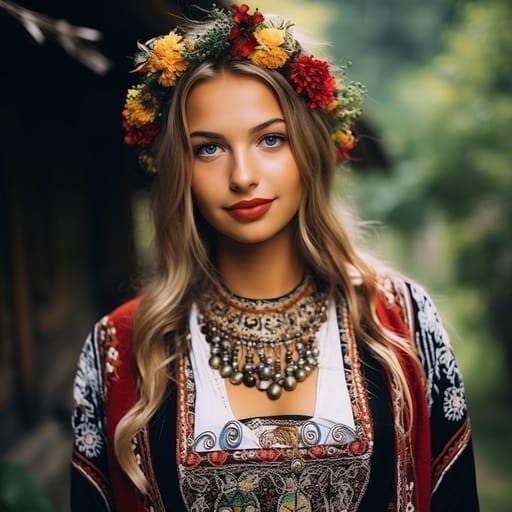
Slovaks
same region (Eastern Europe)
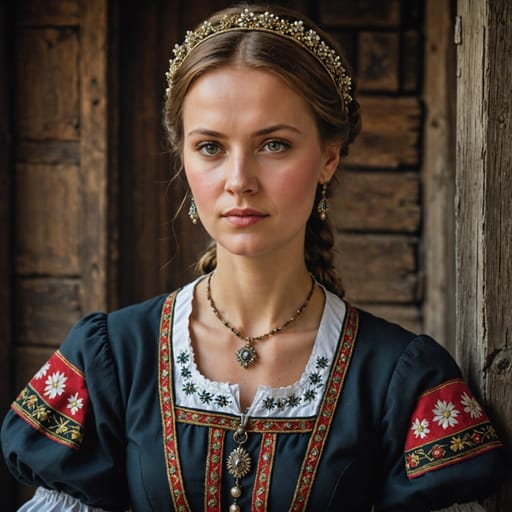
Poland Other
same region (Eastern Europe)
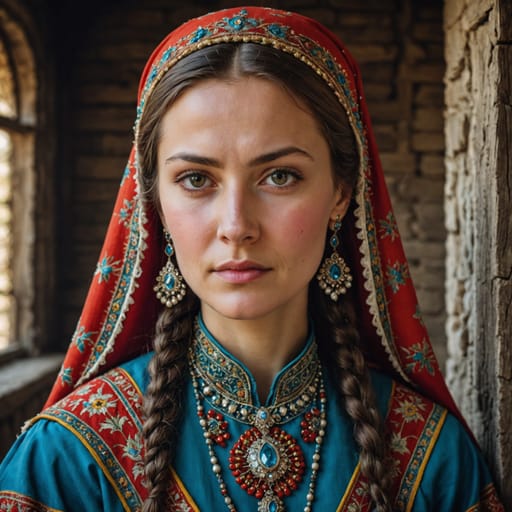
Crimean Tatar
same region (Eastern Europe)
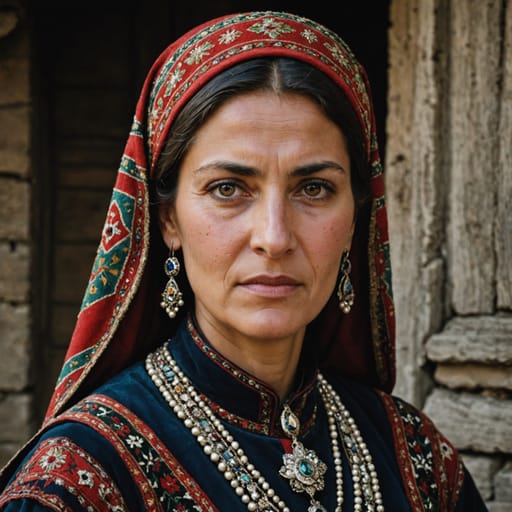
Kabardians
same region (Eastern Europe)
Yotvingians
same region (Eastern Europe)
Typical Poleshuks Phenotypes
Reference for AI generation: hair, eyes, skin, facial structure, build
Poleshuks Body & Anatomy Reference
Anatomy by feature, Eastern European / Slavic phenotype
Poleshuks Boobs & Breasts
Poleshuks boobs follow the Eastern European / Slavic profile: medium-to-large cup, full, moderate-to-high projection. Areolar diameter is usually 30-44mm, and the coloring is light-pink to medium-brown areolar pigmentation against the fair-to-light-brown skin tone. Breast shape tracks body composition (mesomorph, full hip-and-bust deposition, mean adult female BMI 23-26), so Poleshuks breasts tend to be full and projecting, classic Eastern European curvy bust. Expect a forward-set shape, not the smaller East Asian bust.
Poleshuks Ass & Hips
Poleshuks ass and hip morphology presents as medium-to-full, moderate-to-high projection, distinctly different from the slim narrow-hip East Asian profile. The Poleshuks pelvic profile shows medium iliac crests, full gluteal-femoral fat deposition, anchored in the Eastern European / Slavic skeletal pattern. Poleshuks butt shots in adult AI imagery should render the medium-to-full, moderate-to-high projection silhouette with the overall build (mesomorph, full hip-and-bust deposition) and the fat distribution typical of the Eastern European / Slavic phenotype.
Poleshuks Vagina & Pussy
Poleshuks pussy anatomy typically shows light-pink to medium-brown labial pigmentation, varied labia minora. Pubic hair is usually wavy medium texture, blond to dark-brown. In AI-generated Poleshuks nudes, labial color should blend into the fair to light skin with a gradual transition, and the hair should keep its wavy medium texture.
Poleshuks Dicks & Penis
Penis reference for Poleshuks men: regional mean ~13-14cm erect, moderate girth. Coloring: light-pink to medium-brown shaft pigmentation. An accurate Poleshuks cock in AI imagery matches the surrounding fair to light skin rather than a generic porn default. Circumcision depends on religion and custom, not ancestry.
Poleshuks Body, Curves & Build
The Poleshuks figure is generally mesomorph, full hip-and-bust deposition, with mean adult female BMI 23-26, characteristic of Eastern European / Slavic ancestry. AI image tools tend to flatten regional body types into a few stock shapes; here the Poleshuks build is kept as its own reference.
Poleshuks Skin Tone & Hair Texture
Skin: fair to light (Fitzpatrick II-III). Hair: straight-to-wavy 1A-2B, light-blond to dark-brown. Both are typical of Eastern European / Slavic ancestry. The most common mistake in AI nudes of Poleshuks women is a body rendered lighter than the face.
Explore phenotype categories
Structured taxonomy with peer-reviewed scales · 22 anatomical categories
Erotic Poses & Sex Positions
From the pose catalog: 219 named positions with reference skeletons
Frequently asked questions about Poleshuks people
Where is the Poleshuks homeland?
The Poleshuks homeland is Polesia, the forested wetland of the Pripyat River basin in southern Belarus and northern Ukraine, extending into eastern Poland and western Russia in Eastern Europe.
What language do Poleshuks people speak?
Poleshuks people primarily speak Polesian dialects (Indo-European, Slavic, East Slavic), transitional between Belarusian and Ukrainian; standard Belarusian, Ukrainian and Russian are also used.
What religion do Poleshuks people practice?
The predominant religion among Poleshuks people is Mainly Eastern Orthodox Christian, with notable Baptist and Pentecostal communities and surviving folk farming customs.






Make your own Poleshuks images
Five a day, free, no credits to buy. The studio starts from this group's phenotype data, so you can set body type, pose and style and keep the traits accurate.
Start with Poleshuks