No portrait yet
Yotvingians Erotic
Sudovia (Yotvingia), the lake and forest country between the Neman and Narew rivers: northeastern Poland, southwestern Lithuania and western Belarus
Yotvingian, also called Sudovian (West Baltic, Indo-European), extinct by the seventeenth century
Baltic paganism; Christianized only after the Teutonic conquest
West Balts, alongside the Old Prussians and Galindians; tribes included the Sudovians, Dainavians, Pollexians and Yotvingians proper
About Yotvingians People
The Yotvingians were a West Baltic people who held the lake and forest country between the Neman and Narew rivers, now northeastern Poland, southwestern Lithuania and western Belarus, from at least the second century CE until the Teutonic Order broke them in 1283. The survivors were deported or absorbed over the following centuries by Lithuanians, Poles, Old Prussians and Ruthenians. Nobody is a Yotvingian today, but the Suwałki region of Poland and the Lithuanian districts of Suvalkija and Dzūkija sit on their old ground and carry part of their descent.
What set them apart from their Baltic cousins was reputation. They spoke a West Baltic language close to Old Prussian and more distant from Lithuanian, but chroniclers on every side remembered them for war. Ptolemy noted the Sudini in the second century. The Rus chronicles record Vladimir of Kiev marching against the Yatvyagi in 983, and for the next three hundred years Yotvingian raiding parties struck Masovia, Volhynia and the Rus borderlands while Polish dukes, Galician princes and finally the Teutonic Knights answered in kind. Peter of Dusburg, the Order's own chronicler, called the Sudovians the noblest and richest of the Prussian tribes and credited them with six thousand horsemen. Their last major leader, Skomantas, fought the Knights for years before submitting, and the Order deported whole communities to a corner of the Sambian peninsula that Germans went on calling the Sudauer Winkel. The emptied homeland became the Great Wilderness, a buffer that stayed largely unsettled until Lithuanian, Masovian and Ruthenian colonists moved in during the fifteenth and sixteenth centuries.
They stayed pagan to the end. The barrows of the early Sudovian culture around Suwałki, including the Szwajcaria cemetery, hold graves furnished with weapons, bronze ornaments and sacrificed horses. By the Middle Ages the Yotvingians cremated their dead. A sixteenth-century German text known as the Sudovian Book describes the deported community in Sambia still sacrificing a goat at communal feasts, with a priest blessing the animal and the beer while villagers confessed their faults. The name itself covered several tribes, the Sudovians, Dainavians, Pollexians and the Yotvingians proper, which is why Lithuanian sources say Sūduva and Polish ones say Jaćwież for the same people. Their language survives only in place names and personal names, plus a disputed Polish-Yotvingian glossary that surfaced in 1978. Hill forts such as Szurpiły still stand, a nineteenth-century Russian census still found some thirty thousand people near Grodno calling themselves Yotvingians, and the name lives on in the Lithuanian regional identity of Suvalkija.
Related ethnic groups
Groups that share Yotvingians's homeland, region, language, or religious tradition. These are likely candidates for comparative phenotype reference.
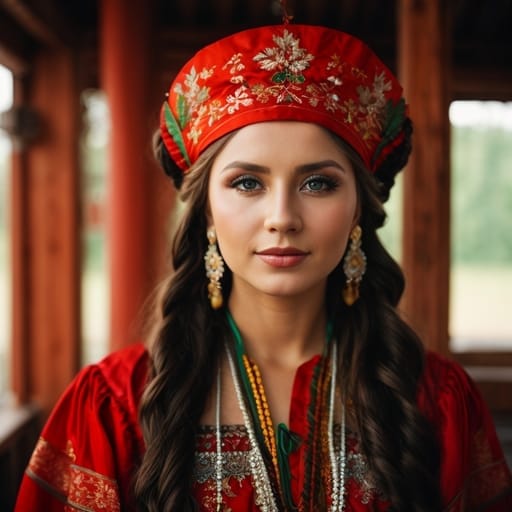
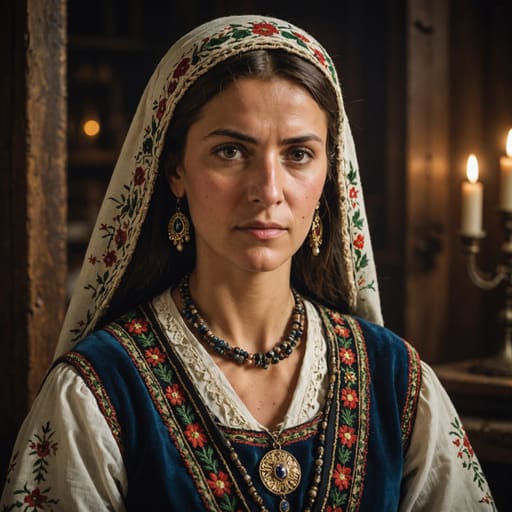
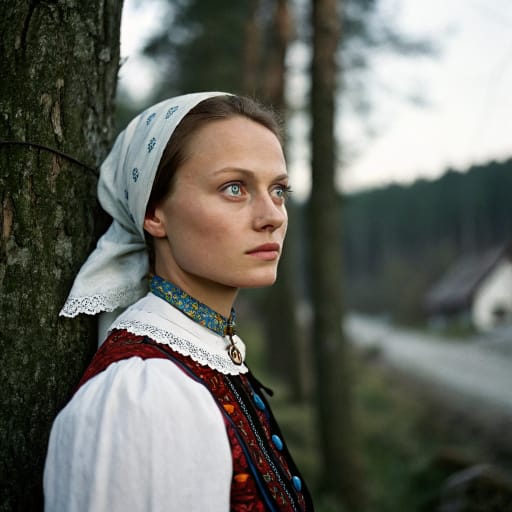
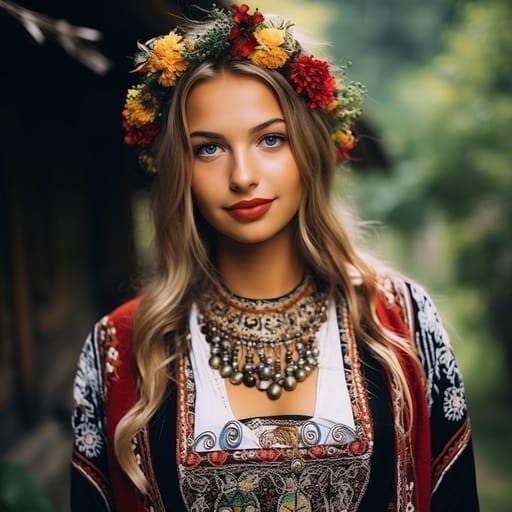
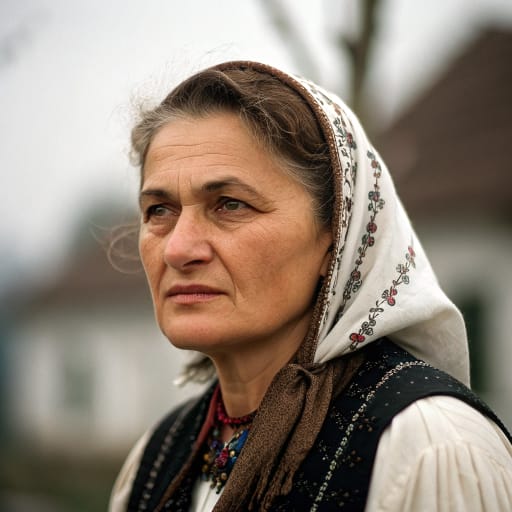
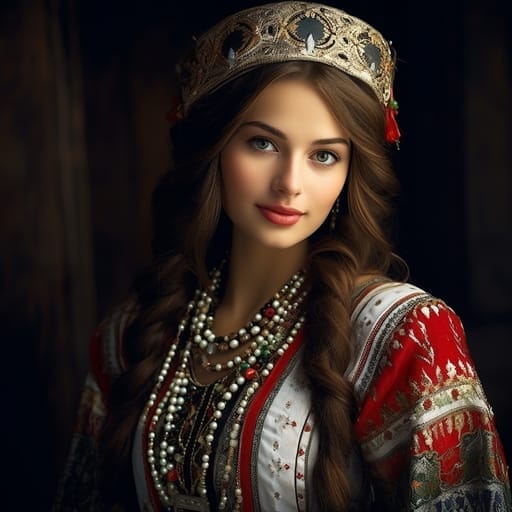
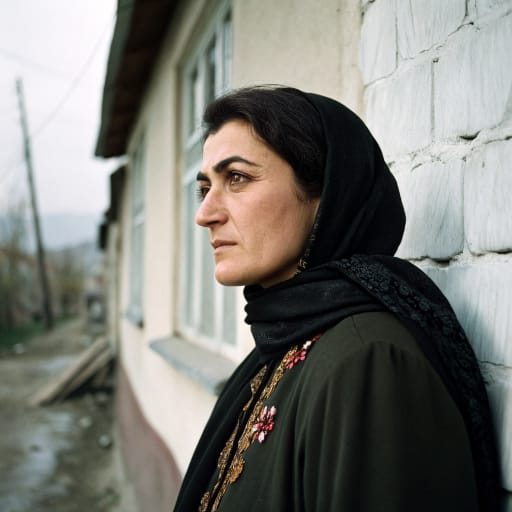
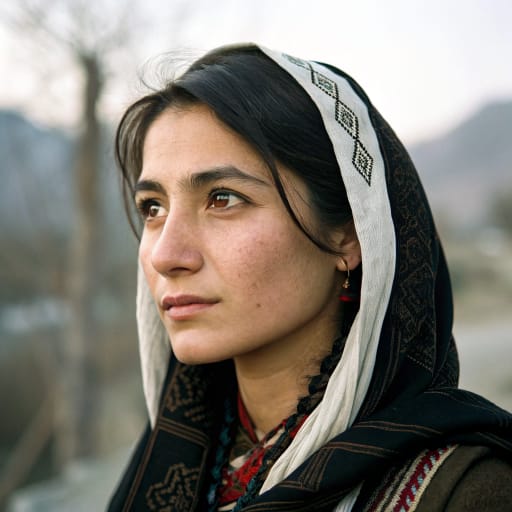
Typical Yotvingians Phenotypes
Reference for AI generation: hair, eyes, skin, facial structure, build
Yotvingians Body & Anatomy Reference
Eastern European / Slavic phenotype: anatomy reference for AI nude generation
Yotvingians Boobs & Breasts
Bust reference for Yotvingians women: medium-to-large cup, full, moderate-to-high projection, which is typical of Eastern European / Slavic ancestry. Areolas measure about 30-44mm across, with light-pink to medium-brown pigmentation. Body type (mesomorph, full hip-and-bust deposition) shapes the bust as well, so Yotvingians tits are usually full and projecting, classic Eastern European curvy bust. In AI imagery, keep the forward-set shape rather than drifting toward the smaller East Asian bust.
Yotvingians Ass & Hips
The Yotvingians ass is typically medium-to-full, moderate-to-high projection, which sets it apart from the slim narrow-hip East Asian profile. Underneath, the pelvis shows medium iliac crests, full gluteal-femoral fat deposition, part of the Eastern European / Slavic skeletal pattern. For Yotvingians butt pics and AI renders, match that silhouette and the overall build (mesomorph, full hip-and-bust deposition).
Yotvingians Vagina & Pussy
Yotvingians pussy and vulvar anatomy presents light-pink to medium-brown labial pigmentation, varied labia minora, consistent with the Eastern European / Slavic phenotype's pigmentation pattern. Yotvingians pubic hair is typically wavy medium texture, blond to dark-brown, in the inverted-triangle pattern. For anatomically accurate Yotvingians pussy renders the labial coloration should match the surrounding fair to light skin tone with a continuous gradient, and the hair should keep its wavy medium texture.
Yotvingians Dicks & Penis
Yotvingians dicks follow the Eastern European / Slavic reference data: regional mean ~13-14cm erect; moderate girth; light-pink to medium-brown shaft pigmentation. Shaft color should track the fair to light skin tone with a smooth change toward the glans, and Yotvingians pubic hair keeps its wavy medium texture.
Yotvingians Body, Curves & Build
Yotvingians body type and overall build presents as mesomorph, full hip-and-bust deposition, with mean adult female BMI 23-26: the characteristic Eastern European / Slavic habitus. Yotvingians curves and proportions should keep the regional skeletal frame (height, shoulder-to-hip ratio, limb proportions) rather than a generic mesomorph default.
Yotvingians Skin Tone & Hair Texture
Yotvingians skin sits in the fair to light (Fitzpatrick II-III) band. Hair is typically straight-to-wavy 1A-2B, light-blond to dark-brown, in keeping with the Eastern European / Slavic phenotype. In nude renders the skin should stay one even tone from face to body, and body, pubic and head hair should match.
Explore phenotype categories
Structured taxonomy with peer-reviewed scales · 22 anatomical categories
Erotic Poses & Sex Positions
From the pose catalog: 219 named positions with reference skeletons
Frequently asked questions about Yotvingians people
Where is the Yotvingians homeland?
The Yotvingians homeland is Sudovia (Yotvingia), the lake and forest country between the Neman and Narew rivers: northeastern Poland, southwestern Lithuania and western Belarus in Eastern Europe.
What language do Yotvingians people speak?
Yotvingians people primarily speak Yotvingian, also called Sudovian (West Baltic, Indo-European), extinct by the seventeenth century.
What religion do Yotvingians people practice?
The predominant religion among Yotvingians people is Baltic paganism; Christianized only after the Teutonic conquest.






Make your own Yotvingians images
Five a day, free, no credits to buy. The studio starts from this group's phenotype data, so you can set body type, pose and style and keep the traits accurate.
Start with Yotvingians