No portrait yet
Costoboci Erotic
The upper Dniester and Prut basins on the northern flank of the Carpathians, in present day western Ukraine, northern Moldova and northeastern Romania.
Undocumented beyond personal names, which read Thraco-Dacian; presumed to have spoken Dacian (Indo-European, Daco-Thracian).
Not attested. Presumed polytheism of the Dacian kind; none of their own rites are recorded.
Usually classed among the free Dacians, the tribes left outside the Roman province; Ptolemy separately names a Transmontani branch across the mountains.
About Costoboci People
The Costoboci were a people of the northern Carpathians who turn up in Roman writing between roughly the first and fourth centuries AD, and then stop turning up. Their country lay along the upper Dniester and Prut, in what is now western Ukraine, northern Moldova and Romanian Bukovina: wooded hill country above the Dacian plain, close enough to Rome's frontier to matter and far enough past it to stay outside the province. Most historians count them among the free Dacians, the tribes left unconquered when Trajan took Dacia in 106. Ptolemy lists them twice, once in Sarmatia and once as the Transmontani Costoboci, those across the mountains, which may record two branches or may be a mapmaker duplicating himself. Archaeologists usually attach them to the Lipita culture of the upper Dniester, whose pottery and house plans look Dacian, though that match is argued rather than settled. Nothing of their language survives except personal names, and those names read Thraco-Dacian, which is the strongest single piece of evidence against the older theories making them Sarmatian, Celtic or Slavic.
They are remembered for one campaign. Around 170, with Rome tied up in the Marcomannic Wars, the Costoboci crossed the Danube and drove south through Moesia and Thrace into Macedonia, then kept going into Greece itself. At Eleusis they burned the sanctuary of Demeter, whose mysteries had been running for centuries without a break; Pausanias, writing soon after, calls them bandits and remembers a runner from Elateia who died fighting them. Marcus Aurelius paid for the rebuilding. Roman troops broke the raid, and then, within a year or two, the Hasdingi Vandals moved into the Costoboci homeland and took it. After that they are never again a power. One marble monument in Rome holds the whole aftermath: Zia, daughter of Tiatus, a Dacian woman, wife of Pieporus king of the Costoboci, buried in the imperial capital by two grandsons with Dacian names, Natoporus and Drilgisa. A royal house living out its last years inside the empire it had raided. The name itself lasts into the fourth century in Ammianus, by then attached to a stretch of country rather than to anyone doing anything. No living people traces itself to them. What remains is the excavated ground along the Dniester and a permanent open question about who the free Dacians actually were.
Related ethnic groups
Groups that share Costoboci's homeland, region, language, or religious tradition. These are likely candidates for comparative phenotype reference.
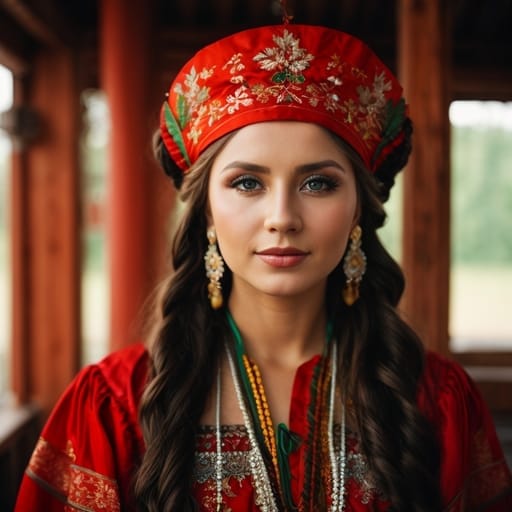
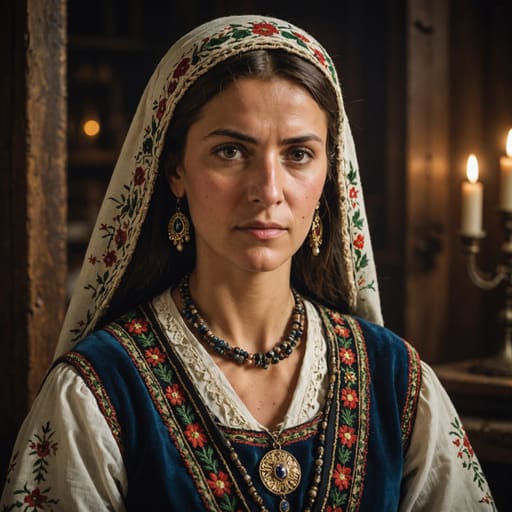
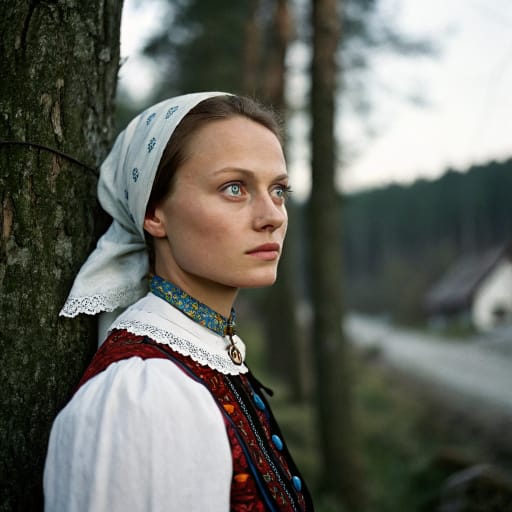
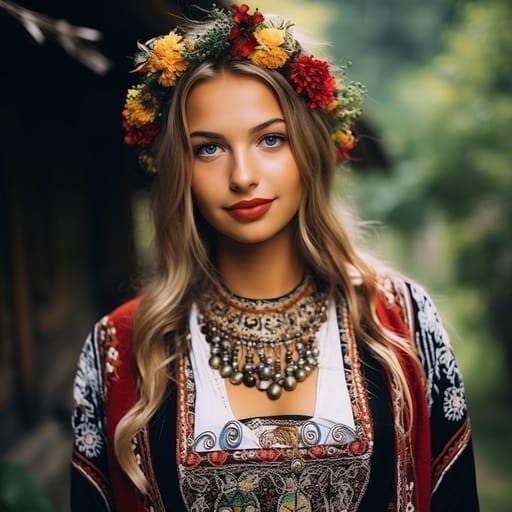
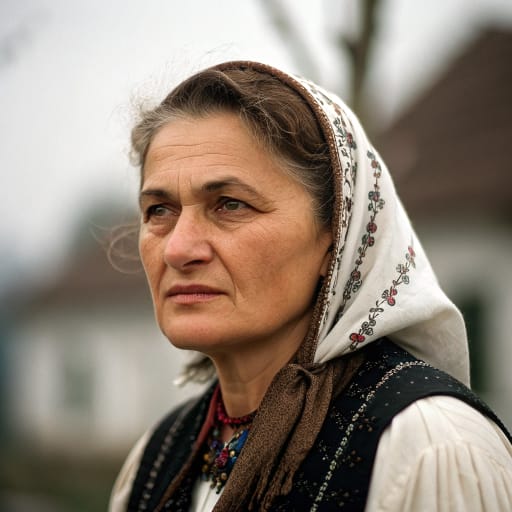
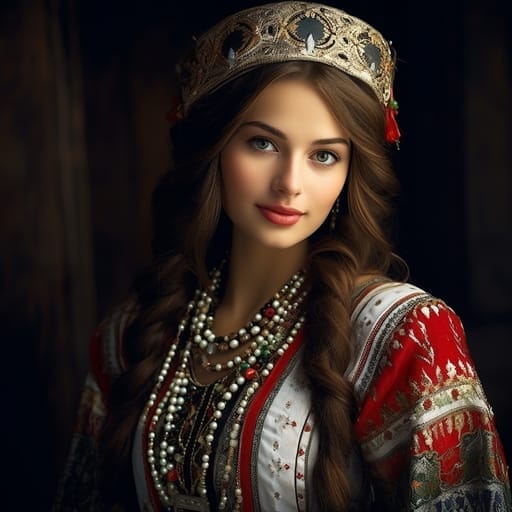
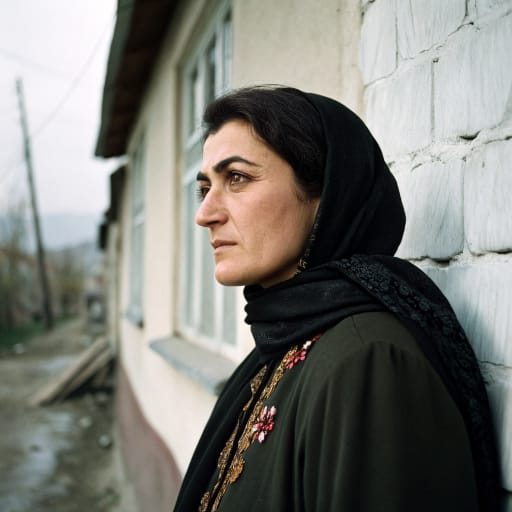
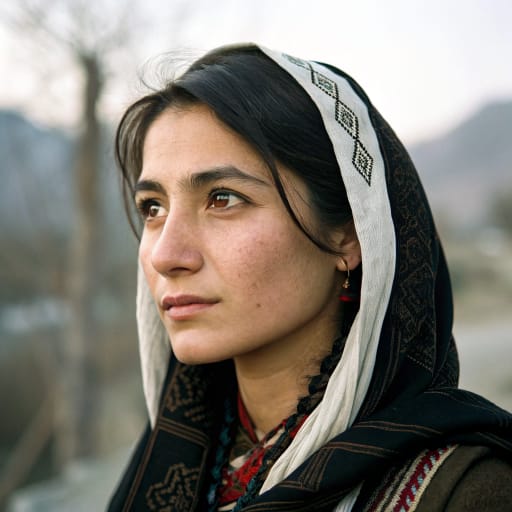
Typical Costoboci Phenotypes
Reference for AI generation: hair, eyes, skin, facial structure, build
Costoboci Body & Anatomy Reference
Anatomy by feature, Eastern European / Slavic phenotype
Costoboci Boobs & Breasts
The typical Costoboci bust is medium-to-large cup, full, moderate-to-high projection, in line with the wider Eastern European / Slavic pattern. Areolas usually fall in the 30-44mm range, with light-pink to medium-brown areolar pigmentation against the fair-to-light-brown skin tone. Compared with the smaller East Asian bust, Costoboci breasts sit forward and are generally full and projecting, classic Eastern European curvy bust. A faithful AI render of Costoboci tits keeps that shape and areola size.
Costoboci Ass & Hips
Butt shape among Costoboci women: medium-to-full, moderate-to-high projection, over medium iliac crests, full gluteal-femoral fat deposition. This follows Eastern European / Slavic ancestry and looks quite unlike the slim narrow-hip East Asian profile. An accurate Costoboci ass in adult AI imagery keeps both the silhouette and the overall build (mesomorph, full hip-and-bust deposition) instead of a generic average.
Costoboci Vagina & Pussy
Vulvar anatomy among Costoboci women: light-pink to medium-brown labial pigmentation, varied labia minora. Pubic hair tends to be wavy medium texture, blond to dark-brown, in the usual inverted-triangle pattern. Both follow Eastern European / Slavic pigmentation, which is why Costoboci pussy renders should not fall back on a pale, sparse Western template.
Costoboci Dicks & Penis
The Costoboci cock profile, from Eastern European / Slavic anthropometric data: regional mean ~13-14cm erect; moderate girth; light-pink to medium-brown shaft pigmentation. Pubic hair has a wavy medium texture and forms the usual inverted-V pattern. Whether Costoboci men are circumcised follows religious and cultural practice rather than phenotype.
Costoboci Body, Curves & Build
Build and curves among Costoboci women follow the Eastern European / Slavic pattern: mesomorph, full hip-and-bust deposition, mean adult female BMI 23-26. Proportions matter as much as skin tone, so Costoboci figures should keep their regional height and limb ratios.
Costoboci Skin Tone & Hair Texture
The Costoboci skin range is fair to light (Fitzpatrick II-III), and hair tends to be straight-to-wavy 1A-2B, light-blond to dark-brown. That combination marks the Eastern European / Slavic phenotype, and skin tone is the trait AI generators most often get wrong for Costoboci women.
Explore phenotype categories
Structured taxonomy with peer-reviewed scales · 22 anatomical categories
Erotic Poses & Sex Positions
From the pose catalog: 219 named positions with reference skeletons
Frequently asked questions about Costoboci people
Where is the Costoboci homeland?
The Costoboci homeland is The upper Dniester and Prut basins on the northern flank of the Carpathians, in present day western Ukraine, northern Moldova and northeastern Romania. in Eastern Europe.
What language do Costoboci people speak?
Costoboci people primarily speak Undocumented beyond personal names, which read Thraco-Dacian; presumed to have spoken Dacian (Indo-European, Daco-Thracian)..
What religion do Costoboci people practice?
The predominant religion among Costoboci people is Not attested. Presumed polytheism of the Dacian kind; none of their own rites are recorded..






Make your own Costoboci images
Five a day, free, no credits to buy. The studio starts from this group's phenotype data, so you can set body type, pose and style and keep the traits accurate.
Start with Costoboci