Help us get this right
Does this portrait look right for Eastern Magyars?
Nobody has judged this one yet. You would be the first.
Eastern Magyars Erotic
Magna Hungaria: the forest steppe between the middle Volga, the Kama and the southern Urals (today's Bashkortostan and Tatarstan, Russia), with smaller branches reported near the Caucasus
Early Hungarian dialects (Ugric branch, Uralic); survivors shifted to the Kipchak Turkic languages of their neighbors
Pagan (traditional Magyar belief) when described by Friar Julian in 1236; descendants absorbed into largely Muslim Bashkir and Tatar populations
Eastern branch of the Magyars; includes the Volga-Ural Magyars of Magna Hungaria and the Savard Magyars of the Caucasus region; kin to the Hungarians and, more distantly, the Mansi and Khanty
About Eastern Magyars People
The Eastern Magyars were the Hungarians who never made it to Hungary. When the main Magyar tribal confederation rode west and took the Carpathian Basin around 895, kindred groups stayed behind on the forest steppe between the middle Volga and the southern Urals, in today's Bashkortostan and Tatarstan in Russia. They held on there as a Hungarian-speaking people until the Mongol invasion of 1236, then scattered and dissolved into their Turkic-speaking neighbors, most likely among the ancestors of the Bashkirs and Volga Tatars.
What sets their story apart is that the western Hungarians remembered them. Chronicles in the Kingdom of Hungary kept a tradition of kinsmen left in the east, and in the 1230s Dominican friars went looking. Friar Julian reached Volga Bulgaria in 1236, met a Hungarian woman who had married into a town there, and followed her directions two days farther to her people. He could speak with them without an interpreter, some three and a half centuries after the split. His report calls their country Magna Hungaria, Great Hungary, and describes pagans who did not farm, kept great horse herds, drank mare's milk, and were well armed and hard to beat. A Mongol envoy was already among them. When Julian came back in 1237 he got no farther than the Rus principalities: Great Hungary had been overrun, and he went home carrying a Mongol ultimatum addressed to King Béla IV.
Their language was an early form of Hungarian, a Ugric tongue of the Uralic family whose nearest living relatives are Mansi and Khanty in western Siberia. It sat as an island among Turkic speakers: Volga Bulgars, Bashkirs, Kipchaks. Archaeology fills in the rest. The Bolshie Tigany cemetery near the lower Kama, and sites of the Kushnarenkovo and Karayakupovo cultures in the southern Urals, hold belt mounts, horse gear and burial face cloths with silver eye and mouth plates that match graves of the conquest generation in Hungary. Recent ancient DNA work ties the two populations together.
Other eastern branches are murkier. The Byzantine emperor Constantine VII wrote that after a Pecheneg attack one part of the Magyars, known to scholars as the Savard Magyars, moved east toward Persia, probably into the Caucasus region, and that the western Hungarians still exchanged messages with them in the tenth century. The ruined town of Madjar on the Kuma River has long been linked to them, though that connection is disputed. What survives today is mostly names. The Bashkir clans Yurmaty and Yeney echo the Hungarian tribes Gyarmat and Jenő, and in Hungary the cousins who stayed behind remain a live piece of national memory.
Related ethnic groups
Groups that share Eastern Magyars's homeland, region, language, or religious tradition. These are likely candidates for comparative phenotype reference.
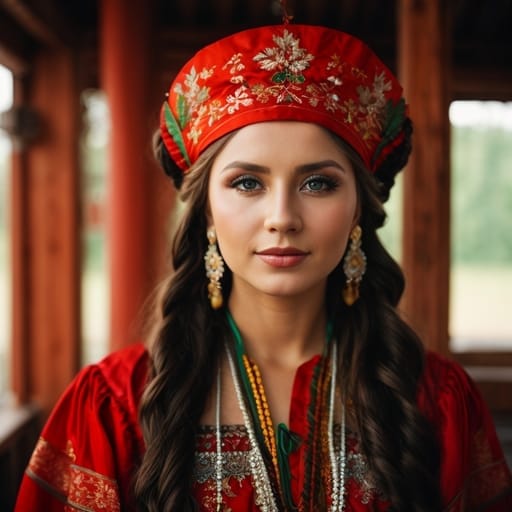
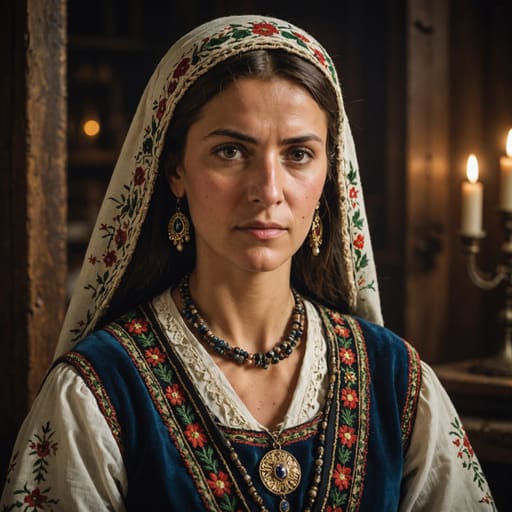
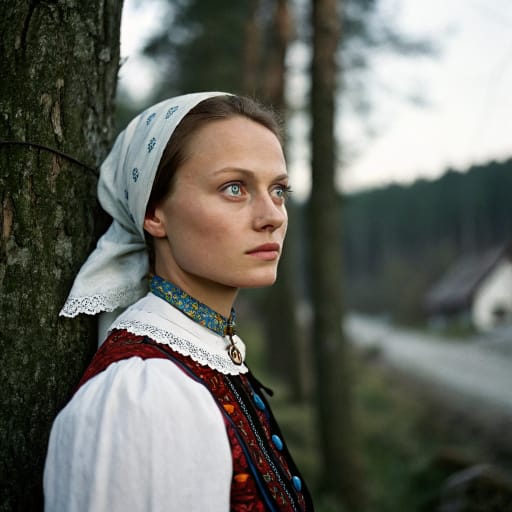
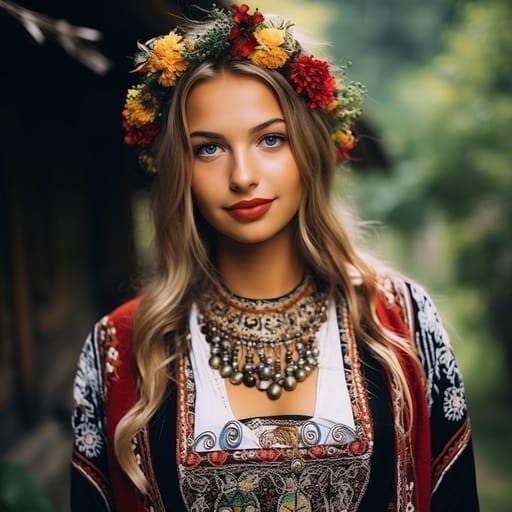
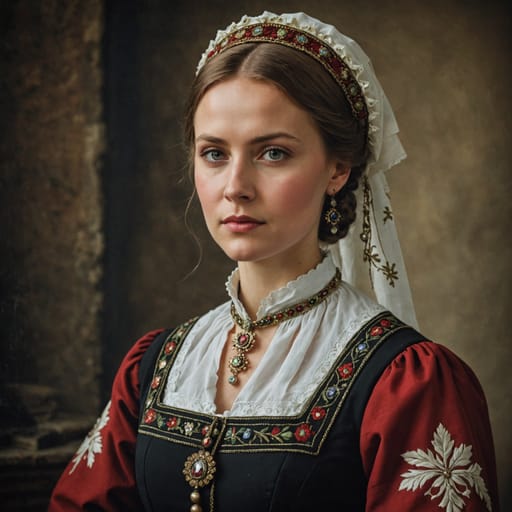
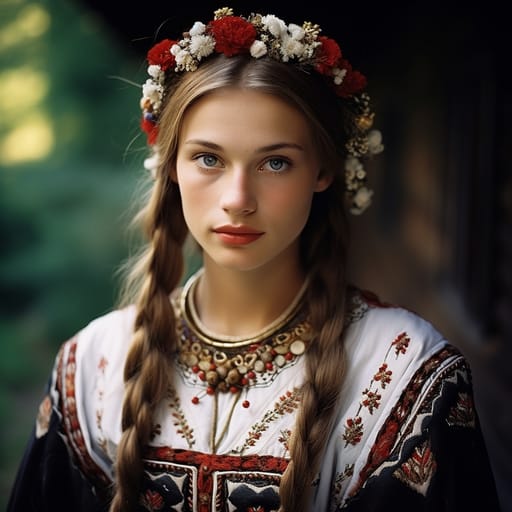
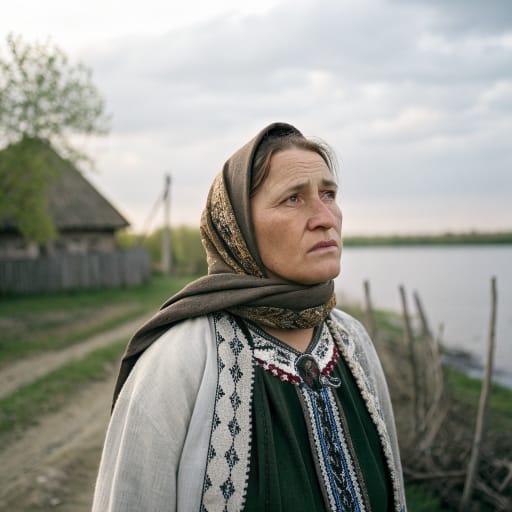
Typical Eastern Magyars Phenotypes
Reference for AI generation: hair, eyes, skin, facial structure, build
Eastern Magyars Body & Anatomy Reference
Per-feature anatomical profile for AI nude generation: Eastern European / Slavic phenotype
Eastern Magyars Boobs & Breasts
Eastern Magyars boobs follow the Eastern European / Slavic profile: medium-to-large cup, full, moderate-to-high projection. Areolar diameter is usually 30-44mm, and the coloring is light-pink to medium-brown areolar pigmentation against the fair-to-light-brown skin tone. Breast shape tracks body composition (mesomorph, full hip-and-bust deposition, mean adult female BMI 23-26), so Eastern Magyars breasts tend to be full and projecting, classic Eastern European curvy bust. Expect a forward-set shape, not the smaller East Asian bust.
Eastern Magyars Ass & Hips
Eastern Magyars ass and hip morphology presents as medium-to-full, moderate-to-high projection, distinctly different from the slim narrow-hip East Asian profile. The Eastern Magyars pelvic profile shows medium iliac crests, full gluteal-femoral fat deposition, anchored in the Eastern European / Slavic skeletal pattern. Eastern Magyars butt shots in adult AI imagery should render the medium-to-full, moderate-to-high projection silhouette with the overall build (mesomorph, full hip-and-bust deposition) and the fat distribution typical of the Eastern European / Slavic phenotype.
Eastern Magyars Vagina & Pussy
Eastern Magyars pussy anatomy typically shows light-pink to medium-brown labial pigmentation, varied labia minora. Pubic hair is usually wavy medium texture, blond to dark-brown. In AI-generated Eastern Magyars nudes, labial color should blend into the fair to light skin with a gradual transition, and the hair should keep its wavy medium texture.
Eastern Magyars Dicks & Penis
Penis reference for Eastern Magyars men: regional mean ~13-14cm erect, moderate girth. Coloring: light-pink to medium-brown shaft pigmentation. An accurate Eastern Magyars cock in AI imagery matches the surrounding fair to light skin rather than a generic porn default. Circumcision depends on religion and custom, not ancestry.
Eastern Magyars Body, Curves & Build
The Eastern Magyars figure is generally mesomorph, full hip-and-bust deposition, with mean adult female BMI 23-26, characteristic of Eastern European / Slavic ancestry. AI image tools tend to flatten regional body types into a few stock shapes; here the Eastern Magyars build is kept as its own reference.
Eastern Magyars Skin Tone & Hair Texture
Skin: fair to light (Fitzpatrick II-III). Hair: straight-to-wavy 1A-2B, light-blond to dark-brown. Both are typical of Eastern European / Slavic ancestry. The most common mistake in AI nudes of Eastern Magyars women is a body rendered lighter than the face.
Explore phenotype categories
Structured taxonomy with peer-reviewed scales · 22 anatomical categories
Erotic Poses & Sex Positions
From the pose catalog: 219 named positions with reference skeletons
Frequently asked questions about Eastern Magyars people
Where is the Eastern Magyars homeland?
The Eastern Magyars homeland is Magna Hungaria: the forest steppe between the middle Volga, the Kama and the southern Urals (today's Bashkortostan and Tatarstan, Russia), with smaller branches reported near the Caucasus in Eastern Europe.
What language do Eastern Magyars people speak?
Eastern Magyars people primarily speak Early Hungarian dialects (Ugric branch, Uralic); survivors shifted to the Kipchak Turkic languages of their neighbors.
What religion do Eastern Magyars people practice?
The predominant religion among Eastern Magyars people is Pagan (traditional Magyar belief) when described by Friar Julian in 1236; descendants absorbed into largely Muslim Bashkir and Tatar populations.






Make your own Eastern Magyars images
Five a day, free, no credits to buy. The studio starts from this group's phenotype data, so you can set body type, pose and style and keep the traits accurate.
Start with Eastern Magyars