Help us get this right
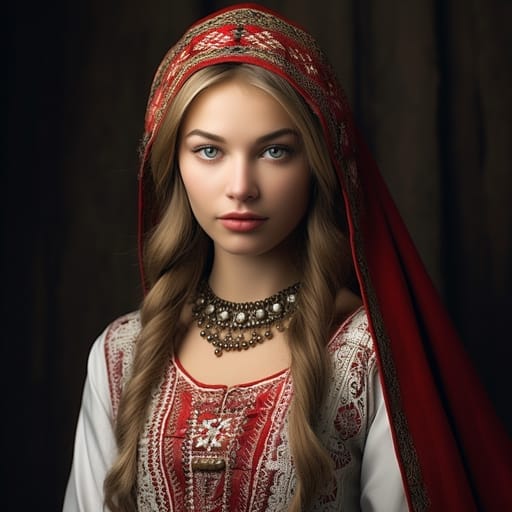
Does this portrait look right for Transylvanian Saxons?
One tap. It takes a second and it is recorded.
0 say it looks right, 1 says it looks off.
Transylvanian Saxons Erotic
Southern and northeastern Transylvania in central Romania, around Sibiu, Brașov, Sighișoara, Mediaș and Bistrița; most now live in Germany, with smaller communities in Austria and North America
Transylvanian Saxon (Germanic, West Central German dialect close to Luxembourgish); Standard German (Germanic) in church and school; Romanian (Romance) widely spoken
Mostly Lutheran since the 16th-century Reformation, in the Evangelical Church of the Augsburg Confession in Romania
Part of the Germans of Romania; regional groups in the King's Land around Sibiu, the Burzenland around Brașov and the Nösnerland around Bistrița; closely tied to the Transylvanian Landlers
About Transylvanian Saxons People
Most of the Transylvanian Saxons' ancestors never saw Saxony. The medieval Hungarian crown used the name for German-speaking settlers in general, and it stuck. From the 12th century on, Hungarian kings invited colonists to farm, mine and hold the kingdom's southeastern frontier. Many came from the Rhine and Moselle country around present-day Luxembourg, and their dialect still shows it. A Luxembourger listening to an older villager from outside Sibiu hears something close to home, while a speaker of standard German may struggle to follow.
For eight centuries, law, church and stone held them together. A royal charter of 1224, the Andreanum, gave the settlers of the King's Land their own courts and elected officials. Their shared self-government, the Saxon University, lost its political powers only in 1876. The towns they built as Hermannstadt, Kronstadt, Schässburg, Mediasch and Bistritz are today's Sibiu, Brașov, Sighișoara, Mediaș and Bistrița. In the villages, centuries of Tatar and Ottoman raids pushed people to put walls around their churches. More than a hundred of these fortified churches still stand, and several are on the UNESCO World Heritage list. Some still have storerooms along the walls where each family kept grain and smoked bacon in case of a siege.
The Reformation took hold early and almost completely. Led by the humanist Johannes Honterus in Kronstadt in the 1540s, the Saxons became Lutheran nearly as one body, and village life was built around the parish. Neighborhood associations, the Nachbarschaften, organized mutual help for everything from raising a roof to burying the dead. Youth brotherhoods and sisterhoods ran the dances and kept an eye on how unmarried young people behaved.
The 20th century nearly ended the community in its homeland. Transylvania passed to Romania after 1918. In January 1945, tens of thousands of ethnic Germans from Romania, Saxons among them, were deported to forced labor in the Soviet Union, and communist land reform took Saxon farms. Under Ceaușescu, West Germany paid Bucharest to let ethnic Germans emigrate, and after 1989 most of those still in Transylvania left within a few years. The largest Saxon community is now in Germany, where it gathers every Pentecost in Dinkelsbühl. The small group that stayed carries more weight than its numbers suggest: Sibiu elected a Saxon mayor, Klaus Iohannis, in 2000, and he went on to serve as president of Romania.
Related ethnic groups
Groups that share Transylvanian Saxons's homeland, region, language, or religious tradition. These are likely candidates for comparative phenotype reference.
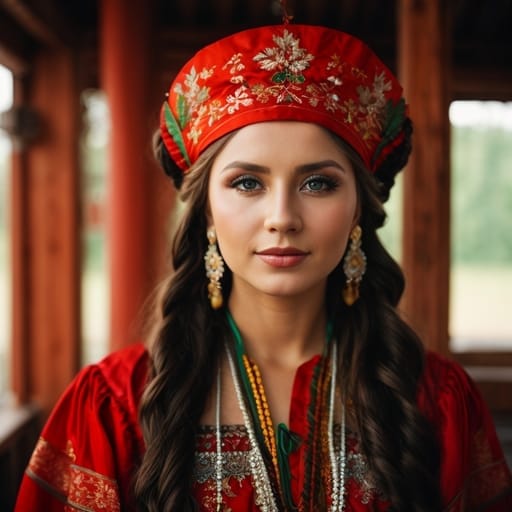
Belarusians
same region (Eastern Europe)
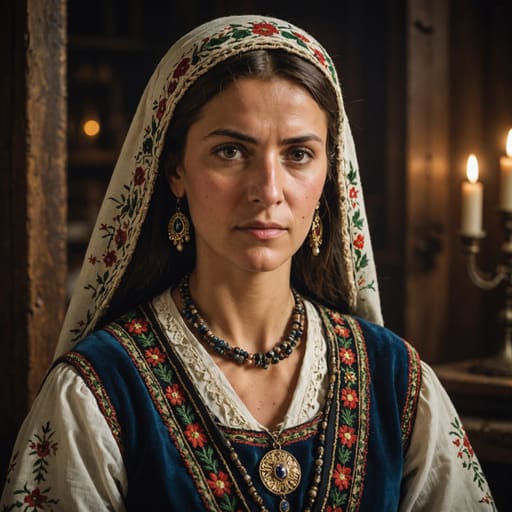
Bulgarians
same region (Eastern Europe)
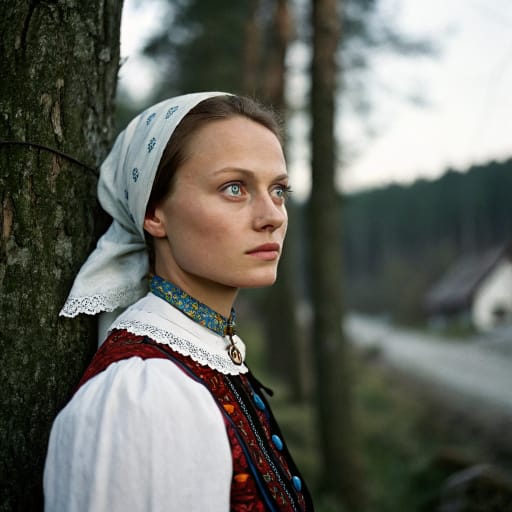
Czechs
same region (Eastern Europe)
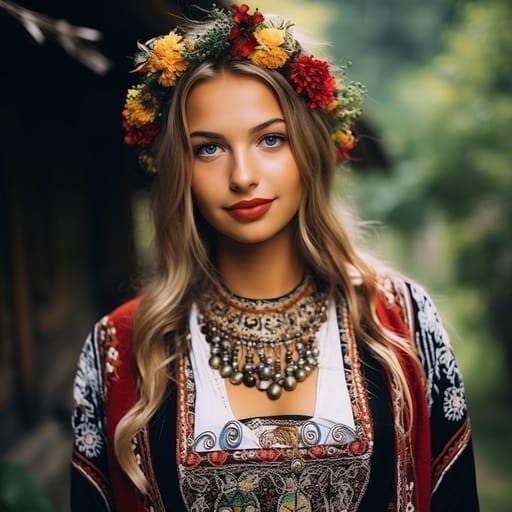
Slovaks
same region (Eastern Europe)
Vistulans
same region (Eastern Europe)
Pogórzanie
same region (Eastern Europe)
Unterlander Jews
same region (Eastern Europe)
Russians
same region (Eastern Europe)
Typical Transylvanian Saxons Phenotypes
Reference for AI generation: hair, eyes, skin, facial structure, build
Transylvanian Saxons Body & Anatomy Reference
Eastern European / Slavic phenotype: anatomy reference for AI nude generation
Transylvanian Saxons Boobs & Breasts
Transylvanian Saxons tits and boobs run medium-to-large cup, full, moderate-to-high projection, the classic Eastern European / Slavic bust profile. Transylvanian Saxons nipples and areolas show light-pink to medium-brown areolar pigmentation against the fair-to-light-brown skin tone, with areolar diameter typically in the 30-44mm range and forward-set positioning rather than the smaller East Asian bust. Transylvanian Saxons breasts trend full and projecting, classic Eastern European curvy bust, a function of the mesomorph, full hip-and-bust deposition body habitus and the mean adult female BMI 23-26. For anatomically accurate AI-generated Transylvanian Saxons nudes the render preserves the medium-to-large cup, full, moderate-to-high projection shape, 30-44mm areolas with light-pink to medium-brown pigmentation, and the torso proportions of the Eastern European / Slavic phenotype.
Transylvanian Saxons Ass & Hips
Transylvanian Saxons hips and butt usually read as medium-to-full, moderate-to-high projection. The skeletal base is medium iliac crests, full gluteal-femoral fat deposition, the Eastern European / Slavic pattern. Set against the slim narrow-hip East Asian profile, the difference is easy to see, and the hip-to-waist ratio is often what identifies Transylvanian Saxons women in photos.
Transylvanian Saxons Vagina & Pussy
Expect light-pink to medium-brown labial pigmentation, varied labia minora on Transylvanian Saxons women, in keeping with Eastern European / Slavic ancestry. The pubic hair is wavy medium texture, blond to dark-brown. Coloring should run evenly from the fair to light skin of the thighs to the labia, and Transylvanian Saxons nude imagery should keep the hair's wavy medium texture.
Transylvanian Saxons Dicks & Penis
Transylvanian Saxons dick and penile anatomy in adult AI generation should anchor on the regional reference data: regional mean ~13-14cm erect, moderate girth, and light-pink to medium-brown shaft pigmentation. The Transylvanian Saxons cock profile reflects the Eastern European / Slavic population's anthropometric measurements. The shaft pigmentation should track the surrounding fair to light skin tone, and the pubic hair should keep its wavy medium texture in the typical inverted-V escutcheon.
Transylvanian Saxons Body, Curves & Build
Transylvanian Saxons body type: mesomorph, full hip-and-bust deposition, with mean adult female BMI 23-26. This is the typical Eastern European / Slavic build. Height range, shoulder-to-hip ratio and fat distribution all follow from it, which is what an accurate Transylvanian Saxons nude body should show.
Transylvanian Saxons Skin Tone & Hair Texture
Transylvanian Saxons skin tone falls in the fair to light (Fitzpatrick II-III) band, the surface signal most often miscalibrated by generic AI nude generators. Transylvanian Saxons hair texture is typically straight-to-wavy 1A-2B, light-blond to dark-brown, characteristic of the Eastern European / Slavic phenotype. In Transylvanian Saxons nude renders the skin should hold that band consistently across the body.
Explore phenotype categories
Structured taxonomy with peer-reviewed scales · 22 anatomical categories
Erotic Poses & Sex Positions
From the pose catalog: 219 named positions with reference skeletons
Frequently asked questions about Transylvanian Saxons people
Where is the Transylvanian Saxons homeland?
The Transylvanian Saxons homeland is Southern and northeastern Transylvania in central Romania, around Sibiu, Brașov, Sighișoara, Mediaș and Bistrița; most now live in Germany, with smaller communities in Austria and North America in Eastern Europe.
What language do Transylvanian Saxons people speak?
Transylvanian Saxons people primarily speak Transylvanian Saxon (Germanic, West Central German dialect close to Luxembourgish); Standard German (Germanic) in church and school; Romanian (Romance) widely spoken.
What religion do Transylvanian Saxons people practice?
The predominant religion among Transylvanian Saxons people is Mostly Lutheran since the 16th-century Reformation, in the Evangelical Church of the Augsburg Confession in Romania.






Make your own Transylvanian Saxons images
Five a day, free, no credits to buy. The studio starts from this group's phenotype data, so you can set body type, pose and style and keep the traits accurate.
Start with Transylvanian Saxons