No portrait yet
Illyrians Erotic
Western Balkans: the eastern Adriatic coast and its hinterland across modern Albania, Montenegro, Bosnia and Herzegovina, Croatia, Kosovo, and parts of Serbia and North Macedonia
Illyrian (Indo-European, Paleo-Balkan), unwritten and known only from names; Albanian is a possible descendant, Messapic a possible relative
Ancient polytheism with local deities such as Medaurus, Bindus, Vidasus and Thana; Romanized under the Empire, later Christianized
Tribes including the Dalmatae, Ardiaei, Labeatae, Taulantii, Autariatae, Iapodes, Liburni, Daorsi, Enchelei and Dardani (disputed); one of the Paleo-Balkan peoples alongside the Thracians and Greeks
About Illyrians People
The Illyrians were the Indo-European tribes of the western Balkans, holding the eastern Adriatic coast and its mountainous hinterland, roughly modern Croatia, Bosnia, Montenegro, Kosovo and Albania, from the early Iron Age until Rome finished conquering them in AD 9. They were then Romanized over a few generations, overrun by Slavs in the sixth and seventh centuries, and survive today as a name on old maps and as an argument. The argument concerns the Albanians, who speak the only Paleo-Balkan language still alive and are widely, though not conclusively, held to descend from them. The Illyrians never wrote. Everything known of their speech comes from personal and place names copied down by Greeks and Romans, so its relation to Albanian, to Messapic across the sea in Apulia, and to Thracian stays unsettled.
Illyrian was an outsiders' label for dozens of tribes who never saw themselves as one nation: the Dalmatae in the hinterland of the central coast, the Ardiaei and Labeatae in the south around Lake Scutari, the Taulantii near Dyrrhachium, the Autariatae with their mound cemeteries on the Glasinac plateau, the Iapodes and Liburni in the north, the Dardani inland, whose membership is disputed. They lived in hillforts, herded cattle and sheep, worked iron, and buried their dead under tumuli. The coastal tribes built the lembus, a light, fast galley that made them the pirates of the Adriatic and gave Rome its liburna. Rome's first campaign across the Adriatic, in 229 BC, was against Queen Teuta of the Ardiaei, who had told Roman envoys that Illyrian kings did not interfere with private plunder at sea. The kingdom ended in 168 BC when Gentius lost Scodra in a war that took about thirty days.
The interior held out far longer. The revolt of AD 6 to 9, led by two chieftains both named Bato, drew in ten legions and was called by Suetonius the gravest foreign war since Carthage. Afterward Illyricum was split into Dalmatia and Pannonia, and the hills that had fought Rome became its recruiting ground, then its emperors: Diocletian came from near Salona, Constantine from Naissus, Justinian's family from Dardania. What the Illyrians believed is dimly visible in Roman-era inscriptions: a horseman god Medaurus at Risan, a spring god Bindus among the Iapodes, Vidasus and Thana equated with Silvanus and Diana, serpents throughout the iconography, spirals and sun disks hammered into bronze. Strabo says the Iapodes tattooed themselves like the Thracians. Theopompus says the Ardiaei drank hard and kept a subject population he compared to Spartan helots. One small piece of them survives in church: the wide-sleeved tunic Romans associated with Dalmatia, the dalmatica, is still worn by deacons as the dalmatic.
Related ethnic groups
Groups that share Illyrians's homeland, region, language, or religious tradition. These are likely candidates for comparative phenotype reference.
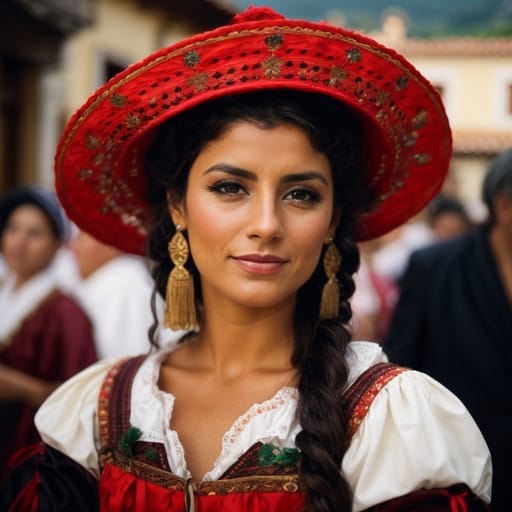
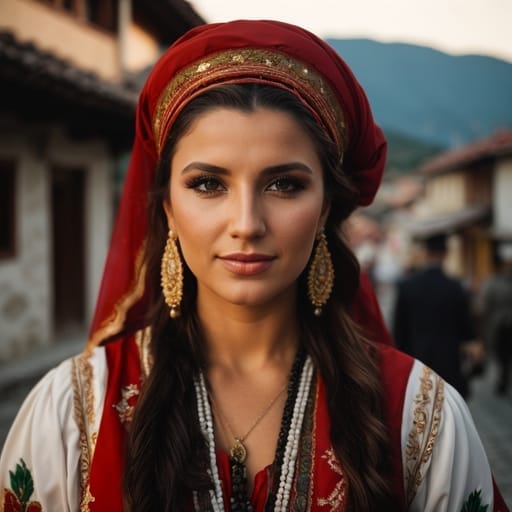
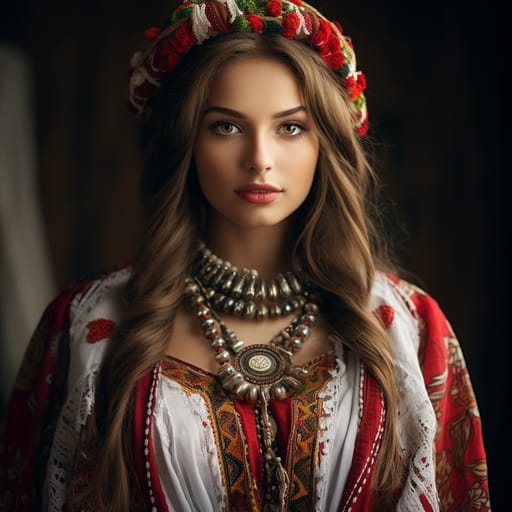
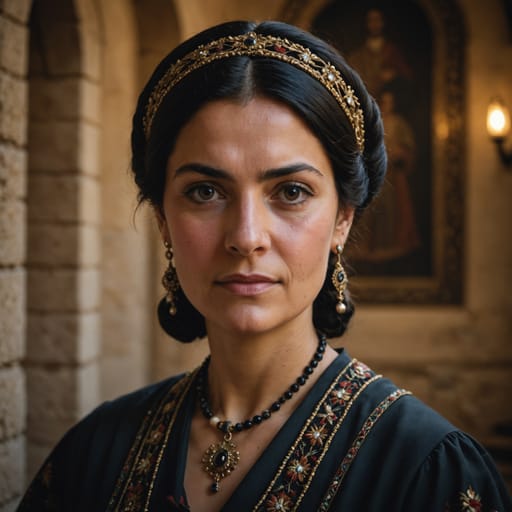
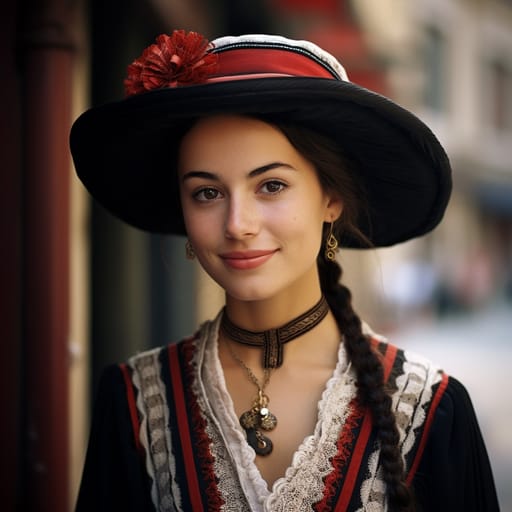
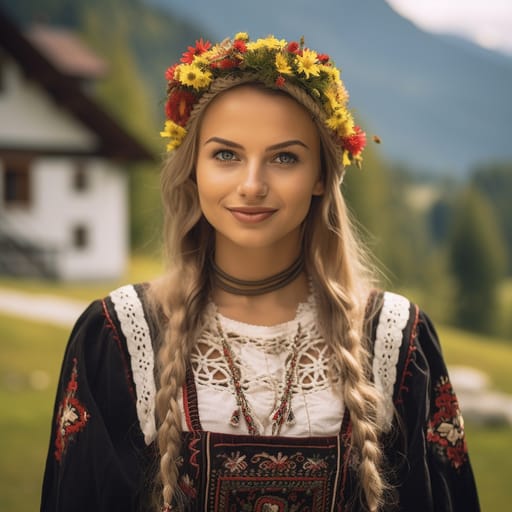
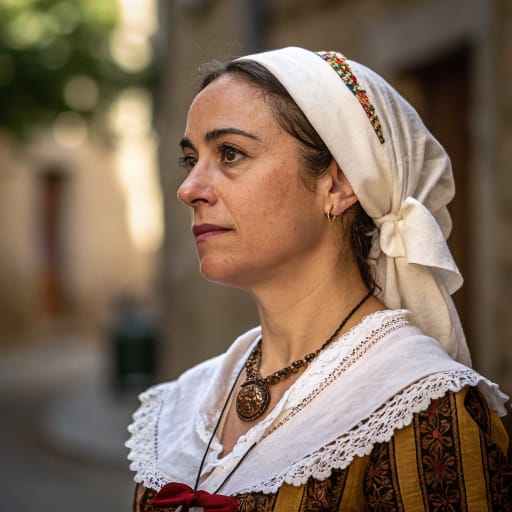
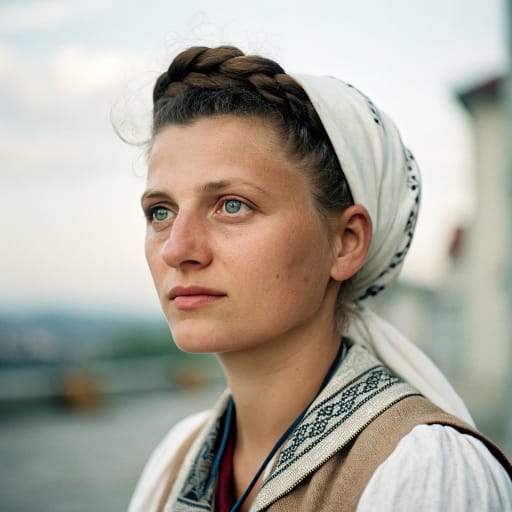
Typical Illyrians Phenotypes
Reference for AI generation: hair, eyes, skin, facial structure, build
Illyrians Body & Anatomy Reference
Anatomy by feature, Southern European / Mediterranean phenotype
Illyrians Boobs & Breasts
The typical Illyrians bust is medium-to-large cup, full, moderate-to-high projection, in line with the wider Southern European / Mediterranean pattern. Areolas usually fall in the 32-46mm range, with medium-brown to dark-brown areolar pigmentation against the olive-to-light-brown skin tone. Compared with the lighter pigmentation of the Northern European bust, Illyrians breasts sit forward and are generally full and projecting, generally the classic Mediterranean curvy bust profile. A faithful AI render of Illyrians tits keeps that shape and areola size.
Illyrians Ass & Hips
Butt shape among Illyrians women: medium-to-full, moderate-to-high projection, broader hip profile, over medium-to-wide iliac crests, full gluteal-femoral fat distribution. This follows Southern European / Mediterranean ancestry and looks quite unlike the slim Northern European narrow-hip pattern. An accurate Illyrians ass in adult AI imagery keeps both the silhouette and the overall build (mesomorph with full hip-and-bust deposition) instead of a generic average.
Illyrians Vagina & Pussy
Vulvar anatomy among Illyrians women: medium-brown to dark-brown labial pigmentation, fuller labia minora. Pubic hair tends to be wavy-to-curly medium-coarse dark texture, dense distribution, in the usual inverted-triangle pattern. Both follow Southern European / Mediterranean pigmentation, which is why Illyrians pussy renders should not fall back on a pale, sparse Western template.
Illyrians Dicks & Penis
The Illyrians cock profile, from Southern European / Mediterranean anthropometric data: regional mean ~13-14cm erect; moderate girth; medium-brown shaft pigmentation. Pubic hair has a wavy-to-curly medium-coarse dark texture and forms the usual inverted-V pattern. Whether Illyrians men are circumcised follows religious and cultural practice rather than phenotype.
Illyrians Body, Curves & Build
Build and curves among Illyrians women follow the Southern European / Mediterranean pattern: mesomorph with full hip-and-bust deposition, mean adult female BMI 24-28. Proportions matter as much as skin tone, so Illyrians figures should keep their regional height and limb ratios.
Illyrians Skin Tone & Hair Texture
The Illyrians skin range is olive to medium (Fitzpatrick III-IV), and hair tends to be wavy-to-curly 2B-3B, dark-brown to black. That combination marks the Southern European / Mediterranean phenotype, and skin tone is the trait AI generators most often get wrong for Illyrians women.
Explore phenotype categories
Structured taxonomy with peer-reviewed scales · 22 anatomical categories
Erotic Poses & Sex Positions
From the pose catalog: 219 named positions with reference skeletons
Frequently asked questions about Illyrians people
Where is the Illyrians homeland?
The Illyrians homeland is Western Balkans: the eastern Adriatic coast and its hinterland across modern Albania, Montenegro, Bosnia and Herzegovina, Croatia, Kosovo, and parts of Serbia and North Macedonia in Southern Europe.
What language do Illyrians people speak?
Illyrians people primarily speak Illyrian (Indo-European, Paleo-Balkan), unwritten and known only from names; Albanian is a possible descendant, Messapic a possible relative.
What religion do Illyrians people practice?
The predominant religion among Illyrians people is Ancient polytheism with local deities such as Medaurus, Bindus, Vidasus and Thana; Romanized under the Empire, later Christianized.






Make your own Illyrians images
Five a day, free, no credits to buy. The studio starts from this group's phenotype data, so you can set body type, pose and style and keep the traits accurate.
Start with Illyrians