No portrait yet
Hupla Erotic
Central highlands of western New Guinea, in the Baliem River country of Highland Papua province, Indonesia
Hupla (Dani, Trans New Guinea); Indonesian widely used as a second language
Christian, mostly Protestant, with older ancestral customs and exchange obligations still observed
Part of the wider Dani cluster of Baliem highland peoples; language closely related to Grand Valley Dani
About Hupla People
The Hupla are a highland people of western New Guinea, and their language is what sets them apart. Hupla belongs to the Dani family. It is spoken in the mountains along the Baliem River in Indonesia's Highland Papua province, next to the Grand Valley Dani varieties that most people in the region speak. Outsiders often count the Hupla as part of the larger Dani population, and the two do share a way of life. But Hupla has its own entry in language catalogs, and language is still the surest way to tell Hupla communities from their neighbors a ridge or two away.
Daily life follows a pattern shared across the Baliem highlands. Families farm steep gardens where sweet potato is the staple food. Pigs are the real measure of wealth: they are given at marriages, paid to settle disputes and killed for feasts. Any large gathering centers on the earth oven, known across Papua as bakar batu, where stones heated in a fire cook pork and tubers in a pit lined with leaves. Traditional compounds are built around the honai, a round house with a thatched roof, a low door and a hearth inside against the mountain cold.
Outsiders arrived late. The Grand Valley of the Baliem first appeared on outside maps after an American expedition flew over it in 1938. Missionaries and Dutch officials did not settle in the highlands until the 1950s, and Indonesian rule followed in the 1960s. Christianity spread through the mountains in those decades, and today most Hupla are Christian, mostly Protestant, with the local church at the center of village life. Conversion did not end older duties. Pig exchanges, obligations to the dead and ties of kinship still shape how families behave toward each other.
One object says a lot about the region: the noken, a looped string bag that women carry hanging from the forehead. It might hold sweet potatoes, firewood or a sleeping baby. UNESCO recognized the noken as cultural heritage needing urgent protection in 2012. Many Hupla now move back and forth between their home villages and Wamena, the highland town that links the region to the rest of Indonesia. Young people go to school in Indonesian, which is taking a growing share of everyday conversation from Hupla itself.
Related ethnic groups
Groups that share Hupla's homeland, region, language, or religious tradition. These are likely candidates for comparative phenotype reference.
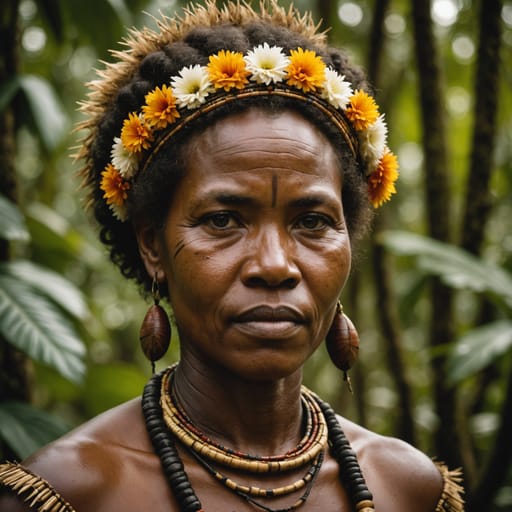
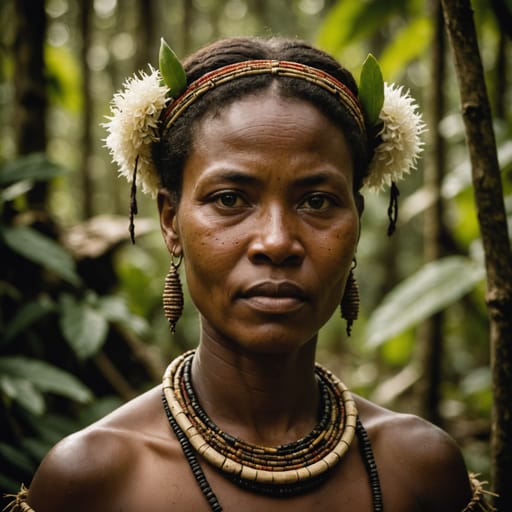
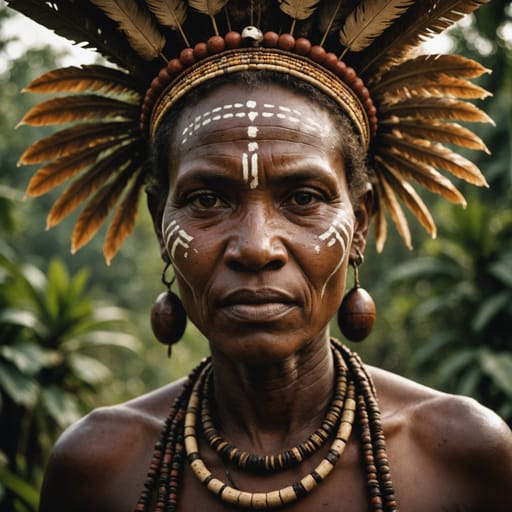
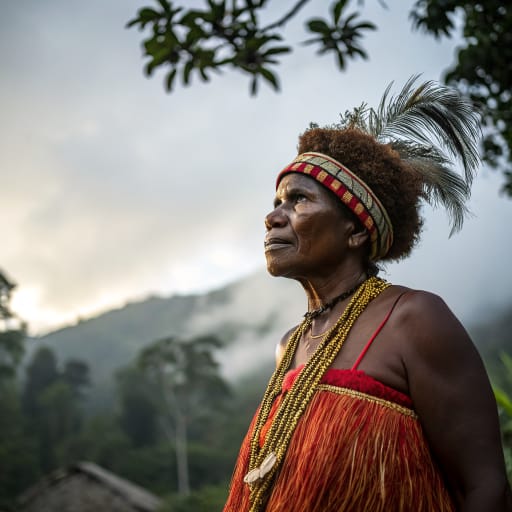
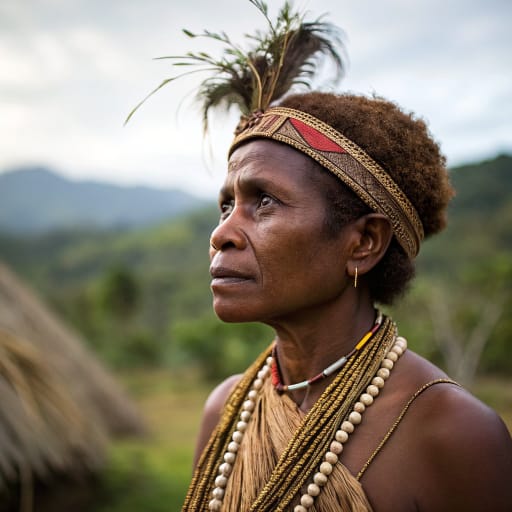
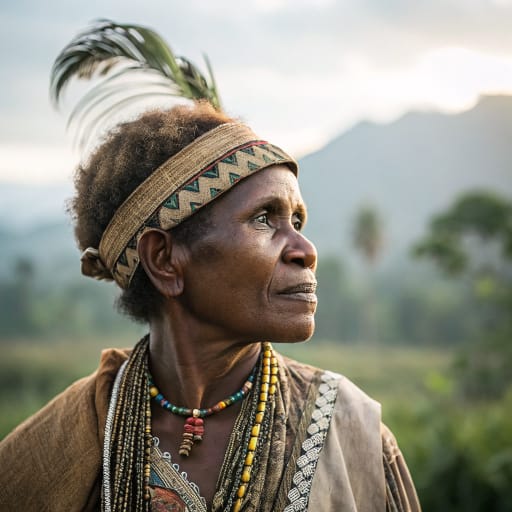
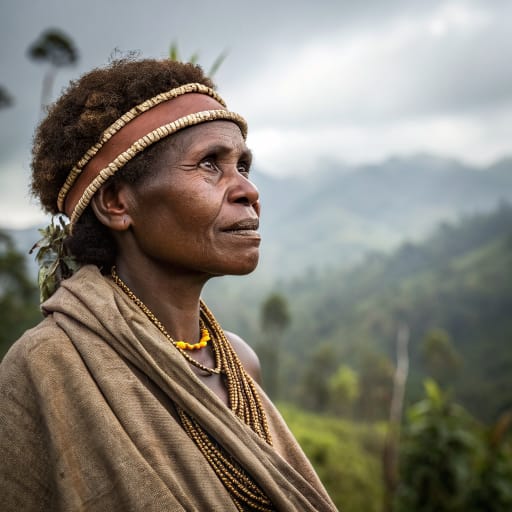
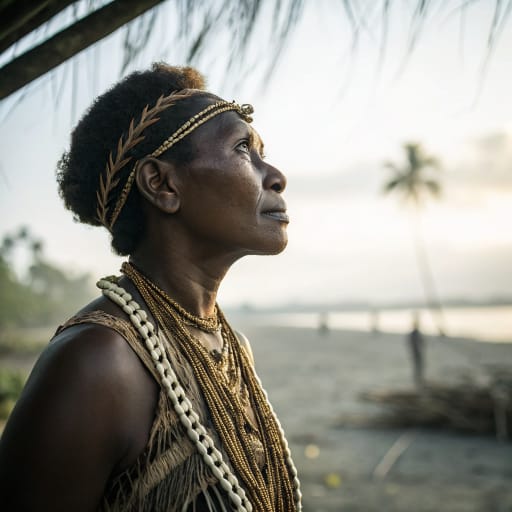
Typical Hupla Phenotypes
Reference for AI generation: hair, eyes, skin, facial structure, build
Hupla Body & Anatomy Reference
Per-feature anatomical profile for AI nude generation: Melanesian / Papuan phenotype
Hupla Boobs & Breasts
Hupla boobs follow the Melanesian / Papuan profile: medium-to-large cup, full, moderate projection. Areolar diameter is usually 32-46mm, and the coloring is deep-brown to near-black areolar pigmentation against the deep-brown skin tone. Breast shape tracks body composition (mesomorph, mean adult female BMI 25-28), so Hupla breasts tend to be full, moderate projection. Expect a forward-set shape, not the smaller Aboriginal Australian bust.
Hupla Ass & Hips
Hupla ass and hip morphology presents as medium-to-full, moderate-to-high projection, distinctly different from the slim Aboriginal Australian narrow-hip profile. The Hupla pelvic profile shows medium-to-wide iliac crests, full gluteal-femoral fat deposition, anchored in the Melanesian / Papuan skeletal pattern. Hupla butt shots in adult AI imagery should render the medium-to-full, moderate-to-high projection silhouette with the overall build (mesomorph) and the fat distribution typical of the Melanesian / Papuan phenotype.
Hupla Vagina & Pussy
Hupla pussy anatomy typically shows deep-brown labial pigmentation. Pubic hair is usually tightly-coiled coarse texture, dense distribution. In AI-generated Hupla nudes, labial color should blend into the deep-brown skin with a gradual transition, and the hair should keep its tightly-coiled coarse texture.
Hupla Dicks & Penis
Penis reference for Hupla men: regional mean ~13cm erect, moderate-to-above-average girth. Coloring: deep-brown shaft pigmentation. An accurate Hupla cock in AI imagery matches the surrounding deep-brown skin rather than a generic porn default. Circumcision depends on religion and custom, not ancestry.
Hupla Body, Curves & Build
The Hupla figure is generally mesomorph, with mean adult female BMI 25-28, characteristic of Melanesian / Papuan ancestry. AI image tools tend to flatten regional body types into a few stock shapes; here the Hupla build is kept as its own reference.
Hupla Skin Tone & Hair Texture
Skin: deep-brown (Fitzpatrick V-VI); the distinctive blond-hair-on-dark-skin trait widely documented in Solomon Islands populations. Hair: tight 4A-4C coil; the blond-on-dark trait is a TYRP1 variant unique to Melanesia. Both are typical of Melanesian / Papuan ancestry. The most common mistake in AI nudes of Hupla women is a body rendered lighter than the face.
Explore phenotype categories
Structured taxonomy with peer-reviewed scales · 22 anatomical categories
Erotic Poses & Sex Positions
From the pose catalog: 219 named positions with reference skeletons
Frequently asked questions about Hupla people
Where is the Hupla homeland?
The Hupla homeland is Central highlands of western New Guinea, in the Baliem River country of Highland Papua province, Indonesia in Melanesia.
What language do Hupla people speak?
Hupla people primarily speak Hupla (Dani, Trans New Guinea); Indonesian widely used as a second language.
What religion do Hupla people practice?
The predominant religion among Hupla people is Christian, mostly Protestant, with older ancestral customs and exchange obligations still observed.






Make your own Hupla images
Five a day, free, no credits to buy. The studio starts from this group's phenotype data, so you can set body type, pose and style and keep the traits accurate.
Start with Hupla