Help us get this right
Does this portrait look right for Hema?
One tap. It takes a second and it is recorded.
1 says it looks right, 0 say it looks off.
Hema Erotic
Ituri province in northeastern Democratic Republic of the Congo, chiefly Djugu and Irumu territories on the highlands west of Lake Albert, with refugee communities in Uganda.
Kihema, spoken by the southern Hema (Bantu, Niger-Congo); Lendu, spoken by the northern Hema or Gegere (Central Sudanic); Swahili and French as lingua francas.
Mostly Christian, Catholic and Protestant.
Southern Hema (Kihema-speaking) and Northern Hema or Gegere (Lendu-speaking); related to the Hima herders of western Uganda.
About Hema People
The Hema are a people of Ituri, the highland, gold-rich northeastern corner of the Democratic Republic of the Congo, living on the plateaus west of Lake Albert. They don't share one language. What holds them together is a common name, a sense of shared descent and a long history of keeping cattle. Their roots run east across the lake to the herding world of western Uganda, where the related Hima still keep long-horned cattle. For generations, a Hema family counted its wealth and standing in cows.
Language is where the Hema story takes a turn. The southern Hema of Irumu territory speak Kihema, a Bantu language close to Runyoro and Rutooro across the border. The northern Hema, usually called Gegere, speak Lendu instead. Lendu is a Central Sudanic language from a different family altogether, and it is the mother tongue of the neighbors that politics would later set them against. That switch reflects a long history of intermarriage, trade and farming the same hills. Swahili and French cover everything else, in the markets of Bunia and in school. Most Hema today are Christian, some Catholic and some Protestant, and several rural chiefdoms in Djugu and Irumu still carry the Bahema name.
The twentieth century hardened what had been a loose relationship. Belgian administrators believed the discredited Hamitic theory, which cast herding peoples as a superior stock, so they favored Hema in schooling and in appointing chiefs. Later, under Mobutu, new land laws let well-connected buyers register large ranching concessions. Many of those buyers were Hema, and much of the land was ground Lendu farmers considered theirs. The disputes simmered for decades. In 1999, in the middle of the wider Congo war, they turned into open fighting that killed tens of thousands of people. Militias formed on both sides. The mostly Hema Union of Congolese Patriots was led by Thomas Lubanga, and his 2012 conviction for using child soldiers was the first verdict the International Criminal Court ever issued. Lendu and Ngiti fighters massacred Hema villagers, including at Bogoro in 2003. The violence came back after 2017, when attacks by the CODECO militia drove large numbers of Hema into displacement camps.
It is easy to reduce the Hema to one side of a war, but that misses most of their lives. They are ranchers, traders, teachers and farmers, many of them in Bunia. The neat split between herders and farmers that outsiders draw over Ituri was always looser in real life than on the map.
Related ethnic groups
Groups that share Hema's homeland, region, language, or religious tradition. These are likely candidates for comparative phenotype reference.
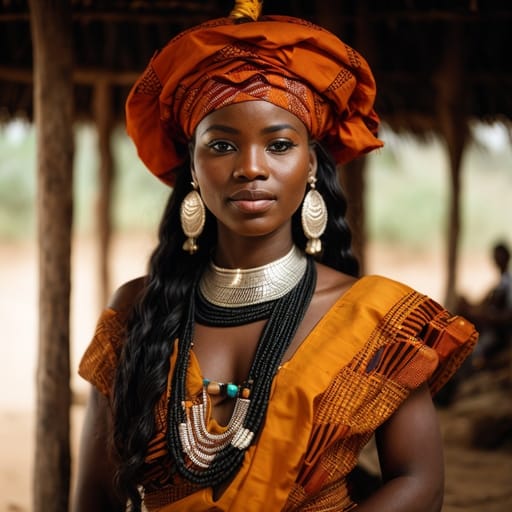
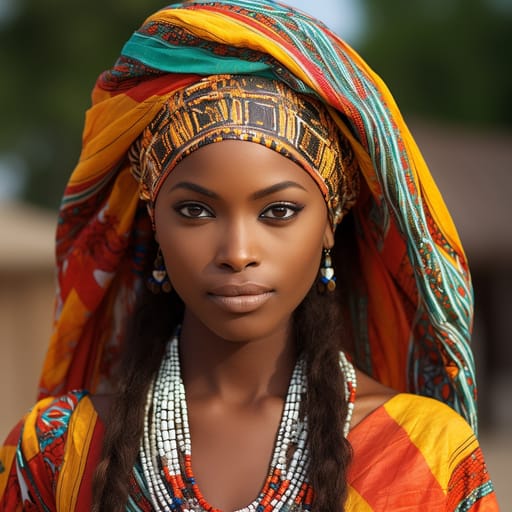
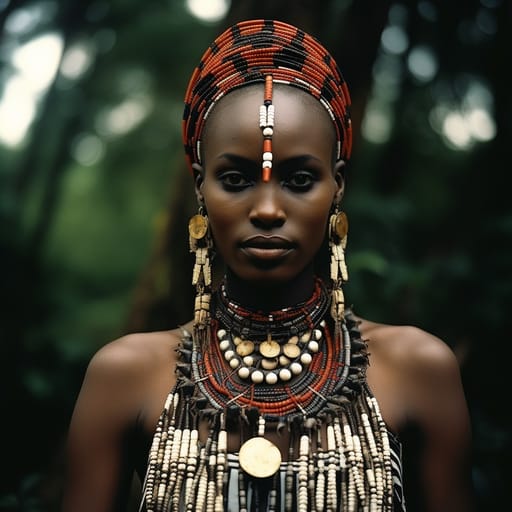
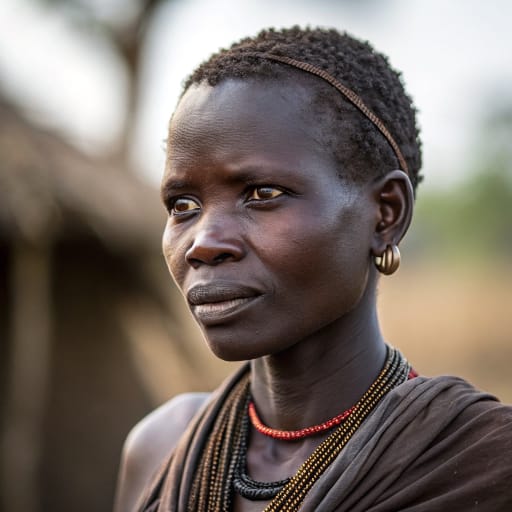
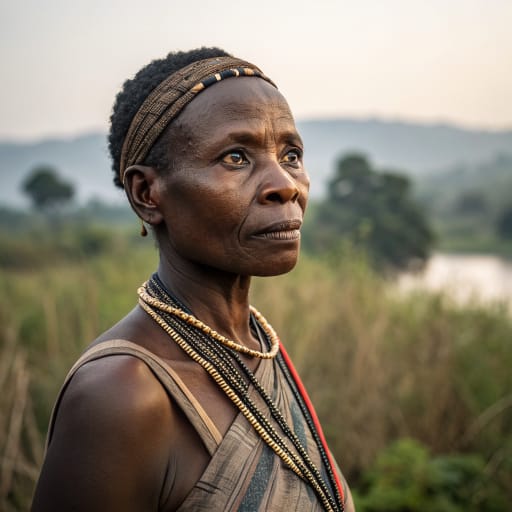
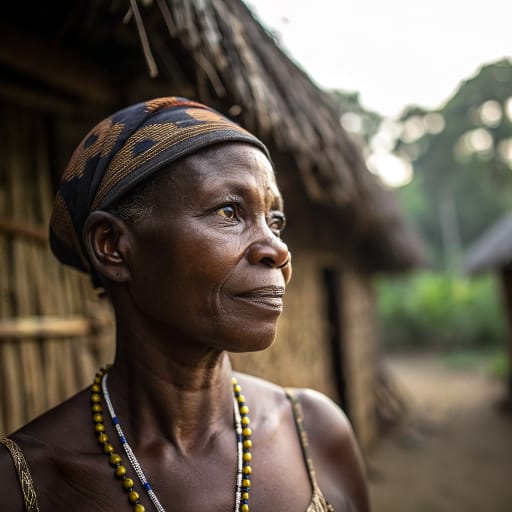
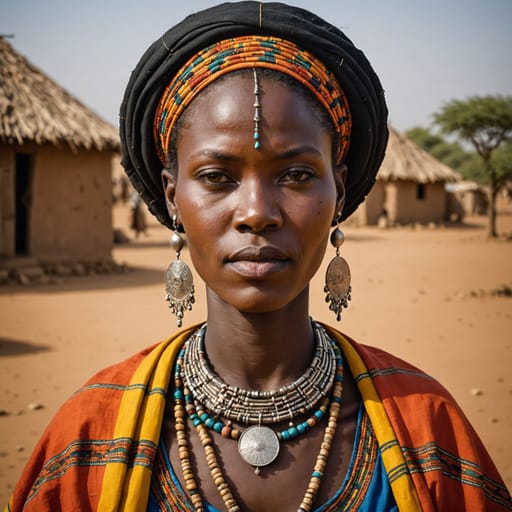
Typical Hema Phenotypes
Reference for AI generation: hair, eyes, skin, facial structure, build
Hema Body & Anatomy Reference
Bantu / Central African Niger-Congo phenotype: anatomy reference for AI nude generation
Hema Boobs & Breasts
Bust reference for Hema women: medium-to-large cup, full, projecting, which is typical of Bantu / Central African Niger-Congo ancestry. Areolas measure about 32-48mm across, with deep-brown pigmentation. Body type (mesomorph with strong gluteal-femoral fat deposition) shapes the bust as well, so Hema tits are usually fuller projection than East African; comparable to West African norm. In AI imagery, keep the forward-set shape rather than drifting toward the smaller East African conical profile.
Hema Ass & Hips
The Hema ass is typically full, projected, wide-set glutes, which sets it apart from the slim narrow-hip Cushitic East African profile. Underneath, the pelvis shows broad iliac crests, gynoid pelvic pattern, part of the Bantu / Central African Niger-Congo skeletal pattern. For Hema butt pics and AI renders, match that silhouette and the overall build (mesomorph with strong gluteal-femoral fat deposition).
Hema Vagina & Pussy
Hema pussy and vulvar anatomy presents deep-brown labial pigmentation, fuller labia minora, consistent with the Bantu / Central African Niger-Congo phenotype's pigmentation pattern. Hema pubic hair is typically tightly-coiled coarse texture, dense distribution, in the inverted-triangle pattern. For anatomically accurate Hema pussy renders the labial coloration should match the surrounding deep-brown skin tone with a continuous gradient, and the hair should keep its tightly-coiled coarse texture.
Hema Dicks & Penis
Hema dicks follow the Bantu / Central African Niger-Congo reference data: regional mean ~14cm erect; above-average girth; deep-brown shaft pigmentation. Shaft color should track the deep-brown skin tone with a smooth change toward the glans, and Hema pubic hair keeps its tightly-coiled coarse texture.
Hema Body, Curves & Build
Hema body type and overall build presents as mesomorph with strong gluteal-femoral fat deposition, with mean adult female BMI 23-26: the characteristic Bantu / Central African Niger-Congo habitus. Hema curves and proportions should keep the regional skeletal frame (height, shoulder-to-hip ratio, limb proportions) rather than a generic mesomorph default.
Hema Skin Tone & Hair Texture
Hema skin sits in the deep-brown (Fitzpatrick VI) band. Hair is typically tight 4A-4C coil, in keeping with the Bantu / Central African Niger-Congo phenotype. In nude renders the skin should stay one even tone from face to body, and body, pubic and head hair should match.
Explore phenotype categories
Structured taxonomy with peer-reviewed scales · 22 anatomical categories
Erotic Poses & Sex Positions
From the pose catalog: 219 named positions with reference skeletons
Frequently asked questions about Hema people
Where is the Hema homeland?
The Hema homeland is Ituri province in northeastern Democratic Republic of the Congo, chiefly Djugu and Irumu territories on the highlands west of Lake Albert, with refugee communities in Uganda. in Central Africa.
What language do Hema people speak?
Hema people primarily speak Kihema, spoken by the southern Hema (Bantu, Niger-Congo); Lendu, spoken by the northern Hema or Gegere (Central Sudanic); Swahili and French as lingua francas..
What religion do Hema people practice?
The predominant religion among Hema people is Mostly Christian, Catholic and Protestant..






Make your own Hema images
Five a day, free, no credits to buy. The studio starts from this group's phenotype data, so you can set body type, pose and style and keep the traits accurate.
Start with Hema