No portrait yet
Hattians Erotic
Central Anatolia inside the bend of the Kızılırmak (Halys) river, around Hattush (Hattusa) and Alaca Höyük, in modern Turkey
Hattic (language isolate; neither Indo-European nor Semitic, known only from passages preserved in Hittite ritual texts)
Ancient Anatolian polytheism centered on the sun goddess of Arinna, the storm god Taru and Telipinu, later absorbed into the Hittite state cult
No attested internal branches; organized as city-kingdoms such as Hattush and Zalpa; absorbed into the Hittite population by the mid-second millennium BC
About Hattians People
The Hattians were a Bronze Age people of central Anatolia, in what is now Turkey, who flourished in the third millennium BC and were gradually absorbed by the Indo-European Hittites during the eighteenth and seventeenth centuries BC. They left no descendant community. What they left instead was a name: the Hittites took over the country name Hatti unchanged, and it passed through Egyptian, Assyrian and biblical usage to become the modern label Hittite, which technically belongs to the people the Hattians lost to. The land of Hatti sat inside the great bend of the Kızılırmak river, the classical Halys, on the high plateau around modern Çorum and Yozgat. Its chief town was Hattush, the later Hattusa, near Boğazkale. A second site, Alaca Höyük, holds the royal shaft graves of the late third millennium that are the Hattians' most spectacular physical trace: gold and electrum jewelry, weapons, and the bronze standards topped with stags, bulls and pierced sun discs that modern Ankara adopted as a civic emblem.
Hattic, their language, is an isolate. It is neither Semitic nor Indo-European, builds words with strings of prefixes, and has been compared with the Northwest Caucasian languages without anyone proving a link. Almost everything known about it comes from the Hittites, who kept Hattic prayers and songs alive in temple ritual long after nobody spoke it at home, marking the passages hattili, in the language of Hatti, and sometimes supplying a translation. The Hittites called their own tongue nesili, after the city of Nesa, so country and language carried different names from the start. Politically the Hattians were never one state but a set of walled city-kingdoms. Hittite tradition remembers a king Piyusti of Hatti defeated by Anitta of Kussara, who burned Hattush and cursed anyone who resettled it. The Hittites resettled it anyway and made it their capital.
The deeper Hattian legacy is religious. The Hittite state cult was built on Hattian foundations: the sun goddess of Arinna, the storm god Taru, the vanishing god Telipinu whose myth explains failed harvests, and the goddess Inara who helps defeat the serpent Illuyanka at the spring festival of Purulli, itself a Hattic name. Even the Hittite royal titles, Labarna for the king and Tawananna for the queen, are usually traced to Hattic, as is Halmasuit, the deified throne on which kings were seated. Hittite civilization was, to a large degree, Hattian civilization speaking a new language.
Related ethnic groups
Groups that share Hattians's homeland, region, language, or religious tradition. These are likely candidates for comparative phenotype reference.
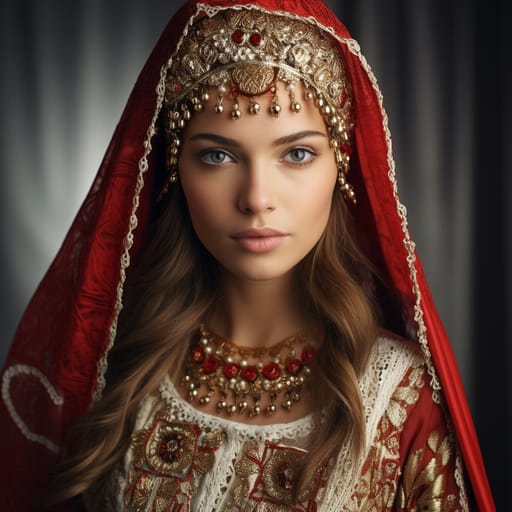
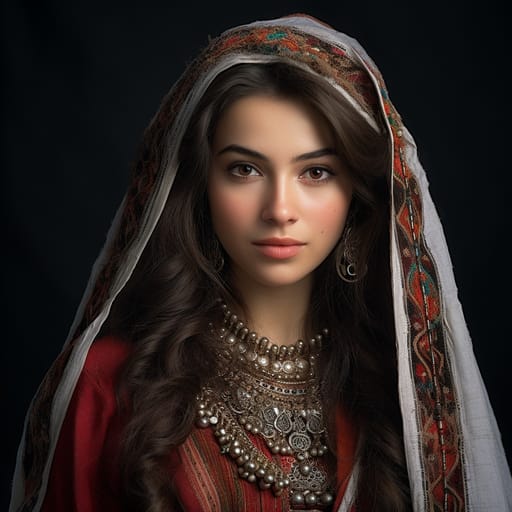
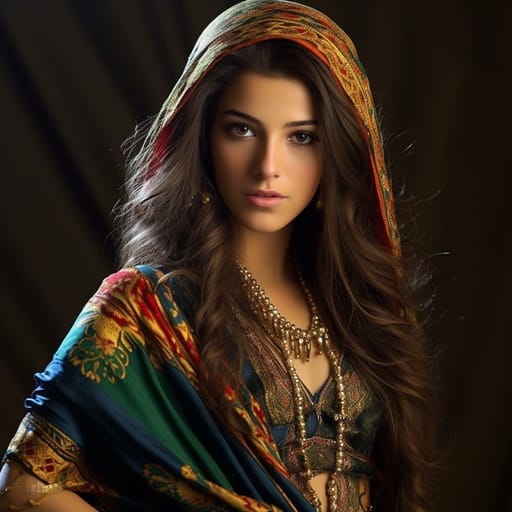
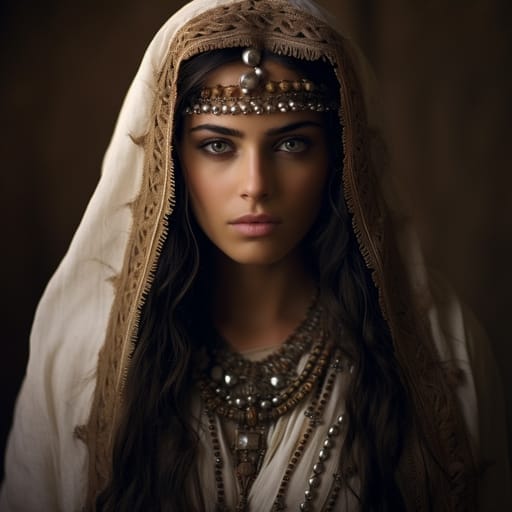
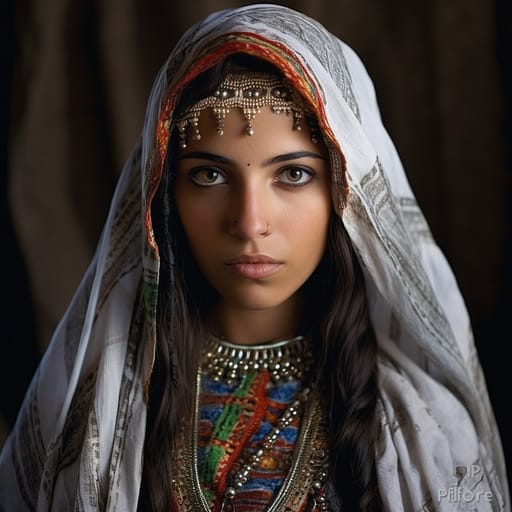
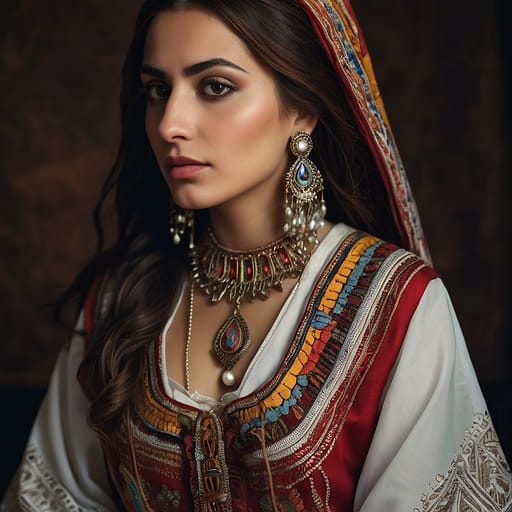
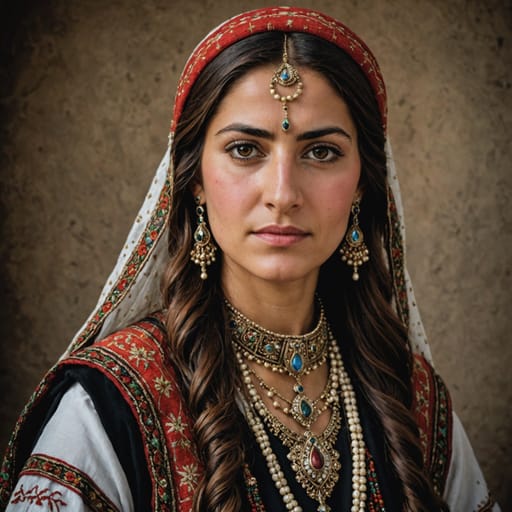
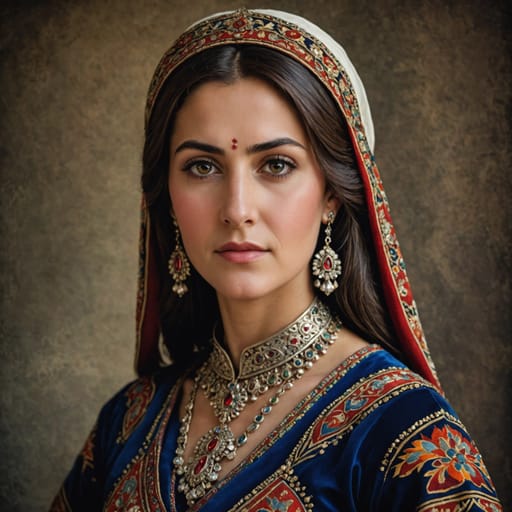
Typical Hattians Phenotypes
Reference for AI generation: hair, eyes, skin, facial structure, build
Hattians Body & Anatomy Reference
Anatomy by feature, Levantine / Mediterranean Middle Eastern phenotype
Hattians Boobs & Breasts
Hattians tits and boobs run medium-to-large cup, full, moderate-to-high projection, the classic Levantine / Mediterranean Middle Eastern bust profile. Hattians nipples and areolas show medium-brown to dark-brown areolar pigmentation against the olive-to-light-brown skin tone, with areolar diameter typically in the 32-46mm range and forward-set positioning rather than the smaller East Asian bust profile. Hattians breasts trend full and soft, fuller projection than the North-African Berber norm, a function of the mesomorph with fuller hip-and-bust deposition body habitus and the mean adult female BMI 25-28. For anatomically accurate AI-generated Hattians nudes the render preserves the medium-to-large cup, full, moderate-to-high projection shape, 32-46mm areolas with medium-brown to dark-brown pigmentation, and the torso proportions of the Levantine / Mediterranean Middle Eastern phenotype.
Hattians Ass & Hips
Hattians hips and butt usually read as medium-to-full, moderate projection, broader hip profile. The skeletal base is medium-to-wide iliac crests, fuller gluteal-femoral deposition, the Levantine / Mediterranean Middle Eastern pattern. Set against the slim East Asian narrow-hip profile, the difference is easy to see, and the hip-to-waist ratio is often what identifies Hattians women in photos.
Hattians Vagina & Pussy
Expect medium-brown to dark-brown labial pigmentation, fuller labia minora on Hattians women, in keeping with Levantine / Mediterranean Middle Eastern ancestry. The pubic hair is wavy-to-coiled medium-coarse dark texture, dense distribution. Coloring should run evenly from the olive to medium-brown skin of the thighs to the labia, and Hattians nude imagery should keep the hair's wavy-to-coiled medium-coarse dark texture.
Hattians Dicks & Penis
Hattians dick and penile anatomy in adult AI generation should anchor on the regional reference data: regional mean ~14cm erect, moderate-to-above-average girth, and medium-brown shaft pigmentation. The Hattians cock profile reflects the Levantine / Mediterranean Middle Eastern population's anthropometric measurements. The shaft pigmentation should track the surrounding olive to medium-brown skin tone, and the pubic hair should keep its wavy-to-coiled medium-coarse dark texture in the typical inverted-V escutcheon.
Hattians Body, Curves & Build
Hattians body type: mesomorph with fuller hip-and-bust deposition, with mean adult female BMI 25-28. This is the typical Levantine / Mediterranean Middle Eastern build. Height range, shoulder-to-hip ratio and fat distribution all follow from it, which is what an accurate Hattians nude body should show.
Hattians Skin Tone & Hair Texture
Hattians skin tone falls in the olive to medium-brown (Fitzpatrick III-V) band, the surface signal most often miscalibrated by generic AI nude generators. Hattians hair texture is typically wavy-to-curly 2B-3B, predominantly dark-brown to black, characteristic of the Levantine / Mediterranean Middle Eastern phenotype. In Hattians nude renders the skin should hold that band consistently across the body.
Explore phenotype categories
Structured taxonomy with peer-reviewed scales · 22 anatomical categories
Erotic Poses & Sex Positions
From the pose catalog: 219 named positions with reference skeletons
Frequently asked questions about Hattians people
Where is the Hattians homeland?
The Hattians homeland is Central Anatolia inside the bend of the Kızılırmak (Halys) river, around Hattush (Hattusa) and Alaca Höyük, in modern Turkey in Western Asia.
What language do Hattians people speak?
Hattians people primarily speak Hattic (language isolate; neither Indo-European nor Semitic, known only from passages preserved in Hittite ritual texts).
What religion do Hattians people practice?
The predominant religion among Hattians people is Ancient Anatolian polytheism centered on the sun goddess of Arinna, the storm god Taru and Telipinu, later absorbed into the Hittite state cult.






Make your own Hattians images
Five a day, free, no credits to buy. The studio starts from this group's phenotype data, so you can set body type, pose and style and keep the traits accurate.
Start with Hattians