Help us get this right
Does this portrait look right for Gujjar-Gurjar?
Nobody has judged this one yet. You would be the first.
Gujjar-Gurjar Erotic
Primarily Pakistan & India, also Afghanistan at smaller numbers
Islam, Hinduism
Khatana, Solanki, Parihar, Tanwar, Parmar, chandel, Chauhan, Bhadana, Bhatti, Kohli, Tomar, Panwar, Pawar, Bainsla, Bagri, Hans, etc.
About Gujjar-Gurjar People
The Gujjars are one of South Asia's great pastoral peoples — a community whose name has traveled so widely that it sits embedded in the map itself. Gujarat, Gujranwala, Gujrat: the toponyms trace a footprint that runs from the Arabian Sea up through Punjab and into the Himalayan foothills. Historically herders of cattle, buffalo, sheep, and goats, many Gujjars still move with their animals between summer pasture in the high meadows of Kashmir, Himachal, and the Pir Panjal and winter ground in the lower plains. The transhumant branches — particularly the Bakarwals and the Van Gujjars of Uttarakhand — keep one of the last functioning long-distance grazing economies in the subcontinent, walking routes their grandparents walked.
The Gujari language belongs to the Indo-Aryan family and sits closest to Rajasthani, which gives away something about origins: most historians trace the community to the Gurjara-Pratihara confederations that consolidated power in northwestern India between roughly the sixth and tenth centuries, before fragmenting into the warrior, cultivator, and herding lineages that survive today. That deep clan structure is still how Gujjars introduce themselves — Khatana, Chauhan, Tanwar, Parihar, Bainsla, Bhadana, Tomar, Bhatti, and dozens more gotras that often overlap with Rajput nomenclature, a reminder that the boundary between Gujjar and Rajput identity has always been porous.
Religion runs along regional lines rather than communal ones. Gujjars in Pakistan and Indian-administered Kashmir are overwhelmingly Muslim, often Sunni and frequently shaped by Sufi devotional culture; those in Rajasthan, Haryana, Delhi, and western Uttar Pradesh are Hindu, with strong attachment to the warrior-saint Devnarayan, whose epic phad paintings and all-night sung performances are a Gujjar tradition specifically. Sikh and small Christian populations exist at the edges. What stays constant across the religious line is the cattle — milk economies, dairy specialization, and a reputation, fairly or not, for being unusually attached to their herds.
Politically the community has been assertive in recent decades. The 2007–2008 reservation agitations in Rajasthan, led largely from the Bainsla lineage, were among the most disruptive caste-political mobilizations of the period and reshaped the conversation about how India classifies its agrarian and pastoral groups. The Van Gujjars, meanwhile, have spent decades fighting forest-department evictions to keep their seasonal access to Rajaji and Corbett — a quieter but equally consequential struggle over what counts as belonging to a place.
Related ethnic groups
Groups that share Gujjar-Gurjar's homeland, region, language, or religious tradition. These are likely candidates for comparative phenotype reference.
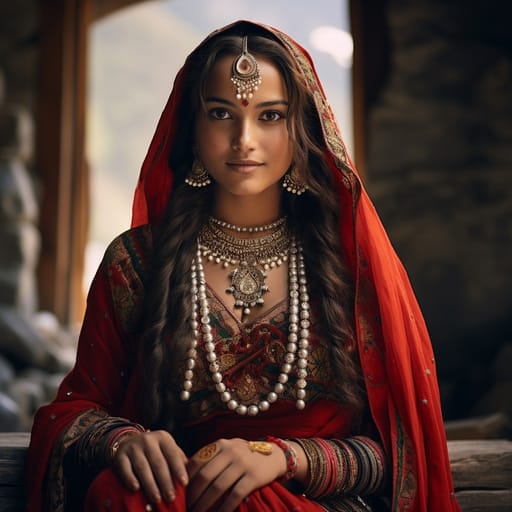
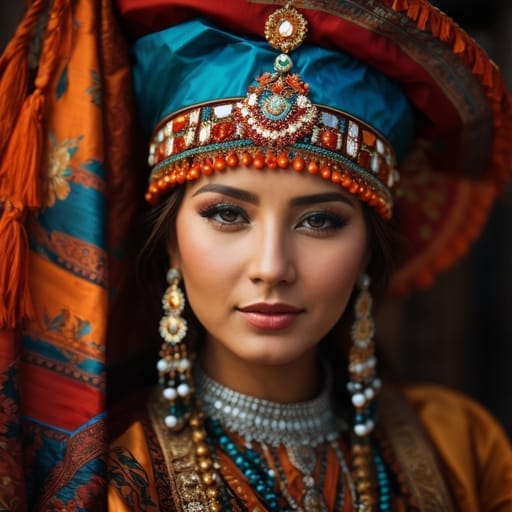
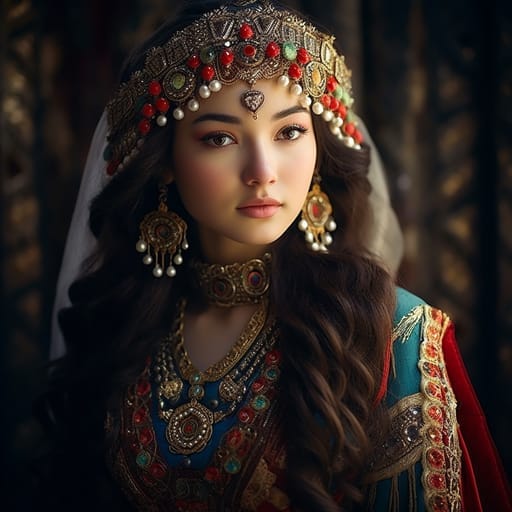
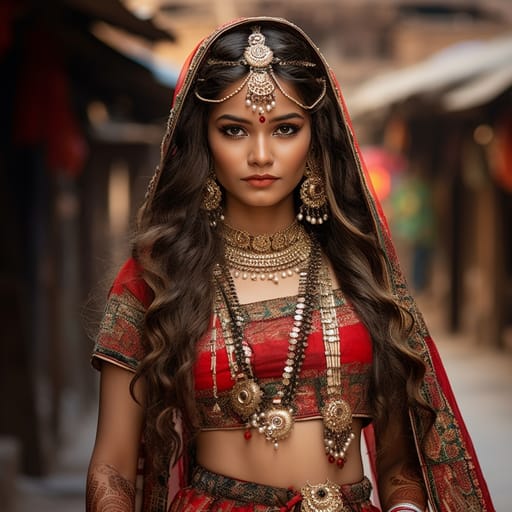
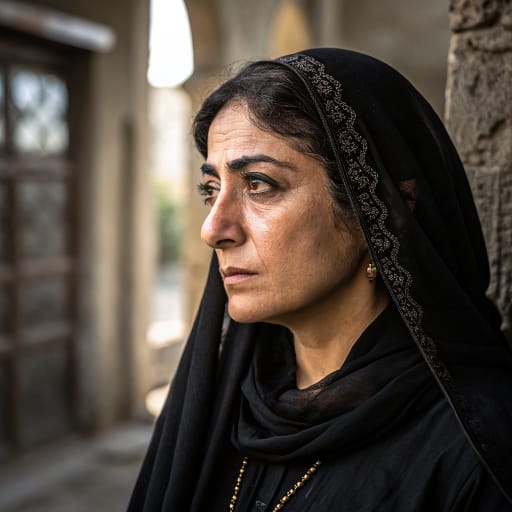
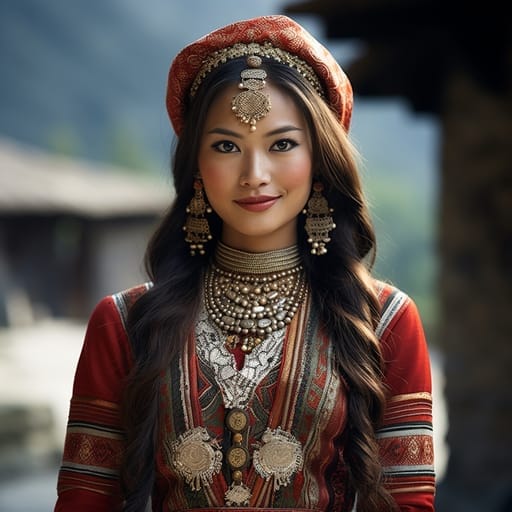
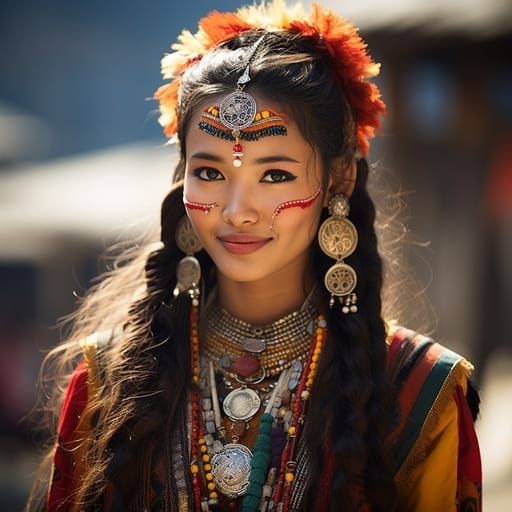
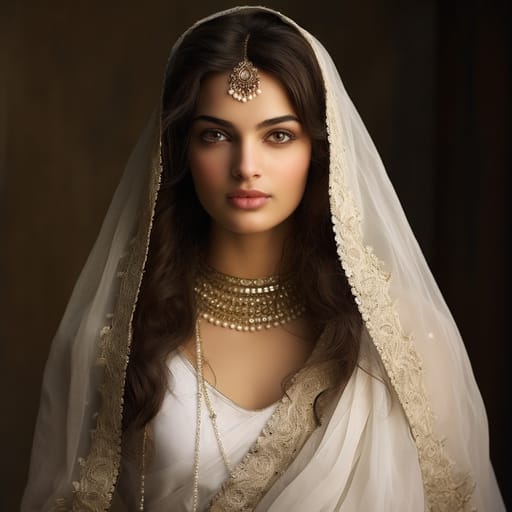
Typical Gujjar-Gurjar Phenotypes
Reference for AI generation: hair, eyes, skin, facial structure, build
The Gujjar phenotype sits at a recognizable intersection of Indo-Aryan and Central Asian features — taller, lighter-built, and sharper-featured than most plains South Asians, with a pastoralist physical signature shaped by centuries of transhumant life in the Himalayan foothills, Punjab plains, and Rajasthan-Gujarat desert margins.
Hair runs dark — black to dark brown — almost universally straight to gently wavy, with coarser texture than European hair but finer than the tight waves common in Sindhi or Tamil populations. Beards grow full and dense in men, often with reddish or auburn cast when sun-bleached, particularly among Pakistani and Kashmiri Gujjars. Premature graying is common from the late twenties.
Eyes range from dark brown through honey and hazel, with documented light-eye frequency — green and grey — markedly higher among Kashmiri and Pir Panjal Gujjar populations than across South Asia generally. Eyelids are typically open and almond-shaped without epicanthic fold; brow ridges are pronounced in men.
Skin spans Fitzpatrick III to V, with warm olive and wheatish undertones predominating. Northern Pakistani and Kashmiri Gujjars often sit in the III–IV range and can pass for Mediterranean or Iranian; Rajasthani and Haryanvi branches like the Bainsla, Bagri, and Bhadana trend deeper into IV–V with stronger sun-weathering on faces and forearms from open-country herding.
Facial structure is the group's most distinctive marker: high, narrow nose bridges with relatively narrow alar width, well-defined cheekbones, strong jawlines, and medium-fullness lips. The face reads angular rather than rounded — closer to Pashtun and Kashmiri Pandit profiles than to Gangetic plains norms.
Build is anthropometrically tall for the region — men commonly 5'9"–6'1", women 5'4"–5'8" — with lean, long-limbed frames and broad shoulders. Older men carry weight at the midsection while retaining the underlying height and bone structure. Among Hindu Tomar, Chauhan, and Parmar branches the build leans more agricultural and stockier; Muslim Bakarwal and Kashmiri Gujjars retain the leaner, taller pastoralist physique most strongly.
Gujjar-Gurjar Body & Anatomy Reference
Anatomy by feature, Indo-Aryan / Dravidian South Asian phenotype
Gujjar-Gurjar Boobs & Breasts
The typical Gujjar-Gurjar bust is medium-to-large cup, moderate-to-full projection, in line with the wider Indo-Aryan / Dravidian South Asian pattern. Areolas usually fall in the 32-46mm range, with medium-brown to dark-brown areolar pigmentation against the wheatish-to-brown skin tone. Compared with the smaller East Asian bust profile, Gujjar-Gurjar breasts sit forward and are generally full and soft, generally fuller than the East Asian norm. A faithful AI render of Gujjar-Gurjar tits keeps that shape and areola size.
Gujjar-Gurjar Ass & Hips
Butt shape among Gujjar-Gurjar women: medium-to-full, moderate-to-high projection, classic curvy hip profile, over medium-to-wide iliac crests, full gluteal-femoral fat distribution. This follows Indo-Aryan / Dravidian South Asian ancestry and looks quite unlike the slim hip profile of East Asian women. An accurate Gujjar-Gurjar ass in adult AI imagery keeps both the silhouette and the overall build (endomorph-to-mesomorph with fuller hip deposition) instead of a generic average.
Gujjar-Gurjar Vagina & Pussy
Vulvar anatomy among Gujjar-Gurjar women: medium-brown to dark-brown labial pigmentation, fuller labia minora projection. Pubic hair tends to be straight-to-wavy coarse texture, dense distribution, in the usual inverted-triangle pattern. Both follow Indo-Aryan / Dravidian South Asian pigmentation, which is why Gujjar-Gurjar pussy renders should not fall back on a pale, sparse Western template.
Gujjar-Gurjar Dicks & Penis
The Gujjar-Gurjar cock profile, from Indo-Aryan / Dravidian South Asian anthropometric data: regional mean ~13cm erect; moderate girth; medium-brown shaft pigmentation. Pubic hair has a straight-to-wavy coarse texture and forms the usual inverted-V pattern. Whether Gujjar-Gurjar men are circumcised follows religious and cultural practice rather than phenotype.
Gujjar-Gurjar Body, Curves & Build
Build and curves among Gujjar-Gurjar women follow the Indo-Aryan / Dravidian South Asian pattern: endomorph-to-mesomorph with fuller hip deposition, mean adult female BMI 22-25. Proportions matter as much as skin tone, so Gujjar-Gurjar figures should keep their regional height and limb ratios.
Gujjar-Gurjar Skin Tone & Hair Texture
The Gujjar-Gurjar skin range is wheatish to brown (Fitzpatrick III-V), and hair tends to be straight-to-wavy 1A-2B, dense, dark-brown to black. That combination marks the Indo-Aryan / Dravidian South Asian phenotype, and skin tone is the trait AI generators most often get wrong for Gujjar-Gurjar women.
Data depth
0/100Coverage of image-grounded phenotype observations · drives AI generation diversity
- Sample size
- 0/40· 0 images
- Image quality
- 0/30· 0% high
- Confidence
- 0/20
- Source diversity
- 0/10
- ·No image observations yet
Explore phenotype categories
Structured taxonomy with peer-reviewed scales · 22 anatomical categories
Erotic Poses & Sex Positions
From the pose catalog: 219 named positions with reference skeletons
Frequently asked questions about Gujjar-Gurjar people
Where is the Gujjar-Gurjar homeland?
The Gujjar-Gurjar homeland is Primarily Pakistan & India, also Afghanistan at smaller numbers in Southern Asia.
What language do Gujjar-Gurjar people speak?
Gujjar-Gurjar people primarily speak Indo-European / Indo-Aryan / Gujari.
What religion do Gujjar-Gurjar people practice?
The predominant religion among Gujjar-Gurjar people is Islam, Hinduism.
What does a typical Gujjar-Gurjar woman look like?
Gujjar women typically have straight to gently wavy black to dark brown hair and brown eyes, with honey, hazel, green and gray more common among Kashmiri Gujjars. Skin spans Fitzpatrick III to V with warm olive and wheatish undertones. Faces are angular, with a high, narrow nose, well-defined cheekbones and medium lips, and women are tall for the region, commonly 5'4" to 5'8", with a lean frame.






Make your own Gujjar-Gurjar images
Five a day, free, no credits to buy. The studio starts from this group's phenotype data, so you can set body type, pose and style and keep the traits accurate.
Start with Gujjar-Gurjar