Help us get this right
Does this portrait look right for Griko (Griko people)?
One tap. It takes a second and it is recorded.
1 says it looks right, 0 say it looks off.
Griko (Griko people) Erotic
Salento (Apulia) and Calabria, southern Italy
Christianity (Roman Catholic)
Italiot Greeks; Grecanici
About Griko (Griko people) People
Griko, also called the Griko people, are a Greek-speaking community of southern Italy, living in two small enclaves: the Grecìa Salentina area of the Salento in Apulia and the Bovesìa district of Calabria. They speak Griko, an Italiot dialect of Greek within the Hellenic branch of the Indo-European family, and are Roman Catholic. Their language descends from the ancient and medieval Greek presence in the Italian south, and it survives today mainly among older speakers.
Society and subsistence
The Griko trace their roots to Magna Graecia, the Greek colonies of antiquity, reinforced by later Byzantine Greek settlement, which together left a Greek-speaking population embedded in the deep south of Italy. Traditional life was that of the southern Italian countryside: cultivation of olives, grapes and wheat, and the seasonal rhythms of small farming villages. The community is especially known for its music, including the driving pizzica dance and haunting Griko songs of love and lament, most famously the piece known as Klama, which have anchored a cultural revival in recent decades.
Appearance and adornment
Griko people share the Mediterranean appearance of southern Italy, with olive skin, dark hair and dark eyes common. They did not maintain a separate ethnic costume distinct from their Apulian and Calabrian neighbors, so historic dress followed local southern Italian rural fashion: women in dark dresses, aprons and headscarves, men in simple work clothes and caps. Their distinctiveness lies in language, song and religious custom rather than in dress, and today the Griko appear in ordinary modern Italian clothing, with folk costume worn for musical and heritage events.
Related ethnic groups
Groups that share Griko (Griko people)'s homeland, region, language, or religious tradition. These are likely candidates for comparative phenotype reference.
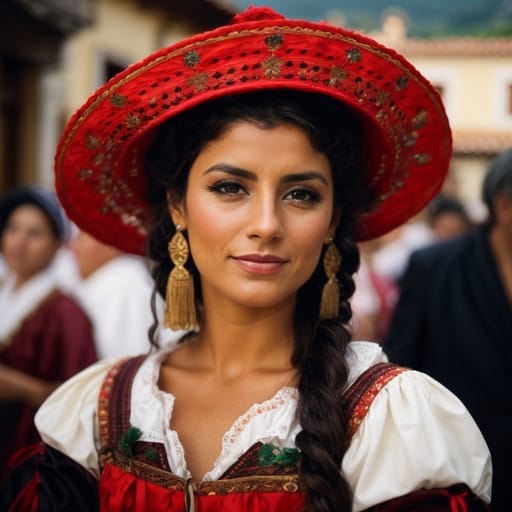
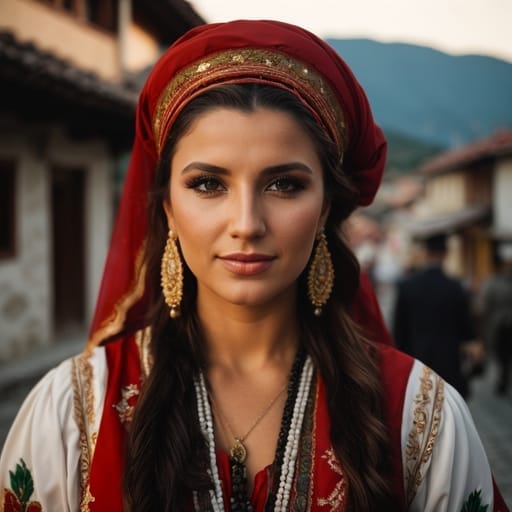
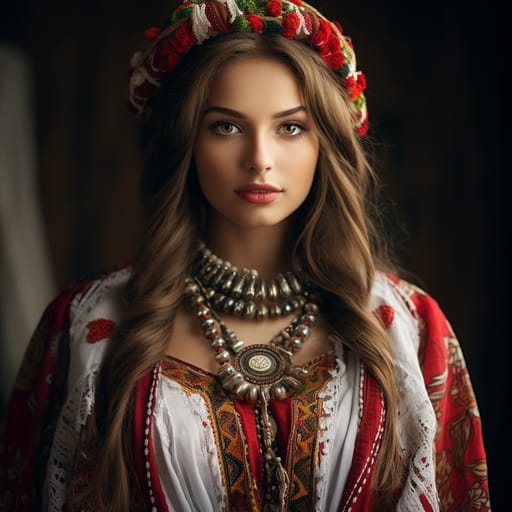
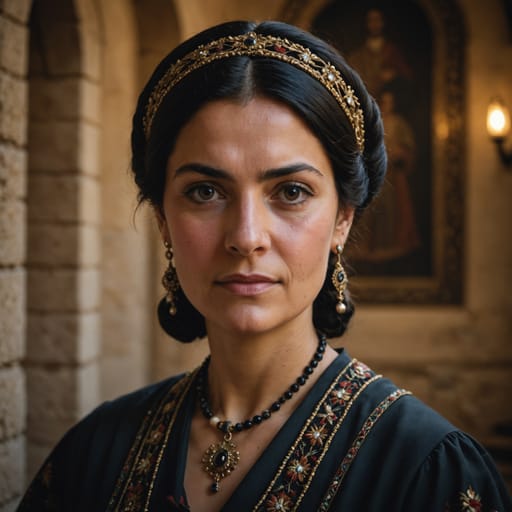
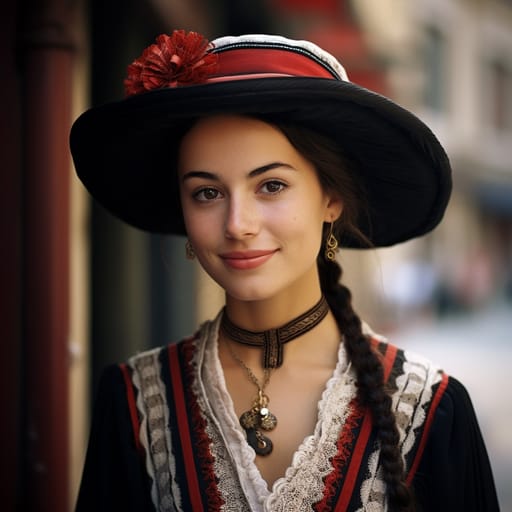
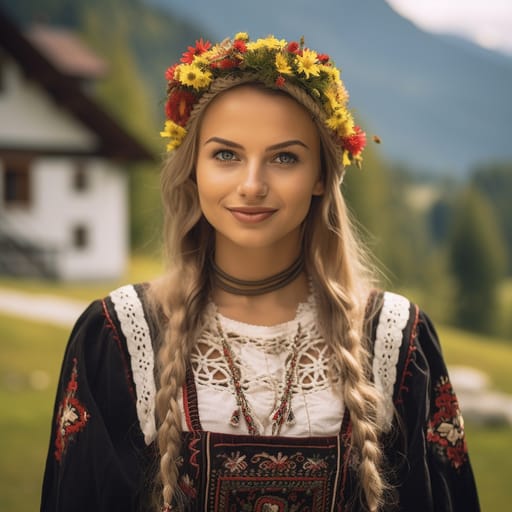
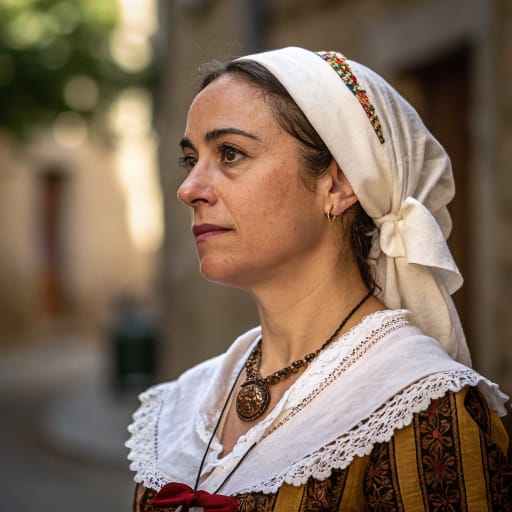
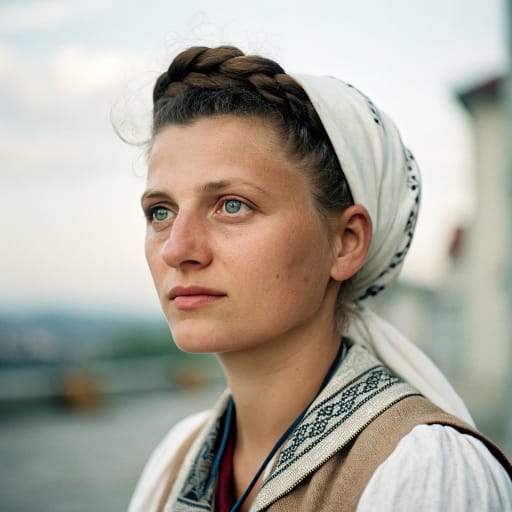
Typical Griko (Griko people) Phenotypes
Reference for AI generation: hair, eyes, skin, facial structure, build
Griko (Griko people) Body & Anatomy Reference
Southern European / Mediterranean phenotype: anatomy reference for AI nude generation
Griko (Griko people) Boobs & Breasts
Griko (Griko people) tits and boobs run medium-to-large cup, full, moderate-to-high projection, the classic Southern European / Mediterranean bust profile. Griko (Griko people) nipples and areolas show medium-brown to dark-brown areolar pigmentation against the olive-to-light-brown skin tone, with areolar diameter typically in the 32-46mm range and forward-set positioning rather than the lighter pigmentation of the Northern European bust. Griko (Griko people) breasts trend full and projecting, generally the classic Mediterranean curvy bust profile, a function of the mesomorph with full hip-and-bust deposition body habitus and the mean adult female BMI 24-28. For anatomically accurate AI-generated Griko (Griko people) nudes the render preserves the medium-to-large cup, full, moderate-to-high projection shape, 32-46mm areolas with medium-brown to dark-brown pigmentation, and the torso proportions of the Southern European / Mediterranean phenotype.
Griko (Griko people) Ass & Hips
Griko (Griko people) hips and butt usually read as medium-to-full, moderate-to-high projection, broader hip profile. The skeletal base is medium-to-wide iliac crests, full gluteal-femoral fat distribution, the Southern European / Mediterranean pattern. Set against the slim Northern European narrow-hip pattern, the difference is easy to see, and the hip-to-waist ratio is often what identifies Griko (Griko people) women in photos.
Griko (Griko people) Vagina & Pussy
Expect medium-brown to dark-brown labial pigmentation, fuller labia minora on Griko (Griko people) women, in keeping with Southern European / Mediterranean ancestry. The pubic hair is wavy-to-curly medium-coarse dark texture, dense distribution. Coloring should run evenly from the olive to medium skin of the thighs to the labia, and Griko (Griko people) nude imagery should keep the hair's wavy-to-curly medium-coarse dark texture.
Griko (Griko people) Dicks & Penis
Griko (Griko people) dick and penile anatomy in adult AI generation should anchor on the regional reference data: regional mean ~13-14cm erect, moderate girth, and medium-brown shaft pigmentation. The Griko (Griko people) cock profile reflects the Southern European / Mediterranean population's anthropometric measurements. The shaft pigmentation should track the surrounding olive to medium skin tone, and the pubic hair should keep its wavy-to-curly medium-coarse dark texture in the typical inverted-V escutcheon.
Griko (Griko people) Body, Curves & Build
Griko (Griko people) body type: mesomorph with full hip-and-bust deposition, with mean adult female BMI 24-28. This is the typical Southern European / Mediterranean build. Height range, shoulder-to-hip ratio and fat distribution all follow from it, which is what an accurate Griko (Griko people) nude body should show.
Griko (Griko people) Skin Tone & Hair Texture
Griko (Griko people) skin tone falls in the olive to medium (Fitzpatrick III-IV) band, the surface signal most often miscalibrated by generic AI nude generators. Griko (Griko people) hair texture is typically wavy-to-curly 2B-3B, dark-brown to black, characteristic of the Southern European / Mediterranean phenotype. In Griko (Griko people) nude renders the skin should hold that band consistently across the body.
Explore phenotype categories
Structured taxonomy with peer-reviewed scales · 22 anatomical categories
Notable Griko (Griko people) People
10 reference figures, sourced from Wikipedia
- Pope Anterus, died 236)
- Pope John VII, c. 650-707)
- Pope Zachary, 679-752)
- Nilus the Younger, 910-1005), a saint born to a Greek family in Rossano, Calabria, and the found…
- Antipope John XVI, c. 945-1001), of Greek origin from Rossano, Calabria
- Barlaam of Seminara, c. 1290-1348), Aristotelian scholastic scholar and clergyman of the 14th century
- Leontius Pilatus, died 1366), Greek Calabrian scholar, was one of the earliest promoters of Gre…
- Antonio de Ferrariis, c. 1444-1517), Greek scholar, academic, doctor and humanist from Galatone, Ap…
- Luigi Pirandello, 1867-1936), dramatist and Nobel Prize winner for literature, was born at cont…
- Tony Bennett, 1926-2023), Italian-American singer of popular music, standards, show tunes, …
Erotic Poses & Sex Positions
From the pose catalog: 219 named positions with reference skeletons
Frequently asked questions about Griko (Griko people) people
Where is the Griko (Griko people) homeland?
The Griko (Griko people) homeland is Salento (Apulia) and Calabria, southern Italy in Southern Europe.
What language do Griko (Griko people) people speak?
Griko (Griko people) people primarily speak Griko / Italiot Greek (Indo-European, Hellenic).
What religion do Griko (Griko people) people practice?
The predominant religion among Griko (Griko people) people is Christianity (Roman Catholic).






Make your own Griko (Griko people) images
Five a day, free, no credits to buy. The studio starts from this group's phenotype data, so you can set body type, pose and style and keep the traits accurate.
Start with Griko (Griko people)