No portrait yet
Falisci Erotic
The Ager Faliscus in the middle Tiber valley of southern Etruria, north of Rome, centered on Falerii; today northern Lazio, Italy.
Faliscan (Indo-European, Italic, Latino-Faliscan branch), written in an alphabet adapted from Etruscan; displaced by Latin.
Italic polytheism with heavy Etruscan coloring: Juno Curritis at Falerii, Soranus and Apollo on Mount Soracte, Minerva; later folded into Roman state religion.
Italic peoples, Latino-Faliscan branch, closest kin of the Latins; culturally Etruscanized, and usually grouped with the neighboring Capenates.
About Falisci People
The Falisci were an Italic people of the middle Tiber valley, absorbed into the Roman state during the third century BC and finished as a distinct people by roughly 150 BC, when their language stops turning up on their pottery. Their descendants are the population of the Agro Falisco, the countryside north of Rome around Civita Castellana. The homeland was small: a wedge of tufa plateau cut by deep stream gorges, bounded by the Tiber on the east and the volcanic uplands toward Lake Vico on the west, with the limestone ridge of Mount Soracte visible from nearly every part of it. The chief town was Falerii, on a defensible spur where Civita Castellana sits today. What separates the Falisci from their neighbors is a mismatch that still puzzles people. They lived like Etruscans: chamber tombs, an alphabet borrowed from Etruscan and written right to left, a long alliance with Veii against Rome, a regional school of red-figure vase painting that holds up against anything made in Etruria. But they did not speak Etruscan. Faliscan was Italic, the nearest relative Latin has, close enough that the small differences are the interesting part. Where a Roman wrote hodie, a Faliscan wrote foied.
That word survives in the best known Faliscan sentence, on a vessel dedicated by a guild of cooks: today I will drink wine, tomorrow I will go without. Not a treaty, not a curse, just working men being funny in their own language, which is more than most lost peoples leave behind. Religion carried local weight. Juno Curritis was the goddess of Falerii and kept her Faliscan epithet after Rome took her over, and on Soracte a set of hereditary families called the Hirpi Sorani, the wolves of Soranus, walked over burning coals at the god's festival; Rome found the rite strange enough, or useful enough, to excuse those families from military service. Roman writers told a flattering story about the siege of Falerii in 394 BC, in which a Faliscan schoolmaster offered his pupils to Camillus as hostages and Camillus sent him back whipped by the boys, whereupon the city surrendered out of admiration. The real end was less decorous. The Falisci rose in 241 BC, right after the First Punic War, and Rome closed the war in six days, leveled the old town and moved the survivors onto open ground three miles away. That second city, Falerii Novi, still stands in its walls and gates, and in 2020 archaeologists mapped its entire buried street plan by radar without lifting a spade.
Related ethnic groups
Groups that share Falisci's homeland, region, language, or religious tradition. These are likely candidates for comparative phenotype reference.
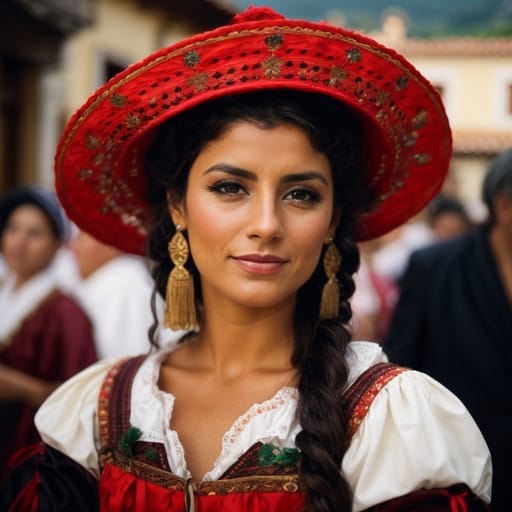
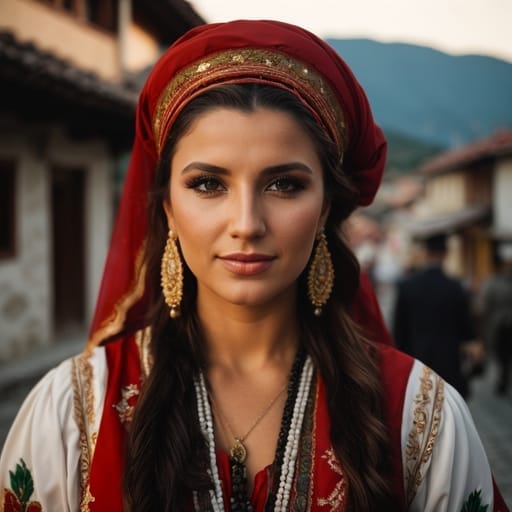
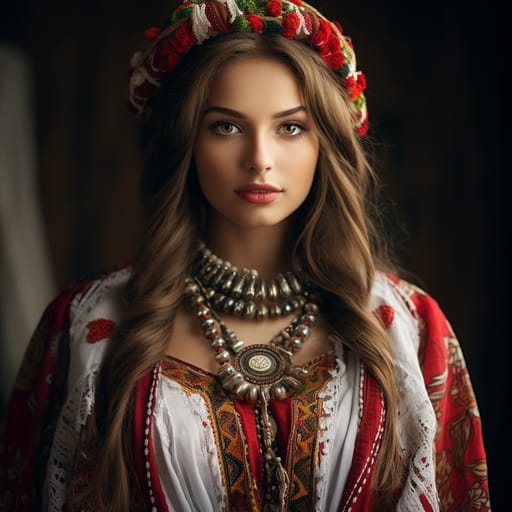
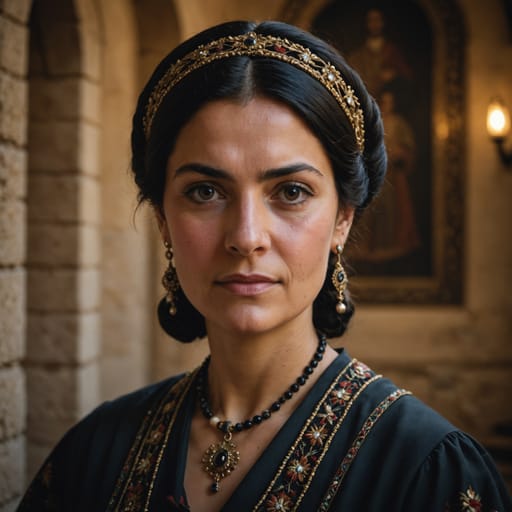
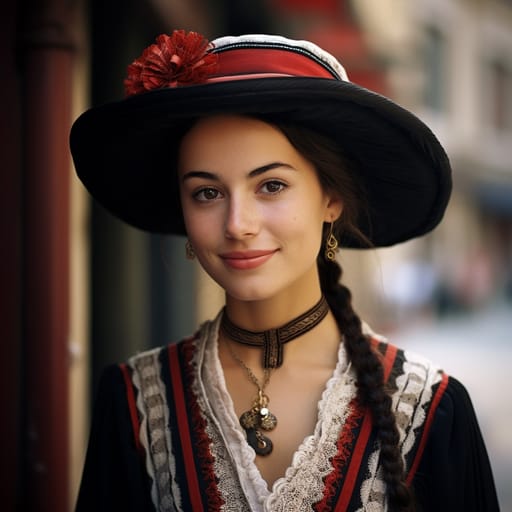

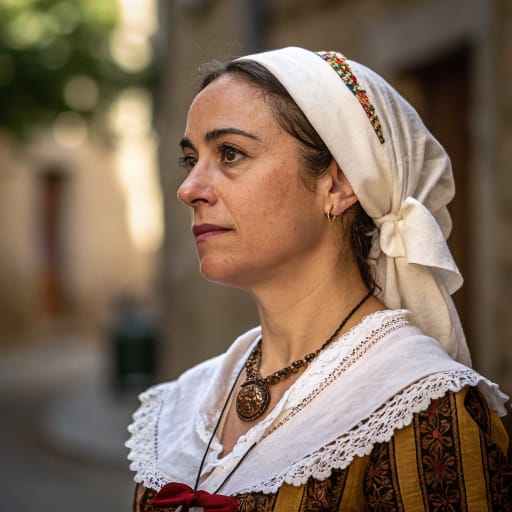
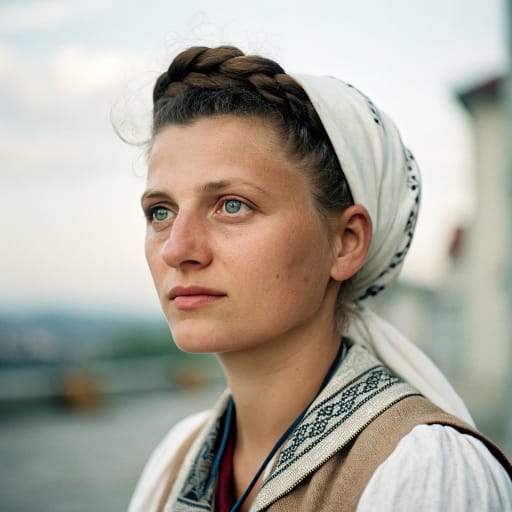
Typical Falisci Phenotypes
Reference for AI generation: hair, eyes, skin, facial structure, build
Falisci Body & Anatomy Reference
Southern European / Mediterranean phenotype: anatomy reference for AI nude generation
Falisci Boobs & Breasts
Bust reference for Falisci women: medium-to-large cup, full, moderate-to-high projection, which is typical of Southern European / Mediterranean ancestry. Areolas measure about 32-46mm across, with medium-brown to dark-brown pigmentation. Body type (mesomorph with full hip-and-bust deposition) shapes the bust as well, so Falisci tits are usually full and projecting, generally the classic Mediterranean curvy bust profile. In AI imagery, keep the forward-set shape rather than drifting toward the lighter pigmentation of the Northern European bust.
Falisci Ass & Hips
The Falisci ass is typically medium-to-full, moderate-to-high projection, broader hip profile, which sets it apart from the slim Northern European narrow-hip pattern. Underneath, the pelvis shows medium-to-wide iliac crests, full gluteal-femoral fat distribution, part of the Southern European / Mediterranean skeletal pattern. For Falisci butt pics and AI renders, match that silhouette and the overall build (mesomorph with full hip-and-bust deposition).
Falisci Vagina & Pussy
Falisci pussy and vulvar anatomy presents medium-brown to dark-brown labial pigmentation, fuller labia minora, consistent with the Southern European / Mediterranean phenotype's pigmentation pattern. Falisci pubic hair is typically wavy-to-curly medium-coarse dark texture, dense distribution, in the inverted-triangle pattern. For anatomically accurate Falisci pussy renders the labial coloration should match the surrounding olive to medium skin tone with a continuous gradient, and the hair should keep its wavy-to-curly medium-coarse dark texture.
Falisci Dicks & Penis
Falisci dicks follow the Southern European / Mediterranean reference data: regional mean ~13-14cm erect; moderate girth; medium-brown shaft pigmentation. Shaft color should track the olive to medium skin tone with a smooth change toward the glans, and Falisci pubic hair keeps its wavy-to-curly medium-coarse dark texture.
Falisci Body, Curves & Build
Falisci body type and overall build presents as mesomorph with full hip-and-bust deposition, with mean adult female BMI 24-28: the characteristic Southern European / Mediterranean habitus. Falisci curves and proportions should keep the regional skeletal frame (height, shoulder-to-hip ratio, limb proportions) rather than a generic mesomorph default.
Falisci Skin Tone & Hair Texture
Falisci skin sits in the olive to medium (Fitzpatrick III-IV) band. Hair is typically wavy-to-curly 2B-3B, dark-brown to black, in keeping with the Southern European / Mediterranean phenotype. In nude renders the skin should stay one even tone from face to body, and body, pubic and head hair should match.
Explore phenotype categories
Structured taxonomy with peer-reviewed scales · 22 anatomical categories
Erotic Poses & Sex Positions
From the pose catalog: 219 named positions with reference skeletons
Frequently asked questions about Falisci people
Where is the Falisci homeland?
The Falisci homeland is The Ager Faliscus in the middle Tiber valley of southern Etruria, north of Rome, centered on Falerii; today northern Lazio, Italy. in Southern Europe.
What language do Falisci people speak?
Falisci people primarily speak Faliscan (Indo-European, Italic, Latino-Faliscan branch), written in an alphabet adapted from Etruscan; displaced by Latin..
What religion do Falisci people practice?
The predominant religion among Falisci people is Italic polytheism with heavy Etruscan coloring: Juno Curritis at Falerii, Soranus and Apollo on Mount Soracte, Minerva; later folded into Roman state religion..






Make your own Falisci images
Five a day, free, no credits to buy. The studio starts from this group's phenotype data, so you can set body type, pose and style and keep the traits accurate.
Start with Falisci