Help us get this right
Does this portrait look right for Dassaretae?
One tap. It takes a second and it is recorded.
1 says it looks right, 0 say it looks off.
Dassaretae Erotic
The highlands and lake basins around Lake Ohrid and the upper Devoll valley, in present-day southeastern Albania and southwestern North Macedonia.
Illyrian, surviving only in personal and place names (Paleo-Balkan, Indo-European); Greek and later Latin for anything written.
Pre-Christian Balkan polytheism, with local cult alongside Greek and later Roman practice; the region Christianized in late antiquity, Lychnidus becoming an early bishopric.
Southern Illyrian tribes. Earlier attested as the Dexaroi, whom Hecataeus grouped with the Chaonians of Epirus; neighbors of the Encheleae, Atintani and Taulantii.
About Dassaretae People
The Dassaretae were a people of the uplands around Lake Ohrid, on what is now the border of Albania and North Macedonia, first glimpsed around 500 BCE under another name and gone from the written record by the middle Roman empire, by which time Dassaretis had outlived them as the label of a district. They lived on a hinge. Illyrian country lay north and west of them, Epirus to the south, Macedonia over the passes to the east, and ancient authors never settled which side of those lines they stood on. Hecataeus, writing about 500 BCE, called the people below Mount Amyron the Dexaroi and counted them Chaonians, which made them Epirotes. Polybius and Livy, centuries later, call the Dassaretae Illyrians and do not pause over it. The likeliest reading is not that someone was wrong but that the categories were Greek imports and the people were not: highland communities in a corridor between three worlds, leaving behind a language known only from names, which places it somewhere in the Paleo-Balkan branch of Indo-European and nowhere more precise than that.
Their country mattered because of what crossed it. The road from the Adriatic to the Macedonian interior runs through those lakes and passes, and Rome eventually paved it as the Via Egnatia, with Lychnidus, modern Ohrid, as a station on the way. In 335 BCE Alexander fought Cleitus the Illyrian at Pelion, a fortress usually placed in or just beside Dassaretian ground, and came closer to disaster than he cared to admit. A century and a half on, the same passes carried Roman columns into the Macedonian wars, and Livy has them storming Dassaretian towns on the march east. The Dassaretae are rarely the power in these stories. They are the ground the powers had to get through, and their hillforts changed hands accordingly.
After Rome absorbed the region the writing stops. Dassaretis survives as an administrative and then a church term, Lychnidus becomes a bishopric, and nobody records the people separately again. No living community traces a documented line back to them: Albanians and Macedonians farm those slopes now, and whether Illyrian speech fed into Albanian is a question linguists still argue rather than answer. What remains is modest and real: a district name that outlasted a nation, hillforts on the ridges above the lake, and bronze fibulae in the regional museum cases.
Related ethnic groups
Groups that share Dassaretae's homeland, region, language, or religious tradition. These are likely candidates for comparative phenotype reference.
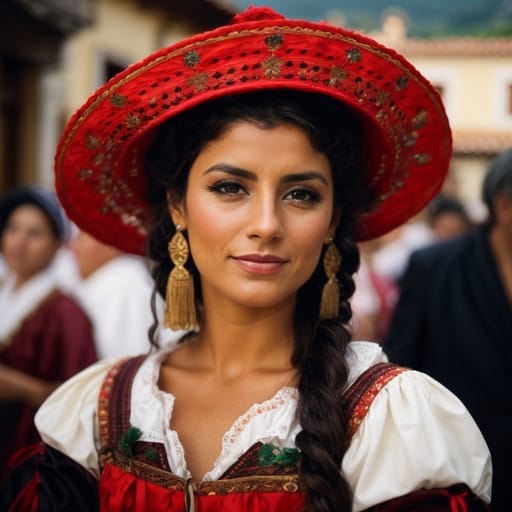
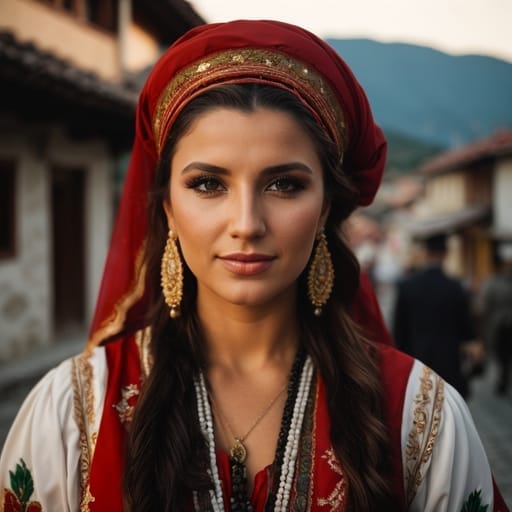
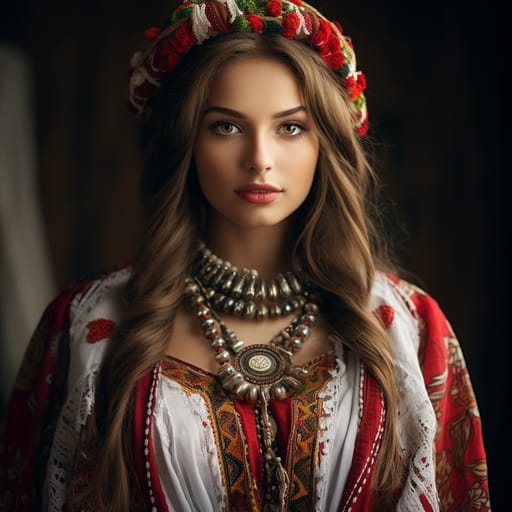
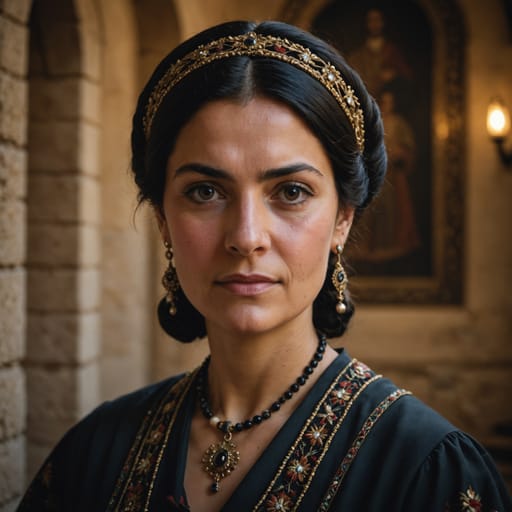
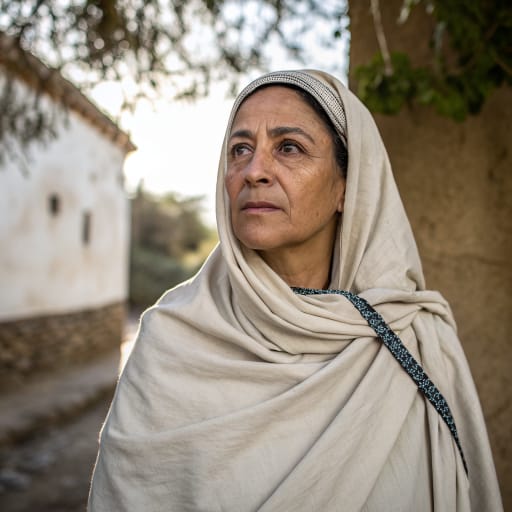
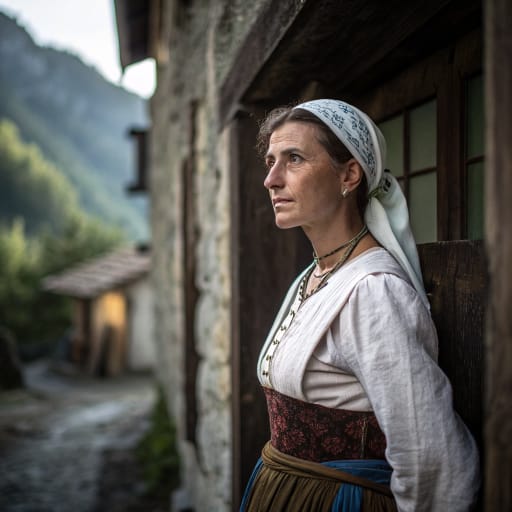
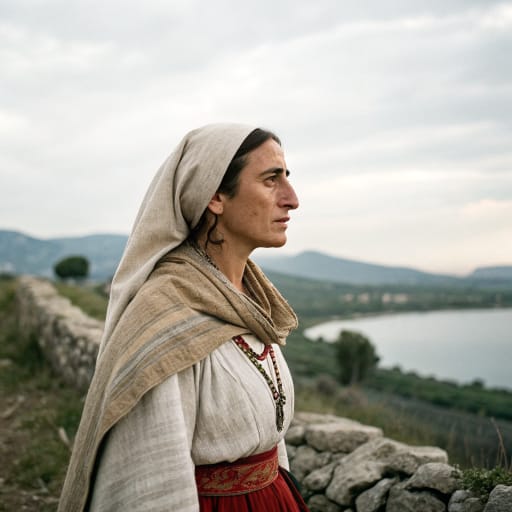
Typical Dassaretae Phenotypes
Reference for AI generation: hair, eyes, skin, facial structure, build
Dassaretae Body & Anatomy Reference
Anatomy by feature, Southern European / Mediterranean phenotype
Dassaretae Boobs & Breasts
Bust reference for Dassaretae women: medium-to-large cup, full, moderate-to-high projection, which is typical of Southern European / Mediterranean ancestry. Areolas measure about 32-46mm across, with medium-brown to dark-brown pigmentation. Body type (mesomorph with full hip-and-bust deposition) shapes the bust as well, so Dassaretae tits are usually full and projecting, generally the classic Mediterranean curvy bust profile. In AI imagery, keep the forward-set shape rather than drifting toward the lighter pigmentation of the Northern European bust.
Dassaretae Ass & Hips
The Dassaretae ass is typically medium-to-full, moderate-to-high projection, broader hip profile, which sets it apart from the slim Northern European narrow-hip pattern. Underneath, the pelvis shows medium-to-wide iliac crests, full gluteal-femoral fat distribution, part of the Southern European / Mediterranean skeletal pattern. For Dassaretae butt pics and AI renders, match that silhouette and the overall build (mesomorph with full hip-and-bust deposition).
Dassaretae Vagina & Pussy
Dassaretae pussy and vulvar anatomy presents medium-brown to dark-brown labial pigmentation, fuller labia minora, consistent with the Southern European / Mediterranean phenotype's pigmentation pattern. Dassaretae pubic hair is typically wavy-to-curly medium-coarse dark texture, dense distribution, in the inverted-triangle pattern. For anatomically accurate Dassaretae pussy renders the labial coloration should match the surrounding olive to medium skin tone with a continuous gradient, and the hair should keep its wavy-to-curly medium-coarse dark texture.
Dassaretae Dicks & Penis
Dassaretae dicks follow the Southern European / Mediterranean reference data: regional mean ~13-14cm erect; moderate girth; medium-brown shaft pigmentation. Shaft color should track the olive to medium skin tone with a smooth change toward the glans, and Dassaretae pubic hair keeps its wavy-to-curly medium-coarse dark texture.
Dassaretae Body, Curves & Build
Dassaretae body type and overall build presents as mesomorph with full hip-and-bust deposition, with mean adult female BMI 24-28: the characteristic Southern European / Mediterranean habitus. Dassaretae curves and proportions should keep the regional skeletal frame (height, shoulder-to-hip ratio, limb proportions) rather than a generic mesomorph default.
Dassaretae Skin Tone & Hair Texture
Dassaretae skin sits in the olive to medium (Fitzpatrick III-IV) band. Hair is typically wavy-to-curly 2B-3B, dark-brown to black, in keeping with the Southern European / Mediterranean phenotype. In nude renders the skin should stay one even tone from face to body, and body, pubic and head hair should match.
Explore phenotype categories
Structured taxonomy with peer-reviewed scales · 22 anatomical categories
Erotic Poses & Sex Positions
From the pose catalog: 219 named positions with reference skeletons
Frequently asked questions about Dassaretae people
Where is the Dassaretae homeland?
The Dassaretae homeland is The highlands and lake basins around Lake Ohrid and the upper Devoll valley, in present-day southeastern Albania and southwestern North Macedonia. in Southern Europe.
What language do Dassaretae people speak?
Dassaretae people primarily speak Illyrian, surviving only in personal and place names (Paleo-Balkan, Indo-European); Greek and later Latin for anything written..
What religion do Dassaretae people practice?
The predominant religion among Dassaretae people is Pre-Christian Balkan polytheism, with local cult alongside Greek and later Roman practice; the region Christianized in late antiquity, Lychnidus becoming an early bishopric..






Make your own Dassaretae images
Five a day, free, no credits to buy. The studio starts from this group's phenotype data, so you can set body type, pose and style and keep the traits accurate.
Start with Dassaretae