Help us get this right
Does this portrait look right for Cilicians?
One tap. It takes a second and it is recorded.
0 say it looks right, 1 says it looks off.
Cilicians Erotic
Cilicia, the southern Anatolian coast between the Taurus Mountains and the Mediterranean, from around Alanya east to the Gulf of Iskenderun, mainly in modern Mersin, Adana and Osmaniye provinces, Turkey
Luwian (Anatolian, Indo-European); Hurrian (Hurro-Urartian) in the Bronze Age; later Greek (Hellenic, Indo-European), with Phoenician and Aramaic (Semitic) used in inscriptions and coinage
Anatolian polytheism centered on the storm god Tarhunz and Sandas of Tarsus, with Hurrian, Semitic and Greek influences; Christianity by late antiquity
Rough Cilicians (Cilicia Trachea) and Plain Cilicians (Cilicia Pedias); part of the Luwian-speaking peoples of ancient Anatolia
About Cilicians People
The Cilicians were the people of Cilicia, the southern coast of Anatolia facing Cyprus in present-day Turkey, from the Bronze Age until Hellenistic and Roman rule absorbed them into the Greek-speaking, later Christian, population of the eastern Mediterranean. Their land came in two halves. To the west, Rough Cilicia was forested mountain and rocky cove dropping straight into the sea. To the east, Plain Cilicia was a hot, fertile lowland watered by the Cydnus, Sarus and Pyramus rivers, with Tarsus as its center. Their roots were Luwian. In the second millennium BCE the plain was the kingdom of Kizzuwatna. Luwian and Hurrian speakers lived there side by side, and Hurrian gods and rites passed from there into Hittite state religion. Queen Puduhepa, one of the most powerful figures at the Hittite court, came from Kizzuwatna. After the Hittite collapse, an Iron Age kingdom called Que by the Assyrians and Hiyawa by its own rulers left inscriptions in two languages, Luwian hieroglyphs and Phoenician, most famously at Karatepe. Herodotus reports that the Cilicians were once called Hypachaeans and took their later name from Cilix, a Phoenician prince. The legend fits a people caught between Anatolian, Semitic and Greek worlds. Their gods stayed Anatolian at heart: the storm god Tarhunz, and at Tarsus a god called Sandas, whom the Greeks identified with Heracles.
The Cilician Gates, a narrow pass through the Taurus Mountains, made the country a corridor for empires. Assyria annexed the plain, and Persia later took the whole country. Under Persian rule, local kings named Syennesis kept real independence while sending tribute that included 360 white horses a year. Alexander marched through in 333 BCE. To many Romans, though, Cilicians simply meant pirates. By the second century BCE the coves of Rough Cilicia sheltered fleets that raided shipping, held travelers for ransom, a young Julius Caesar among them, and fed the slave markets of the Aegean. Pompey swept them from the sea in 67 BCE and resettled many as farmers, some at Soli, which was renamed Pompeiopolis. Tarsus became a famous center of learning and the birthplace of the apostle Paul, while Luwian personal names lingered in the hills into Roman times. What survives now is mostly in words. The rough goat-hair cloth woven there gave Latin cilicium and English cilice, the hair shirt worn as penance. The name Cilicia itself outlived the people and passed to the medieval Armenian kingdom that later ruled the same coast.
Related ethnic groups
Groups that share Cilicians's homeland, region, language, or religious tradition. These are likely candidates for comparative phenotype reference.
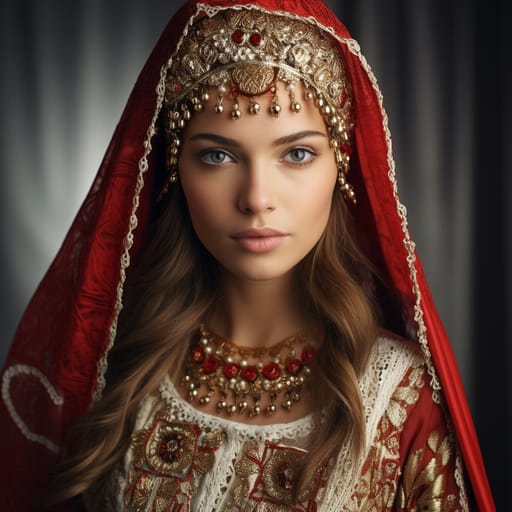
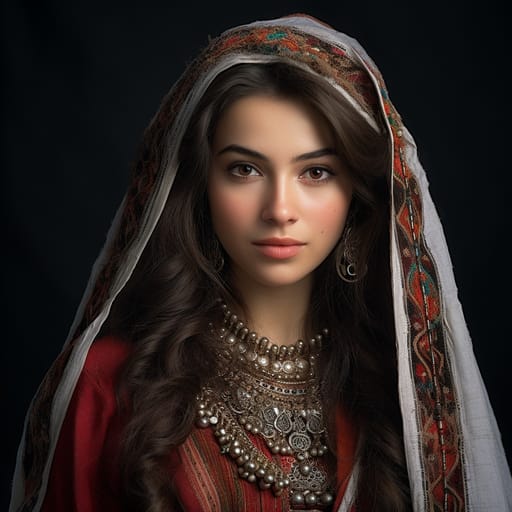
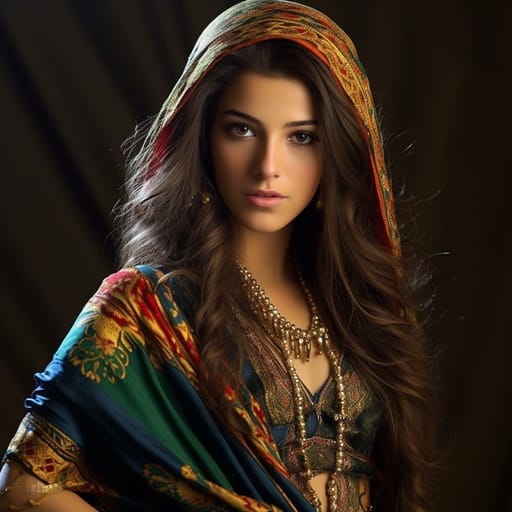
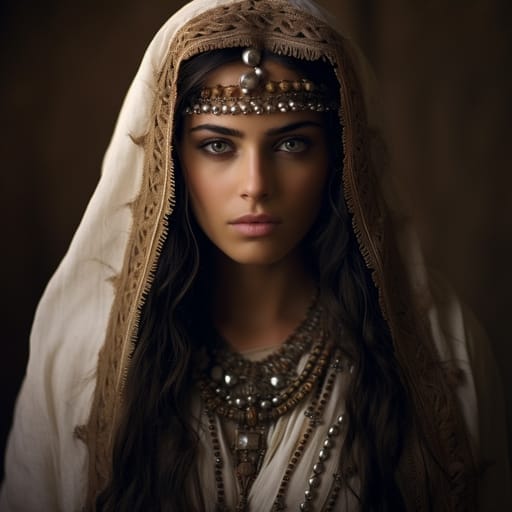
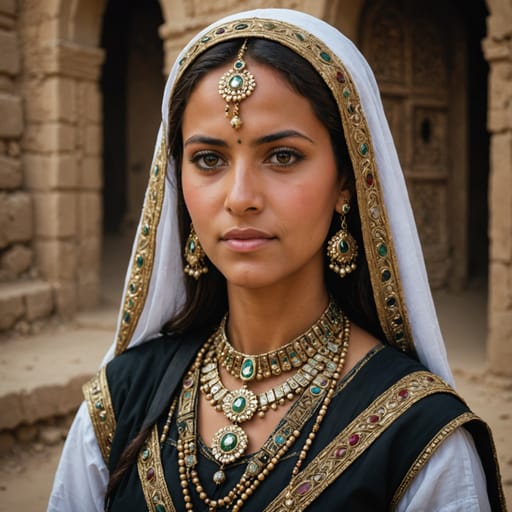
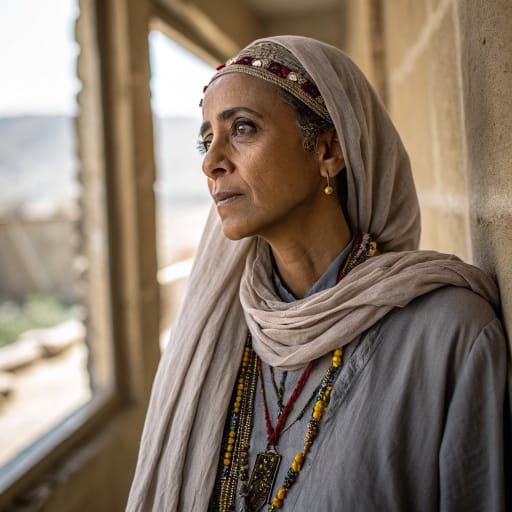
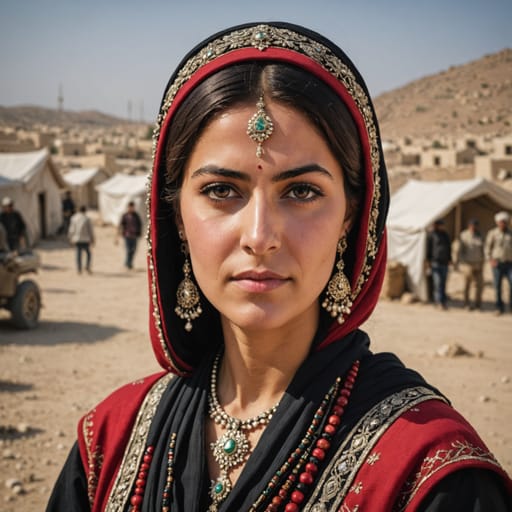
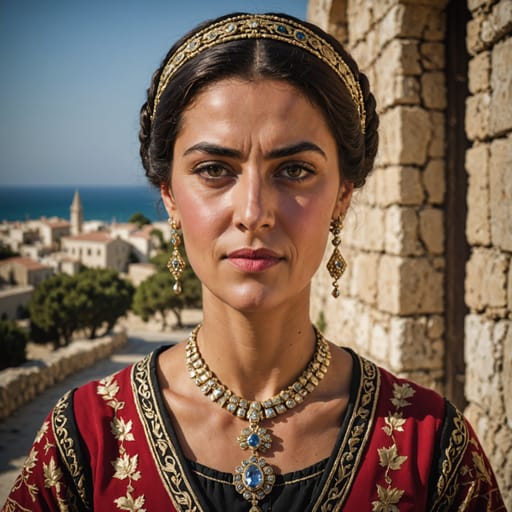
Typical Cilicians Phenotypes
Reference for AI generation: hair, eyes, skin, facial structure, build
Cilicians Body & Anatomy Reference
Levantine / Mediterranean Middle Eastern phenotype: anatomy reference for AI nude generation
Cilicians Boobs & Breasts
The typical Cilicians bust is medium-to-large cup, full, moderate-to-high projection, in line with the wider Levantine / Mediterranean Middle Eastern pattern. Areolas usually fall in the 32-46mm range, with medium-brown to dark-brown areolar pigmentation against the olive-to-light-brown skin tone. Compared with the smaller East Asian bust profile, Cilicians breasts sit forward and are generally full and soft, fuller projection than the North-African Berber norm. A faithful AI render of Cilicians tits keeps that shape and areola size.
Cilicians Ass & Hips
Butt shape among Cilicians women: medium-to-full, moderate projection, broader hip profile, over medium-to-wide iliac crests, fuller gluteal-femoral deposition. This follows Levantine / Mediterranean Middle Eastern ancestry and looks quite unlike the slim East Asian narrow-hip profile. An accurate Cilicians ass in adult AI imagery keeps both the silhouette and the overall build (mesomorph with fuller hip-and-bust deposition) instead of a generic average.
Cilicians Vagina & Pussy
Vulvar anatomy among Cilicians women: medium-brown to dark-brown labial pigmentation, fuller labia minora. Pubic hair tends to be wavy-to-coiled medium-coarse dark texture, dense distribution, in the usual inverted-triangle pattern. Both follow Levantine / Mediterranean Middle Eastern pigmentation, which is why Cilicians pussy renders should not fall back on a pale, sparse Western template.
Cilicians Dicks & Penis
The Cilicians cock profile, from Levantine / Mediterranean Middle Eastern anthropometric data: regional mean ~14cm erect; moderate-to-above-average girth; medium-brown shaft pigmentation. Pubic hair has a wavy-to-coiled medium-coarse dark texture and forms the usual inverted-V pattern. Whether Cilicians men are circumcised follows religious and cultural practice rather than phenotype.
Cilicians Body, Curves & Build
Build and curves among Cilicians women follow the Levantine / Mediterranean Middle Eastern pattern: mesomorph with fuller hip-and-bust deposition, mean adult female BMI 25-28. Proportions matter as much as skin tone, so Cilicians figures should keep their regional height and limb ratios.
Cilicians Skin Tone & Hair Texture
The Cilicians skin range is olive to medium-brown (Fitzpatrick III-V), and hair tends to be wavy-to-curly 2B-3B, predominantly dark-brown to black. That combination marks the Levantine / Mediterranean Middle Eastern phenotype, and skin tone is the trait AI generators most often get wrong for Cilicians women.
Explore phenotype categories
Structured taxonomy with peer-reviewed scales · 22 anatomical categories
Erotic Poses & Sex Positions
From the pose catalog: 219 named positions with reference skeletons
Frequently asked questions about Cilicians people
Where is the Cilicians homeland?
The Cilicians homeland is Cilicia, the southern Anatolian coast between the Taurus Mountains and the Mediterranean, from around Alanya east to the Gulf of Iskenderun, mainly in modern Mersin, Adana and Osmaniye provinces, Turkey in Western Asia.
What language do Cilicians people speak?
Cilicians people primarily speak Luwian (Anatolian, Indo-European); Hurrian (Hurro-Urartian) in the Bronze Age; later Greek (Hellenic, Indo-European), with Phoenician and Aramaic (Semitic) used in inscriptions and coinage.
What religion do Cilicians people practice?
The predominant religion among Cilicians people is Anatolian polytheism centered on the storm god Tarhunz and Sandas of Tarsus, with Hurrian, Semitic and Greek influences; Christianity by late antiquity.






Make your own Cilicians images
Five a day, free, no credits to buy. The studio starts from this group's phenotype data, so you can set body type, pose and style and keep the traits accurate.
Start with Cilicians