No portrait yet
Bunjevci Erotic
Bačka, the plain between the Danube and the Tisza: chiefly Subotica and Sombor in northern Serbia and the Baja area of southern Hungary, with older communities in Lika and the Croatian Littoral around Senj.
Bunjevac speech, a Neo-Shtokavian Ikavian variety (South Slavic, Indo-European), standardized as a language in Serbia and treated in Croatia as a Croatian dialect. Most speakers also use Serbian, Hungarian or Croatian.
Roman Catholic, historically organized by the Franciscans.
Three geographic branches: Danubian (Bačka), Littoral-Lika, and Dalmatian. Closely paired with the Šokci. Counted by Croatia as a subgroup of Croats and by Serbia as a distinct national minority.
About Bunjevci People
Ask what makes a Bunjevac and the answer tends to arrive as a vowel. Bunjevci speak an Ikavian form of Shtokavian, so milk is mliko and a child is dite, where their Serb neighbors say mleko and dete and Croats to the west say mlijeko and dijete. That small sound carries a lot of weight, because nearly every other marker of Bunjevac identity is shared with somebody else. They are South Slavs, they are Roman Catholic in a region where the line between Catholic and Orthodox has long mattered more than the line between languages, and their country is Bačka, the flat black soil between the Danube and the Tisza. Subotica is the center of gravity, with a second concentration across the Hungarian border around Baja. Older Bunjevac communities still sit in Lika and along the Croatian coast near Senj, descendants of the same Herzegovinian and Dalmatian hinterland stock who went west instead of north. In Bačka the characteristic form of life was the salaš, the isolated farmstead standing alone in the wheat, with the town kept for church, market and marriage.
The northward migration came in seventeenth century waves with Franciscan friars as its institutional spine, the largest arrival reaching Bačka in 1687 as the Ottomans fell back. Two centuries of frontier service for the Habsburgs followed, which bought privileges, and Bunjevac townsmen were among those pressing to have Subotica raised to a free royal city in 1779. A national awakening formed in the nineteenth century around the priest Ivan Antunović, who launched a Bunjevac and Šokac newspaper in 1870 on the premise that a people who read in their own speech becomes a people. In 1918 their name sat in the formal title of the Novi Sad assembly that voted to join Banat, Bačka and Baranja to Serbia. After 1945 Yugoslav authorities reclassified them as Croats and the census category disappeared. Serbia restored it in 1991 and recognized a standardized Bunjevac language in 2021, over loud objection from Zagreb, where the same speech is held to be a Croatian dialect. Bunjevci are not united among themselves on the question either. What they do agree on shows up every summer in Subotica at Dužijanca, the harvest thanksgiving, when a crown woven from wheat is carried to the church and the best harvesters are crowned, and again in winter at Velo prelo, descendant of the old spinning gatherings, where the silk comes out of the wardrobes and the tamburica orchestras play until morning.
Related ethnic groups
Groups that share Bunjevci's homeland, region, language, or religious tradition. These are likely candidates for comparative phenotype reference.
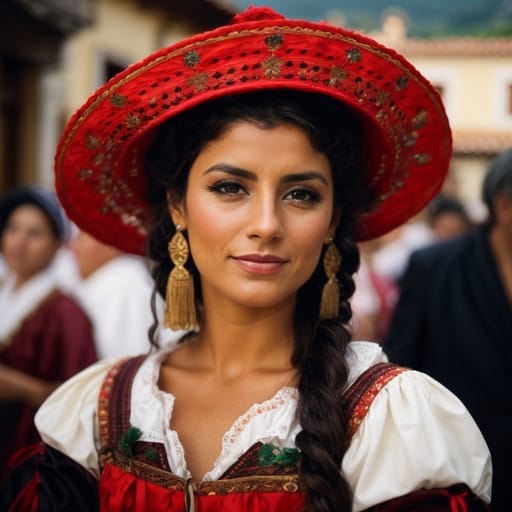
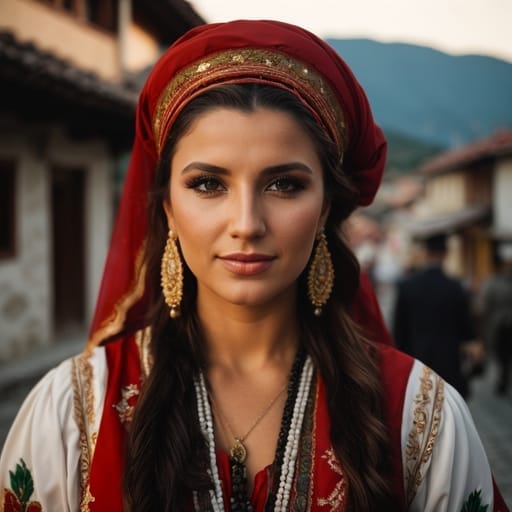
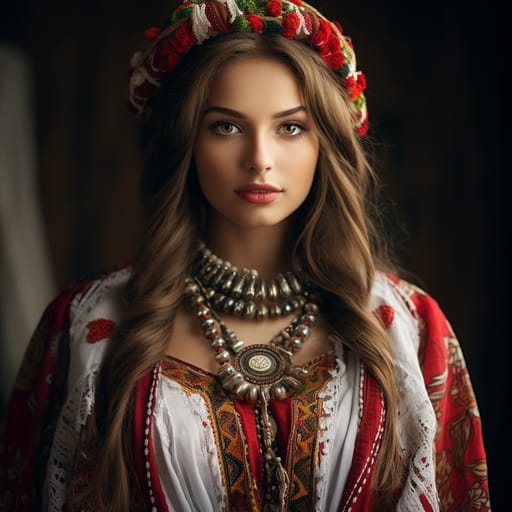
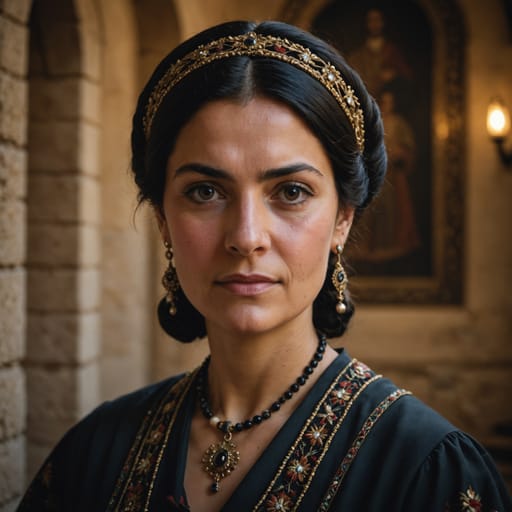
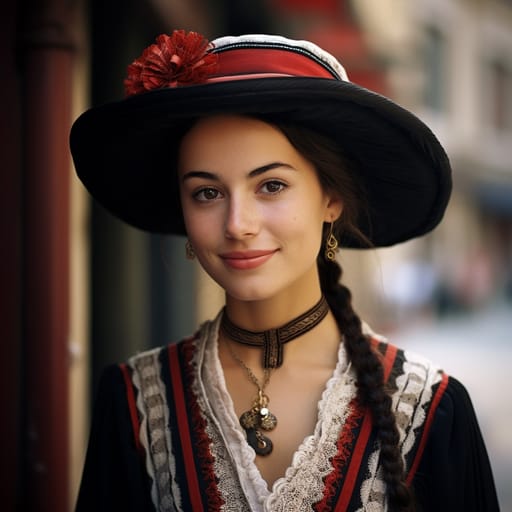
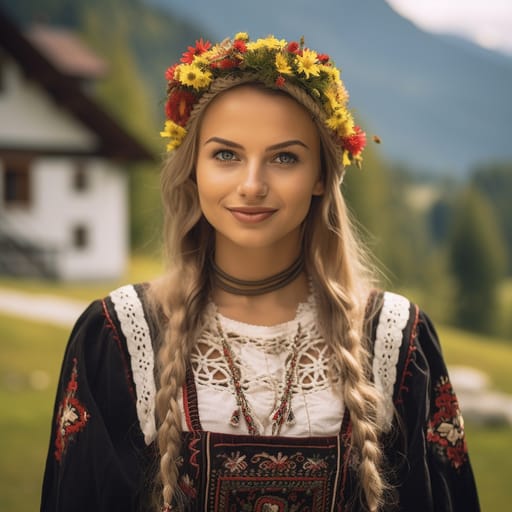
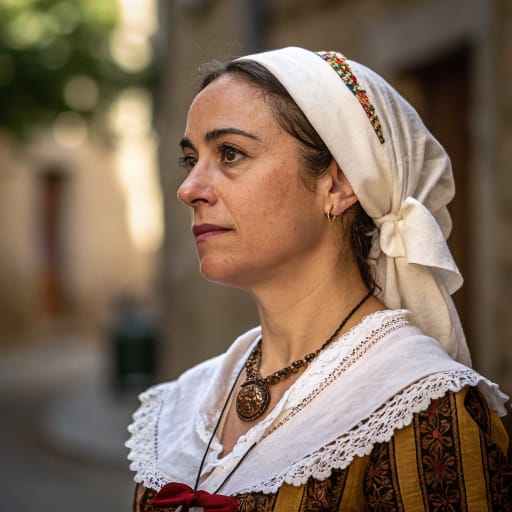
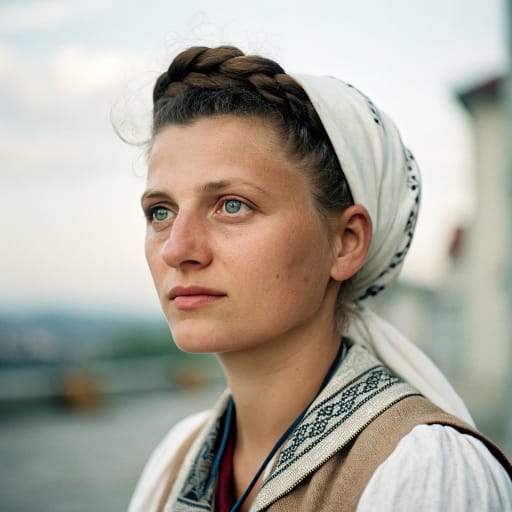
Typical Bunjevci Phenotypes
Reference for AI generation: hair, eyes, skin, facial structure, build
Bunjevci Body & Anatomy Reference
Southern European / Mediterranean phenotype: anatomy reference for AI nude generation
Bunjevci Boobs & Breasts
Bunjevci tits and boobs run medium-to-large cup, full, moderate-to-high projection, the classic Southern European / Mediterranean bust profile. Bunjevci nipples and areolas show medium-brown to dark-brown areolar pigmentation against the olive-to-light-brown skin tone, with areolar diameter typically in the 32-46mm range and forward-set positioning rather than the lighter pigmentation of the Northern European bust. Bunjevci breasts trend full and projecting, generally the classic Mediterranean curvy bust profile, a function of the mesomorph with full hip-and-bust deposition body habitus and the mean adult female BMI 24-28. For anatomically accurate AI-generated Bunjevci nudes the render preserves the medium-to-large cup, full, moderate-to-high projection shape, 32-46mm areolas with medium-brown to dark-brown pigmentation, and the torso proportions of the Southern European / Mediterranean phenotype.
Bunjevci Ass & Hips
Bunjevci hips and butt usually read as medium-to-full, moderate-to-high projection, broader hip profile. The skeletal base is medium-to-wide iliac crests, full gluteal-femoral fat distribution, the Southern European / Mediterranean pattern. Set against the slim Northern European narrow-hip pattern, the difference is easy to see, and the hip-to-waist ratio is often what identifies Bunjevci women in photos.
Bunjevci Vagina & Pussy
Expect medium-brown to dark-brown labial pigmentation, fuller labia minora on Bunjevci women, in keeping with Southern European / Mediterranean ancestry. The pubic hair is wavy-to-curly medium-coarse dark texture, dense distribution. Coloring should run evenly from the olive to medium skin of the thighs to the labia, and Bunjevci nude imagery should keep the hair's wavy-to-curly medium-coarse dark texture.
Bunjevci Dicks & Penis
Bunjevci dick and penile anatomy in adult AI generation should anchor on the regional reference data: regional mean ~13-14cm erect, moderate girth, and medium-brown shaft pigmentation. The Bunjevci cock profile reflects the Southern European / Mediterranean population's anthropometric measurements. The shaft pigmentation should track the surrounding olive to medium skin tone, and the pubic hair should keep its wavy-to-curly medium-coarse dark texture in the typical inverted-V escutcheon.
Bunjevci Body, Curves & Build
Bunjevci body type: mesomorph with full hip-and-bust deposition, with mean adult female BMI 24-28. This is the typical Southern European / Mediterranean build. Height range, shoulder-to-hip ratio and fat distribution all follow from it, which is what an accurate Bunjevci nude body should show.
Bunjevci Skin Tone & Hair Texture
Bunjevci skin tone falls in the olive to medium (Fitzpatrick III-IV) band, the surface signal most often miscalibrated by generic AI nude generators. Bunjevci hair texture is typically wavy-to-curly 2B-3B, dark-brown to black, characteristic of the Southern European / Mediterranean phenotype. In Bunjevci nude renders the skin should hold that band consistently across the body.
Explore phenotype categories
Structured taxonomy with peer-reviewed scales · 22 anatomical categories
Erotic Poses & Sex Positions
From the pose catalog: 219 named positions with reference skeletons
Frequently asked questions about Bunjevci people
Where is the Bunjevci homeland?
The Bunjevci homeland is Bačka, the plain between the Danube and the Tisza: chiefly Subotica and Sombor in northern Serbia and the Baja area of southern Hungary, with older communities in Lika and the Croatian Littoral around Senj. in Southern Europe.
What language do Bunjevci people speak?
Bunjevci people primarily speak Bunjevac speech, a Neo-Shtokavian Ikavian variety (South Slavic, Indo-European), standardized as a language in Serbia and treated in Croatia as a Croatian dialect. Most speakers also use Serbian, Hungarian or Croatian..
What religion do Bunjevci people practice?
The predominant religion among Bunjevci people is Roman Catholic, historically organized by the Franciscans..






Make your own Bunjevci images
Five a day, free, no credits to buy. The studio starts from this group's phenotype data, so you can set body type, pose and style and keep the traits accurate.
Start with Bunjevci