Help us get this right
Does this portrait look right for Awa-Kwaiker?
Nobody has judged this one yet. You would be the first.
Awa-Kwaiker Erotic
The Pacific slope of the Andes in southern Colombia (Nariño and Putumayo) and the northern border provinces of Ecuador, principally Carchi
Awa Pit (Barbacoan), with Spanish widely spoken as a second language
Predominantly Catholic, with growing evangelical congregations, alongside persistent beliefs about forest-borne illness and the healers who treat it
Barbacoan peoples; closest linguistic kin are the Chachi and Tsáchila of coastal Ecuador. Also called Kwaiker or Cuaiquer, self-designated Inkal Awá. Distinct from the Awá Guajá of Brazil.
About Awa-Kwaiker People
The Awá call themselves Inkal Awá, roughly "people of the mountain forest," and the name reads less like a label than a description of how they live. Their country is the western slope of the Andes where it falls away toward the Pacific: steep, permanently green, and among the wettest forest on the continent, running from Nariño and Putumayo in southern Colombia across the border into Carchi and the neighboring Ecuadorian provinces. They have historically declined to build villages. Awá families spread themselves along ridges and river courses, one household to a clearing, close enough to walk to a relative but not close enough to see one. Houses stand on posts above the mud, floored with split palm, reached by a notched log. The dispersal was never incidental. It kept them awkward to administer, first for the Spanish, later for rubber and timber crews, and later still for everyone else who came in with a plan for the forest.
They speak Awa Pit, a Barbacoan language whose nearest relatives are Cha'palaa and Tsafiki, spoken by the Chachi and Tsáchila farther down the Ecuadorian coast. It has no demonstrated link to Quechua and sits in a Spanish-speaking region resembling almost nothing around it. Its verbs mark whether the speaker was the one who acted or merely witnessed the act, a distinction documented in only a handful of languages worldwide. Catholicism came through mission stations and is the nominal affiliation of most, with evangelical congregations added more recently, but it sits alongside a working understanding of the forest as something that can make a person sick: chutún, an illness caught from contaminated places and remains, is a matter for a healer rather than a clinic. Plantain, maize and cassava come from plots cut and burned into the slope; hunting and river fishing supply the rest. The last three decades have been brutal. Coca, armed groups, aerial fumigation and landmines all arrived in Awá territory, and in 2009 Colombia's Constitutional Court named them among the Indigenous peoples facing physical and cultural extermination, a finding that followed a series of massacres in Nariño. Their response has been organizational: resguardo titles, their own federations on both sides of a border they did not draw, and bilingual schooling meant to keep Awa Pit in the mouths of people under twenty.
Related ethnic groups
Groups that share Awa-Kwaiker's homeland, region, language, or religious tradition. These are likely candidates for comparative phenotype reference.
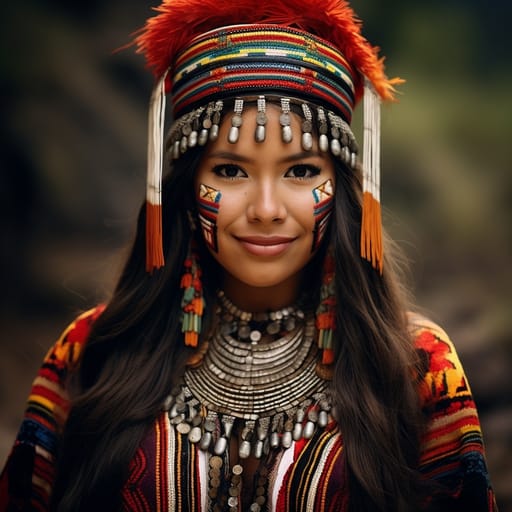
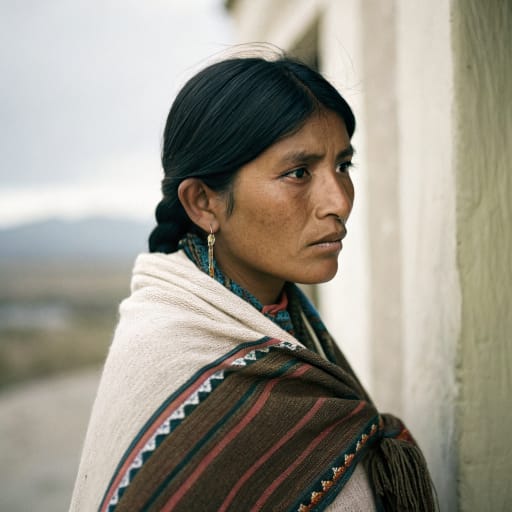
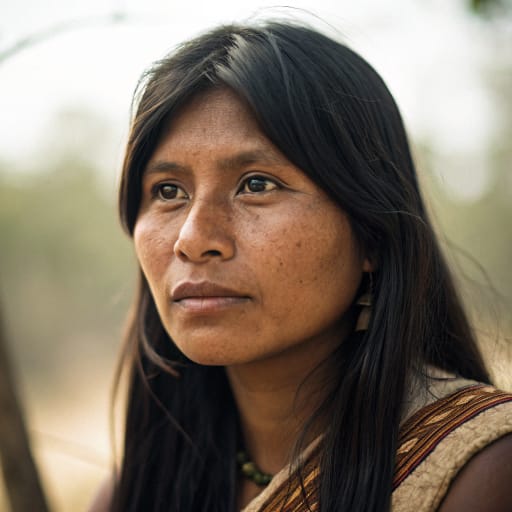
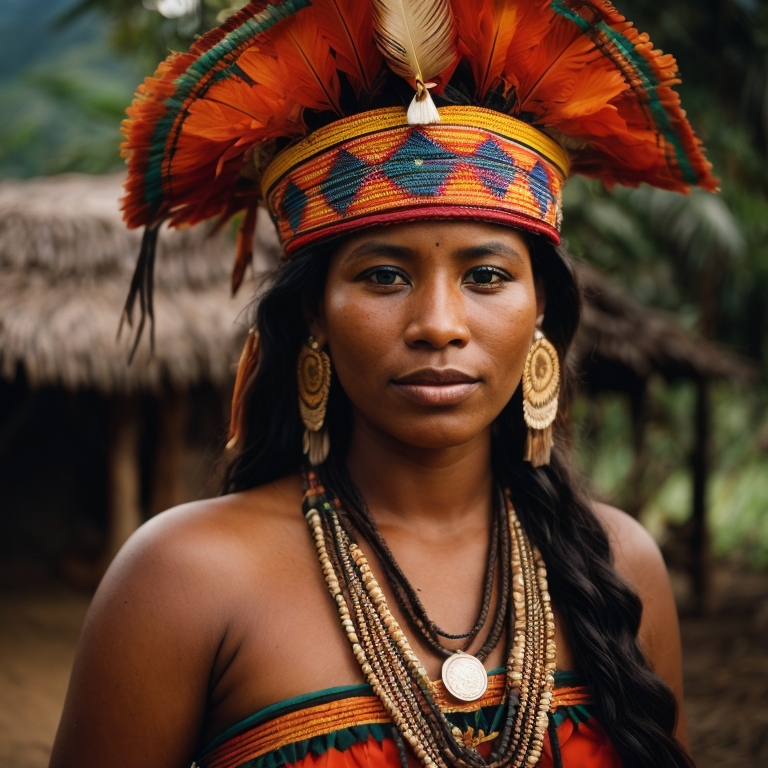
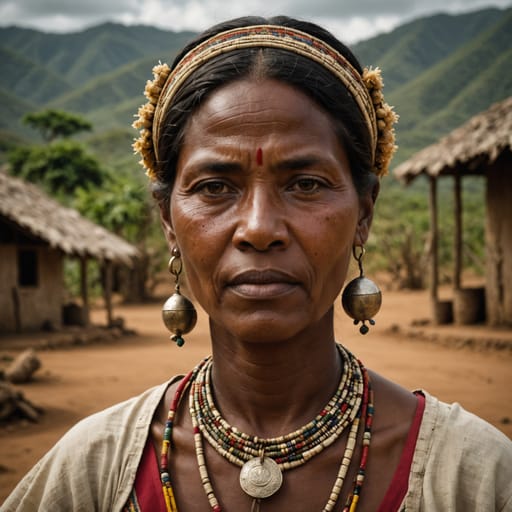
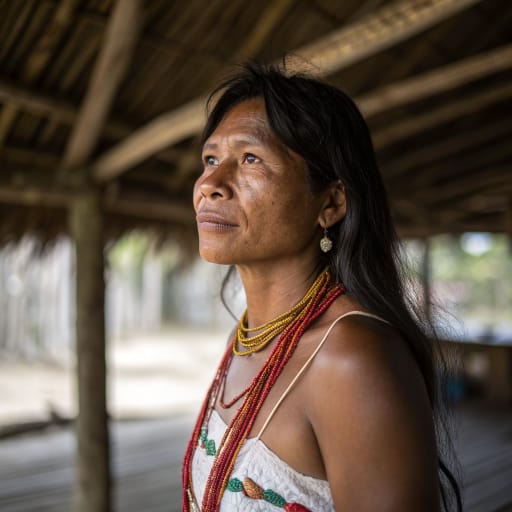
Typical Awa-Kwaiker Phenotypes
Reference for AI generation: hair, eyes, skin, facial structure, build
Awa-Kwaiker Body & Anatomy Reference
South American Indigenous / European-Mestizo / Afro-Latino mix phenotype: anatomy reference for AI nude generation
Awa-Kwaiker Boobs & Breasts
Awa-Kwaiker tits and boobs run medium-to-large cup, full, high projection, the classic South American Indigenous / European-Mestizo / Afro-Latino mix bust profile. Awa-Kwaiker nipples and areolas show medium-brown to dark-brown areolar pigmentation against the tan-to-deep-brown skin tone, with areolar diameter typically in the 32-46mm range and forward-set positioning rather than the smaller bust profile of Andean Indigenous sub-populations. Awa-Kwaiker breasts trend the classic Brazilian / Latina curvy bust profile in lowland populations; smaller and shorter-set in Andean Indigenous populations, a function of the endomorph-to-mesomorph with high gluteal-femoral deposition body habitus and the mean adult female BMI 25-28. For anatomically accurate AI-generated Awa-Kwaiker nudes the render preserves the medium-to-large cup, full, high projection shape, 32-46mm areolas with medium-brown to dark-brown pigmentation, and the torso proportions of the South American Indigenous / European-Mestizo / Afro-Latino mix phenotype.
Awa-Kwaiker Ass & Hips
Awa-Kwaiker hips and butt usually read as full, high projection, the famous Brazilian / Latina bunda profile. The skeletal base is wide iliac crests, very full gluteal-femoral fat deposition (the hallmark Brazilian / Latina hip-to-waist ratio), the South American Indigenous / European-Mestizo / Afro-Latino mix pattern. Set against the slim narrow-hip East Asian profile, the difference is easy to see, and the hip-to-waist ratio is often what identifies Awa-Kwaiker women in photos.
Awa-Kwaiker Vagina & Pussy
Expect medium-brown to dark-brown labial pigmentation, fuller labia minora on Awa-Kwaiker women, in keeping with South American Indigenous / European-Mestizo / Afro-Latino mix ancestry. The pubic hair is wavy-to-curly coarse dark texture, dense distribution. Coloring should run evenly from the tan to deep-brown skin of the thighs to the labia, and Awa-Kwaiker nude imagery should keep the hair's wavy-to-curly coarse dark texture.
Awa-Kwaiker Dicks & Penis
Awa-Kwaiker dick and penile anatomy in adult AI generation should anchor on the regional reference data: regional mean ~13cm erect, moderate-to-above-average girth, and medium-brown shaft pigmentation. The Awa-Kwaiker cock profile reflects the South American Indigenous / European-Mestizo / Afro-Latino mix population's anthropometric measurements. The shaft pigmentation should track the surrounding tan to deep-brown skin tone, and the pubic hair should keep its wavy-to-curly coarse dark texture in the typical inverted-V escutcheon.
Awa-Kwaiker Body, Curves & Build
Awa-Kwaiker body type: endomorph-to-mesomorph with high gluteal-femoral deposition, with mean adult female BMI 25-28. This is the typical South American Indigenous / European-Mestizo / Afro-Latino mix build. Height range, shoulder-to-hip ratio and fat distribution all follow from it, which is what an accurate Awa-Kwaiker nude body should show.
Awa-Kwaiker Skin Tone & Hair Texture
Awa-Kwaiker skin tone falls in the tan to deep-brown (Fitzpatrick III-VI) band, the surface signal most often miscalibrated by generic AI nude generators. Awa-Kwaiker hair texture is typically straight-to-curly 1A-3C, varies widely by ancestral composition, characteristic of the South American Indigenous / European-Mestizo / Afro-Latino mix phenotype. In Awa-Kwaiker nude renders the skin should hold that band consistently across the body.
Explore phenotype categories
Structured taxonomy with peer-reviewed scales · 22 anatomical categories
Erotic Poses & Sex Positions
From the pose catalog: 219 named positions with reference skeletons
Frequently asked questions about Awa-Kwaiker people
Where is the Awa-Kwaiker homeland?
The Awa-Kwaiker homeland is The Pacific slope of the Andes in southern Colombia (Nariño and Putumayo) and the northern border provinces of Ecuador, principally Carchi in South America.
What language do Awa-Kwaiker people speak?
Awa-Kwaiker people primarily speak Awa Pit (Barbacoan), with Spanish widely spoken as a second language.
What religion do Awa-Kwaiker people practice?
The predominant religion among Awa-Kwaiker people is Predominantly Catholic, with growing evangelical congregations, alongside persistent beliefs about forest-borne illness and the healers who treat it.






Make your own Awa-Kwaiker images
Five a day, free, no credits to buy. The studio starts from this group's phenotype data, so you can set body type, pose and style and keep the traits accurate.
Start with Awa-Kwaiker