Help us get this right
Does this portrait look right for Arameans?
One tap. It takes a second and it is recorded.
0 say it looks right, 1 says it looks off.
Arameans Erotic
Ancient Aram: central and northern Syria, extending into southeastern Turkey and the upper Euphrates; principal cities Damascus, Hamath, Arpad and Guzana
Aramaic (Northwest Semitic, Afroasiatic); Neo-Aramaic dialects survive among descendants
Ancient Semitic polytheism centered on the storm god Hadad; Aramaic-speaking descendants are largely Syriac Christians
Iron Age tribal kingdoms including Aram-Damascus, Bit-Adini, Bit-Agusi, Bit-Bahiani, Sam'al and Hamath; ancestral to Syriac Christian communities identifying as Arameans, Assyrians and Chaldeans
About Arameans People
The Arameans were an Iron Age Semitic people who emerged in the Syrian interior around the twelfth century BCE, built a string of small kingdoms across the Levant and upper Mesopotamia, and were absorbed by Assyria by the late eighth century BCE. Their name survives in the Aramaic language, in the self-designation of many Syriac Christians, and in a few villages north of Damascus where a descendant of their speech is still spoken. What made them a people was never a state. It was a shared language, a clan-based way of holding power, and a stubborn presence on the land between the Euphrates and the Anti-Lebanon. Assyrian scribes first noticed them as Ahlamu raiders at the river crossings. Within two centuries those raiders had settled into a patchwork of polities named for founding ancestors: Bit-Adini, Bit-Agusi, Bit-Bahiani, the house of this or that patriarch. Aram-Damascus grew strongest, contesting the Transjordan and the caravan routes with the kingdom of Israel, and Damascus is what the Bible usually means when it says Aram. Israel's own scripture claims kinship anyway: a wandering Aramean was my father, the pilgrim recites in Deuteronomy.
Their religion was the common furniture of the ancient Near East, with the storm god Hadad at the center, honored at Damascus and Aleppo, alongside El, the moon god of Harran, and a crowd of local patrons. Kings raised basalt steles in his name and had themselves carved in long fringed robes and squared beards, holding a staff and a lotus. Assyria took the cities one by one, Arpad in 740, Damascus in 732, Hamath in 720, and deported the survivors by the tens of thousands. That deportation is the hinge of the story. Scattered through an empire that needed a common tongue, Aramaic, written in a borrowed Phoenician alphabet, was easier to write than cuneiform and simpler to learn than Akkadian. The conquered replaced the conqueror's language. Persia made it the administrative script from Egypt to the Indus. Jews carried it home from Babylon, so parts of Daniel and Ezra are written in it and Jesus preached in it. Its letters fathered the Hebrew square script, Syriac, Nabataean and, through Nabataean, Arabic. Aramaic speakers later formed the first great Christian churches of the East, and it is through that church, not any Iron Age dynasty, that modern Arameans, Assyrians and Chaldeans in Iraq, Syria, Turkey and the European diaspora trace their line. A people that lost every war it fought against empire ended up writing the empire's paperwork and, in time, its scripture.
Related ethnic groups
Groups that share Arameans's homeland, region, language, or religious tradition. These are likely candidates for comparative phenotype reference.
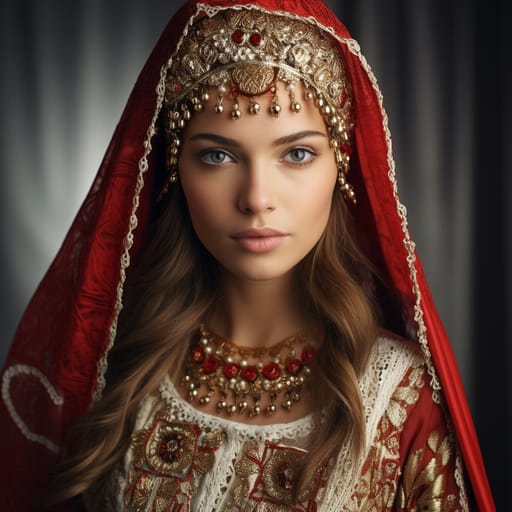
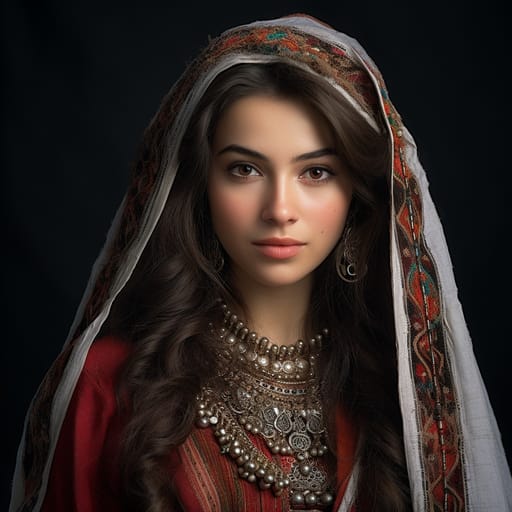
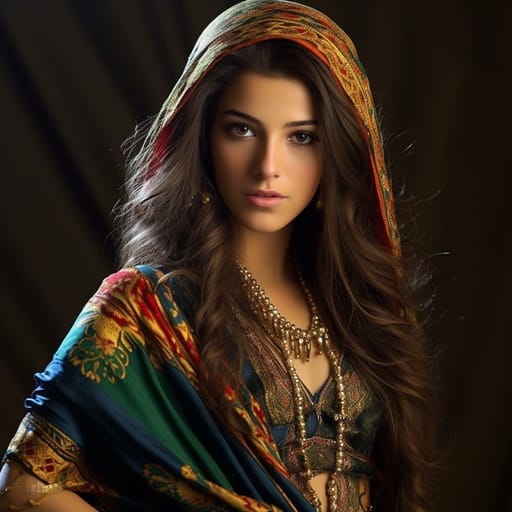
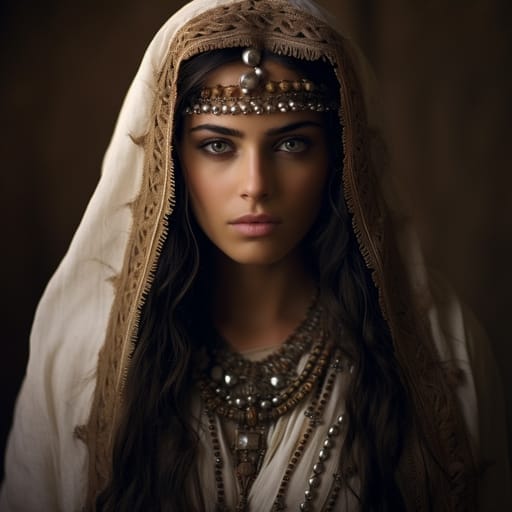
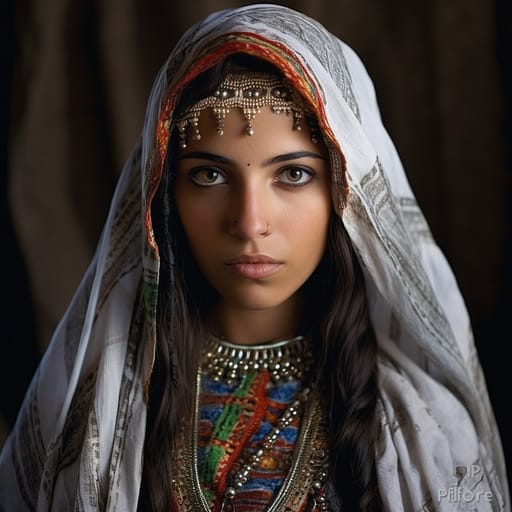
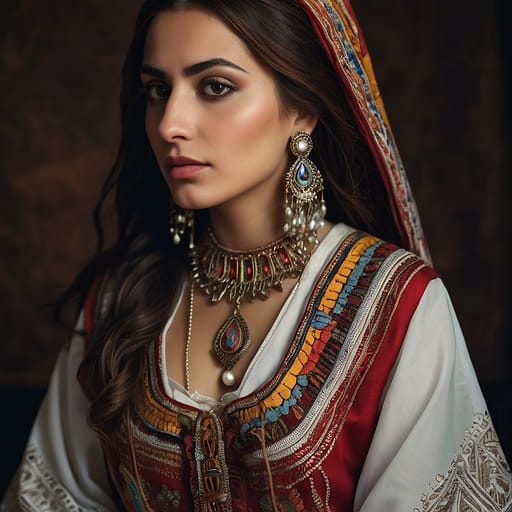
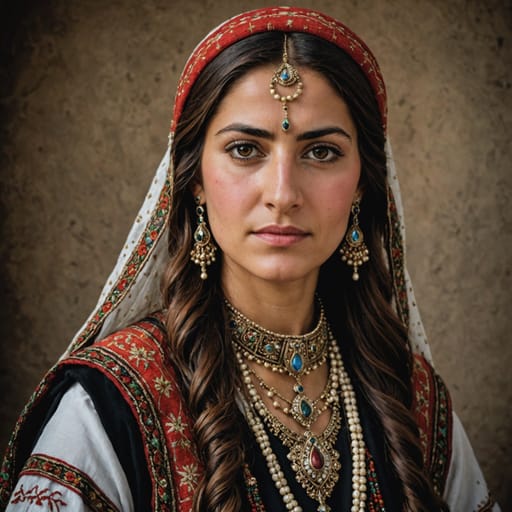
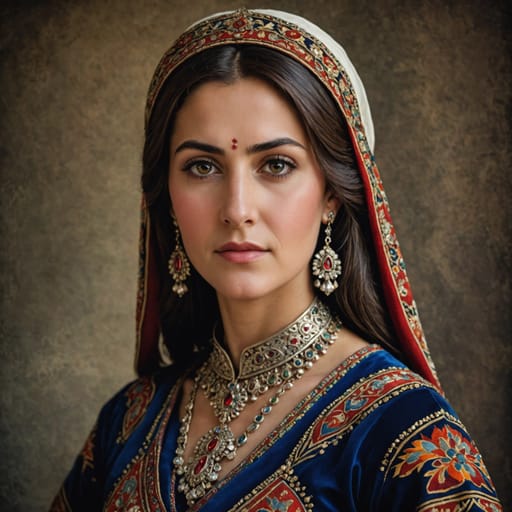
Typical Arameans Phenotypes
Reference for AI generation: hair, eyes, skin, facial structure, build
Arameans Body & Anatomy Reference
Levantine / Mediterranean Middle Eastern phenotype: anatomy reference for AI nude generation
Arameans Boobs & Breasts
Arameans boobs follow the Levantine / Mediterranean Middle Eastern profile: medium-to-large cup, full, moderate-to-high projection. Areolar diameter is usually 32-46mm, and the coloring is medium-brown to dark-brown areolar pigmentation against the olive-to-light-brown skin tone. Breast shape tracks body composition (mesomorph with fuller hip-and-bust deposition, mean adult female BMI 25-28), so Arameans breasts tend to be full and soft, fuller projection than the North-African Berber norm. Expect a forward-set shape, not the smaller East Asian bust profile.
Arameans Ass & Hips
Arameans ass and hip morphology presents as medium-to-full, moderate projection, broader hip profile, distinctly different from the slim East Asian narrow-hip profile. The Arameans pelvic profile shows medium-to-wide iliac crests, fuller gluteal-femoral deposition, anchored in the Levantine / Mediterranean Middle Eastern skeletal pattern. Arameans butt shots in adult AI imagery should render the medium-to-full, moderate projection, broader hip profile silhouette with the overall build (mesomorph with fuller hip-and-bust deposition) and the fat distribution typical of the Levantine / Mediterranean Middle Eastern phenotype.
Arameans Vagina & Pussy
Arameans pussy anatomy typically shows medium-brown to dark-brown labial pigmentation, fuller labia minora. Pubic hair is usually wavy-to-coiled medium-coarse dark texture, dense distribution. In AI-generated Arameans nudes, labial color should blend into the olive to medium-brown skin with a gradual transition, and the hair should keep its wavy-to-coiled medium-coarse dark texture.
Arameans Dicks & Penis
Penis reference for Arameans men: regional mean ~14cm erect, moderate-to-above-average girth. Coloring: medium-brown shaft pigmentation. An accurate Arameans cock in AI imagery matches the surrounding olive to medium-brown skin rather than a generic porn default. Circumcision depends on religion and custom, not ancestry.
Arameans Body, Curves & Build
The Arameans figure is generally mesomorph with fuller hip-and-bust deposition, with mean adult female BMI 25-28, characteristic of Levantine / Mediterranean Middle Eastern ancestry. AI image tools tend to flatten regional body types into a few stock shapes; here the Arameans build is kept as its own reference.
Arameans Skin Tone & Hair Texture
Skin: olive to medium-brown (Fitzpatrick III-V). Hair: wavy-to-curly 2B-3B, predominantly dark-brown to black. Both are typical of Levantine / Mediterranean Middle Eastern ancestry. The most common mistake in AI nudes of Arameans women is a body rendered lighter than the face.
Explore phenotype categories
Structured taxonomy with peer-reviewed scales · 22 anatomical categories
Erotic Poses & Sex Positions
From the pose catalog: 219 named positions with reference skeletons
Frequently asked questions about Arameans people
Where is the Arameans homeland?
The Arameans homeland is Ancient Aram: central and northern Syria, extending into southeastern Turkey and the upper Euphrates; principal cities Damascus, Hamath, Arpad and Guzana in Western Asia.
What language do Arameans people speak?
Arameans people primarily speak Aramaic (Northwest Semitic, Afroasiatic); Neo-Aramaic dialects survive among descendants.
What religion do Arameans people practice?
The predominant religion among Arameans people is Ancient Semitic polytheism centered on the storm god Hadad; Aramaic-speaking descendants are largely Syriac Christians.






Make your own Arameans images
Five a day, free, no credits to buy. The studio starts from this group's phenotype data, so you can set body type, pose and style and keep the traits accurate.
Start with Arameans