Help us get this right
Does this portrait look right for Jarai?
One tap. It takes a second and it is recorded.
1 says it looks right, 0 say it looks off.
Jarai Erotic
Central Highlands (Vietnam)
Animism
About Jarai People
The Jarai live in the rolling plateau country of Vietnam's Central Highlands, mostly across Gia Lai and Kon Tum provinces, with smaller populations spilling over the border into northeastern Cambodia. They are the largest of the Chamic-speaking peoples on the mainland — a linguistic outlier, since their language belongs to the Austronesian family that otherwise stretches across the islands of Southeast Asia and the Pacific. The Jarai are essentially a maritime-family people who never went back to the sea. Their language is most closely related to Cham and Rade, and more distantly to Malay and Tagalog, which is unusual company for a hill people surrounded by speakers of Mon-Khmer and Vietnamese.
Society is organized matrilineally. Descent, house, and family land pass through women; a husband moves into his wife's longhouse on marriage, and children belong to the mother's clan. The clan system regulates marriage rules with real force — certain unions are forbidden across generations, and elders track lineage carefully. The traditional longhouse, raised on stilts and sometimes stretching long enough to shelter several related families, is the architectural signature of Jarai settlements, though concrete and tin are steadily replacing timber and thatch.
Religious life is animist at its core. The world is populated by yang — spirits inhabiting rice, water, forest, particular stones, particular trees — and ritual exists to keep relations with them in working order. The most distinctive Jarai practice is the cemetery: families tend a grave for years, feeding and "living with" the dead, and then hold a tomb-abandonment ceremony — Pơ Thi — after which the deceased is released and the grave allowed to return to forest. Carved wooden figures, sometimes mourning, sometimes erotic, sometimes simply watching, surround the funeral houses. They are among the most striking pieces of folk sculpture in mainland Southeast Asia.
The Jarai had their own loosely organized political tradition before French colonization, including the famous Pötao — the so-called Kings of Fire, Water, and Wind, ritual figures rather than rulers, whose office anthropologists like Jacques Dournes spent decades trying to describe. The twentieth century was hard on them: war across the Highlands, displacement during and after the Vietnam War, postwar resettlement programs, and waves of in-migration by lowland Vietnamese have all compressed Jarai land and reshaped village life. Christian missions, especially Protestant, have drawn a substantial minority away from animist practice, though the older spirit world has not so much disappeared as gone quieter.
Related ethnic groups
Groups that share Jarai's homeland, region, language, or religious tradition. These are likely candidates for comparative phenotype reference.
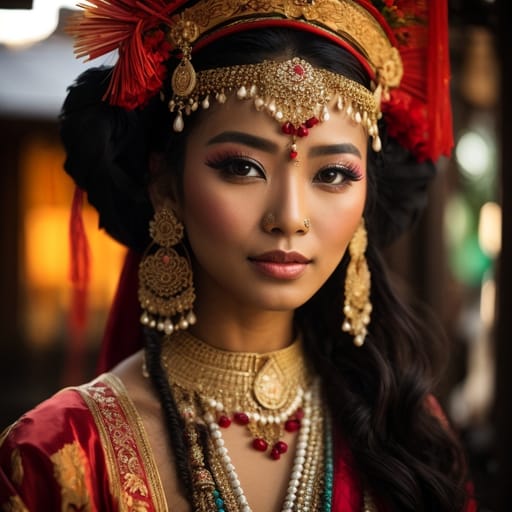
Bahnar
same homeland (Central Highlands (Vietnam))
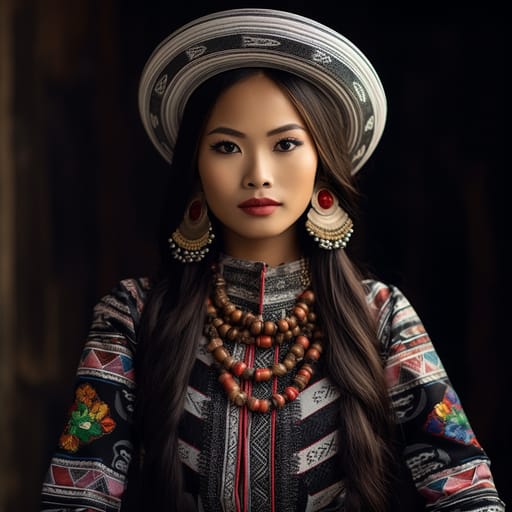
Rade
same homeland (Central Highlands (Vietnam))
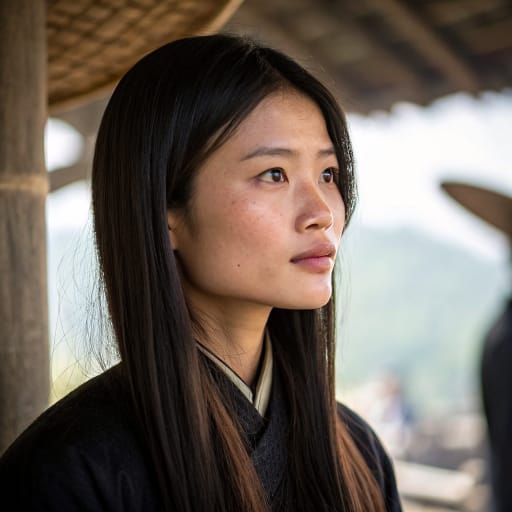
Nùng
same region (Southeast Asia)
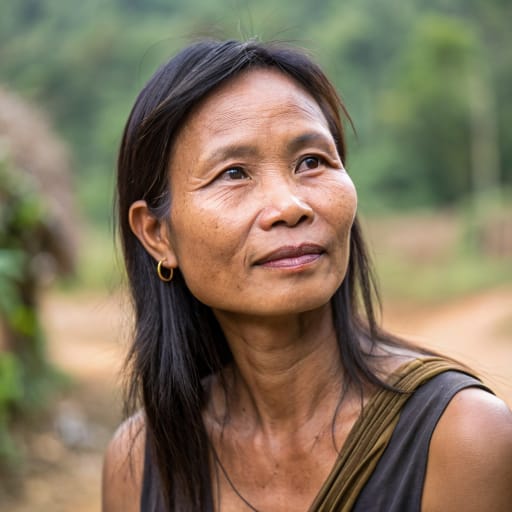
Bru
same region (Southeast Asia)
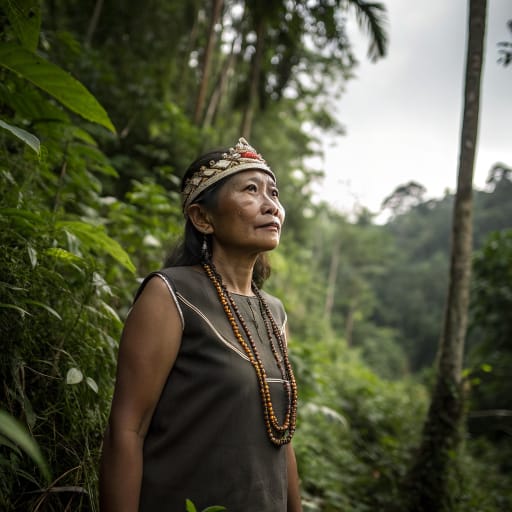
Meratus Dayak
same region (Southeast Asia)
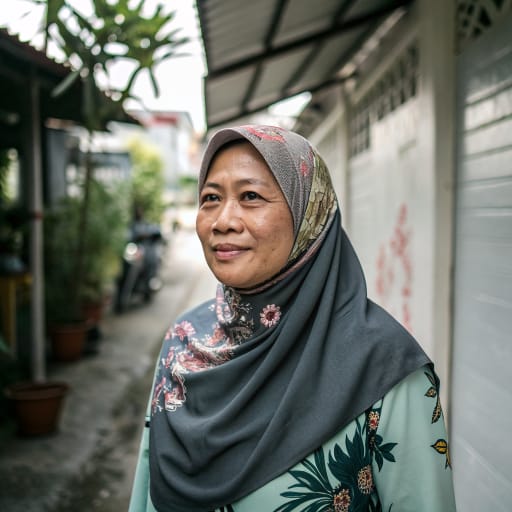
Chitty
same region (Southeast Asia)
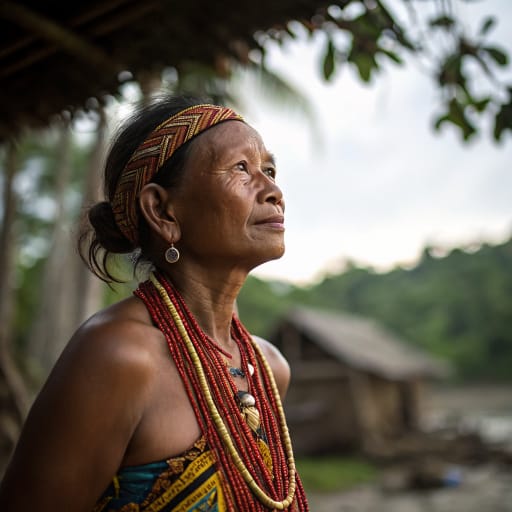
Mentawai
same region (Southeast Asia)
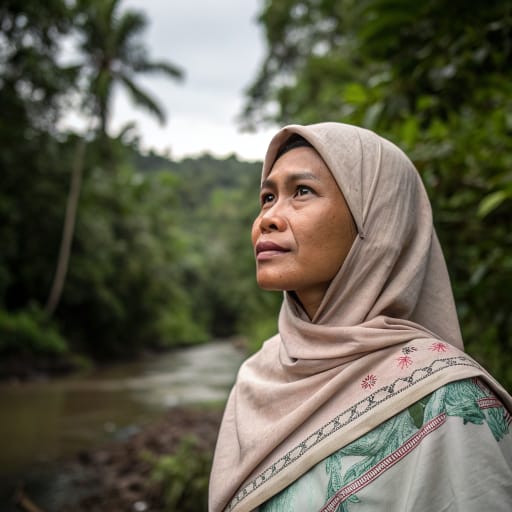
Alas
same region (Southeast Asia)
Geographic Distribution: Jarai populations across 1 country
Each row is ranked by the group's share of that country's population, with the source citation drawn from published census and demographic surveys. Click through for the full per-country phenotype profile.
| Country | Share | Source |
|---|---|---|
| Vietnam | 0.5% | Vietnam 2019 Census, self-identified Jarai (~0.5%, ~510,000); concentrated in the Central Highlands (Gia Lai, Kon Tum, Dak Lak provinces). Austronesian / Malayo-Polynesian language family — distinct from the Kinh and other Vietnamese populations through Austronesian linguistic affiliation |
Typical Jarai Phenotypes
Reference for AI generation: hair, eyes, skin, facial structure, build
The Jarai are an Austronesian-speaking highland people of Vietnam's Central Highlands — Chamic cousins of the lowland Cham, but with centuries of upland isolation that pushed their phenotype away from coastal Southeast Asian norms toward something distinctly montagnard. The defining structural note is a heavier, broader facial architecture than ethnic Vietnamese: wider zygomatic arches, a squarer jawline, and a generally more robust skull form that reads as visibly different to anyone familiar with Kinh features.
Hair is uniformly black to blue-black, coarse in texture, and predominantly straight, though a meaningful minority show loose waves — a Chamic/Austronesian trait carried up from the coast. Graying is late. Body and facial hair is sparse, matching the regional pattern. Eyes are dark brown to near-black; the epicanthic fold is present but typically lighter and less pronounced than in northern East Asian groups, and a noticeable share of Jarai show only a partial fold or none at all, giving a more open, almond shape. Eyebrows are dark and moderately heavy.
Skin tones cluster in the Fitzpatrick III–IV range with warm bronze and olive undertones, though field workers and older men weathered by highland sun often deepen well into IV. Compared to lowland Vietnamese, Jarai skin tends to read warmer and more golden-brown rather than yellow-toned.
The nose is a key marker — broader at the alae and lower-bridged than the Kinh average, with rounded tips; this is the most reliable distinguishing feature in mixed company. Lips are medium to full, fuller than typical East Asian norms, again a Chamic inheritance. Cheekbones sit high and wide.
Build is short and compact — adult men commonly 1.58–1.65m, women 1.48–1.55m — with sturdy, muscular frames built by terrace farming and highland terrain rather than slight or wiry. Shoulders are proportionally broad for stature, hips narrow, and limbs thickset rather than long. Body fat distribution is low through middle age, with lean musculature visible across both sexes.
Jarai Body & Anatomy Reference
Anatomy by feature, Southeast Asian Austronesian / Austroasiatic phenotype
Jarai Boobs & Breasts
Bust reference for Jarai women: small-to-medium cup, modest projection, which is typical of Southeast Asian Austronesian / Austroasiatic ancestry. Areolas measure about 26-38mm across, with medium-brown to dark-brown pigmentation. Body type (ectomorph, petite frame) shapes the bust as well, so Jarai tits are usually firm, modest projection. In AI imagery, keep the forward-set shape rather than drifting toward the fuller South Asian or Polynesian bust.
Jarai Ass & Hips
The Jarai ass is typically small-to-medium, modest projection, narrower hip profile, which sets it apart from the fuller glutes of the Pacific Islander phenotype. Underneath, the pelvis shows narrow-to-medium iliac crests, part of the Southeast Asian Austronesian / Austroasiatic skeletal pattern. For Jarai butt pics and AI renders, match that silhouette and the overall build (ectomorph, petite frame).
Jarai Vagina & Pussy
Jarai pussy and vulvar anatomy presents medium-brown to dark-brown labial pigmentation, consistent with the Southeast Asian Austronesian / Austroasiatic phenotype's pigmentation pattern. Jarai pubic hair is typically straight-to-wavy fine-to-medium texture, in the inverted-triangle pattern. For anatomically accurate Jarai pussy renders the labial coloration should match the surrounding tan to medium-brown skin tone with a continuous gradient, and the hair should keep its straight-to-wavy fine-to-medium texture.
Jarai Dicks & Penis
Jarai dicks follow the Southeast Asian Austronesian / Austroasiatic reference data: regional mean ~11cm erect; moderate girth; medium-brown shaft pigmentation. Shaft color should track the tan to medium-brown skin tone with a smooth change toward the glans, and Jarai pubic hair keeps its straight-to-wavy fine-to-medium texture.
Jarai Body, Curves & Build
Jarai body type and overall build presents as ectomorph, petite frame, with mean adult female BMI 20-23: the characteristic Southeast Asian Austronesian / Austroasiatic habitus. Jarai curves and proportions should keep the regional skeletal frame (height, shoulder-to-hip ratio, limb proportions) rather than a generic mesomorph default.
Jarai Skin Tone & Hair Texture
Jarai skin sits in the tan to medium-brown (Fitzpatrick III-V) band. Hair is typically straight-to-wavy 1A-2A, dark-brown to black, in keeping with the Southeast Asian Austronesian / Austroasiatic phenotype. In nude renders the skin should stay one even tone from face to body, and body, pubic and head hair should match.
Data depth
0/100Coverage of image-grounded phenotype observations · drives AI generation diversity
- Sample size
- 0/40· 0 images
- Image quality
- 0/30· 0% high
- Confidence
- 0/20
- Source diversity
- 0/10
- ·No image observations yet
Explore phenotype categories
Structured taxonomy with peer-reviewed scales · 22 anatomical categories
Erotic Poses & Sex Positions
From the pose catalog: 219 named positions with reference skeletons
Frequently asked questions about Jarai people
Where is the Jarai homeland?
The Jarai homeland is Central Highlands (Vietnam) in Southeast Asia.
What countries do Jarai people live in?
Jarai populations are documented across 1 country: Vietnam.
What language do Jarai people speak?
Jarai people primarily speak Austronesian / Chamic / Jarai.
What religion do Jarai people practice?
The predominant religion among Jarai people is Animism.






Make your own Jarai images
Five a day, free, no credits to buy. The studio starts from this group's phenotype data, so you can set body type, pose and style and keep the traits accurate.
Start with Jarai