No portrait yet
Yuracaré Erotic
The Chapare and the Isiboro, Sécure and Ichilo river country of the Bolivian departments of Cochabamba and Beni, in the foothills between the Andes and the Amazon basin.
Yuracaré (language isolate, with no established relatives)
Catholic since the Franciscan missions, with evangelical congregations more recent; traditional cosmology persists alongside both.
Nineteenth century sources report Solto and Mansiño divisions; today counted among the lowland indigenous peoples of Bolivia and represented through CIDOB.
About Yuracaré People
The Yuracaré speak a language with no known relatives. Linguists have spent a century trying to attach it to Mosetén, to Panoan, to the Tacanan languages of the same lowlands, and none of the proposals hold. Yuracaré sits alone in the forested foothills where the Andes break down into the Amazon basin, surrounded by Arawak and Tupi speakers it has borrowed from but does not descend from. That isolation is the first thing to know about them, and the rest of the picture matches it: small settlements strung along rivers, families that moved when they felt like moving, and two centuries of declining to stay anywhere anyone else put them.
Their country is the Chapare and the rivers running north out of it, the Isiboro, the Sécure and the Ichilo, in the Bolivian departments of Cochabamba and Beni. Hot, wet, broken ground that rewards people who can read a river. Life was built on garden clearings of plantain and manioc, on fish, and on hunting with long bows; men wore sleeveless tunics of pounded bark painted in red and black, and the same red, from achiote, went on the skin. The name Yuracaré came from outside. It is Quechua, usually glossed as white men, a highland word for people the highlands did not know well. Their own name for themselves is closer to Yurujuré.
Franciscans founded missions among them from the late eighteenth century and watched most of those missions empty out again as families walked back into the forest. Catholicism took eventually, loosely, and evangelical churches have since taken some of the same ground, but the older cosmology has not gone with it; Tiri, the culture hero who made the first people out of trees, still anchors the stories. The heavier pressure came later and from another direction. After the middle of the twentieth century, Quechua and Aymara families moved down into the Chapare in large numbers to grow coca, and the Yuracaré became a minority in their own valleys. They organized. They joined the 1990 March for Territory and Dignity that walked from Trinidad to La Paz and won the first territorial titles for lowland peoples, and in 2011 they marched again against a highway the government intended to cut through TIPNIS, the Isiboro Sécure territory they hold alongside Mojeño and Tsimané neighbors. That road has never entirely gone away. There are only a few thousand Yuracaré and fewer fluent speakers than that, which makes the bilingual school programs less a heritage exercise than an open question about whether the language gets another generation.
Related ethnic groups
Groups that share Yuracaré's homeland, region, language, or religious tradition. These are likely candidates for comparative phenotype reference.
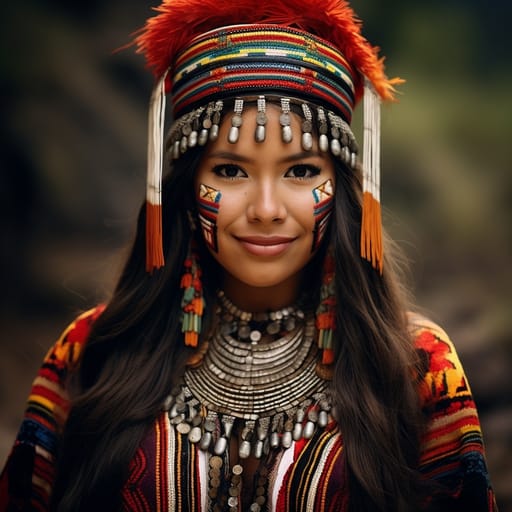
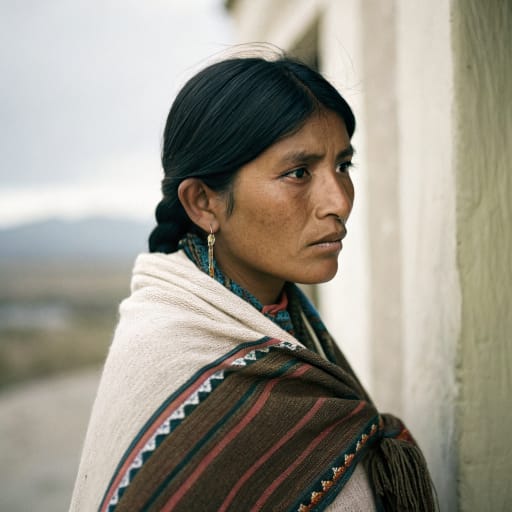
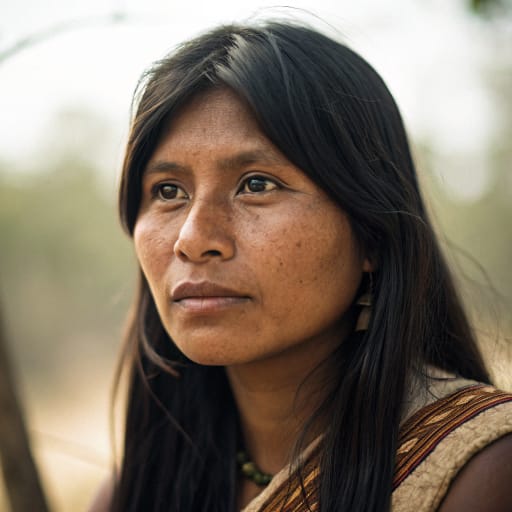
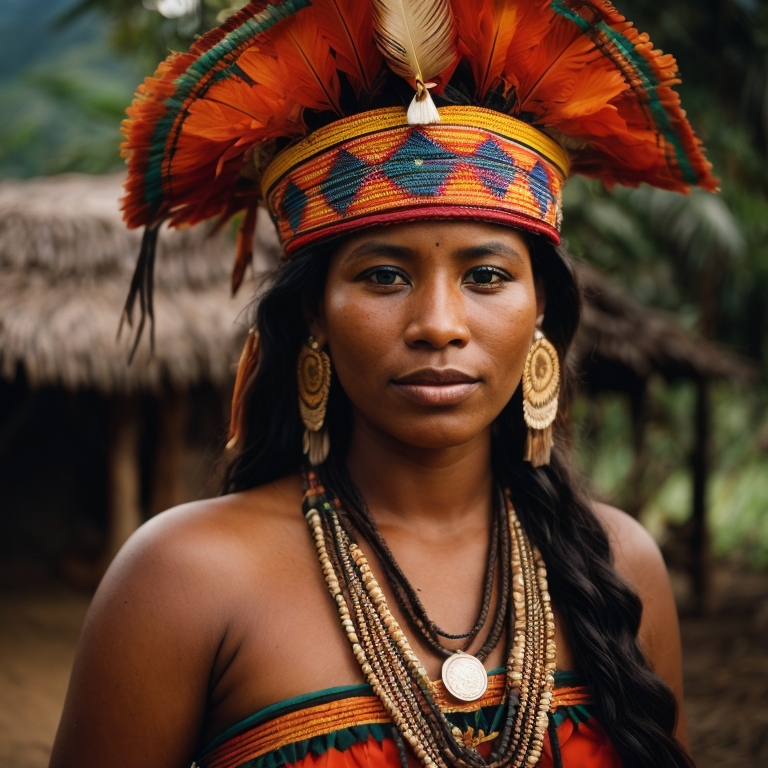
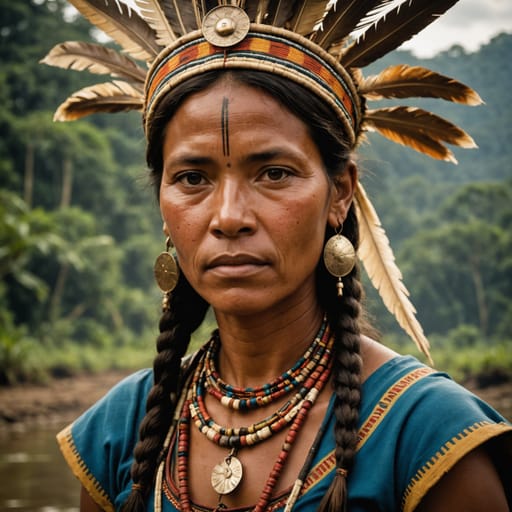
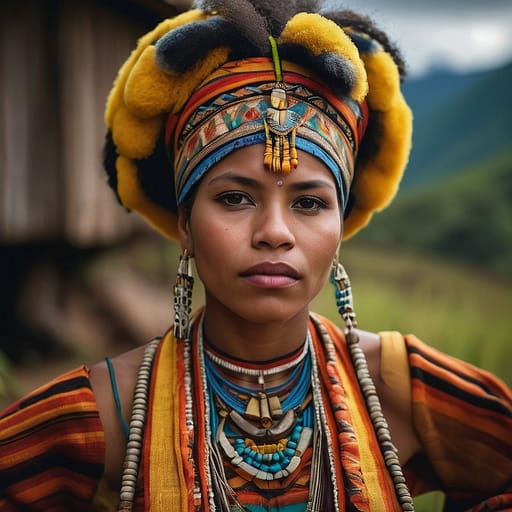
Typical Yuracaré Phenotypes
Reference for AI generation: hair, eyes, skin, facial structure, build
Yuracaré Body & Anatomy Reference
Anatomy by feature, South American Indigenous / European-Mestizo / Afro-Latino mix phenotype
Yuracaré Boobs & Breasts
Yuracaré tits and boobs run medium-to-large cup, full, high projection, the classic South American Indigenous / European-Mestizo / Afro-Latino mix bust profile. Yuracaré nipples and areolas show medium-brown to dark-brown areolar pigmentation against the tan-to-deep-brown skin tone, with areolar diameter typically in the 32-46mm range and forward-set positioning rather than the smaller bust profile of Andean Indigenous sub-populations. Yuracaré breasts trend the classic Brazilian / Latina curvy bust profile in lowland populations; smaller and shorter-set in Andean Indigenous populations, a function of the endomorph-to-mesomorph with high gluteal-femoral deposition body habitus and the mean adult female BMI 25-28. For anatomically accurate AI-generated Yuracaré nudes the render preserves the medium-to-large cup, full, high projection shape, 32-46mm areolas with medium-brown to dark-brown pigmentation, and the torso proportions of the South American Indigenous / European-Mestizo / Afro-Latino mix phenotype.
Yuracaré Ass & Hips
Yuracaré hips and butt usually read as full, high projection, the famous Brazilian / Latina bunda profile. The skeletal base is wide iliac crests, very full gluteal-femoral fat deposition (the hallmark Brazilian / Latina hip-to-waist ratio), the South American Indigenous / European-Mestizo / Afro-Latino mix pattern. Set against the slim narrow-hip East Asian profile, the difference is easy to see, and the hip-to-waist ratio is often what identifies Yuracaré women in photos.
Yuracaré Vagina & Pussy
Expect medium-brown to dark-brown labial pigmentation, fuller labia minora on Yuracaré women, in keeping with South American Indigenous / European-Mestizo / Afro-Latino mix ancestry. The pubic hair is wavy-to-curly coarse dark texture, dense distribution. Coloring should run evenly from the tan to deep-brown skin of the thighs to the labia, and Yuracaré nude imagery should keep the hair's wavy-to-curly coarse dark texture.
Yuracaré Dicks & Penis
Yuracaré dick and penile anatomy in adult AI generation should anchor on the regional reference data: regional mean ~13cm erect, moderate-to-above-average girth, and medium-brown shaft pigmentation. The Yuracaré cock profile reflects the South American Indigenous / European-Mestizo / Afro-Latino mix population's anthropometric measurements. The shaft pigmentation should track the surrounding tan to deep-brown skin tone, and the pubic hair should keep its wavy-to-curly coarse dark texture in the typical inverted-V escutcheon.
Yuracaré Body, Curves & Build
Yuracaré body type: endomorph-to-mesomorph with high gluteal-femoral deposition, with mean adult female BMI 25-28. This is the typical South American Indigenous / European-Mestizo / Afro-Latino mix build. Height range, shoulder-to-hip ratio and fat distribution all follow from it, which is what an accurate Yuracaré nude body should show.
Yuracaré Skin Tone & Hair Texture
Yuracaré skin tone falls in the tan to deep-brown (Fitzpatrick III-VI) band, the surface signal most often miscalibrated by generic AI nude generators. Yuracaré hair texture is typically straight-to-curly 1A-3C, varies widely by ancestral composition, characteristic of the South American Indigenous / European-Mestizo / Afro-Latino mix phenotype. In Yuracaré nude renders the skin should hold that band consistently across the body.
Explore phenotype categories
Structured taxonomy with peer-reviewed scales · 22 anatomical categories
Erotic Poses & Sex Positions
From the pose catalog: 219 named positions with reference skeletons
Frequently asked questions about Yuracaré people
Where is the Yuracaré homeland?
The Yuracaré homeland is The Chapare and the Isiboro, Sécure and Ichilo river country of the Bolivian departments of Cochabamba and Beni, in the foothills between the Andes and the Amazon basin. in South America.
What language do Yuracaré people speak?
Yuracaré people primarily speak Yuracaré (language isolate, with no established relatives).
What religion do Yuracaré people practice?
The predominant religion among Yuracaré people is Catholic since the Franciscan missions, with evangelical congregations more recent; traditional cosmology persists alongside both..






Make your own Yuracaré images
Five a day, free, no credits to buy. The studio starts from this group's phenotype data, so you can set body type, pose and style and keep the traits accurate.
Start with Yuracaré