No portrait yet
Wassu Cocal Erotic
Wassu-Cocal Indigenous Territory in the Zona da Mata of northern Alagoas, northeastern Brazil, centered on the municipality of Joaquim Gomes and crossed by highway BR-101.
Portuguese (Indo-European, Romance); the ancestral language is extinct and unclassified.
Roman Catholicism, with Evangelical Protestant minorities, alongside the Toré ritual tradition of the Native Northeast.
One of the Native peoples of the Brazilian Northeast, alongside the Xucuru-Kariri, Kariri-Xocó and others in Alagoas; villages include Cocal, Pedrinhas, Gereba and Serrinha.
About Wassu Cocal People
The Wassu Cocal are a Native people of the sugarcane country of northern Alagoas, in northeastern Brazil, and their identity is bound up with a single piece of ground: the old colonial Indian settlement of Cocal, in what is now the municipality of Joaquim Gomes. Roughly two thousand people live there in a handful of villages, Cocal, Pedrinhas, Gereba and Serrinha among them, on hilly land in the Zona da Mata where patches of Atlantic Forest survive between the cane fields. The federal highway BR-101 runs straight through the territory, which has brought traffic deaths, compensation disputes and a daily reminder of how little room the reserve has.
Their history follows the pattern of the Brazilian Northeast, where Native peoples were colonized earliest and written off soonest. Local tradition ties the Cocal land to military service: it is said to have been granted to Native fighters who took part in the colonial campaigns against the quilombo of Palmares. In 1872 the province of Alagoas declared all of its Indian settlements extinct, on the argument that the residents had blended into the general population, and planters took the land. The families stayed on as tenants and cane cutters on ground they considered theirs. In the 1980s, as part of the wider resurgence of Native peoples across the Northeast, they organized, pressed the federal Indian agency for recognition, and secured a demarcated territory of under three thousand hectares, ratified in 1991. They regard that as a fraction of the original grant, and a revision of the boundaries has been under study for years.
The ancestral language is gone, and too little of it was recorded to classify. The Wassu Cocal speak Portuguese. What marks them as a people is not speech but descent, place and practice. The Toré, the circle dance and chant shared by Native peoples across the Northeast, is danced to maracas at assemblies, commemorations and protests, and it works as both devotion and a public statement of who they are. Most families are Catholic, Evangelical churches are present too, and neither is treated as being at odds with the Toré. People farm manioc, beans, corn and bananas, and many still take seasonal work in the sugar mills that surround them. The villages have their own state-run Native schools. Outsiders sometimes question whether people who look and talk like their rural neighbors are really Indians. The Wassu Cocal answer is that they never left.
Related ethnic groups
Groups that share Wassu Cocal's homeland, region, language, or religious tradition. These are likely candidates for comparative phenotype reference.
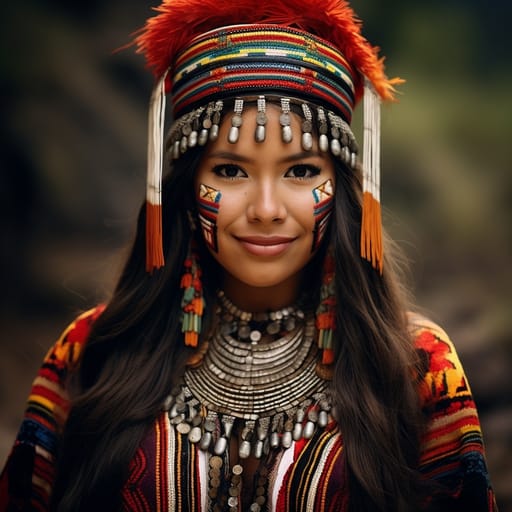
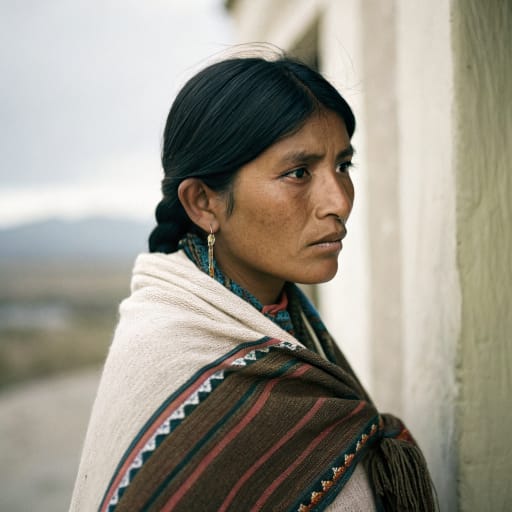
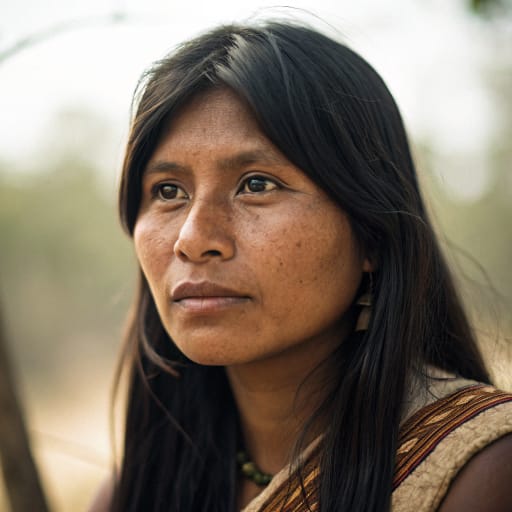
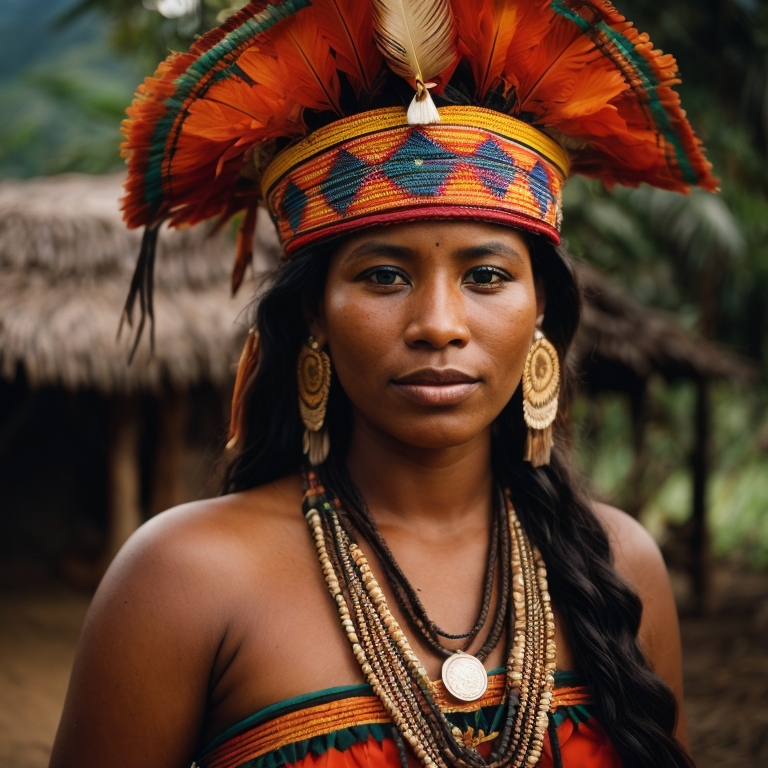
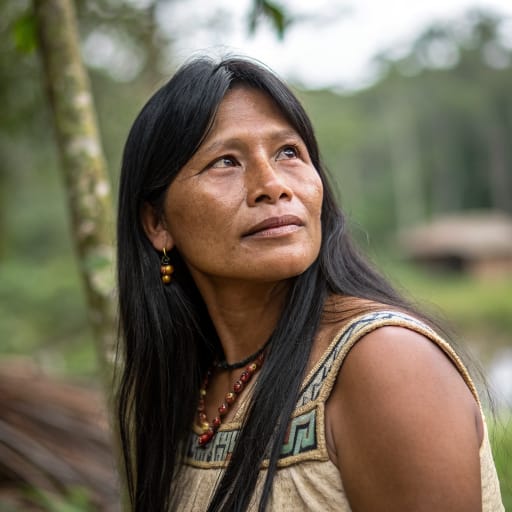
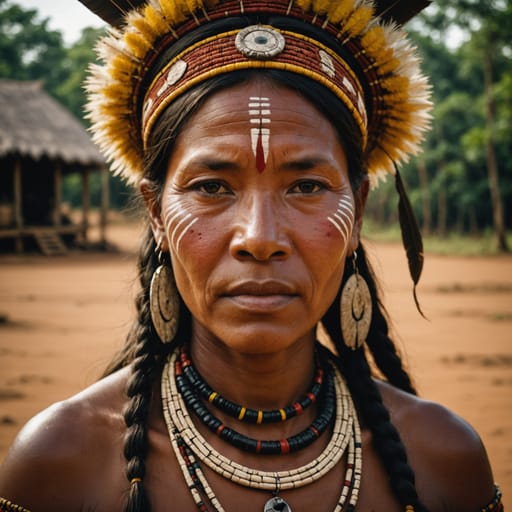
Typical Wassu Cocal Phenotypes
Reference for AI generation: hair, eyes, skin, facial structure, build
Wassu Cocal Body & Anatomy Reference
Per-feature anatomical profile for AI nude generation: South American Indigenous / European-Mestizo / Afro-Latino mix phenotype
Wassu Cocal Boobs & Breasts
Bust reference for Wassu Cocal women: medium-to-large cup, full, high projection, which is typical of South American Indigenous / European-Mestizo / Afro-Latino mix ancestry. Areolas measure about 32-46mm across, with medium-brown to dark-brown pigmentation. Body type (endomorph-to-mesomorph with high gluteal-femoral deposition) shapes the bust as well, so Wassu Cocal tits are usually the classic Brazilian / Latina curvy bust profile in lowland populations; smaller and shorter-set in Andean Indigenous populations. In AI imagery, keep the forward-set shape rather than drifting toward the smaller bust profile of Andean Indigenous sub-populations.
Wassu Cocal Ass & Hips
The Wassu Cocal ass is typically full, high projection, the famous Brazilian / Latina bunda profile, which sets it apart from the slim narrow-hip East Asian profile. Underneath, the pelvis shows wide iliac crests, very full gluteal-femoral fat deposition (the hallmark Brazilian / Latina hip-to-waist ratio), part of the South American Indigenous / European-Mestizo / Afro-Latino mix skeletal pattern. For Wassu Cocal butt pics and AI renders, match that silhouette and the overall build (endomorph-to-mesomorph with high gluteal-femoral deposition).
Wassu Cocal Vagina & Pussy
Wassu Cocal pussy and vulvar anatomy presents medium-brown to dark-brown labial pigmentation, fuller labia minora, consistent with the South American Indigenous / European-Mestizo / Afro-Latino mix phenotype's pigmentation pattern. Wassu Cocal pubic hair is typically wavy-to-curly coarse dark texture, dense distribution, in the inverted-triangle pattern. For anatomically accurate Wassu Cocal pussy renders the labial coloration should match the surrounding tan to deep-brown skin tone with a continuous gradient, and the hair should keep its wavy-to-curly coarse dark texture.
Wassu Cocal Dicks & Penis
Wassu Cocal dicks follow the South American Indigenous / European-Mestizo / Afro-Latino mix reference data: regional mean ~13cm erect; moderate-to-above-average girth; medium-brown shaft pigmentation. Shaft color should track the tan to deep-brown skin tone with a smooth change toward the glans, and Wassu Cocal pubic hair keeps its wavy-to-curly coarse dark texture.
Wassu Cocal Body, Curves & Build
Wassu Cocal body type and overall build presents as endomorph-to-mesomorph with high gluteal-femoral deposition, with mean adult female BMI 25-28: the characteristic South American Indigenous / European-Mestizo / Afro-Latino mix habitus. Wassu Cocal curves and proportions should keep the regional skeletal frame (height, shoulder-to-hip ratio, limb proportions) rather than a generic mesomorph default.
Wassu Cocal Skin Tone & Hair Texture
Wassu Cocal skin sits in the tan to deep-brown (Fitzpatrick III-VI) band. Hair is typically straight-to-curly 1A-3C, varies widely by ancestral composition, in keeping with the South American Indigenous / European-Mestizo / Afro-Latino mix phenotype. In nude renders the skin should stay one even tone from face to body, and body, pubic and head hair should match.
Explore phenotype categories
Structured taxonomy with peer-reviewed scales · 22 anatomical categories
Erotic Poses & Sex Positions
From the pose catalog: 219 named positions with reference skeletons
Frequently asked questions about Wassu Cocal people
Where is the Wassu Cocal homeland?
The Wassu Cocal homeland is Wassu-Cocal Indigenous Territory in the Zona da Mata of northern Alagoas, northeastern Brazil, centered on the municipality of Joaquim Gomes and crossed by highway BR-101. in South America.
What language do Wassu Cocal people speak?
Wassu Cocal people primarily speak Portuguese (Indo-European, Romance); the ancestral language is extinct and unclassified..
What religion do Wassu Cocal people practice?
The predominant religion among Wassu Cocal people is Roman Catholicism, with Evangelical Protestant minorities, alongside the Toré ritual tradition of the Native Northeast..






Make your own Wassu Cocal images
Five a day, free, no credits to buy. The studio starts from this group's phenotype data, so you can set body type, pose and style and keep the traits accurate.
Start with Wassu Cocal