Help us get this right
Does this portrait look right for Wagri?
One tap. It takes a second and it is recorded.
0 say it looks right, 1 says it looks off.
Wagri Erotic
Wagria (Wagrien), eastern Holstein in Schleswig-Holstein, Germany, between Kiel Bay, the Trave river and the Baltic coast, centered on Oldenburg in Holstein
Polabian Slavic, Wagrian dialect, never recorded and extinct by the late Middle Ages (Indo-European, Slavic, West Slavic, Lechitic)
Slavic paganism, centered on the god Prove worshipped in a sacred grove near Starigard; nominally Christianized under the bishopric of Oldenburg, fully so only after the twelfth-century German conquest
Constituent tribe of the Obodrite (Obotrite) confederacy of Polabian Slavs, alongside the Obodrites proper, Polabians and Warnabi
About Wagri People
The Wagri were a West Slavic people who lived in eastern Holstein, in what is now northern Germany, from about the ninth century until the twelfth, when German conquest and settlement absorbed them. Their descendants dissolved into the population of Schleswig-Holstein, and the region still carries their name as Wagrien. What set them apart was position. They held the northwestern corner of the Slavic world, a wedge of lakes and moraine hills between Kiel Bay, the Trave river and the Baltic shore, with Saxons across the Limes Saxoniae to the west and Danes just over the water to the north. Whatever reached the Slavs from the west, whether missionaries, margraves or armies, tended to reach the Wagri first.
They were the westernmost member of the Obodrite confederacy, and their stronghold at Starigard, the old fort, was one of the great ringforts of the Baltic Slavs. The Saxons called it Aldenburg. It is Oldenburg in Holstein today, and the excavated rampart with the museum beside it is the most tangible thing the Wagri left behind. Otto I planted a bishopric there around 968, which tells you the place mattered. The great Slavic rising of 983 threw it out again, and for most of the next two centuries Wagria swung between paganism and a thin, intermittent Christianity. Helmold of Bosau, the priest who wrote their history in the 1160s and 1170s, describes a sacred grove near Starigard dedicated to the god Prove, where no idols stood and where the people gathered each week with their prince and priest to hear judgment. Bishop Gerold had the grove felled in 1156.
Their most notable prince was Kruto, who seized the Obodrite realm in 1066 after the Christian ruler Gottschalk was killed, and ran it from Wagria for a generation, pressing Saxon Holstein hard enough that Gottschalk's heirs fled to Denmark. He died around 1093 at the hands of Gottschalk's son Henry, with, Helmold says, the connivance of his own wife Slavina. The end came in 1143, when Count Adolf II of Holstein took Wagria, founded Lübeck beside the old Slavic site of Liubice, and invited Westphalians, Hollanders and Frisians to settle the emptied land. Helmold records that Slavs were left only around Oldenburg and Lütjenburg, and within a few generations their language was gone from Holstein entirely. It was never written down. What survives is a layer of place names, Eutin, Plön, Grömitz, Ratekau, and a persistent Russian legend, first floated by Herberstein in the sixteenth century, that Rurik's Varangians came from Wagria.
Related ethnic groups
Groups that share Wagri's homeland, region, language, or religious tradition. These are likely candidates for comparative phenotype reference.
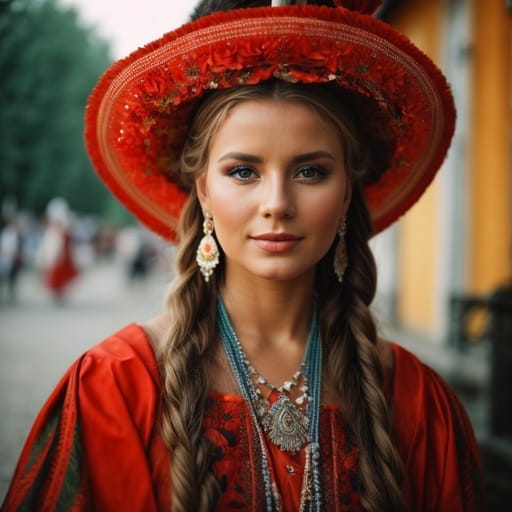
Estonians
same region (Western Europe)
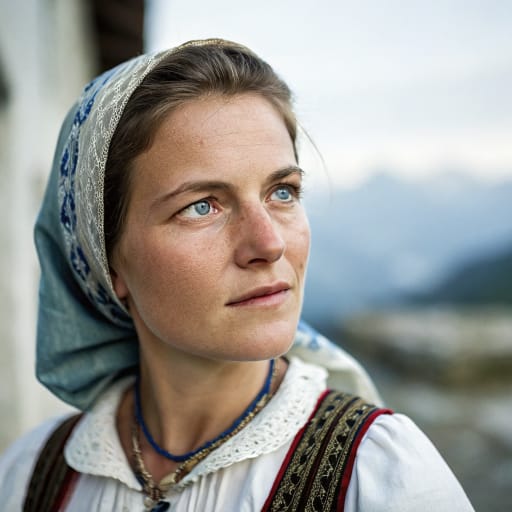
Austrians
same region (Western Europe)
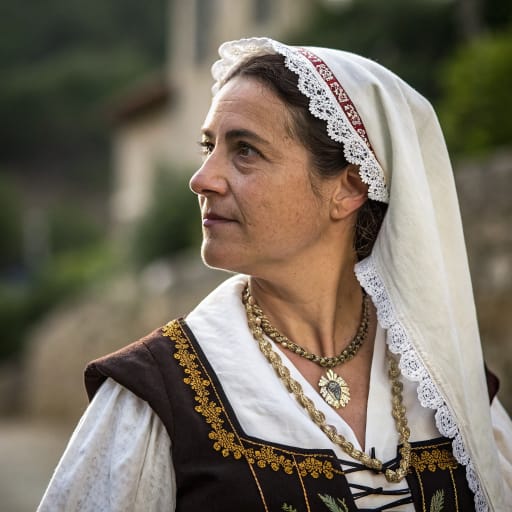
Corsicans
same region (Western Europe)
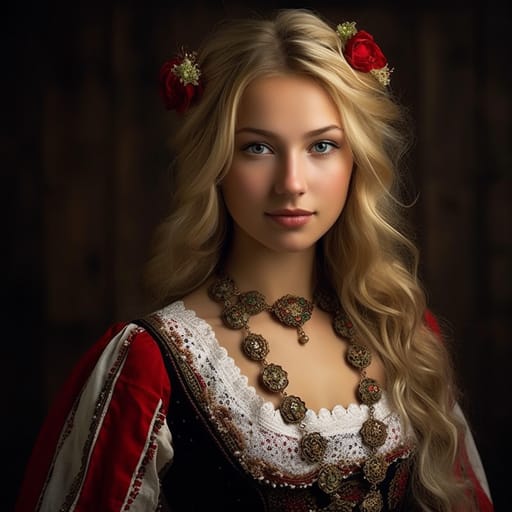
Frisians
same region (Western Europe)
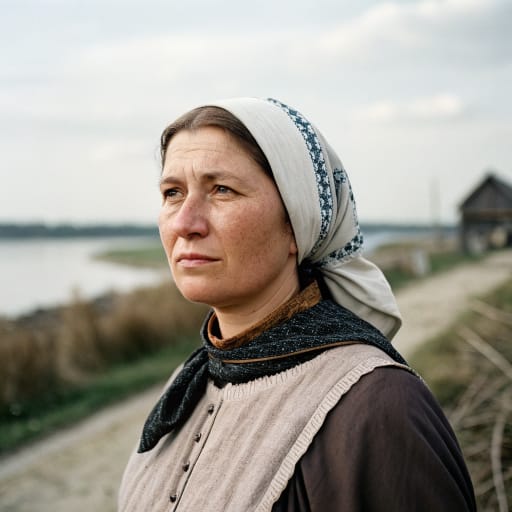
Bethenici
same region (Western Europe)
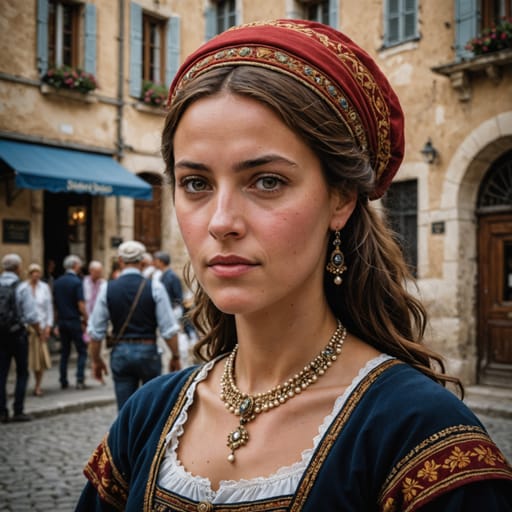
French Southern European
same region (Western Europe)
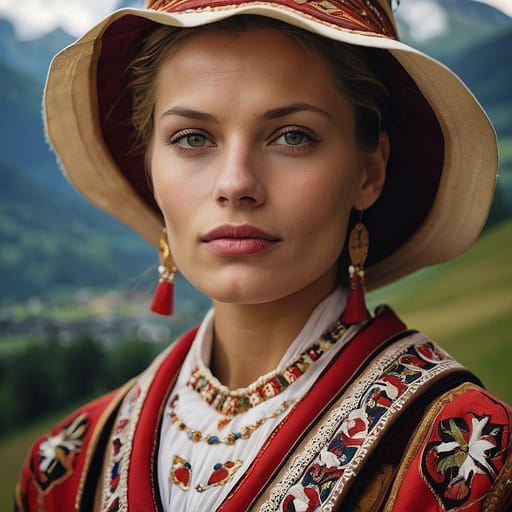
Liechtenstein Other
same region (Western Europe)
Warini
same region (Western Europe)
Typical Wagri Phenotypes
Reference for AI generation: hair, eyes, skin, facial structure, build
Wagri Body & Anatomy Reference
Anatomy by feature, Western European / Celtic-Germanic phenotype
Wagri Boobs & Breasts
Wagri tits and boobs run medium-to-large cup, full, moderate-to-high projection, the classic Western European / Celtic-Germanic bust profile. Wagri nipples and areolas show light-pink to medium-pink areolar pigmentation against the fair-to-light skin tone, with areolar diameter typically in the 30-46mm range and forward-set positioning rather than the smaller East Asian bust. Wagri breasts trend full and projecting, a function of the ectomorph-to-mesomorph body habitus and the mean adult female BMI 24-27. For anatomically accurate AI-generated Wagri nudes the render preserves the medium-to-large cup, full, moderate-to-high projection shape, 30-46mm areolas with light-pink to medium-pink pigmentation, and the torso proportions of the Western European / Celtic-Germanic phenotype.
Wagri Ass & Hips
Wagri hips and butt usually read as medium, moderate projection. The skeletal base is medium iliac crests, the Western European / Celtic-Germanic pattern. Set against the broader hip profile of Mediterranean phenotypes, the difference is easy to see, and the hip-to-waist ratio is often what identifies Wagri women in photos.
Wagri Vagina & Pussy
Expect light-pink labial pigmentation, varied labia minora on Wagri women, in keeping with Western European / Celtic-Germanic ancestry. The pubic hair is wavy fine-to-medium texture, blond to dark-brown. Coloring should run evenly from the fair to light skin of the thighs to the labia, and Wagri nude imagery should keep the hair's wavy fine-to-medium texture.
Wagri Dicks & Penis
Wagri dick and penile anatomy in adult AI generation should anchor on the regional reference data: regional mean ~13-14cm erect, moderate girth, and light-pink to light-brown shaft pigmentation. The Wagri cock profile reflects the Western European / Celtic-Germanic population's anthropometric measurements. The shaft pigmentation should track the surrounding fair to light skin tone, and the pubic hair should keep its wavy fine-to-medium texture in the typical inverted-V escutcheon.
Wagri Body, Curves & Build
Wagri body type: ectomorph-to-mesomorph, with mean adult female BMI 24-27. This is the typical Western European / Celtic-Germanic build. Height range, shoulder-to-hip ratio and fat distribution all follow from it, which is what an accurate Wagri nude body should show.
Wagri Skin Tone & Hair Texture
Wagri skin tone falls in the fair to light (Fitzpatrick I-III) band, the surface signal most often miscalibrated by generic AI nude generators. Wagri hair texture is typically straight-to-wavy 1A-2B, blond to dark-brown, characteristic of the Western European / Celtic-Germanic phenotype. In Wagri nude renders the skin should hold that band consistently across the body.
Explore phenotype categories
Structured taxonomy with peer-reviewed scales · 22 anatomical categories
Erotic Poses & Sex Positions
From the pose catalog: 219 named positions with reference skeletons
Frequently asked questions about Wagri people
Where is the Wagri homeland?
The Wagri homeland is Wagria (Wagrien), eastern Holstein in Schleswig-Holstein, Germany, between Kiel Bay, the Trave river and the Baltic coast, centered on Oldenburg in Holstein in Western Europe.
What language do Wagri people speak?
Wagri people primarily speak Polabian Slavic, Wagrian dialect, never recorded and extinct by the late Middle Ages (Indo-European, Slavic, West Slavic, Lechitic).
What religion do Wagri people practice?
The predominant religion among Wagri people is Slavic paganism, centered on the god Prove worshipped in a sacred grove near Starigard; nominally Christianized under the bishopric of Oldenburg, fully so only after the twelfth-century German conquest.






Make your own Wagri images
Five a day, free, no credits to buy. The studio starts from this group's phenotype data, so you can set body type, pose and style and keep the traits accurate.
Start with Wagri