No portrait yet
Tunjung Erotic
Middle Mahakam River basin and the nearby uplands around Melak, Barong Tongkok and Sendawar, West Kutai Regency, East Kalimantan, Indonesia
Tunjung (Austronesian, Barito); Indonesian widely spoken, Kutai Malay in downriver towns
Mostly Christian (Catholic and Protestant), with a Muslim minority; traditional rites such as belian healing persist
One of the Dayak peoples of Borneo; closely tied to the neighboring Benuaq of West Kutai
About Tunjung People
Along the middle Mahakam River in East Kalimantan, and on the rolling uplands behind the river town of Melak, live the Tunjung, who call themselves Tonyooi. They are among the largest Dayak peoples of West Kutai Regency, and it is hard to talk about them for long without mentioning their neighbors, the Benuaq. The two peoples have lived side by side for so long, trading and marrying and sharing ritual habits, that outsiders often blur them together. Each still keeps its own speech and its own account of where it came from. When West Kutai was split off from greater Kutai in 1999, its new seat was named Sendawar, after a kingdom remembered in the oral traditions of this region.
Tunjung is a Barito language, part of an Austronesian family whose center lies farther south in Central and South Kalimantan. It is related to Benuaq but distinct from it. Nearly everyone also speaks Indonesian, and Kutai Malay is heard in the downriver towns. That downriver link shaped Tunjung history. For centuries the Mahakam interior lay within the orbit of the Kutai sultanate downstream. Across Borneo, Dayak families who converted to Islam often came to be counted as Malay within a few generations, so the line between Tunjung and Kutai has long been partly a question of faith.
Most Tunjung today are Christian, Catholic and Protestant, with a smaller Muslim community. Conversion did not wipe out the older ritual world. The belian, a healing rite in which a specialist chants, dances and makes offerings to spirits, often through the night, is still called for when an illness seems to have a cause that medicine cannot reach. Customary law, adat, still settles disputes over land, marriage and insult, usually through negotiated fines. The longhouse, once a whole community under one roof, survives here and there as a meeting place and a point of pride.
For generations, households lived from hill rice, rubber gardens and forest products. In recent decades coal mines and oil palm estates have pushed deep into West Kutai, and much of Tunjung public life now turns on who controls customary land. More and more young people work in Samarinda or in mining towns, but harvest celebrations and funerals still pull extended families back to the village.
Related ethnic groups
Groups that share Tunjung's homeland, region, language, or religious tradition. These are likely candidates for comparative phenotype reference.
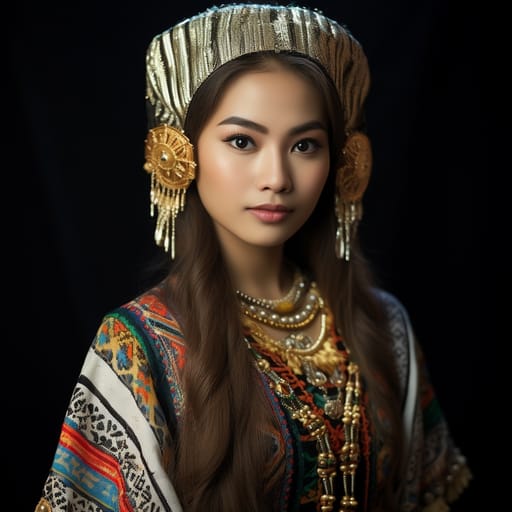
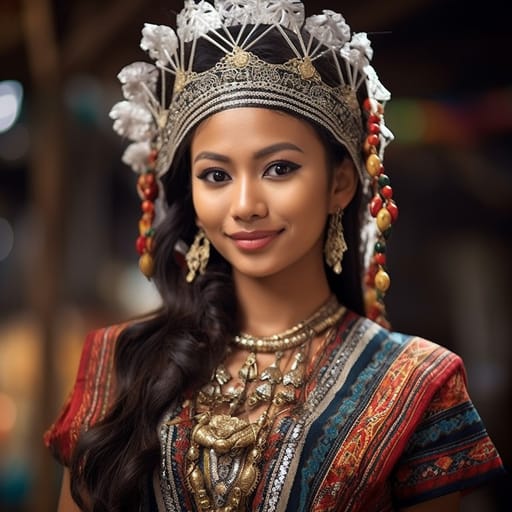
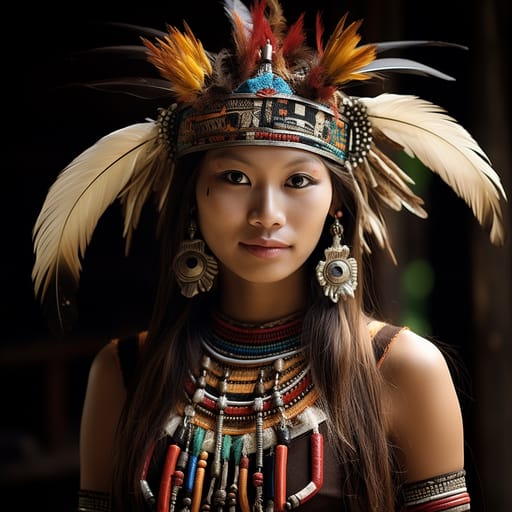
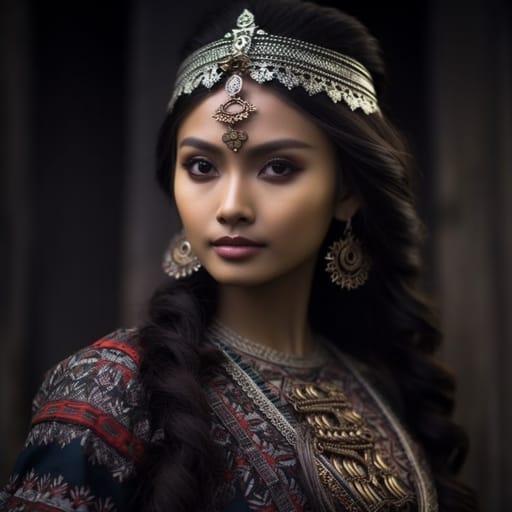
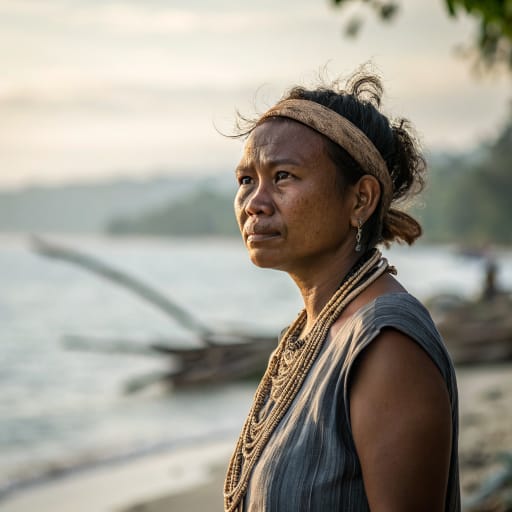
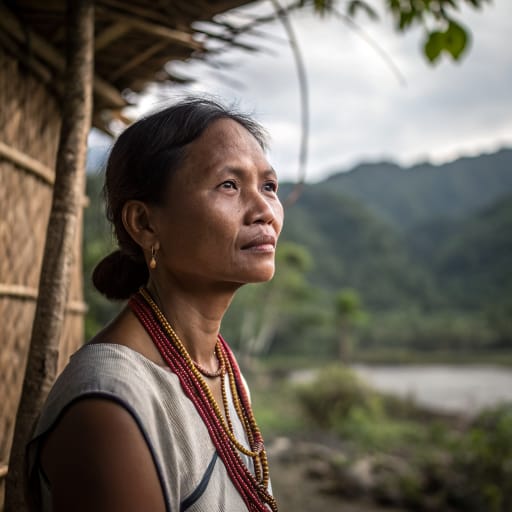
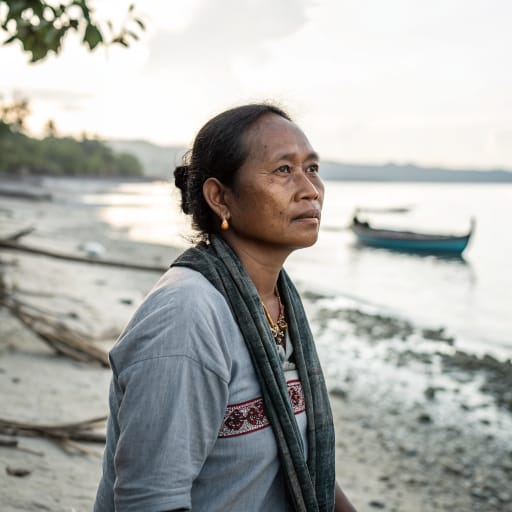
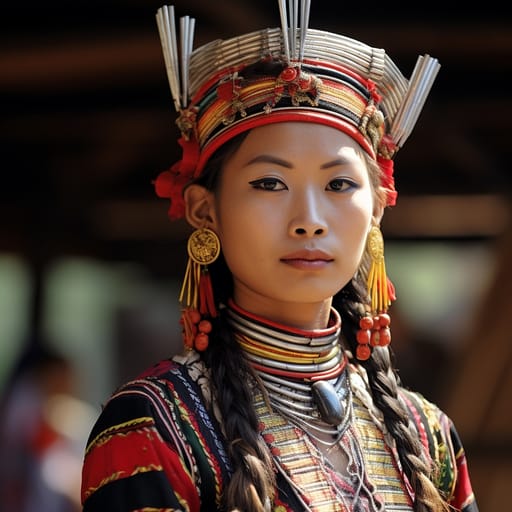
Typical Tunjung Phenotypes
Reference for AI generation: hair, eyes, skin, facial structure, build
Tunjung Body & Anatomy Reference
Per-feature anatomical profile for AI nude generation: Southeast Asian Austronesian / Austroasiatic phenotype
Tunjung Boobs & Breasts
The typical Tunjung bust is small-to-medium cup, modest projection, in line with the wider Southeast Asian Austronesian / Austroasiatic pattern. Areolas usually fall in the 26-38mm range, with medium-brown to dark-brown areolar pigmentation against the tan-to-medium-brown skin tone. Compared with the fuller South Asian or Polynesian bust, Tunjung breasts sit forward and are generally firm, modest projection. A faithful AI render of Tunjung tits keeps that shape and areola size.
Tunjung Ass & Hips
Butt shape among Tunjung women: small-to-medium, modest projection, narrower hip profile, over narrow-to-medium iliac crests. This follows Southeast Asian Austronesian / Austroasiatic ancestry and looks quite unlike the fuller glutes of the Pacific Islander phenotype. An accurate Tunjung ass in adult AI imagery keeps both the silhouette and the overall build (ectomorph, petite frame) instead of a generic average.
Tunjung Vagina & Pussy
Vulvar anatomy among Tunjung women: medium-brown to dark-brown labial pigmentation. Pubic hair tends to be straight-to-wavy fine-to-medium texture, in the usual inverted-triangle pattern. Both follow Southeast Asian Austronesian / Austroasiatic pigmentation, which is why Tunjung pussy renders should not fall back on a pale, sparse Western template.
Tunjung Dicks & Penis
The Tunjung cock profile, from Southeast Asian Austronesian / Austroasiatic anthropometric data: regional mean ~11cm erect; moderate girth; medium-brown shaft pigmentation. Pubic hair has a straight-to-wavy fine-to-medium texture and forms the usual inverted-V pattern. Whether Tunjung men are circumcised follows religious and cultural practice rather than phenotype.
Tunjung Body, Curves & Build
Build and curves among Tunjung women follow the Southeast Asian Austronesian / Austroasiatic pattern: ectomorph, petite frame, mean adult female BMI 20-23. Proportions matter as much as skin tone, so Tunjung figures should keep their regional height and limb ratios.
Tunjung Skin Tone & Hair Texture
The Tunjung skin range is tan to medium-brown (Fitzpatrick III-V), and hair tends to be straight-to-wavy 1A-2A, dark-brown to black. That combination marks the Southeast Asian Austronesian / Austroasiatic phenotype, and skin tone is the trait AI generators most often get wrong for Tunjung women.
Explore phenotype categories
Structured taxonomy with peer-reviewed scales · 22 anatomical categories
Erotic Poses & Sex Positions
From the pose catalog: 219 named positions with reference skeletons
Frequently asked questions about Tunjung people
Where is the Tunjung homeland?
The Tunjung homeland is Middle Mahakam River basin and the nearby uplands around Melak, Barong Tongkok and Sendawar, West Kutai Regency, East Kalimantan, Indonesia in Southeast Asia.
What language do Tunjung people speak?
Tunjung people primarily speak Tunjung (Austronesian, Barito); Indonesian widely spoken, Kutai Malay in downriver towns.
What religion do Tunjung people practice?
The predominant religion among Tunjung people is Mostly Christian (Catholic and Protestant), with a Muslim minority; traditional rites such as belian healing persist.






Make your own Tunjung images
Five a day, free, no credits to buy. The studio starts from this group's phenotype data, so you can set body type, pose and style and keep the traits accurate.
Start with Tunjung