No portrait yet
Trojans Erotic
Troy (Ilios, Hittite Wilusa) on the hill of Hisarlik and the surrounding Troad, beside the Dardanelles in northwestern Anatolia; today Çanakkale Province, Turkey.
Unknown. Luwian (Anatolian branch of Indo-European) is the leading candidate, on the evidence of a single hieroglyphic seal; Homer has them speak Greek.
Bronze Age Anatolian polytheism. A Hittite treaty names a storm god, a deity Apaliunas and an underground watercourse god for Wilusa; Homer gives them the Greek pantheon, with Apollo as patron.
Homer separates the Trojans proper from the kindred Dardanians. In Hittite terms Wilusa was counted among the Arzawa lands of western Anatolia.
About Trojans People
The Trojans were the Bronze Age inhabitants of Troy, a fortified city on the hill of Hisarlik in northwestern Anatolia, in what is now Çanakkale Province, Turkey. Their city stood from around 3000 BC, reached its height between roughly 1750 and 1180 BC, and was burned at the end of that span. No living people descends from them by name. The survivors stayed on in a reduced settlement, were absorbed into the later populations of the Troad, and Greek settlers refounded the site as Ilion some centuries afterward. What outlived them is a story, and it has proved more durable than the walls.
Almost everything popularly known about the Trojans comes from their enemies' poets. Homer's Iliad, composed some four centuries after the destruction, gives them Greek names, Greek gods and Greek speech, which tells us about Homer rather than about Troy. The harder evidence is thinner and more interesting. Hittite archives record a western kingdom called Wilusa, widely identified with Homer's Ilios, and preserve a treaty from around 1280 BC between the Hittite king Muwatalli II and a ruler named Alaksandu. That name sits uncomfortably close to Alexandros, the other name of Homer's Paris. Among the gods sworn to in the treaty is one Apaliunas, possibly an early Apollo, the god who takes Troy's side in the epic.
What language the Trojans spoke is unknown. The only writing recovered from the Bronze Age city is a single bronze seal inscribed in Luwian hieroglyphs, found in 1995, which makes Luwian or a related Anatolian language the leading candidate and nothing more. Their wealth is easier to explain. Troy sat at the mouth of the Dardanelles, where contrary winds and currents could hold ships for days, and the city profited from the wait. Excavation has turned up thousands of spindle whorls, pointing to textile production on a serious scale, and horse bones show up in the city's levels from the second millennium BC, which lends some weight to Homer's stock epithet, the horse-taming Trojans.
The legacy is a genealogy of borrowed ancestors. Rome claimed descent from the refugee Aeneas, and Virgil turned that claim into a national epic. Medieval Franks, Britons and Norse writers did the same, tracing their kings to Trojan exiles. Frank Calvert argued that Hisarlik was the place, and Heinrich Schliemann began large excavations there in 1871, cutting straight through the layers he was looking for. The mound, with its nine main levels of rebuilding, has been a UNESCO World Heritage Site since 1998.
Related ethnic groups
Groups that share Trojans's homeland, region, language, or religious tradition. These are likely candidates for comparative phenotype reference.
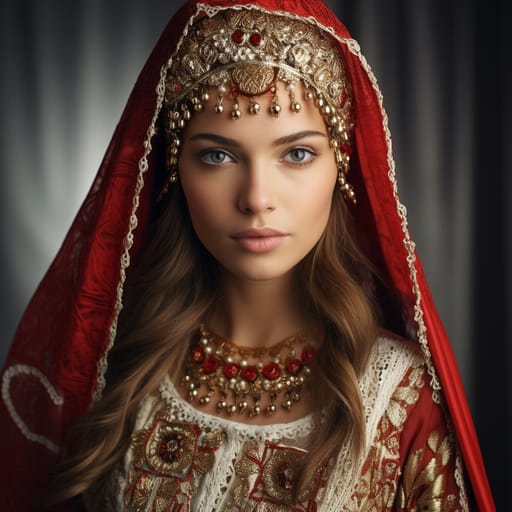
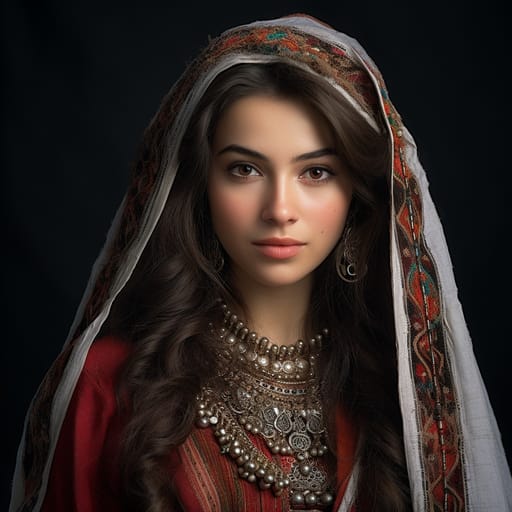
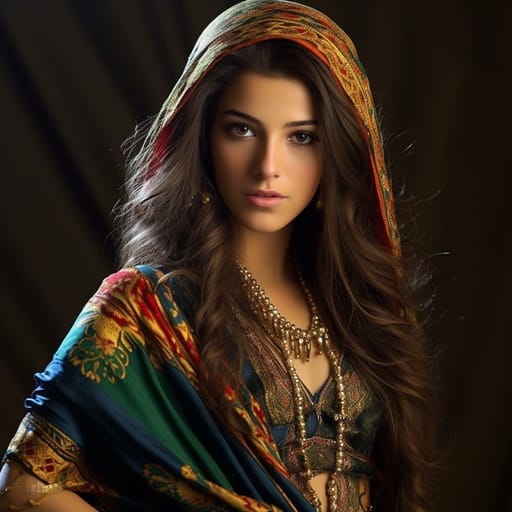
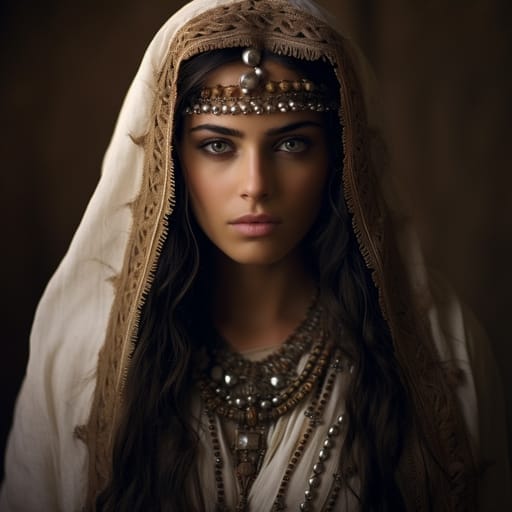
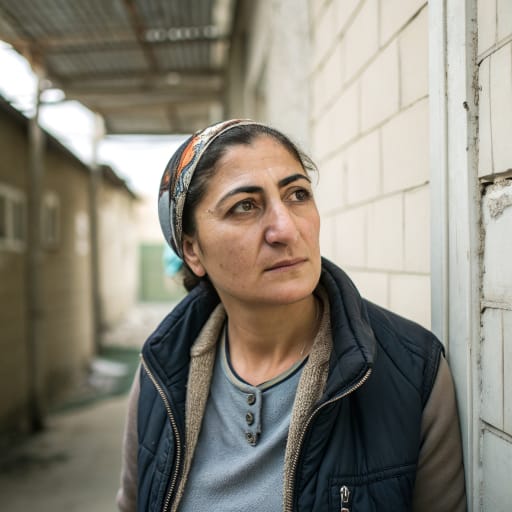
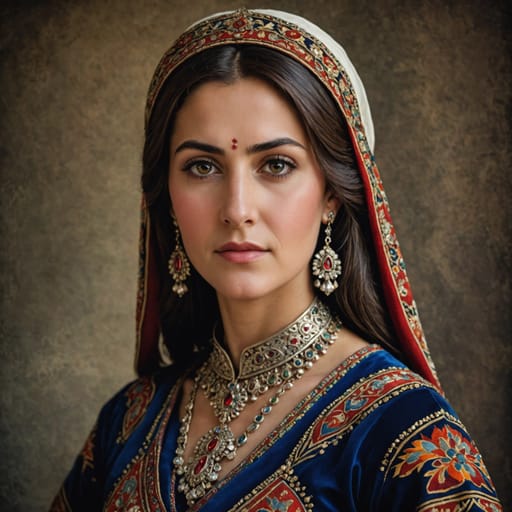
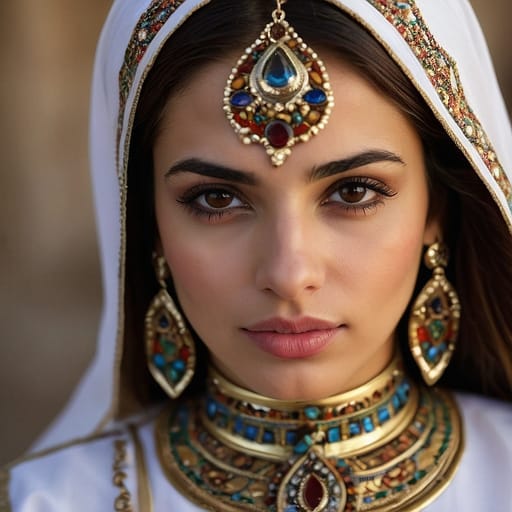
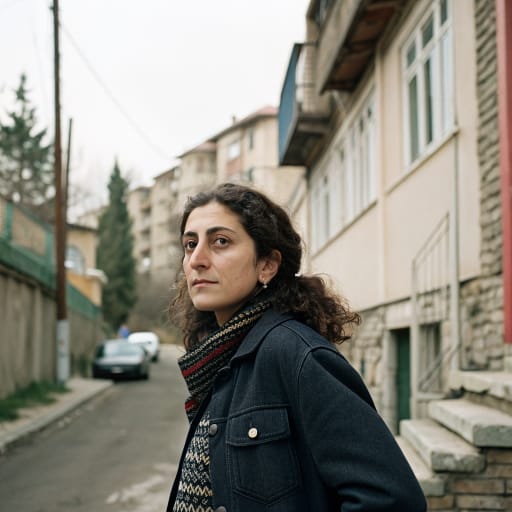
Typical Trojans Phenotypes
Reference for AI generation: hair, eyes, skin, facial structure, build
Trojans Body & Anatomy Reference
Per-feature anatomical profile for AI nude generation: Levantine / Mediterranean Middle Eastern phenotype
Trojans Boobs & Breasts
The typical Trojans bust is medium-to-large cup, full, moderate-to-high projection, in line with the wider Levantine / Mediterranean Middle Eastern pattern. Areolas usually fall in the 32-46mm range, with medium-brown to dark-brown areolar pigmentation against the olive-to-light-brown skin tone. Compared with the smaller East Asian bust profile, Trojans breasts sit forward and are generally full and soft, fuller projection than the North-African Berber norm. A faithful AI render of Trojans tits keeps that shape and areola size.
Trojans Ass & Hips
Butt shape among Trojans women: medium-to-full, moderate projection, broader hip profile, over medium-to-wide iliac crests, fuller gluteal-femoral deposition. This follows Levantine / Mediterranean Middle Eastern ancestry and looks quite unlike the slim East Asian narrow-hip profile. An accurate Trojans ass in adult AI imagery keeps both the silhouette and the overall build (mesomorph with fuller hip-and-bust deposition) instead of a generic average.
Trojans Vagina & Pussy
Vulvar anatomy among Trojans women: medium-brown to dark-brown labial pigmentation, fuller labia minora. Pubic hair tends to be wavy-to-coiled medium-coarse dark texture, dense distribution, in the usual inverted-triangle pattern. Both follow Levantine / Mediterranean Middle Eastern pigmentation, which is why Trojans pussy renders should not fall back on a pale, sparse Western template.
Trojans Dicks & Penis
The Trojans cock profile, from Levantine / Mediterranean Middle Eastern anthropometric data: regional mean ~14cm erect; moderate-to-above-average girth; medium-brown shaft pigmentation. Pubic hair has a wavy-to-coiled medium-coarse dark texture and forms the usual inverted-V pattern. Whether Trojans men are circumcised follows religious and cultural practice rather than phenotype.
Trojans Body, Curves & Build
Build and curves among Trojans women follow the Levantine / Mediterranean Middle Eastern pattern: mesomorph with fuller hip-and-bust deposition, mean adult female BMI 25-28. Proportions matter as much as skin tone, so Trojans figures should keep their regional height and limb ratios.
Trojans Skin Tone & Hair Texture
The Trojans skin range is olive to medium-brown (Fitzpatrick III-V), and hair tends to be wavy-to-curly 2B-3B, predominantly dark-brown to black. That combination marks the Levantine / Mediterranean Middle Eastern phenotype, and skin tone is the trait AI generators most often get wrong for Trojans women.
Explore phenotype categories
Structured taxonomy with peer-reviewed scales · 22 anatomical categories
Erotic Poses & Sex Positions
From the pose catalog: 219 named positions with reference skeletons
Frequently asked questions about Trojans people
Where is the Trojans homeland?
The Trojans homeland is Troy (Ilios, Hittite Wilusa) on the hill of Hisarlik and the surrounding Troad, beside the Dardanelles in northwestern Anatolia; today Çanakkale Province, Turkey. in Western Asia.
What language do Trojans people speak?
Trojans people primarily speak Unknown. Luwian (Anatolian branch of Indo-European) is the leading candidate, on the evidence of a single hieroglyphic seal; Homer has them speak Greek..
What religion do Trojans people practice?
The predominant religion among Trojans people is Bronze Age Anatolian polytheism. A Hittite treaty names a storm god, a deity Apaliunas and an underground watercourse god for Wilusa; Homer gives them the Greek pantheon, with Apollo as patron..






Make your own Trojans images
Five a day, free, no credits to buy. The studio starts from this group's phenotype data, so you can set body type, pose and style and keep the traits accurate.
Start with Trojans