No portrait yet
Topasses Erotic
Solor, Larantuka on eastern Flores, and Timor, especially Lifau and Oecusse, in present-day Indonesia and East Timor
Portuguese (Indo-European, Romance) for church and status, Malay (Austronesian) for trade, and Tetum, Uab Meto and Lamaholot (Austronesian) at home
Roman Catholic, shaped by Dominican missionaries
Mixed Portuguese and Asian community; led by the rival da Costa and Hornay families; the Larantuka branch was known as Larantuqueiros
About Topasses People
The Topasses were a Catholic people of mixed Portuguese and island descent who controlled Solor, eastern Flores and much of Timor from the early 1600s into the 1800s. Over time they merged into the population around them. Their legacy survives in the old Catholic families of Larantuka and in Oecusse, East Timor's enclave on the Indonesian side of the island.
What made someone a Topass was not a homeland or a single bloodline but a combination of things: baptism, a Portuguese surname, a musket, and a place in a network of family and trade. On paper that network belonged to Lisbon, but Lisbon rarely controlled it. The community formed around Dominican missions and trading posts, as Portuguese sailors, soldiers and deserters married women from Solor, Flores and Timor. The Dutch called them the Black Portuguese. The origin of the name Topass is disputed. One explanation traces it to a South Indian word for interpreter, another to topi, a word for hat, pointing to the European hats their men wore. In India the same word was used for soldiers of mixed Portuguese descent who served the European trading companies.
After the Dutch took the Portuguese fort on Solor in 1613, the community moved its center to Larantuka, at the eastern tip of Flores. From there it pushed into Timor, drawn by sandalwood, the island's most valuable export. Two families came to run things: the da Costas and the Hornays. The Hornay line began with Jan de Hornay, a Dutch deserter who married into the community. The two families feuded, shared power when they had to, and treated governors sent from Goa or Macau as rivals to be outlasted. In 1749 the Dutch routed a Topass army and its Timorese allies at Penfui, near Kupang, which set the western limit of Topass power. Twenty years later, Topass pressure on Lifau forced the Portuguese governor to abandon the town and move the colonial capital east to Dili.
Faith held the Topasses together. Brought by Dominican friars, Catholicism set them apart from Muslim traders and from the island peoples who kept their own religions, and it remains their clearest legacy. Every Holy Week, Larantuka still fills with candlelit processions, songs and prayers handed down in Portuguese, and devotion to Tuan Ma, a statue of the Virgin kept by lay brotherhoods that go back centuries. Each language had its job: Portuguese for church and status, Malay for trade, and Tetum, Uab Meto or Lamaholot at home. Oecusse, with Lifau on its coast, remains a separate piece of East Timor largely because it was Topass country.
Related ethnic groups
Groups that share Topasses's homeland, region, language, or religious tradition. These are likely candidates for comparative phenotype reference.
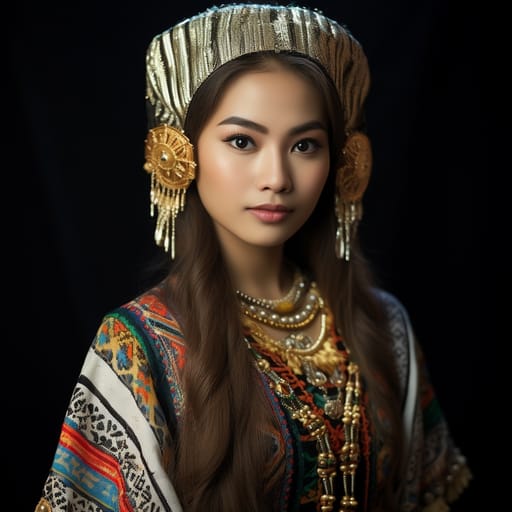
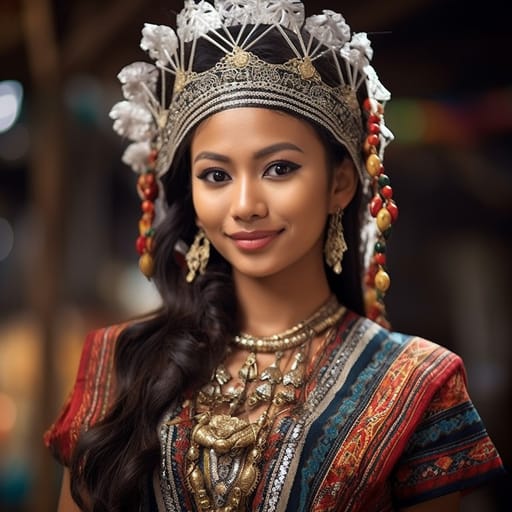
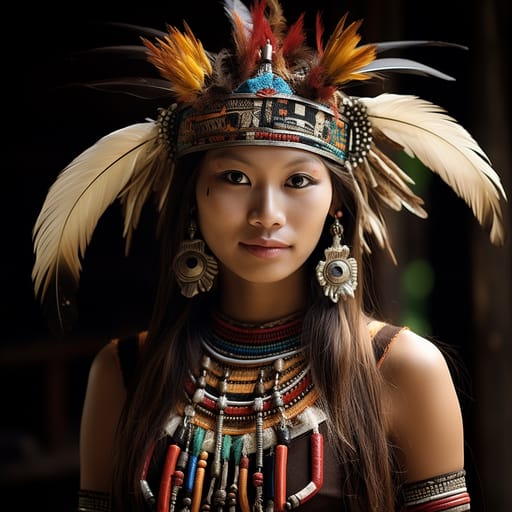
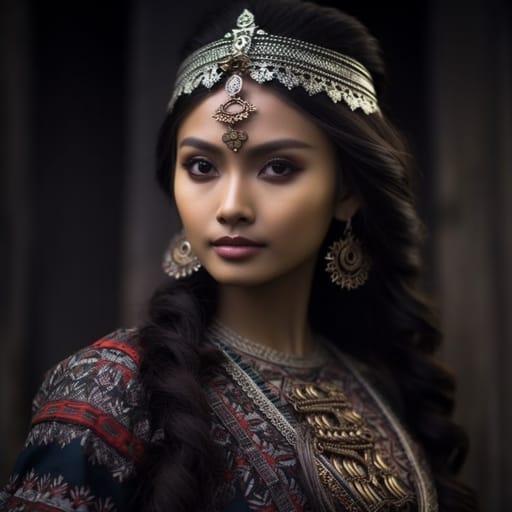
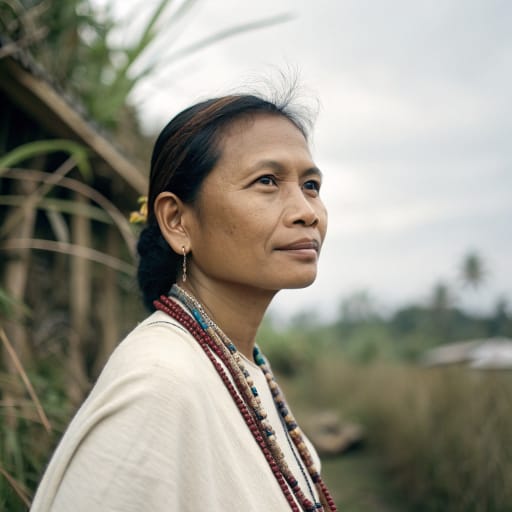
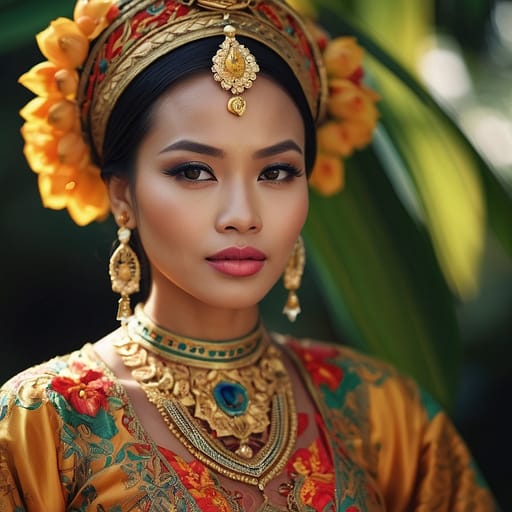
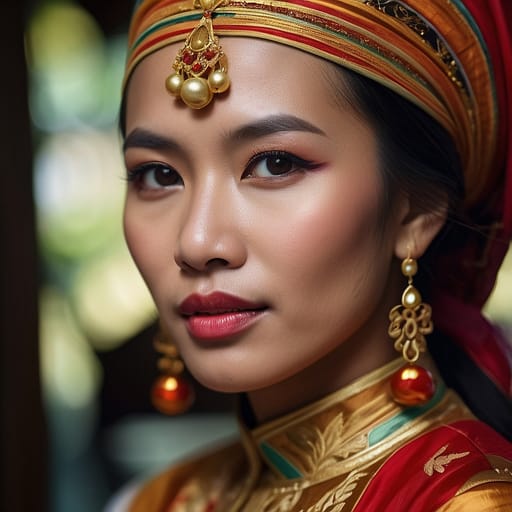
Typical Topasses Phenotypes
Reference for AI generation: hair, eyes, skin, facial structure, build
Explore phenotype categories
Structured taxonomy with peer-reviewed scales · 22 anatomical categories
Erotic Poses & Sex Positions
From the pose catalog: 219 named positions with reference skeletons
Frequently asked questions about Topasses people
Where is the Topasses homeland?
The Topasses homeland is Solor, Larantuka on eastern Flores, and Timor, especially Lifau and Oecusse, in present-day Indonesia and East Timor in Southeast Asia.
What language do Topasses people speak?
Topasses people primarily speak Portuguese (Indo-European, Romance) for church and status, Malay (Austronesian) for trade, and Tetum, Uab Meto and Lamaholot (Austronesian) at home.
What religion do Topasses people practice?
The predominant religion among Topasses people is Roman Catholic, shaped by Dominican missionaries.






Make your own Topasses images
Five a day, free, no credits to buy. The studio starts from this group's phenotype data, so you can set body type, pose and style and keep the traits accurate.
Start with Topasses