No portrait yet
Timoto-Cuicas Erotic
High valleys and páramos of the Venezuelan Andes, chiefly the present-day states of Mérida and Trujillo, Venezuela.
Timote and Cuica (Timote-Cuica family, extinct; a link to Chibchan has been proposed but not proven)
Indigenous religion centered on offerings at mountain lagoons, caves and shrines, with a deity remembered as Ches and priest-healers called mojanes. Their descendants became Roman Catholic.
Two related peoples, the Timotes of Mérida and the Cuicas of Trujillo, each made up of many local village communities.
About Timoto-Cuicas People
The Timoto-Cuicas were the farming peoples of the Venezuelan Andes. They lived in the high valleys of what are now Mérida and Trujillo for centuries before the Spanish conquest of the 1550s. Their descendants became part of the rural mestizo population that still farms those mountains. The name joins two related peoples: the Timotes, in the valleys and páramos of Mérida, and the Cuicas, to the northeast in Trujillo. Neither formed a single state. Each was a patchwork of village communities that shared related languages, a way of farming steep ground, and beliefs tied to water and high places.
They stood out among the peoples of what is now Venezuela for how hard they worked the land. They built terraces on hillsides and dug irrigation channels. They stored harvests in mintoyes, underground chambers lined with stone that also served as tombs. Maize, potatoes, beans and cotton grew in fields at heights where frost is a real danger. Historians often call them the most complex farming society in pre-Hispanic Venezuela, and their nearest cultural relatives were the highland peoples to the southwest, in what is now Colombia, rather than the lowland groups to the east.
Their languages, Timote and Cuica, are usually treated as a small family of their own. Some scholars have proposed a link to the Chibchan languages, but no one has proven it. Both languages died out after colonization. What remains is a scattering of recorded words and a mark on the map: the many Mérida place names that begin with Mucu, such as Mucuchíes and Mucubají, come from Timote. Their religion was bound to the landscape. People left offerings at mountain lagoons, caves and shrines, a deity remembered as Ches was held in special regard, and specialists that Spanish sources call mojanes served as priests and healers. Clay figurines turn up in large numbers at Andean sites and are usually read as ritual objects.
Everything changed with the founding of Trujillo in 1557 and Mérida in 1558. Forced labor under the encomienda system, epidemics and resettlement into Spanish towns broke up the old communities within a few generations. The people did not so much vanish as merge into the Andean peasant population. Their legacy shows in old terraces and stonework on the slopes, in potato farming on the páramo, in place names, and in the Venezuelans who today claim Timoto-Cuica ancestry as part of who they are.
Related ethnic groups
Groups that share Timoto-Cuicas's homeland, region, language, or religious tradition. These are likely candidates for comparative phenotype reference.
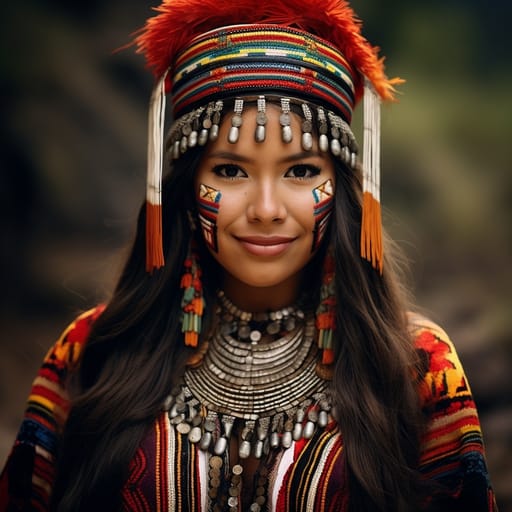
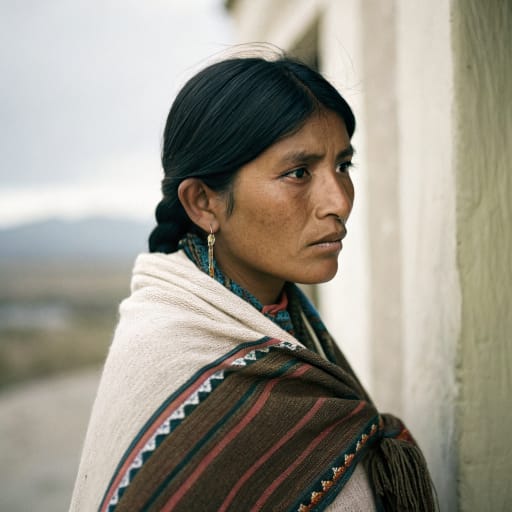
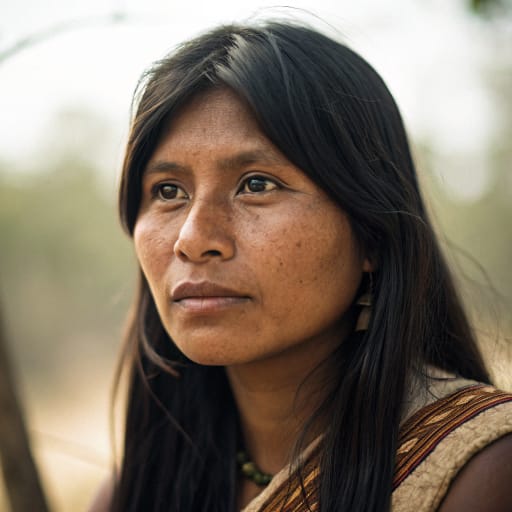
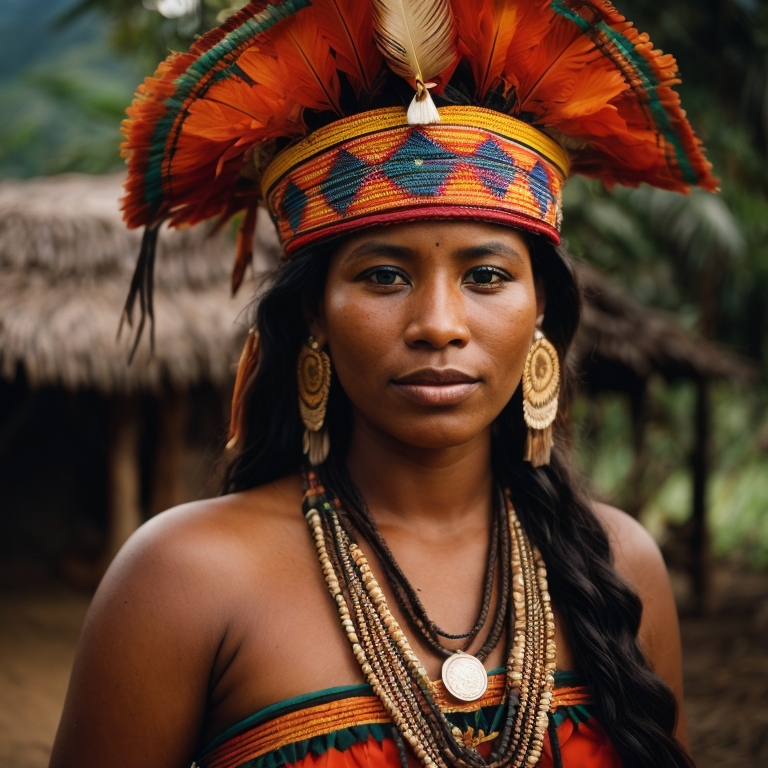
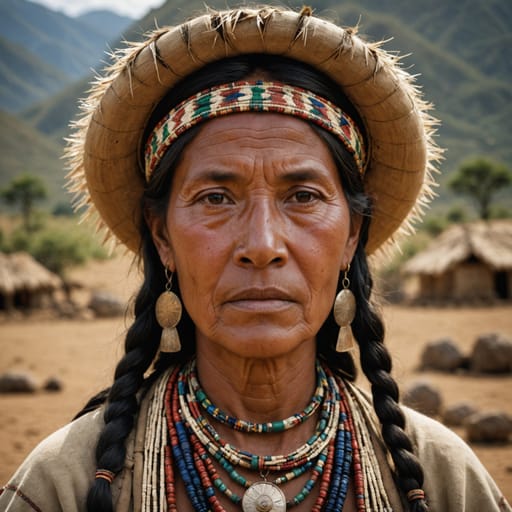
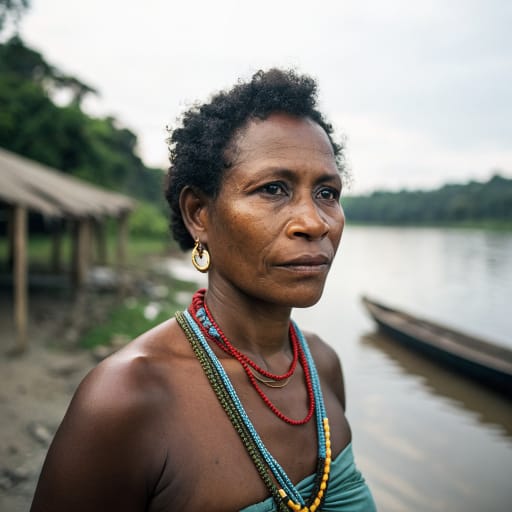
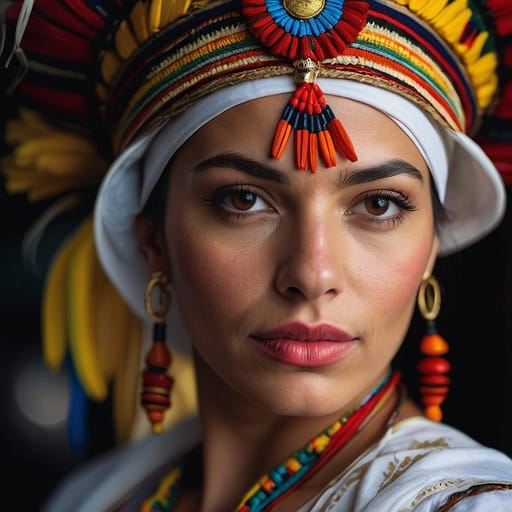
Typical Timoto-Cuicas Phenotypes
Reference for AI generation: hair, eyes, skin, facial structure, build
Timoto-Cuicas Body & Anatomy Reference
South American Indigenous / European-Mestizo / Afro-Latino mix phenotype: anatomy reference for AI nude generation
Timoto-Cuicas Boobs & Breasts
The typical Timoto-Cuicas bust is medium-to-large cup, full, high projection, in line with the wider South American Indigenous / European-Mestizo / Afro-Latino mix pattern. Areolas usually fall in the 32-46mm range, with medium-brown to dark-brown areolar pigmentation against the tan-to-deep-brown skin tone. Compared with the smaller bust profile of Andean Indigenous sub-populations, Timoto-Cuicas breasts sit forward and are generally the classic Brazilian / Latina curvy bust profile in lowland populations; smaller and shorter-set in Andean Indigenous populations. A faithful AI render of Timoto-Cuicas tits keeps that shape and areola size.
Timoto-Cuicas Ass & Hips
Butt shape among Timoto-Cuicas women: full, high projection, the famous Brazilian / Latina bunda profile, over wide iliac crests, very full gluteal-femoral fat deposition (the hallmark Brazilian / Latina hip-to-waist ratio). This follows South American Indigenous / European-Mestizo / Afro-Latino mix ancestry and looks quite unlike the slim narrow-hip East Asian profile. An accurate Timoto-Cuicas ass in adult AI imagery keeps both the silhouette and the overall build (endomorph-to-mesomorph with high gluteal-femoral deposition) instead of a generic average.
Timoto-Cuicas Vagina & Pussy
Vulvar anatomy among Timoto-Cuicas women: medium-brown to dark-brown labial pigmentation, fuller labia minora. Pubic hair tends to be wavy-to-curly coarse dark texture, dense distribution, in the usual inverted-triangle pattern. Both follow South American Indigenous / European-Mestizo / Afro-Latino mix pigmentation, which is why Timoto-Cuicas pussy renders should not fall back on a pale, sparse Western template.
Timoto-Cuicas Dicks & Penis
The Timoto-Cuicas cock profile, from South American Indigenous / European-Mestizo / Afro-Latino mix anthropometric data: regional mean ~13cm erect; moderate-to-above-average girth; medium-brown shaft pigmentation. Pubic hair has a wavy-to-curly coarse dark texture and forms the usual inverted-V pattern. Whether Timoto-Cuicas men are circumcised follows religious and cultural practice rather than phenotype.
Timoto-Cuicas Body, Curves & Build
Build and curves among Timoto-Cuicas women follow the South American Indigenous / European-Mestizo / Afro-Latino mix pattern: endomorph-to-mesomorph with high gluteal-femoral deposition, mean adult female BMI 25-28. Proportions matter as much as skin tone, so Timoto-Cuicas figures should keep their regional height and limb ratios.
Timoto-Cuicas Skin Tone & Hair Texture
The Timoto-Cuicas skin range is tan to deep-brown (Fitzpatrick III-VI), and hair tends to be straight-to-curly 1A-3C, varies widely by ancestral composition. That combination marks the South American Indigenous / European-Mestizo / Afro-Latino mix phenotype, and skin tone is the trait AI generators most often get wrong for Timoto-Cuicas women.
Explore phenotype categories
Structured taxonomy with peer-reviewed scales · 22 anatomical categories
Erotic Poses & Sex Positions
From the pose catalog: 219 named positions with reference skeletons
Frequently asked questions about Timoto-Cuicas people
Where is the Timoto-Cuicas homeland?
The Timoto-Cuicas homeland is High valleys and páramos of the Venezuelan Andes, chiefly the present-day states of Mérida and Trujillo, Venezuela. in South America.
What language do Timoto-Cuicas people speak?
Timoto-Cuicas people primarily speak Timote and Cuica (Timote-Cuica family, extinct; a link to Chibchan has been proposed but not proven).
What religion do Timoto-Cuicas people practice?
The predominant religion among Timoto-Cuicas people is Indigenous religion centered on offerings at mountain lagoons, caves and shrines, with a deity remembered as Ches and priest-healers called mojanes. Their descendants became Roman Catholic..






Make your own Timoto-Cuicas images
Five a day, free, no credits to buy. The studio starts from this group's phenotype data, so you can set body type, pose and style and keep the traits accurate.
Start with Timoto-Cuicas