Help us get this right
Does this portrait look right for Baure?
Nobody has judged this one yet. You would be the first.
Baure Erotic
Iténez Province, Beni Department, northeastern Bolivia, around the towns of Baures and Magdalena, near the Iténez (Guaporé) River and the Brazilian border
Baure (Arawakan), critically endangered; Spanish is now the main everyday language
Roman Catholic, shaped by Jesuit missions founded in the early 18th century
Arawakan peoples of the Llanos de Moxos; closely related to the Mojeño (Trinitario and Ignaciano)
About Baure People
The Baure are a small Arawakan-speaking people of the Bolivian Amazon, and a place defines them as much as a language does. Their home is the seasonally flooded savanna and scattered forest islands of northeastern Beni, around the town that carries their name, Baures, and the provincial town of Magdalena, not far from the Iténez River where Bolivia meets Brazil. For months each year much of this country sits under water, and life here has always followed the swing between flood and dry season.
The land itself is a historical record. The plains around Baures are crossed by pre-Columbian earthworks: raised causeways, ring ditches, and long zigzag embankments that archaeologists read as fish weirs, built to catch fish as the floodwaters drained away. It is hard to tie them to any one living people, but they show that this was a busy, managed landscape long before Europeans arrived.
The great break came with the Jesuits. Missionaries pushed into Baure territory around 1700, and the priest Cipriano Barace, who had already founded missions among the neighboring Mojos, was killed there in 1702. Within a few decades the Baure had been gathered into mission towns, where Catholic worship, Spanish-style town plans and mission-appointed native officials took over daily life. The Jesuits were expelled in 1767, but the Catholic calendar and its patron saint festivals still anchor community life. Later, the rubber boom and the spread of cattle ranching across the Beni savannas brought more upheaval and hard labor to the region's indigenous towns.
The Baure language is a close relative of the Mojeño varieties spoken by the Trinitario and Ignaciano peoples to the west. Today it is among the most endangered languages in Bolivia: Spanish is the everyday tongue, and fluent speakers are mostly elderly. Even so, Baure is one of the indigenous languages named as official in Bolivia's 2009 constitution, and linguists working with the last generation of speakers have documented it in detail, material that supports efforts to teach it again locally. Many Baure families still grow cassava, maize and plantains, fish the rivers and lagoons, and gather the wild cacao that grows in the forest islands, a harvest that has given the Baures area a reputation well beyond the Beni.
Related ethnic groups
Groups that share Baure's homeland, region, language, or religious tradition. These are likely candidates for comparative phenotype reference.
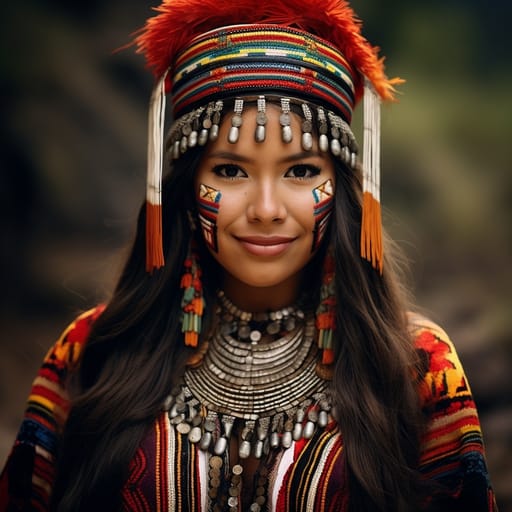
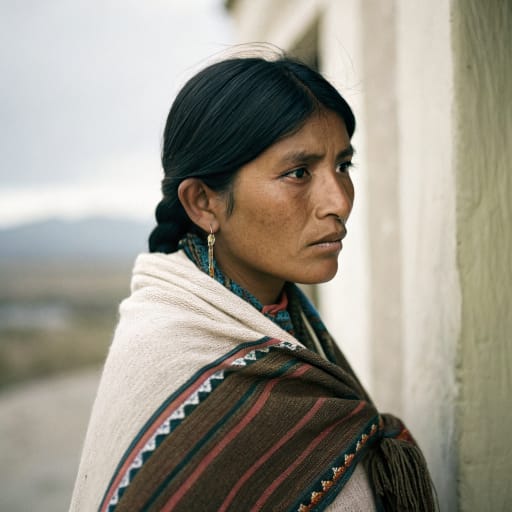
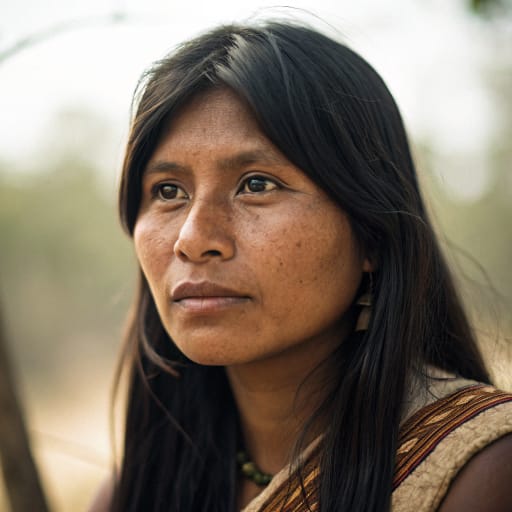
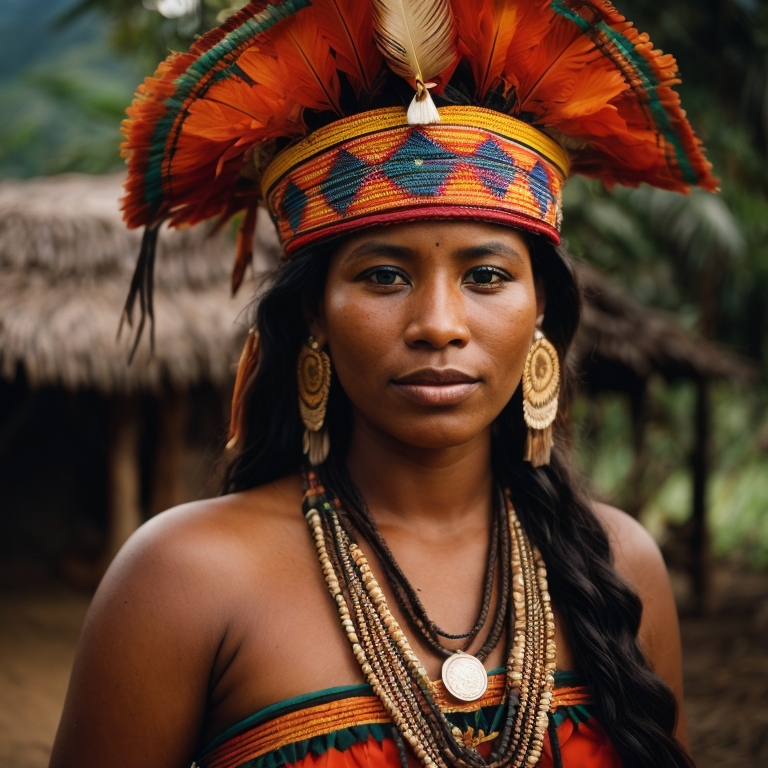
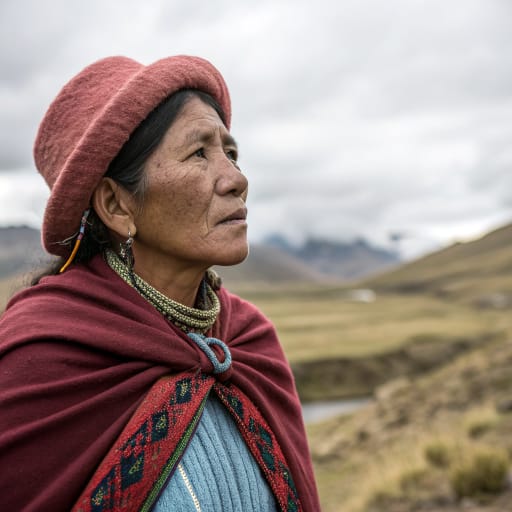
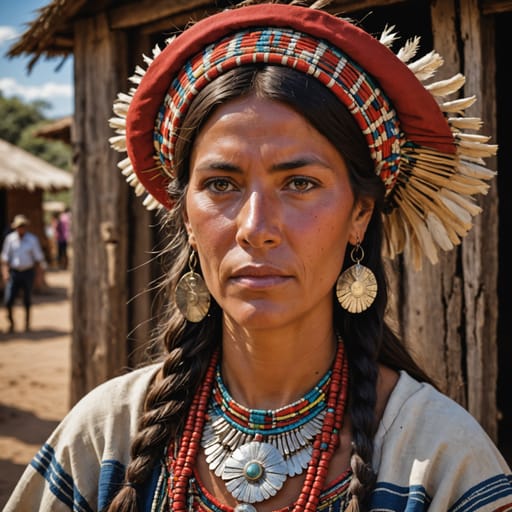
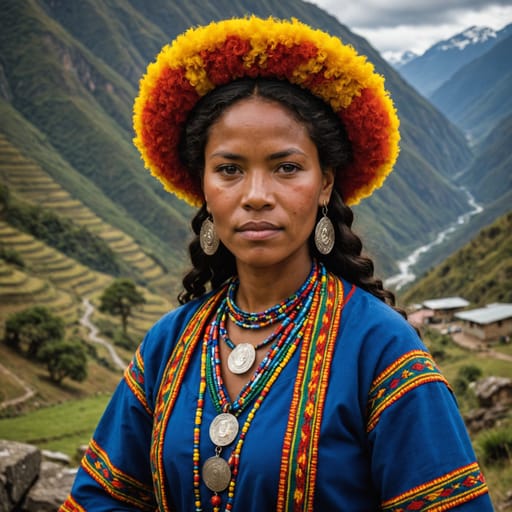
Typical Baure Phenotypes
Reference for AI generation: hair, eyes, skin, facial structure, build
Baure Body & Anatomy Reference
South American Indigenous / European-Mestizo / Afro-Latino mix phenotype: anatomy reference for AI nude generation
Baure Boobs & Breasts
The typical Baure bust is medium-to-large cup, full, high projection, in line with the wider South American Indigenous / European-Mestizo / Afro-Latino mix pattern. Areolas usually fall in the 32-46mm range, with medium-brown to dark-brown areolar pigmentation against the tan-to-deep-brown skin tone. Compared with the smaller bust profile of Andean Indigenous sub-populations, Baure breasts sit forward and are generally the classic Brazilian / Latina curvy bust profile in lowland populations; smaller and shorter-set in Andean Indigenous populations. A faithful AI render of Baure tits keeps that shape and areola size.
Baure Ass & Hips
Butt shape among Baure women: full, high projection, the famous Brazilian / Latina bunda profile, over wide iliac crests, very full gluteal-femoral fat deposition (the hallmark Brazilian / Latina hip-to-waist ratio). This follows South American Indigenous / European-Mestizo / Afro-Latino mix ancestry and looks quite unlike the slim narrow-hip East Asian profile. An accurate Baure ass in adult AI imagery keeps both the silhouette and the overall build (endomorph-to-mesomorph with high gluteal-femoral deposition) instead of a generic average.
Baure Vagina & Pussy
Vulvar anatomy among Baure women: medium-brown to dark-brown labial pigmentation, fuller labia minora. Pubic hair tends to be wavy-to-curly coarse dark texture, dense distribution, in the usual inverted-triangle pattern. Both follow South American Indigenous / European-Mestizo / Afro-Latino mix pigmentation, which is why Baure pussy renders should not fall back on a pale, sparse Western template.
Baure Dicks & Penis
The Baure cock profile, from South American Indigenous / European-Mestizo / Afro-Latino mix anthropometric data: regional mean ~13cm erect; moderate-to-above-average girth; medium-brown shaft pigmentation. Pubic hair has a wavy-to-curly coarse dark texture and forms the usual inverted-V pattern. Whether Baure men are circumcised follows religious and cultural practice rather than phenotype.
Baure Body, Curves & Build
Build and curves among Baure women follow the South American Indigenous / European-Mestizo / Afro-Latino mix pattern: endomorph-to-mesomorph with high gluteal-femoral deposition, mean adult female BMI 25-28. Proportions matter as much as skin tone, so Baure figures should keep their regional height and limb ratios.
Baure Skin Tone & Hair Texture
The Baure skin range is tan to deep-brown (Fitzpatrick III-VI), and hair tends to be straight-to-curly 1A-3C, varies widely by ancestral composition. That combination marks the South American Indigenous / European-Mestizo / Afro-Latino mix phenotype, and skin tone is the trait AI generators most often get wrong for Baure women.
Explore phenotype categories
Structured taxonomy with peer-reviewed scales · 22 anatomical categories
Erotic Poses & Sex Positions
From the pose catalog: 219 named positions with reference skeletons
Frequently asked questions about Baure people
Where is the Baure homeland?
The Baure homeland is Iténez Province, Beni Department, northeastern Bolivia, around the towns of Baures and Magdalena, near the Iténez (Guaporé) River and the Brazilian border in South America.
What language do Baure people speak?
Baure people primarily speak Baure (Arawakan), critically endangered; Spanish is now the main everyday language.
What religion do Baure people practice?
The predominant religion among Baure people is Roman Catholic, shaped by Jesuit missions founded in the early 18th century.






Make your own Baure images
Five a day, free, no credits to buy. The studio starts from this group's phenotype data, so you can set body type, pose and style and keep the traits accurate.
Start with Baure