No portrait yet
Taiwano Erotic
Pirá-Paraná River basin, Vaupés department, southeastern Colombia
Taiwano or Eduria, a variety of Barasana-Eduria (Tucanoan, Eastern Tucanoan branch); Spanish widely spoken as a second language
Indigenous shamanic tradition centered on Yuruparí rites, with some Catholic and evangelical Christian influence
Eastern Tukanoan peoples of the Vaupés; closely tied to the Barasana, with the Makuna, Tatuyo and other Pirá-Paraná peoples as neighbors
About Taiwano People
The Taiwano, who call themselves Eduria, are a small Indigenous people of the Pirá-Paraná River basin in Colombia's Vaupés department, in the rainforest of the country's southeast. They are set apart less by territory or dress than by descent and speech. In the Vaupés, everyone belongs to their father's group. Each group owns a language, a line of sacred ancestors and a place among the peoples of the region, who trade, feast and marry with one another. The Taiwano hold on to that identity even though their speech is so close to that of their Barasana neighbors that linguists count the two as one language, Barasana-Eduria, in the Tucanoan family. That closeness is exactly why the name matters. People here are expected to marry someone whose father spoke a different language, so the label carries a weight that grammar alone does not.
Daily life follows patterns shared along the river. Families clear forest gardens for bitter manioc, which women grate, press and bake into cassava bread, while men fish the rivers and hunt the forest. The maloca, a big communal house under a steep thatched roof, is a home, a ceremonial hall and a working model of the cosmos all at once. In the evenings men gather there to take coca, toasted and powdered with leaf ash, and talk through family lines, myth and practical business in one long conversation.
Religious life turns on Yuruparí. In these rites, sacred flutes and trumpets, understood as the living bodies of the ancestors, are played for initiated men and kept from the sight of women. Specialists often called jaguar shamans hold the knowledge needed to cure illness, name children, protect the territory and keep peace with the spirit owners of fish and game. In 2011 UNESCO recognized this shamanic knowledge, shared by the Taiwano and the other peoples of the Pirá-Paraná, as intangible cultural heritage. At exchange feasts known locally as dabucurí, allied groups come together and offer one another food, drink and dance.
Outside pressure has come in waves: rubber traders in the early twentieth century, then Catholic and Protestant missionaries, and later the cocaine trade and armed conflict that reached deep into the Vaupés. The river communities responded partly by organizing, and today the Taiwano are represented by an association of traditional authorities that deals with the Colombian state for the peoples of the Pirá-Paraná. Most speak Spanish alongside their own language, and often several neighboring languages too, a habit the region has kept for generations.
Related ethnic groups
Groups that share Taiwano's homeland, region, language, or religious tradition. These are likely candidates for comparative phenotype reference.
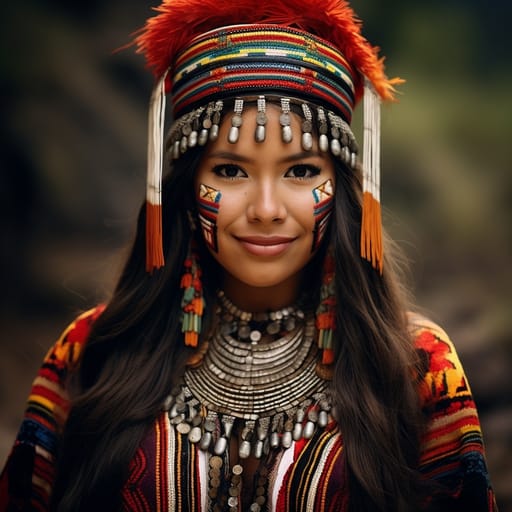
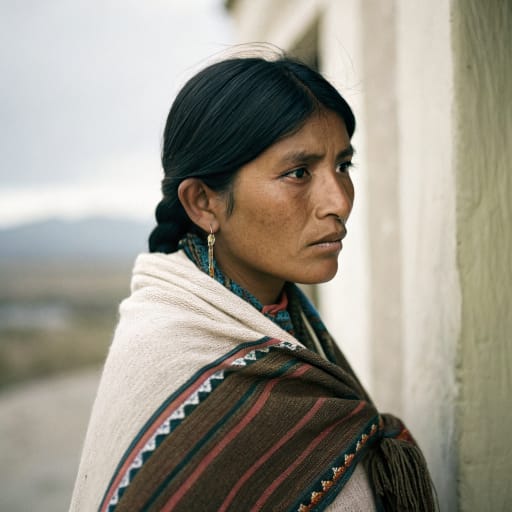
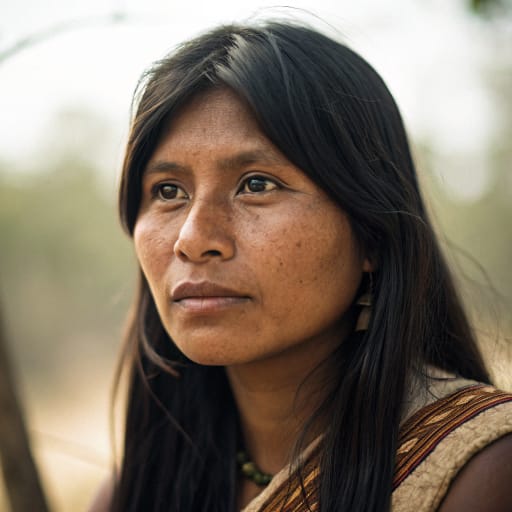
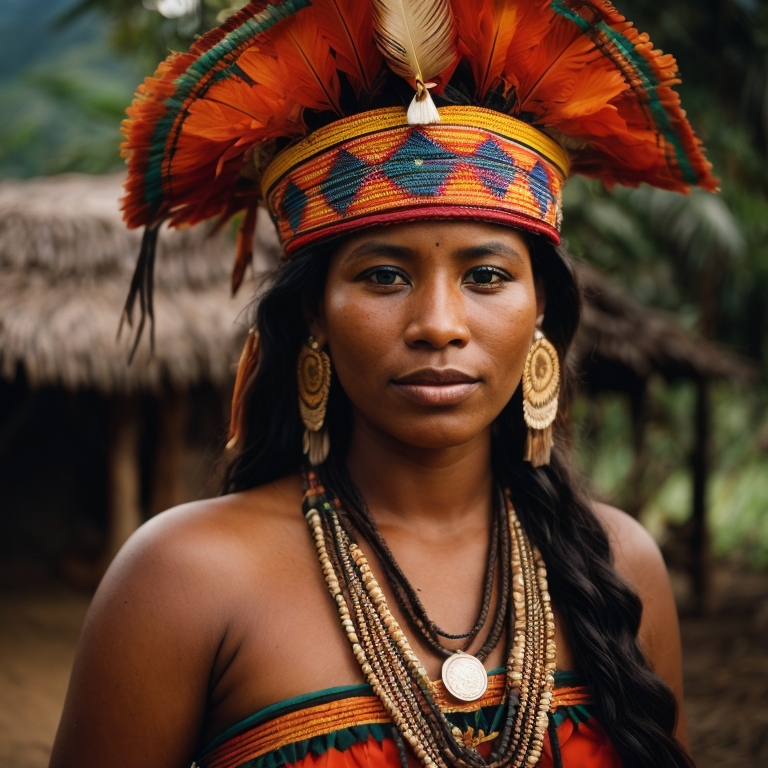
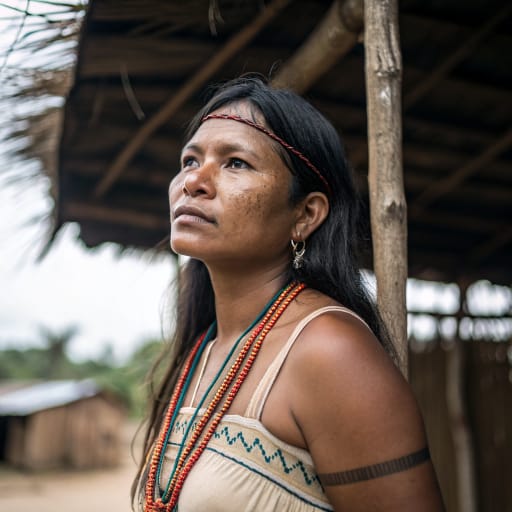
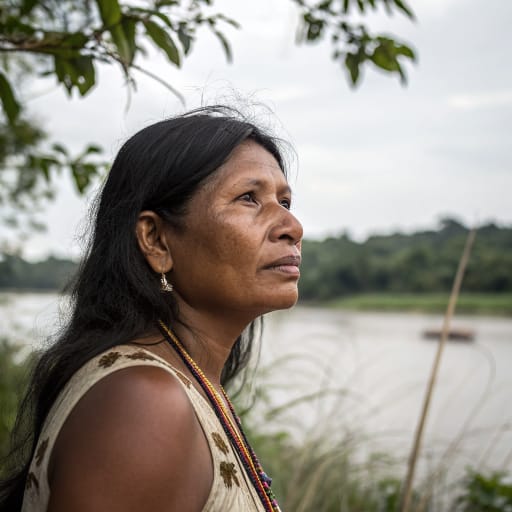
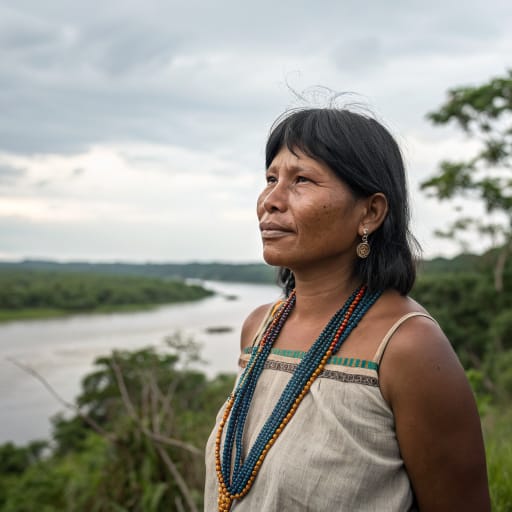
Typical Taiwano Phenotypes
Reference for AI generation: hair, eyes, skin, facial structure, build
Taiwano Body & Anatomy Reference
Per-feature anatomical profile for AI nude generation: South American Indigenous / European-Mestizo / Afro-Latino mix phenotype
Taiwano Boobs & Breasts
The typical Taiwano bust is medium-to-large cup, full, high projection, in line with the wider South American Indigenous / European-Mestizo / Afro-Latino mix pattern. Areolas usually fall in the 32-46mm range, with medium-brown to dark-brown areolar pigmentation against the tan-to-deep-brown skin tone. Compared with the smaller bust profile of Andean Indigenous sub-populations, Taiwano breasts sit forward and are generally the classic Brazilian / Latina curvy bust profile in lowland populations; smaller and shorter-set in Andean Indigenous populations. A faithful AI render of Taiwano tits keeps that shape and areola size.
Taiwano Ass & Hips
Butt shape among Taiwano women: full, high projection, the famous Brazilian / Latina bunda profile, over wide iliac crests, very full gluteal-femoral fat deposition (the hallmark Brazilian / Latina hip-to-waist ratio). This follows South American Indigenous / European-Mestizo / Afro-Latino mix ancestry and looks quite unlike the slim narrow-hip East Asian profile. An accurate Taiwano ass in adult AI imagery keeps both the silhouette and the overall build (endomorph-to-mesomorph with high gluteal-femoral deposition) instead of a generic average.
Taiwano Vagina & Pussy
Vulvar anatomy among Taiwano women: medium-brown to dark-brown labial pigmentation, fuller labia minora. Pubic hair tends to be wavy-to-curly coarse dark texture, dense distribution, in the usual inverted-triangle pattern. Both follow South American Indigenous / European-Mestizo / Afro-Latino mix pigmentation, which is why Taiwano pussy renders should not fall back on a pale, sparse Western template.
Taiwano Dicks & Penis
The Taiwano cock profile, from South American Indigenous / European-Mestizo / Afro-Latino mix anthropometric data: regional mean ~13cm erect; moderate-to-above-average girth; medium-brown shaft pigmentation. Pubic hair has a wavy-to-curly coarse dark texture and forms the usual inverted-V pattern. Whether Taiwano men are circumcised follows religious and cultural practice rather than phenotype.
Taiwano Body, Curves & Build
Build and curves among Taiwano women follow the South American Indigenous / European-Mestizo / Afro-Latino mix pattern: endomorph-to-mesomorph with high gluteal-femoral deposition, mean adult female BMI 25-28. Proportions matter as much as skin tone, so Taiwano figures should keep their regional height and limb ratios.
Taiwano Skin Tone & Hair Texture
The Taiwano skin range is tan to deep-brown (Fitzpatrick III-VI), and hair tends to be straight-to-curly 1A-3C, varies widely by ancestral composition. That combination marks the South American Indigenous / European-Mestizo / Afro-Latino mix phenotype, and skin tone is the trait AI generators most often get wrong for Taiwano women.
Explore phenotype categories
Structured taxonomy with peer-reviewed scales · 22 anatomical categories
Erotic Poses & Sex Positions
From the pose catalog: 219 named positions with reference skeletons
Frequently asked questions about Taiwano people
Where is the Taiwano homeland?
The Taiwano homeland is Pirá-Paraná River basin, Vaupés department, southeastern Colombia in South America.
What language do Taiwano people speak?
Taiwano people primarily speak Taiwano or Eduria, a variety of Barasana-Eduria (Tucanoan, Eastern Tucanoan branch); Spanish widely spoken as a second language.
What religion do Taiwano people practice?
The predominant religion among Taiwano people is Indigenous shamanic tradition centered on Yuruparí rites, with some Catholic and evangelical Christian influence.






Make your own Taiwano images
Five a day, free, no credits to buy. The studio starts from this group's phenotype data, so you can set body type, pose and style and keep the traits accurate.
Start with Taiwano