No portrait yet
Mukurin Erotic
Atlantic Forest of eastern Minas Gerais, Brazil, within Botocudo country between the Doce and Jequitinhonha river valleys.
A variety of Borun, also called Botocudo or Krenak (Macro-Jê); the band's own speech is extinct, and Krenak is the surviving related language.
Indigenous Botocudo religion centered on sky spirits (marét) and the souls of the dead; survivors were drawn into Catholic missions in the nineteenth century.
A band of the Botocudo (Borun, also called Aimoré), alongside bands such as the Naknenuk, Pojixá, Nakrehé and Gutkrak; the Krenak are the recognized living Botocudo descendants.
About Mukurin People
The Mukurin, spelled Mokuriñ in Brazilian sources, were a band of the Botocudo, the forest hunters who held eastern Minas Gerais, Brazil, until the conquest of the region in the nineteenth century. They are gone as a named group, and the Krenak of the Rio Doce are the recognized Botocudo descendants today. Very little was ever recorded about the Mukurin under their own name. They appear in the ethnographic record as a band label, one among dozens, and what can honestly be said of them is what is known of the Botocudo as a whole.
Botocudo was never their word. Portuguese settlers coined it from botoque, a barrel plug, after the light wooden discs worn in the lower lip and earlobes. The people called themselves Borun, a word that simply separates people from outsiders. Their speech belonged to the small Krenak branch of the Macro-Jê family, unrelated to the Tupi languages of the coast and only distantly tied to the Jê peoples of the interior plateau. They lived in small mobile bands in the Atlantic Forest between the Doce and Jequitinhonha rivers, hunting with long bows, gathering, sleeping under quick shelters of palm fronds, and moving on. Bands split, feuded, and recombined constantly, which is why the lists of band names compiled by travelers and missionaries are so long and so inconsistent. Religious life turned on the marét, powerful sky spirits, and on the souls of the dead, who were feared. A band leader's authority rested largely on his reputed standing with those spirits.
The turning point came in 1808, when the Portuguese prince regent, newly arrived in Rio de Janeiro, declared offensive war on the Botocudo of Minas Gerais and allowed captives to be held in forced service. Military posts went up along the Rio Doce. The decree was revoked in 1831, but the pressure only changed form. Teófilo Otoni's Mucuri Company opened the Mucuri valley to settlers from the late 1840s, and a Capuchin mission founded at Itambacuri in 1873 gathered surviving bands in one place, where separate band names faded.
The Krenak remain: a few hundred people on a reserve beside the Rio Doce near Resplendor, who keep Borun as a heritage language and have spent years fighting over a river fouled by the 2015 Fundão mining dam collapse. Bands like the Mukurin survive more quietly, in the ancestry of rural families across eastern Minas Gerais and as a name in the ethnographic record.
Related ethnic groups
Groups that share Mukurin's homeland, region, language, or religious tradition. These are likely candidates for comparative phenotype reference.
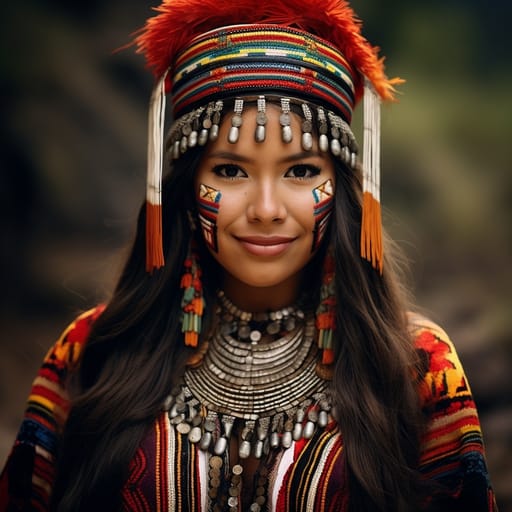
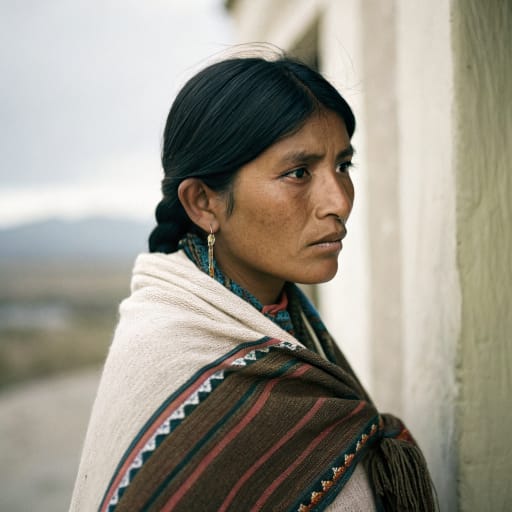
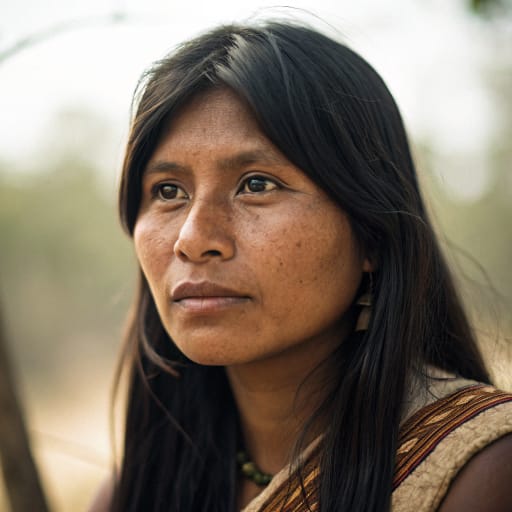
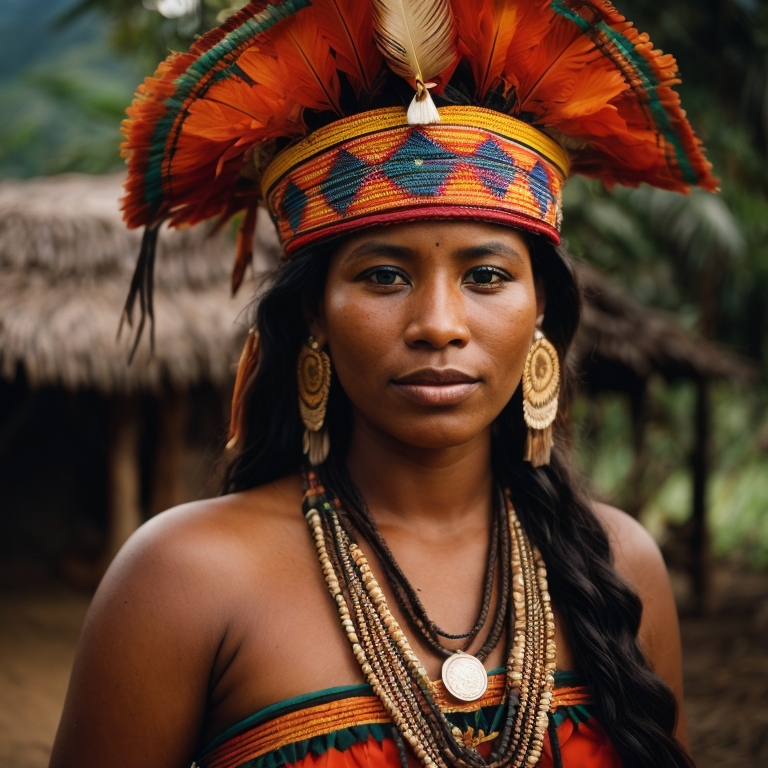
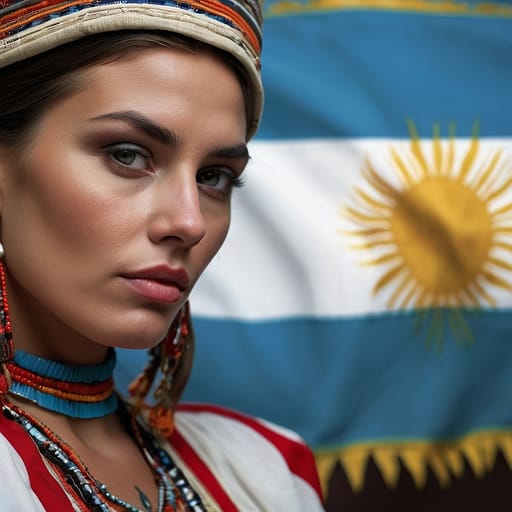
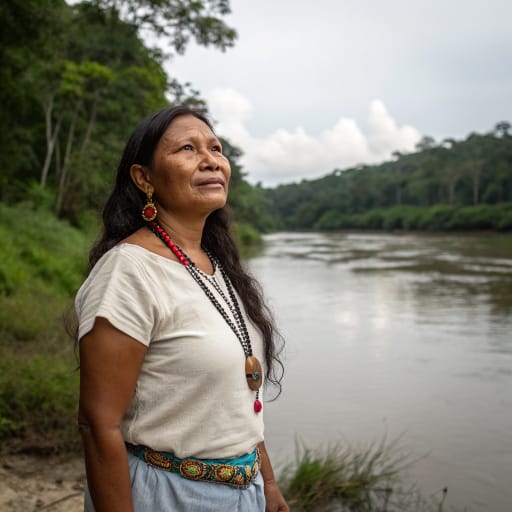
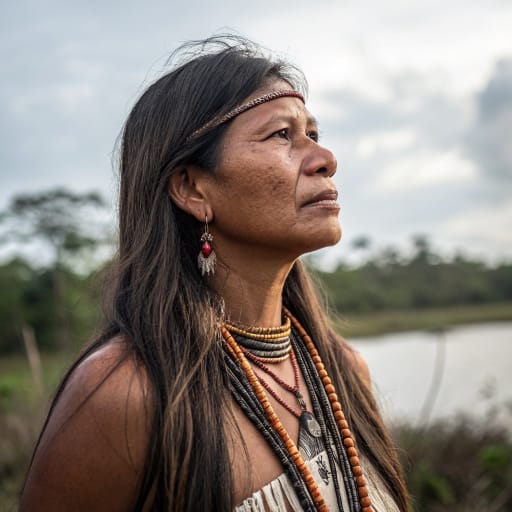
Typical Mukurin Phenotypes
Reference for AI generation: hair, eyes, skin, facial structure, build
Mukurin Body & Anatomy Reference
Per-feature anatomical profile for AI nude generation: South American Indigenous / European-Mestizo / Afro-Latino mix phenotype
Mukurin Boobs & Breasts
Bust reference for Mukurin women: medium-to-large cup, full, high projection, which is typical of South American Indigenous / European-Mestizo / Afro-Latino mix ancestry. Areolas measure about 32-46mm across, with medium-brown to dark-brown pigmentation. Body type (endomorph-to-mesomorph with high gluteal-femoral deposition) shapes the bust as well, so Mukurin tits are usually the classic Brazilian / Latina curvy bust profile in lowland populations; smaller and shorter-set in Andean Indigenous populations. In AI imagery, keep the forward-set shape rather than drifting toward the smaller bust profile of Andean Indigenous sub-populations.
Mukurin Ass & Hips
The Mukurin ass is typically full, high projection, the famous Brazilian / Latina bunda profile, which sets it apart from the slim narrow-hip East Asian profile. Underneath, the pelvis shows wide iliac crests, very full gluteal-femoral fat deposition (the hallmark Brazilian / Latina hip-to-waist ratio), part of the South American Indigenous / European-Mestizo / Afro-Latino mix skeletal pattern. For Mukurin butt pics and AI renders, match that silhouette and the overall build (endomorph-to-mesomorph with high gluteal-femoral deposition).
Mukurin Vagina & Pussy
Mukurin pussy and vulvar anatomy presents medium-brown to dark-brown labial pigmentation, fuller labia minora, consistent with the South American Indigenous / European-Mestizo / Afro-Latino mix phenotype's pigmentation pattern. Mukurin pubic hair is typically wavy-to-curly coarse dark texture, dense distribution, in the inverted-triangle pattern. For anatomically accurate Mukurin pussy renders the labial coloration should match the surrounding tan to deep-brown skin tone with a continuous gradient, and the hair should keep its wavy-to-curly coarse dark texture.
Mukurin Dicks & Penis
Mukurin dicks follow the South American Indigenous / European-Mestizo / Afro-Latino mix reference data: regional mean ~13cm erect; moderate-to-above-average girth; medium-brown shaft pigmentation. Shaft color should track the tan to deep-brown skin tone with a smooth change toward the glans, and Mukurin pubic hair keeps its wavy-to-curly coarse dark texture.
Mukurin Body, Curves & Build
Mukurin body type and overall build presents as endomorph-to-mesomorph with high gluteal-femoral deposition, with mean adult female BMI 25-28: the characteristic South American Indigenous / European-Mestizo / Afro-Latino mix habitus. Mukurin curves and proportions should keep the regional skeletal frame (height, shoulder-to-hip ratio, limb proportions) rather than a generic mesomorph default.
Mukurin Skin Tone & Hair Texture
Mukurin skin sits in the tan to deep-brown (Fitzpatrick III-VI) band. Hair is typically straight-to-curly 1A-3C, varies widely by ancestral composition, in keeping with the South American Indigenous / European-Mestizo / Afro-Latino mix phenotype. In nude renders the skin should stay one even tone from face to body, and body, pubic and head hair should match.
Explore phenotype categories
Structured taxonomy with peer-reviewed scales · 22 anatomical categories
Erotic Poses & Sex Positions
From the pose catalog: 219 named positions with reference skeletons
Frequently asked questions about Mukurin people
Where is the Mukurin homeland?
The Mukurin homeland is Atlantic Forest of eastern Minas Gerais, Brazil, within Botocudo country between the Doce and Jequitinhonha river valleys. in South America.
What language do Mukurin people speak?
Mukurin people primarily speak A variety of Borun, also called Botocudo or Krenak (Macro-Jê); the band's own speech is extinct, and Krenak is the surviving related language..
What religion do Mukurin people practice?
The predominant religion among Mukurin people is Indigenous Botocudo religion centered on sky spirits (marét) and the souls of the dead; survivors were drawn into Catholic missions in the nineteenth century..






Make your own Mukurin images
Five a day, free, no credits to buy. The studio starts from this group's phenotype data, so you can set body type, pose and style and keep the traits accurate.
Start with Mukurin