No portrait yet
Mirandese Erotic
Terra de Miranda plateau in northeastern Portugal (Bragança District, Trás-os-Montes): Miranda do Douro and neighboring villages in Vimioso, along the Douro border with Spain
Mirandese (Romance, Astur-Leonese branch) and Portuguese (Romance); nearly all speakers are bilingual
Roman Catholic, with saints' days and village festivals shaping the local calendar
Central, Border (Raiano) and Sendim varieties of Mirandese; linguistically part of the Astur-Leonese world, nationally Portuguese
About Mirandese People
What sets the Mirandese apart inside Portugal is language. On the high, windswept plateau of Terra de Miranda, in the country's far northeastern corner, villagers still speak a Romance tongue whose nearest relatives are not in Lisbon but across the river in Spain. The Douro cuts a deep gorge along the border here, and for centuries that canyon has marked the edge of two kingdoms without fully separating the people on either side.
Mirandese belongs to the Astur-Leonese branch of Romance, kin to the Leonese still heard in parts of Zamora and León and to Asturian further north. It took shape in the Middle Ages, when this corner was tied to the Leonese world, and it survived after the border settled with Miranda on the Portuguese side. Cut off from its cousins and surrounded by a national language with far more prestige, it became the speech of the kitchen, the field and the village square, while Portuguese handled school, courts and anything official. Nearly every speaker today is bilingual. Locals recognize three varieties: a central form, the border speech of the villages closest to Spain, and the distinctive dialect of Sendim.
Miranda do Douro itself had a brief stretch of importance. In 1545 it became the seat of a new diocese and got a cathedral far grander than the town. In 1762, during a Spanish invasion, the castle's powder magazine exploded, killing hundreds and wrecking the fortress, and the bishops soon moved to Bragança. Outside scholars barely noticed the language until 1882, when the philologist José Leite de Vasconcelos published the first study of it. In 1999 the Portuguese parliament gave Mirandese official recognition. It now has a standard spelling, a place in local schools and bilingual street signs in Miranda. Recognition has not reversed the losses. Emigration to France and to Portuguese cities hollowed out villages through the twentieth century, and daily speakers keep getting older and fewer.
The Mirandese are best known outside the region for the pauliteiros, teams of men in white skirts, embroidered shirts and hats decked with flowers and ribbons, who dance while clacking wooden sticks to bagpipe and drums. Less familiar is the capa de honra, a heavy brown wool cape with elaborate cut and stitched decoration, once formal wear for village men and still worn on ceremonial occasions. Catholicism works here as a calendar: saints' days set the feasts and processions, while masked winter festivals in some villages carry echoes of something older than the church. The plateau also lends its name to the Mirandesa cattle breed and to posta à mirandesa, the thick grilled steak ordered all over Portugal.
Related ethnic groups
Groups that share Mirandese's homeland, region, language, or religious tradition. These are likely candidates for comparative phenotype reference.
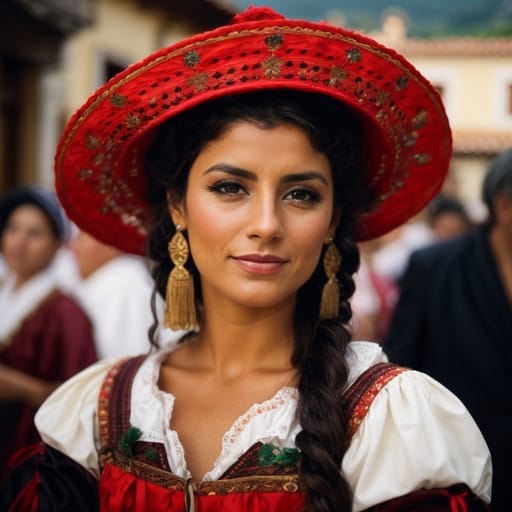
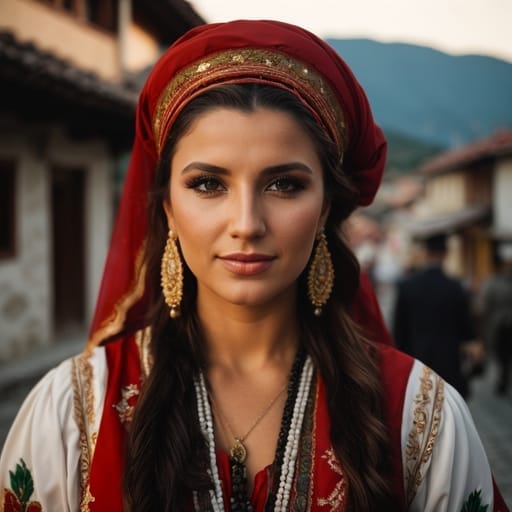
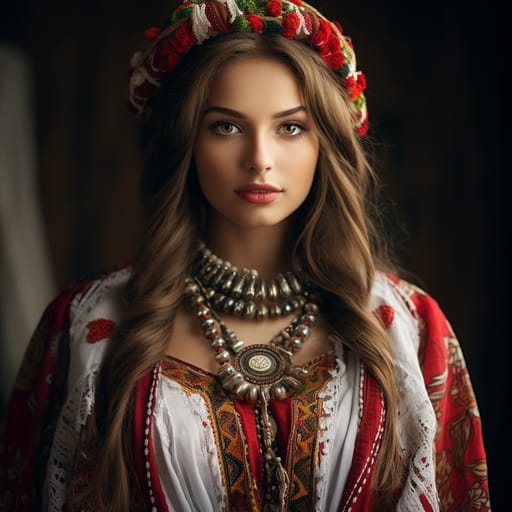
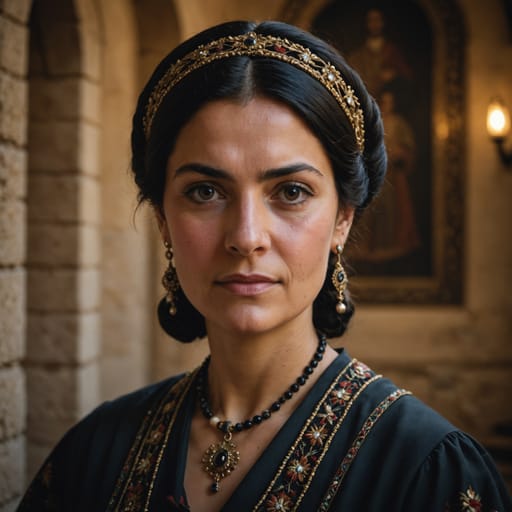
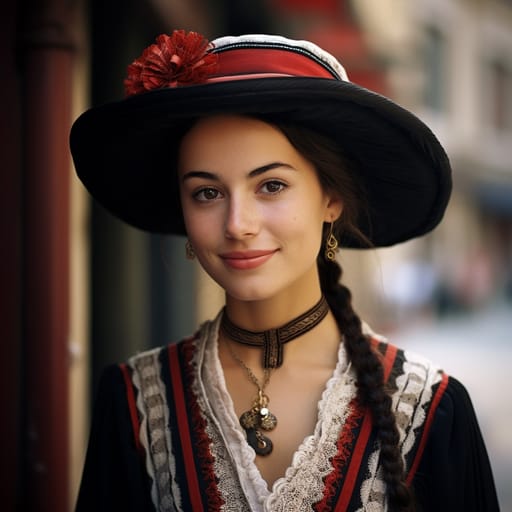
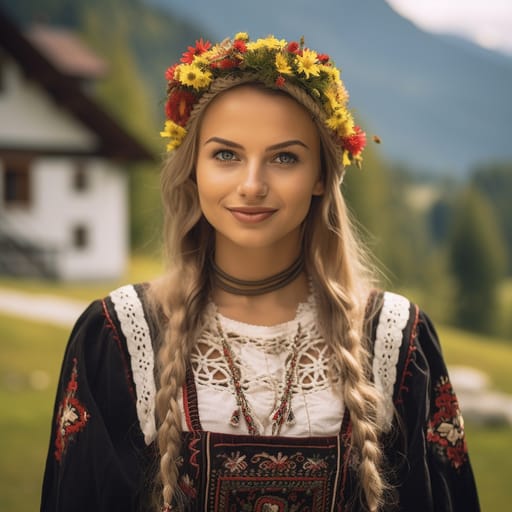
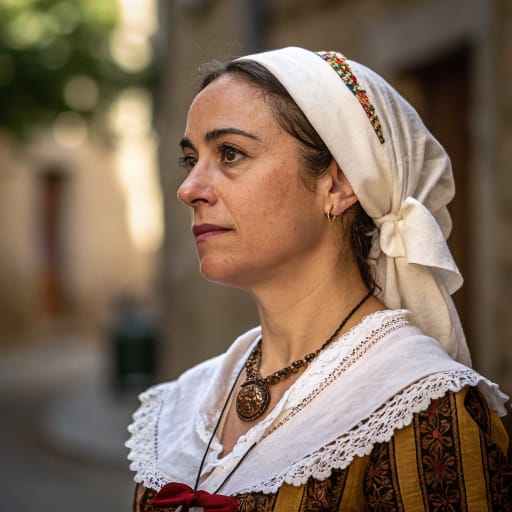
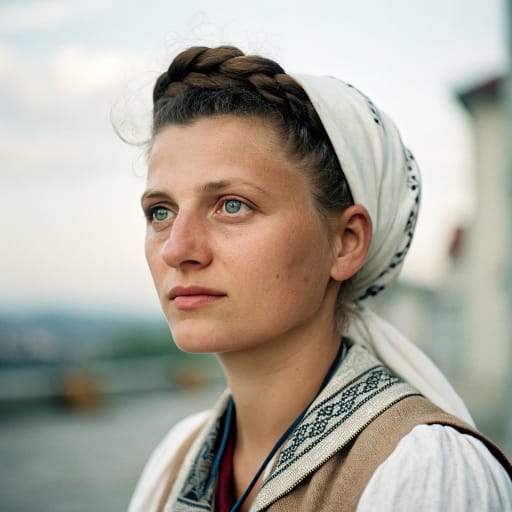
Typical Mirandese Phenotypes
Reference for AI generation: hair, eyes, skin, facial structure, build
Mirandese Body & Anatomy Reference
Anatomy by feature, Southern European / Mediterranean phenotype
Mirandese Boobs & Breasts
Mirandese tits and boobs run medium-to-large cup, full, moderate-to-high projection, the classic Southern European / Mediterranean bust profile. Mirandese nipples and areolas show medium-brown to dark-brown areolar pigmentation against the olive-to-light-brown skin tone, with areolar diameter typically in the 32-46mm range and forward-set positioning rather than the lighter pigmentation of the Northern European bust. Mirandese breasts trend full and projecting, generally the classic Mediterranean curvy bust profile, a function of the mesomorph with full hip-and-bust deposition body habitus and the mean adult female BMI 24-28. For anatomically accurate AI-generated Mirandese nudes the render preserves the medium-to-large cup, full, moderate-to-high projection shape, 32-46mm areolas with medium-brown to dark-brown pigmentation, and the torso proportions of the Southern European / Mediterranean phenotype.
Mirandese Ass & Hips
Mirandese hips and butt usually read as medium-to-full, moderate-to-high projection, broader hip profile. The skeletal base is medium-to-wide iliac crests, full gluteal-femoral fat distribution, the Southern European / Mediterranean pattern. Set against the slim Northern European narrow-hip pattern, the difference is easy to see, and the hip-to-waist ratio is often what identifies Mirandese women in photos.
Mirandese Vagina & Pussy
Expect medium-brown to dark-brown labial pigmentation, fuller labia minora on Mirandese women, in keeping with Southern European / Mediterranean ancestry. The pubic hair is wavy-to-curly medium-coarse dark texture, dense distribution. Coloring should run evenly from the olive to medium skin of the thighs to the labia, and Mirandese nude imagery should keep the hair's wavy-to-curly medium-coarse dark texture.
Mirandese Dicks & Penis
Mirandese dick and penile anatomy in adult AI generation should anchor on the regional reference data: regional mean ~13-14cm erect, moderate girth, and medium-brown shaft pigmentation. The Mirandese cock profile reflects the Southern European / Mediterranean population's anthropometric measurements. The shaft pigmentation should track the surrounding olive to medium skin tone, and the pubic hair should keep its wavy-to-curly medium-coarse dark texture in the typical inverted-V escutcheon.
Mirandese Body, Curves & Build
Mirandese body type: mesomorph with full hip-and-bust deposition, with mean adult female BMI 24-28. This is the typical Southern European / Mediterranean build. Height range, shoulder-to-hip ratio and fat distribution all follow from it, which is what an accurate Mirandese nude body should show.
Mirandese Skin Tone & Hair Texture
Mirandese skin tone falls in the olive to medium (Fitzpatrick III-IV) band, the surface signal most often miscalibrated by generic AI nude generators. Mirandese hair texture is typically wavy-to-curly 2B-3B, dark-brown to black, characteristic of the Southern European / Mediterranean phenotype. In Mirandese nude renders the skin should hold that band consistently across the body.
Explore phenotype categories
Structured taxonomy with peer-reviewed scales · 22 anatomical categories
Erotic Poses & Sex Positions
From the pose catalog: 219 named positions with reference skeletons
Frequently asked questions about Mirandese people
Where is the Mirandese homeland?
The Mirandese homeland is Terra de Miranda plateau in northeastern Portugal (Bragança District, Trás-os-Montes): Miranda do Douro and neighboring villages in Vimioso, along the Douro border with Spain in Southern Europe.
What language do Mirandese people speak?
Mirandese people primarily speak Mirandese (Romance, Astur-Leonese branch) and Portuguese (Romance); nearly all speakers are bilingual.
What religion do Mirandese people practice?
The predominant religion among Mirandese people is Roman Catholic, with saints' days and village festivals shaping the local calendar.






Make your own Mirandese images
Five a day, free, no credits to buy. The studio starts from this group's phenotype data, so you can set body type, pose and style and keep the traits accurate.
Start with Mirandese