No portrait yet
Melingoi Erotic
The western slopes of Mount Taygetos, in Laconia and Messenia, southern Peloponnese, Greece.
An unrecorded South Slavic dialect (Indo-European, Slavic), replaced by Greek (Indo-European, Hellenic) by the late Middle Ages.
Slavic paganism at settlement, Orthodox Christianity from roughly the ninth century onward.
South Slavs; recorded alongside the Ezeritai as one of the two Slavic tribes of the Peloponnese.
About Melingoi People
The Melingoi were a Slavic tribe who settled the western flank of Mount Taygetos, in the southern Peloponnese, sometime after the Slavic migrations into Greece in the late sixth and seventh centuries, and who kept a separate name and a measure of self-rule there for roughly seven hundred years before being absorbed into the Greek-speaking population of Laconia and Messenia. Their descendants are the mountain villagers of Taygetos, indistinguishable from their neighbors for centuries now. What survives of them directly is a scatter of Slavic place names on the ridges above Sparta and a few paragraphs in Byzantine and Frankish records.
What made them a group, in the eyes of everyone who wrote about them, was the mountain. Taygetos is a long limestone wall running down toward the sea, high enough to be snowbound and steep enough that the empire found it cheaper to tax the people on it than to govern them. Constantine VII, writing in the tenth century, lists the Melingoi and the neighboring Ezeritai as the two Slavic groups of the Peloponnese, autonomous and paying tribute in gold rather than answering to the provincial governor in the ordinary way. When they revolted, an imperial commander named Krinites raised their tribute sharply as punishment; they petitioned the emperor and got the increase rolled back. That is the pattern for most of their recorded history: a hill people negotiating from a defensible position, useful as soldiers, awkward to administer.
They arrived pagan and were Orthodox by the ninth or tenth century. Their language, a South Slavic dialect, was never written down and left no texts, and it gave way to Greek at a date nobody can fix. The Franks who took the Peloponnese after 1204 dealt with them on the old terms: the Chronicle of the Morea records them submitting and having their freedoms confirmed in return for military service, and William of Villehardouin built the castle of Mystras below the mountain in 1249 partly to keep watch on that flank. Byzantine documents still name a district of the Melingoi in the fourteenth century. After that the name drops out of the record.
They acquired an odd afterlife in the 1830s, when Jakob Philipp Fallmerayer used the Slavic settlement of Greece, the Melingoi included, to argue that modern Greeks had no ancestral link to the ancients. The claim was overstated and has been picked apart since, but it turned a small mountain tribe into a political argument, and much of what has been written about them since has been written with that argument in view.
Related ethnic groups
Groups that share Melingoi's homeland, region, language, or religious tradition. These are likely candidates for comparative phenotype reference.
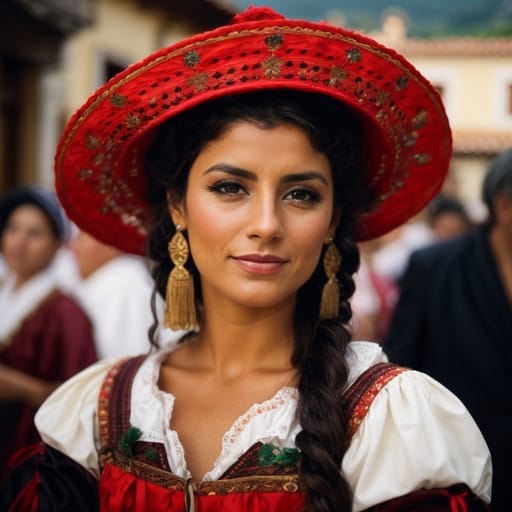
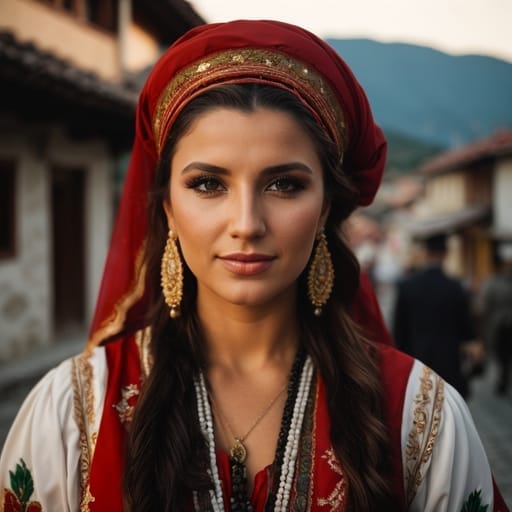
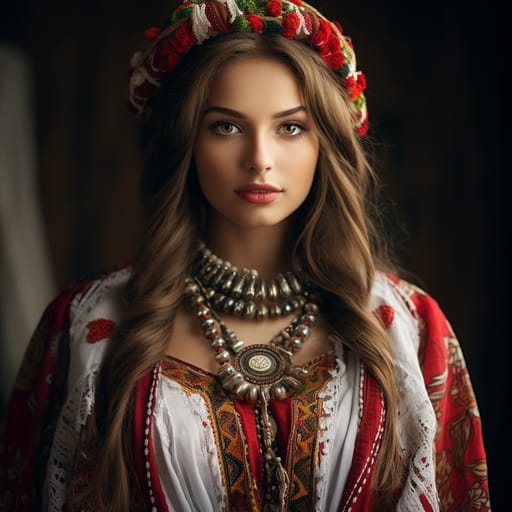
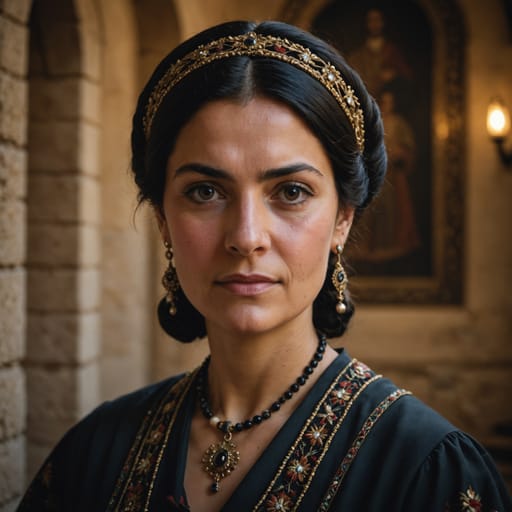
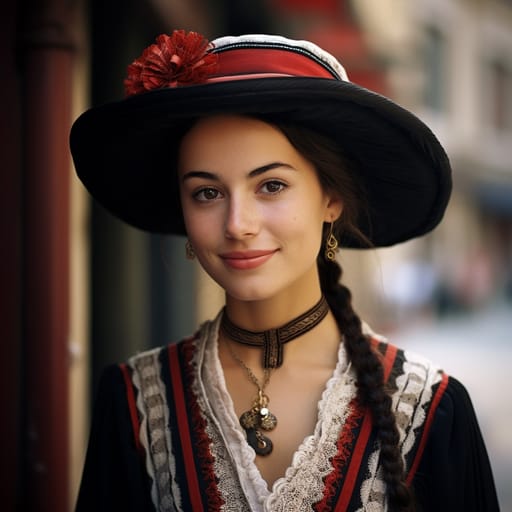
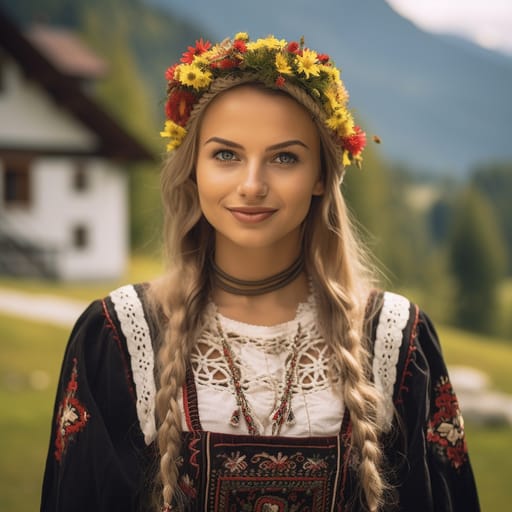
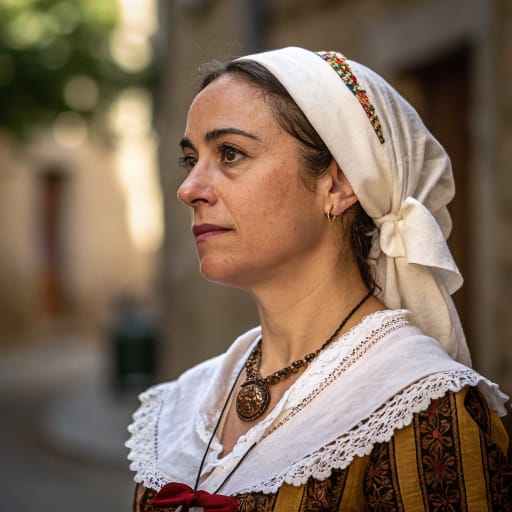
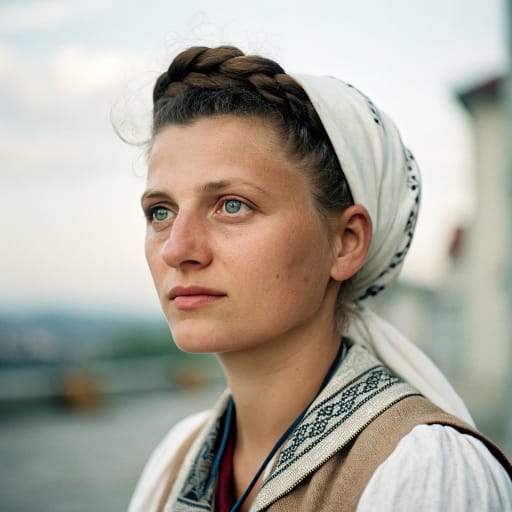
Typical Melingoi Phenotypes
Reference for AI generation: hair, eyes, skin, facial structure, build
Melingoi Body & Anatomy Reference
Southern European / Mediterranean phenotype: anatomy reference for AI nude generation
Melingoi Boobs & Breasts
Melingoi tits and boobs run medium-to-large cup, full, moderate-to-high projection, the classic Southern European / Mediterranean bust profile. Melingoi nipples and areolas show medium-brown to dark-brown areolar pigmentation against the olive-to-light-brown skin tone, with areolar diameter typically in the 32-46mm range and forward-set positioning rather than the lighter pigmentation of the Northern European bust. Melingoi breasts trend full and projecting, generally the classic Mediterranean curvy bust profile, a function of the mesomorph with full hip-and-bust deposition body habitus and the mean adult female BMI 24-28. For anatomically accurate AI-generated Melingoi nudes the render preserves the medium-to-large cup, full, moderate-to-high projection shape, 32-46mm areolas with medium-brown to dark-brown pigmentation, and the torso proportions of the Southern European / Mediterranean phenotype.
Melingoi Ass & Hips
Melingoi hips and butt usually read as medium-to-full, moderate-to-high projection, broader hip profile. The skeletal base is medium-to-wide iliac crests, full gluteal-femoral fat distribution, the Southern European / Mediterranean pattern. Set against the slim Northern European narrow-hip pattern, the difference is easy to see, and the hip-to-waist ratio is often what identifies Melingoi women in photos.
Melingoi Vagina & Pussy
Expect medium-brown to dark-brown labial pigmentation, fuller labia minora on Melingoi women, in keeping with Southern European / Mediterranean ancestry. The pubic hair is wavy-to-curly medium-coarse dark texture, dense distribution. Coloring should run evenly from the olive to medium skin of the thighs to the labia, and Melingoi nude imagery should keep the hair's wavy-to-curly medium-coarse dark texture.
Melingoi Dicks & Penis
Melingoi dick and penile anatomy in adult AI generation should anchor on the regional reference data: regional mean ~13-14cm erect, moderate girth, and medium-brown shaft pigmentation. The Melingoi cock profile reflects the Southern European / Mediterranean population's anthropometric measurements. The shaft pigmentation should track the surrounding olive to medium skin tone, and the pubic hair should keep its wavy-to-curly medium-coarse dark texture in the typical inverted-V escutcheon.
Melingoi Body, Curves & Build
Melingoi body type: mesomorph with full hip-and-bust deposition, with mean adult female BMI 24-28. This is the typical Southern European / Mediterranean build. Height range, shoulder-to-hip ratio and fat distribution all follow from it, which is what an accurate Melingoi nude body should show.
Melingoi Skin Tone & Hair Texture
Melingoi skin tone falls in the olive to medium (Fitzpatrick III-IV) band, the surface signal most often miscalibrated by generic AI nude generators. Melingoi hair texture is typically wavy-to-curly 2B-3B, dark-brown to black, characteristic of the Southern European / Mediterranean phenotype. In Melingoi nude renders the skin should hold that band consistently across the body.
Explore phenotype categories
Structured taxonomy with peer-reviewed scales · 22 anatomical categories
Erotic Poses & Sex Positions
From the pose catalog: 219 named positions with reference skeletons
Frequently asked questions about Melingoi people
Where is the Melingoi homeland?
The Melingoi homeland is The western slopes of Mount Taygetos, in Laconia and Messenia, southern Peloponnese, Greece. in Southern Europe.
What language do Melingoi people speak?
Melingoi people primarily speak An unrecorded South Slavic dialect (Indo-European, Slavic), replaced by Greek (Indo-European, Hellenic) by the late Middle Ages..
What religion do Melingoi people practice?
The predominant religion among Melingoi people is Slavic paganism at settlement, Orthodox Christianity from roughly the ninth century onward..






Make your own Melingoi images
Five a day, free, no credits to buy. The studio starts from this group's phenotype data, so you can set body type, pose and style and keep the traits accurate.
Start with Melingoi