Help us get this right
Does this portrait look right for Milceni?
Nobody has judged this one yet. You would be the first.
Milceni Erotic
Milsko, the upper Spree basin and hill country around Bautzen in Upper Lusatia, eastern Saxony, Germany
Old Sorbian (West Slavic, Indo-European); its direct descendant is Upper Sorbian
Pre-Christian Slavic religion until the tenth century, then Christianity under the diocese of Meissen; the descendant villages around Bautzen and Kamenz have remained Catholic since before the Reformation
Sorbian (Lusatian) branch of the West Slavs, alongside the Lusici, Daleminzi and Besunzane; ancestral to the Upper Sorbs
About Milceni People
The Milceni were a West Slavic people who settled the hill country and loess fields around what is now Bautzen, in eastern Saxony, from about the seventh century, and who lost their political independence to Saxon and then Bohemian rulers between the 930s and the eleventh century. They were not wiped out. Their descendants are the Upper Sorbs, a Slavic minority still living in the same villages, still speaking a Slavic language surrounded by German, and still calling Bautzen by its older name, Budyšin.
What made the Milceni legible to their neighbors was land and fortification rather than any name they used for themselves. A ninth-century Frankish list known as the Bavarian Geographer credited the Milzane with thirty civitates, which almost certainly meant ring forts: earth and timber enclosures on spurs above the Spree, each holding a cluster of farming settlements below it. Their country was called Milsko, and it sat in a tight neighborhood. The Lusici lay north across the heath, the Daleminzi west toward the Elbe, the Besunzane east near the Neisse, and Bohemia south over the mountains. Henry I made them tributary in 932, and the margraves of Meissen finished the work at the end of the century. After that Milsko changed hands repeatedly: Bolesław the Brave of Poland took it in 1002 and kept it under the Peace of Bautzen in 1018, the Empire recovered it in the 1030s, and by the 1070s it had passed to Bohemia, where it stayed for centuries.
Christianity arrived with the conquerors, imposed from the new diocese of Meissen on a population that had been burying its dead with Slavic rites, and it took generations to settle. That produced one of the stranger facts about the region: because the land answered to the Bohemian crown and to church landlords, a knot of Sorbian villages northwest of Bautzen stayed Catholic straight through the Reformation while Saxony around them turned Lutheran, and those villages remain the core of Catholic Sorbian life today. The name Milceni itself faded early. Lusatia was originally the country of the Lusici to the north, and only in the late Middle Ages did the label slide south over Milsko to become Upper Lusatia. What survived is quieter and more durable: Upper Sorbian, which grew out of the speech of this district and leans toward Czech where its Lower Sorbian cousin leans toward Polish, and a countryside where nearly every village still carries a Sorbian name beside its German one.
Related ethnic groups
Groups that share Milceni's homeland, region, language, or religious tradition. These are likely candidates for comparative phenotype reference.
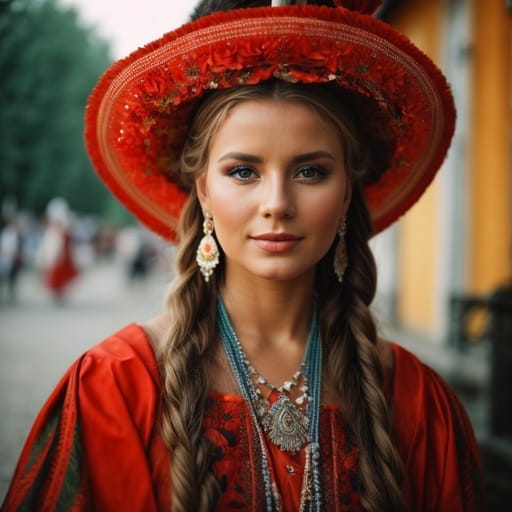
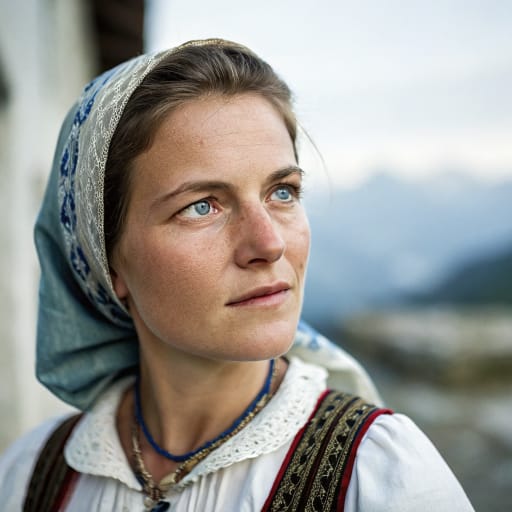
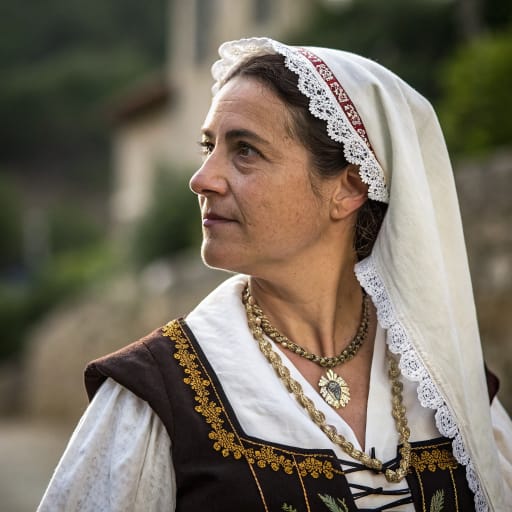
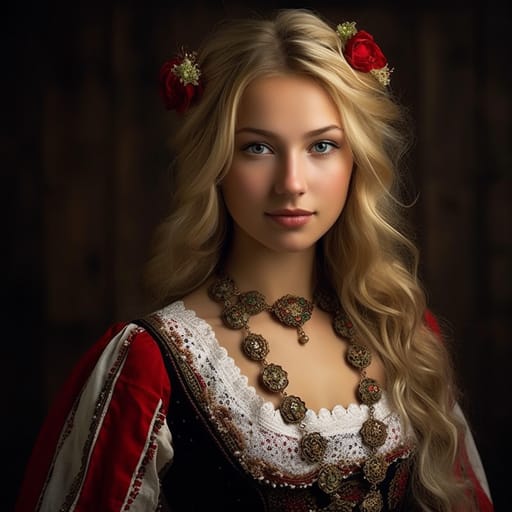
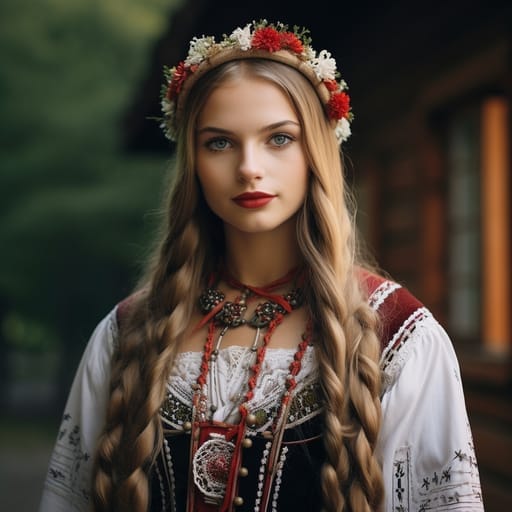
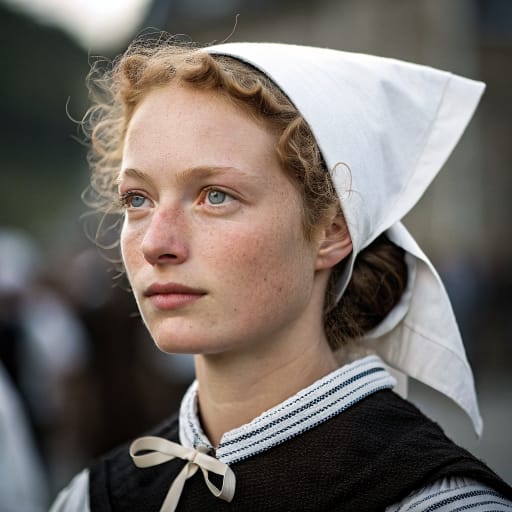
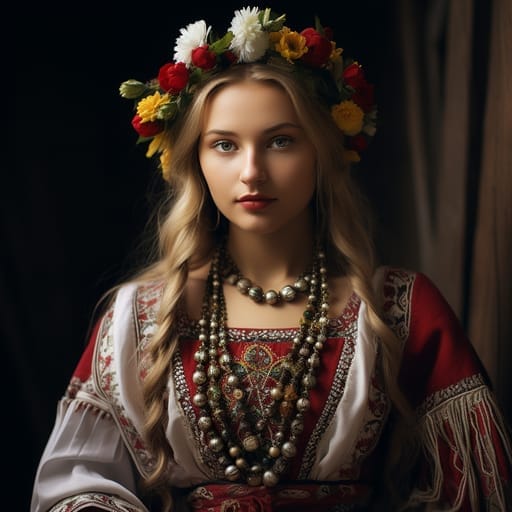
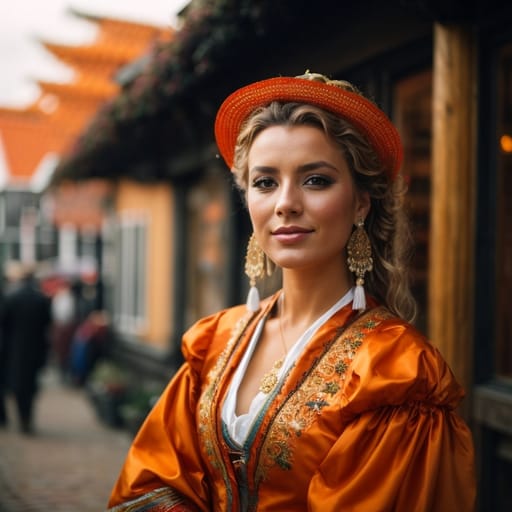
Typical Milceni Phenotypes
Reference for AI generation: hair, eyes, skin, facial structure, build
Milceni Body & Anatomy Reference
Per-feature anatomical profile for AI nude generation: Western European / Celtic-Germanic phenotype
Milceni Boobs & Breasts
Bust reference for Milceni women: medium-to-large cup, full, moderate-to-high projection, which is typical of Western European / Celtic-Germanic ancestry. Areolas measure about 30-46mm across, with light-pink to medium-pink pigmentation. Body type (ectomorph-to-mesomorph) shapes the bust as well, so Milceni tits are usually full and projecting. In AI imagery, keep the forward-set shape rather than drifting toward the smaller East Asian bust.
Milceni Ass & Hips
The Milceni ass is typically medium, moderate projection, which sets it apart from the broader hip profile of Mediterranean phenotypes. Underneath, the pelvis shows medium iliac crests, part of the Western European / Celtic-Germanic skeletal pattern. For Milceni butt pics and AI renders, match that silhouette and the overall build (ectomorph-to-mesomorph).
Milceni Vagina & Pussy
Milceni pussy and vulvar anatomy presents light-pink labial pigmentation, varied labia minora, consistent with the Western European / Celtic-Germanic phenotype's pigmentation pattern. Milceni pubic hair is typically wavy fine-to-medium texture, blond to dark-brown, in the inverted-triangle pattern. For anatomically accurate Milceni pussy renders the labial coloration should match the surrounding fair to light skin tone with a continuous gradient, and the hair should keep its wavy fine-to-medium texture.
Milceni Dicks & Penis
Milceni dicks follow the Western European / Celtic-Germanic reference data: regional mean ~13-14cm erect; moderate girth; light-pink to light-brown shaft pigmentation. Shaft color should track the fair to light skin tone with a smooth change toward the glans, and Milceni pubic hair keeps its wavy fine-to-medium texture.
Milceni Body, Curves & Build
Milceni body type and overall build presents as ectomorph-to-mesomorph, with mean adult female BMI 24-27: the characteristic Western European / Celtic-Germanic habitus. Milceni curves and proportions should keep the regional skeletal frame (height, shoulder-to-hip ratio, limb proportions) rather than a generic mesomorph default.
Milceni Skin Tone & Hair Texture
Milceni skin sits in the fair to light (Fitzpatrick I-III) band. Hair is typically straight-to-wavy 1A-2B, blond to dark-brown, in keeping with the Western European / Celtic-Germanic phenotype. In nude renders the skin should stay one even tone from face to body, and body, pubic and head hair should match.
Explore phenotype categories
Structured taxonomy with peer-reviewed scales · 22 anatomical categories
Erotic Poses & Sex Positions
From the pose catalog: 219 named positions with reference skeletons
Frequently asked questions about Milceni people
Where is the Milceni homeland?
The Milceni homeland is Milsko, the upper Spree basin and hill country around Bautzen in Upper Lusatia, eastern Saxony, Germany in Western Europe.
What language do Milceni people speak?
Milceni people primarily speak Old Sorbian (West Slavic, Indo-European); its direct descendant is Upper Sorbian.
What religion do Milceni people practice?
The predominant religion among Milceni people is Pre-Christian Slavic religion until the tenth century, then Christianity under the diocese of Meissen; the descendant villages around Bautzen and Kamenz have remained Catholic since before the Reformation.






Make your own Milceni images
Five a day, free, no credits to buy. The studio starts from this group's phenotype data, so you can set body type, pose and style and keep the traits accurate.
Start with Milceni