Help us get this right
Does this portrait look right for Brizani?
Nobody has judged this one yet. You would be the first.
Brizani Erotic
Lower Havel River around Havelberg, near where it joins the Elbe, in present-day Brandenburg and Saxony-Anhalt, Germany
Extinct Polabian Slavic dialect (Indo-European, West Slavic, Lechitic)
Slavic paganism; Christianized after the German conquest of the 12th century
Polabian Slavs; usually counted among the Lutici (Veleti) federation
About Brizani People
The Brizani were a West Slavic people who lived along the lower Havel River around Havelberg, in what is now northeastern Germany, from the early Middle Ages until the German conquest of the twelfth century. After that conquest they were slowly absorbed into the German-speaking population of Brandenburg. What made them a group was a place. Their name is usually traced to the Slavic word for a riverbank, so roughly the people of the shore. The wet, river-cut country where the Havel runs into the Elbe was the ground they held.
They were one of the smaller tribes of the Polabian Slavs, the peoples who settled between the Elbe and the Oder, and they are usually counted among the Lutici, a federation also known as the Veleti. They spoke a West Slavic dialect of the Lechitic group, closely related to the speech of their Polabian and Pomeranian neighbors and more distantly to Polish. The Brizani wrote none of it down. What survives is their name in Latin sources and a scatter of Slavic place names. Like the rest of the Lutici, they kept worshipping the old Slavic gods long after the rulers around them had been baptized. For the federation, refusing the church was as much about politics as belief: a church meant a bishop, and a bishop meant answering to a German king.
Their homeland sat on a contested frontier. Otto I founded a bishopric at Havelberg in the middle of the tenth century as part of a push to bring the Elbe Slavs under Saxon rule. In the great Slavic uprising of 983, the Lutici and their allies tore that order down. They destroyed the church establishments at Havelberg and Brandenburg and kept the region independent and pagan for well over a century and a half. The end came in stages: the Wendish Crusade of 1147, the founding of the Margraviate of Brandenburg under Albert the Bear, and a steady stream of German, Flemish and Dutch settlers who cleared land, founded towns and brought German law. Slavic speech along the Havel faded over the centuries that followed.
What they left behind is quiet but still visible. Village names ending in -itz and -ow across the Prignitz and the Havel country still have Slavic roots, and the earthwork ring forts of the period still stand in the landscape. The cathedral above Havelberg, consecrated in 1170, marks the order that replaced them. Nobody today remembers the Brizani as ancestors, but the people of the region descend partly from Slavs like them, mixed with the settlers who came after.
Related ethnic groups
Groups that share Brizani's homeland, region, language, or religious tradition. These are likely candidates for comparative phenotype reference.
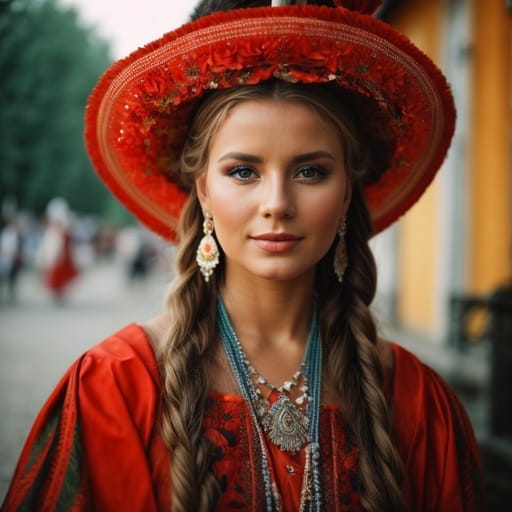
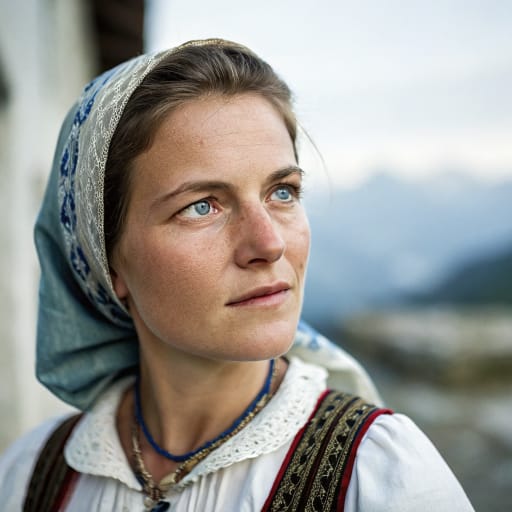
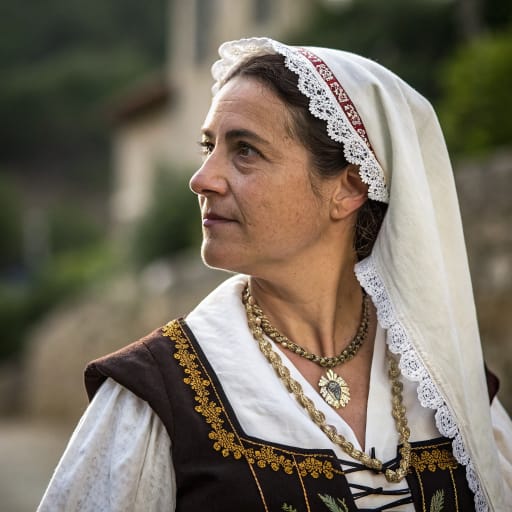
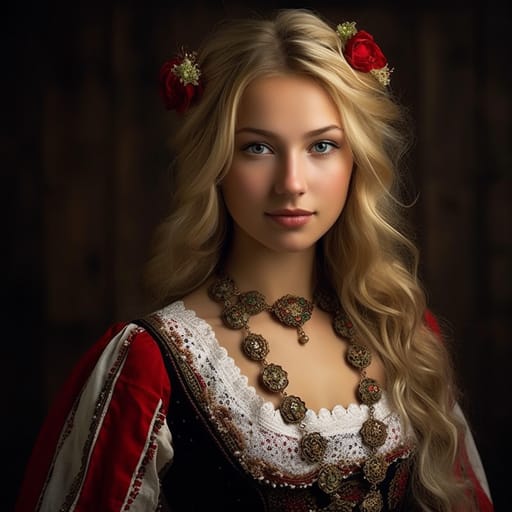
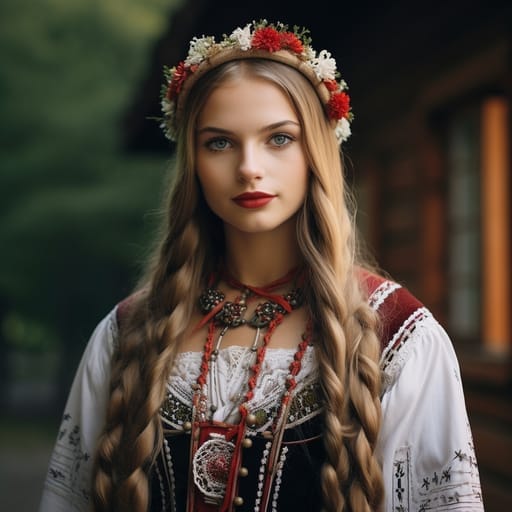
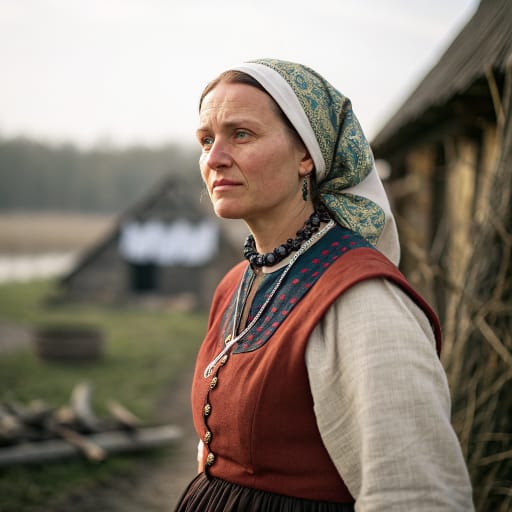
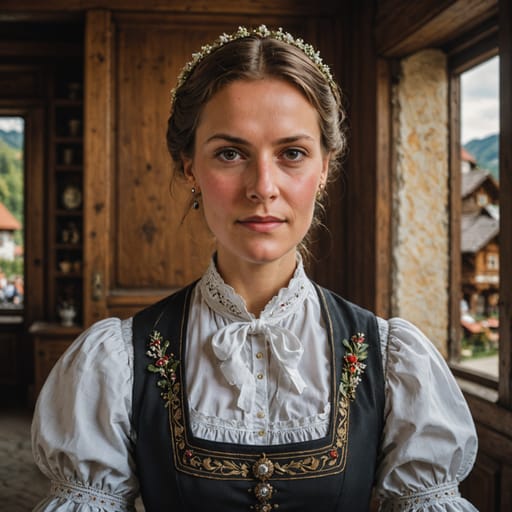
Typical Brizani Phenotypes
Reference for AI generation: hair, eyes, skin, facial structure, build
Brizani Body & Anatomy Reference
Anatomy by feature, Western European / Celtic-Germanic phenotype
Brizani Boobs & Breasts
Bust reference for Brizani women: medium-to-large cup, full, moderate-to-high projection, which is typical of Western European / Celtic-Germanic ancestry. Areolas measure about 30-46mm across, with light-pink to medium-pink pigmentation. Body type (ectomorph-to-mesomorph) shapes the bust as well, so Brizani tits are usually full and projecting. In AI imagery, keep the forward-set shape rather than drifting toward the smaller East Asian bust.
Brizani Ass & Hips
The Brizani ass is typically medium, moderate projection, which sets it apart from the broader hip profile of Mediterranean phenotypes. Underneath, the pelvis shows medium iliac crests, part of the Western European / Celtic-Germanic skeletal pattern. For Brizani butt pics and AI renders, match that silhouette and the overall build (ectomorph-to-mesomorph).
Brizani Vagina & Pussy
Brizani pussy and vulvar anatomy presents light-pink labial pigmentation, varied labia minora, consistent with the Western European / Celtic-Germanic phenotype's pigmentation pattern. Brizani pubic hair is typically wavy fine-to-medium texture, blond to dark-brown, in the inverted-triangle pattern. For anatomically accurate Brizani pussy renders the labial coloration should match the surrounding fair to light skin tone with a continuous gradient, and the hair should keep its wavy fine-to-medium texture.
Brizani Dicks & Penis
Brizani dicks follow the Western European / Celtic-Germanic reference data: regional mean ~13-14cm erect; moderate girth; light-pink to light-brown shaft pigmentation. Shaft color should track the fair to light skin tone with a smooth change toward the glans, and Brizani pubic hair keeps its wavy fine-to-medium texture.
Brizani Body, Curves & Build
Brizani body type and overall build presents as ectomorph-to-mesomorph, with mean adult female BMI 24-27: the characteristic Western European / Celtic-Germanic habitus. Brizani curves and proportions should keep the regional skeletal frame (height, shoulder-to-hip ratio, limb proportions) rather than a generic mesomorph default.
Brizani Skin Tone & Hair Texture
Brizani skin sits in the fair to light (Fitzpatrick I-III) band. Hair is typically straight-to-wavy 1A-2B, blond to dark-brown, in keeping with the Western European / Celtic-Germanic phenotype. In nude renders the skin should stay one even tone from face to body, and body, pubic and head hair should match.
Explore phenotype categories
Structured taxonomy with peer-reviewed scales · 22 anatomical categories
Erotic Poses & Sex Positions
From the pose catalog: 219 named positions with reference skeletons
Frequently asked questions about Brizani people
Where is the Brizani homeland?
The Brizani homeland is Lower Havel River around Havelberg, near where it joins the Elbe, in present-day Brandenburg and Saxony-Anhalt, Germany in Western Europe.
What language do Brizani people speak?
Brizani people primarily speak Extinct Polabian Slavic dialect (Indo-European, West Slavic, Lechitic).
What religion do Brizani people practice?
The predominant religion among Brizani people is Slavic paganism; Christianized after the German conquest of the 12th century.






Make your own Brizani images
Five a day, free, no credits to buy. The studio starts from this group's phenotype data, so you can set body type, pose and style and keep the traits accurate.
Start with Brizani